



Table of Contents
- Why People Look for Herbal Alternatives to Prescription Focus Aids
- Nootropics for Focus: What They Are and How They Differ from Medication
- Key Botanicals Used in Herbal Focus Formulas
- Safety of Herbal Medicines: Interactions, Contraindications and the Yellow Card Scheme
- Bioavailability of Natural Supplements: Why Form and Dose Decide
- How to Choose a Herbal Focus Product in Practice
- Conclusion: Matching the Product to the Demand
- Frequently Asked Questions
Last Updated: October 3, 2026
Why People Look for Herbal Alternatives to Prescription Focus Aids
Herbal alternatives to prescription focus aids are plant-based supplements, botanicals and micronutrients used to support concentration, mental clarity and sustained attention without a stimulant medication. Interest has grown as more people seek something they can take daily without the side-effect profile of pharmaceutical stimulants.
Prescription stimulants work quickly but can bring appetite loss, sleep disruption and cardiovascular effects many would rather avoid. Herbal formulas act more gently, and for some that gentleness is the point.
Nootropics for Focus: What They Are and How They Differ from Medication
Nootropics for focus are substances taken to support cognitive function, including attention, memory and mental clarity. The category spans caffeine and L-theanine, adaptogens such as ashwagandha, mushroom extracts like lion's mane, and prescription drugs such as methylphenidate.

The distinction that matters is regulatory, not botanical. A prescription focus aid is a licensed medicine, assessed for efficacy and safety and dispensed under medical supervision.
Medication manages a diagnosed condition; herbal formulas are used for general support for everyday focus, with a gentler, less predictable effect.
Where Botanical Ingredients Sit in UK Food Law
Botanical ingredients in supplements are regulated as food, not medicine, under the Food Standards Agency guidance on food supplements.
This is why honest labels look the way they do. Vitamin B12 can be described as contributing to normal energy-yielding metabolism and normal psychological function, because those claims are authorised. Lion's mane and ashwagandha have no authorised claims, so a compliant brand describes them by form, dose and standardisation instead.
Key Botanicals Used in Herbal Focus Formulas
The botanicals that appear most often in focus formulas fall into three rough groups: adaptogens, mushroom extracts and circulation-supporting herbs. Each has a different traditional rationale and timescale.
The most important distinction is acute versus cumulative. Some botanicals produce a noticeable effect within an hour or two, resembling caffeine. Others do nothing perceptible on day one and build over weeks of consistent loading.
Acute-acting botanicals (felt within the same day)
L-theanine is an amino acid found in tea, usually dosed at 100-200mg. It does not stimulate; it modulates.
Rhodiola rosea is an adaptogen traditionally used for fatigue, typically standardised to 3% rosavins and 1% salidroside, at doses around 200-400mg.
Panax ginseng is standardised to ginsenosides (commonly 4-7%) and dosed around 200-400mg. It is often grouped with Rhodiola as a same-day option, though the human evidence for acute cognitive effect is more mixed than marketing suggests.
Cumulative botanicals (require a loading phase)
Bacopa monnieri is the clearest example of a botanical that does nothing on day one.
Ashwagandha (KSM-66, standardised to a minimum 5% withanolides, typically 300-600mg daily) sits between the two camps.

Lion's mane (Hericium erinaceus) is valued for its hericenones and erinacines, studied for their effect on nerve growth factor.
Ginkgo biloba has a long history in traditional practice and is often included in blends aimed at mental sharpness, usually as a 50:1 extract.
Matching the botanical to the attention problem
A one-size-fits-all list is why so many people waste money. A more useful framework is to ask what is actually breaking your focus:
- If you are scattered and over-aroused, restless, caffeine-sensitive, easily pulled off task, the calming end of the spectrum suits: L-theanine first, possibly with a small amount of caffeine, and Rhodiola if fatigue is also a factor.
- If you are tired and flat, the problem is energy, not arousal, Rhodiola and Panax ginseng are the logical starting points.
- If you are stressed and ruminating, attention fragmented by worry, Ashwagandha is the best-evidenced option, taken daily for at least a month before judging it.
| Botanical | Typical Standardisation | Typical Daily Dose | Onset | Best Suited To | Evidence Strength |
|---|---|---|---|---|---|
| Ashwagandha (KSM-66) | Min. 5% withanolides | 300-600mg | 4-8 weeks | Stress-driven distraction | Moderate |
| Rhodiola rosea | 3% rosavins / 1% salidroside | 200-400mg | Same day | Fatigue-driven focus loss | Moderate |
| Panax ginseng | 4-7% ginsenosides | 200-400mg | Same day | Low energy, stamina | Moderate |
| Bacopa monnieri | 20-55% bacosides | 300mg | 8-12 weeks | Memory, slow baseline | Moderate |
| Lion's mane | 50% polysaccharides | 4,000mg equiv. | Weeks | General clarity | Limited |
| Ginkgo biloba | 50:1 extract | 120-240mg | Weeks | Older adults | Mixed |
| L-theanine | Isolated amino acid | 100-200mg | 30-60 min | Calm alertness | Moderate |
Safety of Herbal Medicines: Interactions, Contraindications and the Yellow Card Scheme
The safety of herbal medicines is not automatic, and interaction risk is the part most buyers underestimate. Several popular botanicals affect how the liver processes other drugs, changing blood levels of medicines you may already take, including, in some cases, the prescription focus aids you are trying to replace.
Why interactions happen: the CYP450 mechanism
St John's Wort is the textbook inducer.
Ginkgo biloba carries antiplatelet activity and has documented interaction potential with anticoagulants such as warfarin and with antiplatelet drugs, raising bleeding risk.
Panax ginseng has been associated with altered warfarin effect and changes in blood glucose, which matters for anyone on diabetes medication.
Energy & Focus Bundle | Lion's Mane, Ashwagandha, NAD+ & B12 | Pure Vitamins UK →
Ashwagandha is generally well tolerated but is thyroid-active, it can raise thyroid hormone levels, so it warrants caution in anyone with hyperthyroidism or on thyroid medication.
The interaction that matters most for this keyword
If you are already prescribed a stimulant focus aid, methylphenidate or lisdexamfetamine, for example, the question is not just whether a herb interacts with the drug, but whether it interacts with the cardiovascular and sleep effects you are already managing.
If you take any prescription medicine, check with a pharmacist before adding a botanical. Pharmacists have interaction databases most consumers do not, and the conversation takes five minutes.
Quality control: the safety issue nobody lists
The interaction warnings above assume the product contains what the label says. That is not guaranteed. Independent testing has repeatedly found contamination, undeclared pharmaceutical ingredients, and products containing none of the labelled botanical, a bigger practical risk than most theoretical interactions.
Three checks reduce it substantially:
- Third-party testing. Look for a certificate of analysis (CoA) available on request, ideally from a laboratory independent of the manufacturer. A CoA should state the batch number, the assay result for the active compound, and the microbiological and heavy-metal results.
- Standardised extracts with a named standard. "KSM-66" or "50% polysaccharides" tells you the supplier has committed to a measurable specification. "Mushroom powder" tells you nothing.
- Manufacturing certification. ISO 22000, HACCP and GMP certification indicate the facility is audited against food-safety and quality-management standards, not a guarantee of efficacy, but a meaningful filter on contamination risk.
Reporting suspected reactions
In the UK, suspected reactions to supplements can be reported through the MHRA Yellow Card scheme, the same system used for medicines. Reporting is voluntary and open to consumers as well as healthcare professionals, and it is one of the ways regulators spot problems in products that never went through clinical trials. If a supplement made you unwell, reporting it is genuinely useful, the scheme relies on people doing it.
The biggest mistake buyers make is assuming a botanical is harmless because it is plant-derived. St John's Wort is a well-documented inducer of liver enzymes and can reduce the effectiveness of several prescription medicines. Always check interactions before combining anything with medication.
Bioavailability of Natural Supplements: Why Form and Dose Decide
Bioavailability of natural supplements is the proportion of an ingredient that actually reaches your bloodstream in a usable form.
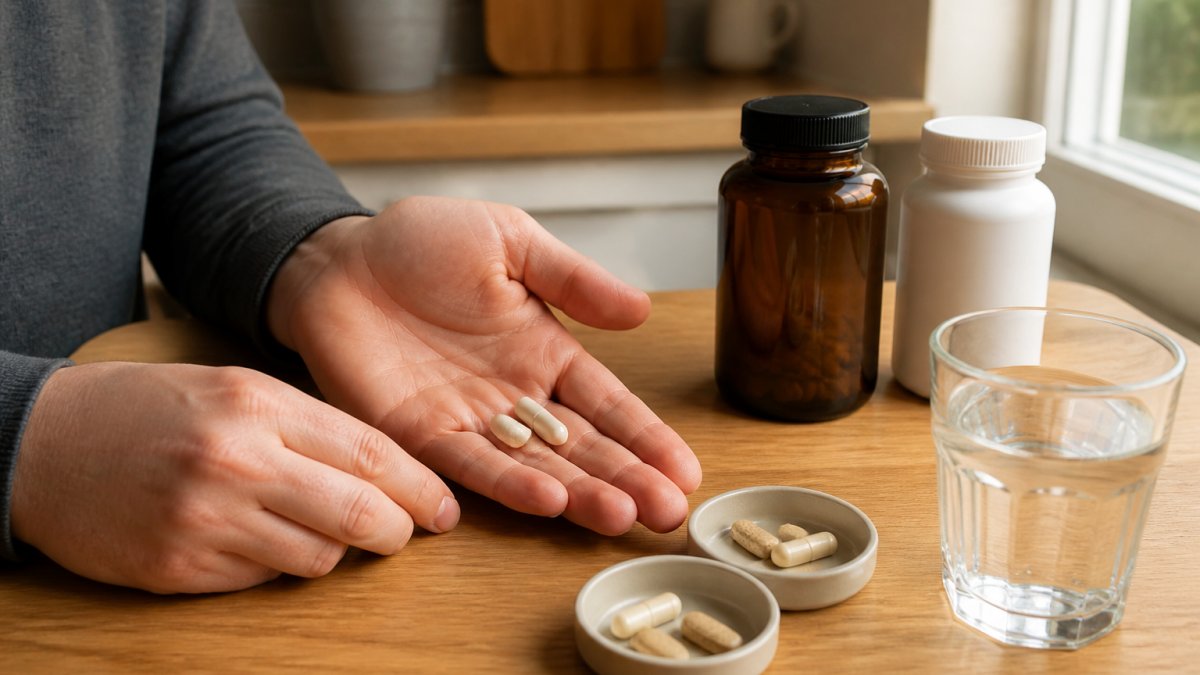
Form is the first variable.
Dose is the second. A 4,000mg equivalent lion's mane extract standardised to 50% polysaccharides is a different proposition from an unspecified mushroom powder.
Black pepper extract is often added for the same reason: it supports absorption of other compounds in the same capsule.
How to Choose a Herbal Focus Product in Practice
Choosing well comes down to reading the label the way a formulator would. Four checks do most of the work.
- Is the dose stated per serving, not per "proprietary blend"? Blends hide individual doses, making it impossible to judge whether anything is present at a meaningful level.
- Is the extract standardised? Look for a named standard, such as KSM-66 ashwagandha or a stated polysaccharide percentage.
- Are the active forms used? For B vitamins, active forms such as methylcobalamin matter more than the headline number.
At Pure Vitamins UK, we formulate to ISO 22000, HACCP and GMP standards and make certificates of analysis available on request. Our Lion's Mane supplement delivers 4,000mg equivalent extract standardised to 50% polysaccharides with Vitamin B1 and black pepper extract, at £9.99. For a broader daily base, the Energy & Focus Bundle combines B12, lion's mane, KSM-66 ashwagandha and NAD+ at £36.99, and our ashwagandha supplement pairs KSM-66 with L-theanine and Vitamin B6 at £11.99.

Conclusion: Matching the Product to the Demand
Herbal alternatives to prescription focus aids occupy a different category from medication, and the people who get the most from them accept that. They are daily support, not a switch you flip.
Match the formula to what you actually want. If your afternoons flag, an active-form B12 is the evidenced place to start. If stress fragments your attention, an adaptogen such as KSM-66 ashwagandha makes more sense.
Frequently Asked Questions
What is the best herb for focus and concentration?
There is no single best herb. Lion's Mane, ashwagandha, ginkgo biloba and Panax ginseng are the botanicals most often included in herbal focus aids, but none of them carries an authorised GB health claim for concentration. What you can judge is the form and dose: a standardised extract with a stated percentage of active compounds is worth more than an unstandardised powder. Pair any botanical with a nutrient that does hold authorised claims, such as vitamin B1 for normal psychological function or vitamin B12 for normal energy-yielding metabolism.
Are herbal focus aids regulated for safety in the UK?
Food supplements are regulated as food, not medicine. They must comply with GB nutrition and health claims rules, which means a pack cannot claim to treat or prevent a condition. Herbal medicines registered under the Traditional Herbal Registration scheme follow a different route and carry a THR mark. For supplements, look for manufacture to ISO 22000, HACCP and GMP standards, and ask for a certificate of analysis. Report any suspected side effect to the MHRA through the Yellow Card scheme.
How do herbal supplements differ from prescription focus medication?
Prescription stimulants are licensed medicines with a defined dose, a monitored patient group and a documented side effect profile. Herbal focus aids are food supplements: they cannot make medicinal claims, they are not prescribed, and their evidence base varies by ingredient. Botanicals such as ginkgo biloba also have pharmacological interaction potential, so combining them with prescription medication should be discussed with a pharmacist or GP first. The two categories are not interchangeable and should not be treated as such.
What should I consider before starting herbal supplements for concentration?
Check three things. First, the dose and standardisation, because an extract standardised to a stated percentage of active compounds is more consistent batch to batch. Second, interactions: ginkgo biloba and ashwagandha both warrant caution alongside blood-thinning or thyroid medication, and ashwagandha is not recommended during pregnancy or breastfeeding. Third, give it time. Botanical routines are usually assessed over four to six weeks of consistent daily use, not a single dose.
Why do some natural supplements seem to do nothing?
Absorption and dose explain most of it. A botanical delivered as a poorly extracted powder at a token dose has little to work with, and some nutrients need specific forms to be used. Vitamin B12 is the clearest example: methylcobalamin and adenosylcobalamin are active forms the body uses directly, while cyanocobalamin must be converted first. Black pepper extract is added to some formulas to support absorption. Standardised extracts with a stated dose remove most of the guesswork.
Herbal support only works if the dose and the form are real. Pure Vitamins UK formulates clean-label supplements with transparent dosing, documented in-house batch testing and well-absorbed ingredient forms, all manufactured to ISO 22000, HACCP and GMP standards. Shop now and build a daily routine you can actually verify.

