


Reviewed and updated: 26 July 2026
The best time to take biotin 10,000 mcg is simply the time you will remember to take it every day, ideally with a meal. There is no established "magic hour" for biotin, so consistency and taking it alongside food matter far more than whether you swallow it at 8am or 8pm. Below I will explain why that is, put the big 10,000 mcg number in proper context, and cover the one practical thing worth planning around: upcoming blood tests.
The best time to take biotin 10,000 mcg: the short answer
Here is the quick version if you are in a hurry.
- What it is: a high-strength dose of vitamin B7 (biotin), the B vitamin that contributes to the maintenance of normal hair and normal skin.
- Best time: whenever fits your routine, taken consistently. Morning with breakfast is the most popular choice, mainly because it is easy to remember.
- With or without food: with food. It is gentler on the stomach and folds neatly into a daily habit.
- One thing to know: a high biotin dose can skew certain laboratory blood tests, so tell your GP you take it and pause it before tests if asked.

Why timing matters far less than most people think
Biotin is a water-soluble vitamin. Your body absorbs what it needs from the small intestine and passes the surplus out in urine rather than storing large reserves in fat tissue. Because of that, there is no clever window where the tablet suddenly works better. What genuinely drives any benefit is keeping a steady daily intake over weeks and months, not the exact minute on the clock.
So if you have been agonising over morning versus evening, you can relax. The single most useful habit is picking a time you will not skip. If that is with your morning coffee, brilliant. If it is next to your toothbrush at night, that works just as well. I would rather someone take biotin reliably at a slightly imperfect time than perfectly on a schedule they abandon after a fortnight.
Take it with food, and here is why
My honest, practical tip is to take your 10,000 mcg tablet with a meal. There are two reasons. First, taking any supplement with food tends to be kinder on a sensitive stomach and reduces the chance of mild queasiness. Second, tying a tablet to something you already do every day, like breakfast, is the simplest way to make it stick.
Biotin does not need a large, fatty meal to be absorbed the way the fat-soluble vitamins (A, D, E and K) do. A normal meal or snack is plenty. If you take other supplements, it is perfectly fine for biotin to join them.

Morning or night? What actually helps
People often ask whether biotin is better in the morning or at night. There is no reliable evidence that either is more effective, so the choice comes down to habit and personal preference.
- Morning: the most common pick. Biotin contributes to normal energy-yielding metabolism, so many people like the idea of taking their B vitamins early with breakfast. Mostly, mornings just make a supplement easy to remember.
- Evening: equally valid. Biotin is not a stimulant and will not keep you awake, so a bedtime routine is fine if that is when you are most consistent.
If I had to pick one for a client with no strong preference, I would say morning with breakfast, purely for the memory habit. But the "right" answer is the one you will actually stick to.
Putting 10,000 mcg in context
It helps to understand just how large 10,000 mcg is. Biotin needs are tiny. The European Food Safety Authority set an adequate intake of around 40 mcg a day for adults, and the NHS gives a similar figure. The Nutrient Reference Value used on UK labels is 50 mcg. A 10,000 mcg tablet therefore provides roughly 200 times the reference value, which is why you will see 20,000% NRV on the label.
Two things follow from that. First, biotin deficiency is uncommon in people eating a varied diet, because the small amount we need is widely available in food. Second, a high-strength dose like 10,000 mcg is not "topping up a gap" in the way a modest multivitamin does; it is a deliberately generous amount that people choose for hair and skin support. Biotin does contribute to the maintenance of normal hair and normal skin, and that authorised role is the same whether the dose is modest or high.
For a fuller breakdown of how much biotin different people actually need, I have written a separate guide on biotin dosage that is worth a read alongside this one.
Who a high-strength dose suits, and who it does not
A 10,000 mcg tablet is popular with people focused on the appearance of their hair, skin and nails who want a simple, consistent high-strength option. Because biotin is water-soluble, the body handles a surplus by excreting it, which is why high doses are generally well tolerated.
That said, more is not automatically better. The research is honest about this. According to PubMed, a widely cited review of biotin for hair and nails by Patel and colleagues found that biotin supplementation produced clear benefit mainly in people who had an underlying deficiency or a specific condition affecting hair and nails, and concluded there is limited evidence for supplementing otherwise healthy individuals (Patel et al., 2017). In plain terms: if your diet already covers your biotin needs, a very high dose will not necessarily do more for your hair than a sensible one. Many people still choose 10,000 mcg for reassurance and simplicity, which is a fair personal choice, just made with clear eyes.

The one thing to plan around: blood tests
This is the part of biotin timing that genuinely matters, and it is worth more attention than morning versus night. High-dose biotin can interfere with certain laboratory blood tests. Many common tests use a biotin and streptavidin binding step, and a large amount of biotin in your bloodstream can push those results falsely high or falsely low, depending on the test.
This is not a fringe concern. According to PubMed, a published case report described a man taking 10,000 mcg of biotin a day whose thyroid blood results looked like overactive thyroid until the biotin was identified and stopped, after which his results returned to normal within about five days (James et al., 2023). Laboratory work has also shown that biotin interference is dose-dependent and affects several hormone assays, including tests for aldosterone and renin (Knudsen et al., 2021).
So the practical advice is simple:
- Always tell your doctor and the nurse taking your blood that you take high-strength biotin.
- If you have a blood test coming up, especially thyroid or cardiac (troponin) tests, ask whether you should pause biotin beforehand. A short break of a couple of days is commonly suggested, though your clinic may advise longer.
- Do not stop any prescribed medicine to "make room" for a supplement. This is only about pausing biotin around a test if advised.
How long before you notice anything?
Be patient and realistic. Hair grows slowly, on a cycle measured in months, so any visible change from a hair-focused supplement is a matter of months rather than days. A sensible trial is around three months of consistent daily use before you judge whether it is doing anything you value.
It is also worth remembering the point from the research above: biotin's clearest benefit is in people who were genuinely short of it. If hair thinning is bothering you and it is not settling, that is a conversation to have with your GP rather than a reason to keep pushing the dose ever higher, because thinning hair can have many causes that a single vitamin will not address.

Can you stack or split biotin with other vitamins?
Yes on both counts. Biotin sits comfortably alongside other vitamins and minerals and does not compete with them for absorption in any way you need to manage. It is a standard ingredient in hair, skin and nail formulas precisely because it pairs so easily.
A useful thing to know: biotin carries the authorised role for the maintenance of normal hair and normal skin, but the mineral partners are the ones with the nails role. Zinc contributes to the maintenance of normal nails, and so does selenium, which is why a combined hair, skin and nail supplement makes sense.
There is no need to split a single 10,000 mcg tablet across the day. One tablet, once daily, with food, is the straightforward approach.
Is it safe to take biotin every day?
For most healthy adults, taking biotin daily is well tolerated. It is water-soluble, so the body excretes what it does not use rather than banking it up, which is the main reason high doses are generally handled well. You can read more on that in my explainer on whether biotin is water-soluble and what happens to the excess.
The genuine caveat is not toxicity but the blood-test interference covered above. That is a testing-accuracy issue rather than a safety-of-the-vitamin issue, but it is the reason a little planning around medical appointments is sensible with any high-strength biotin.
Signs of low biotin and where to find it in food
True biotin deficiency is rare in the UK, but the recognised signs include thinning hair, a scaly red rash (often around the eyes, nose and mouth), and brittle nails, sometimes alongside tiredness or low mood. These signs overlap with many other things, so they are not proof of a biotin problem on their own.
Biotin is found across a normal varied diet. Good sources include eggs (especially the cooked yolk), liver and other organ meats, salmon, nuts and seeds, and some vegetables. A balanced diet supplies the small daily amount most people need, which is exactly why a high-strength supplement is a personal choice for extra support rather than a correction of a common shortfall.
A few cautions worth knowing
Biotin is a gentle nutrient, but a little care is still sensible:
- Blood tests: as above, high-dose biotin can distort several laboratory tests. Always mention it to your healthcare team and pause it before tests if advised.
- Pregnancy and breastfeeding: if you are pregnant, breastfeeding or trying to conceive, check with your midwife, GP or pharmacist before taking a high-strength supplement.
- Existing conditions or medicines: if you have a health condition or take regular medication, a quick word with your pharmacist confirms everything sits well together.
- Persistent symptoms: if hair thinning, skin changes or fatigue persist, please see your GP rather than relying on a supplement, as these can have causes worth investigating.
Frequently asked questions
What is the best time of day to take biotin 10,000 mcg?
There is no single best hour established by research. Take it once daily with a meal at whatever time you will remember consistently. Morning with breakfast is the most popular choice simply because it is easy to build into a routine.
Should I take biotin 10,000 mcg with food or on an empty stomach?
With food. It is gentler on the stomach and easier to remember. Biotin does not need a fatty meal to be absorbed, so any normal meal or snack is fine.
Is 10,000 mcg of biotin too much?
It is a high dose, far above the roughly 40 mcg adequate intake and the 50 mcg label reference value, but biotin is water-soluble and the surplus is excreted, so it is generally well tolerated. The main thing to manage is its effect on blood tests, not toxicity.
Does the time I take biotin change how well it works?
No. Consistent daily use over weeks and months is what matters, not the exact time of day.
How long before I see results from biotin?
Hair grows on a cycle of months, so give it around three months of consistent use before judging. Biotin's clearest benefit is seen in people who were genuinely short of it.
Can biotin affect my blood test results?
Yes. High-dose biotin can skew certain laboratory tests, including some thyroid and cardiac tests. Tell your doctor you take it and pause it before a test if advised.
My best advice, then, is refreshingly boring: take your biotin once a day, with food, at a time you will not forget, and give it a few months. Save your attention for the one detail that genuinely matters, which is flagging it before any blood test.
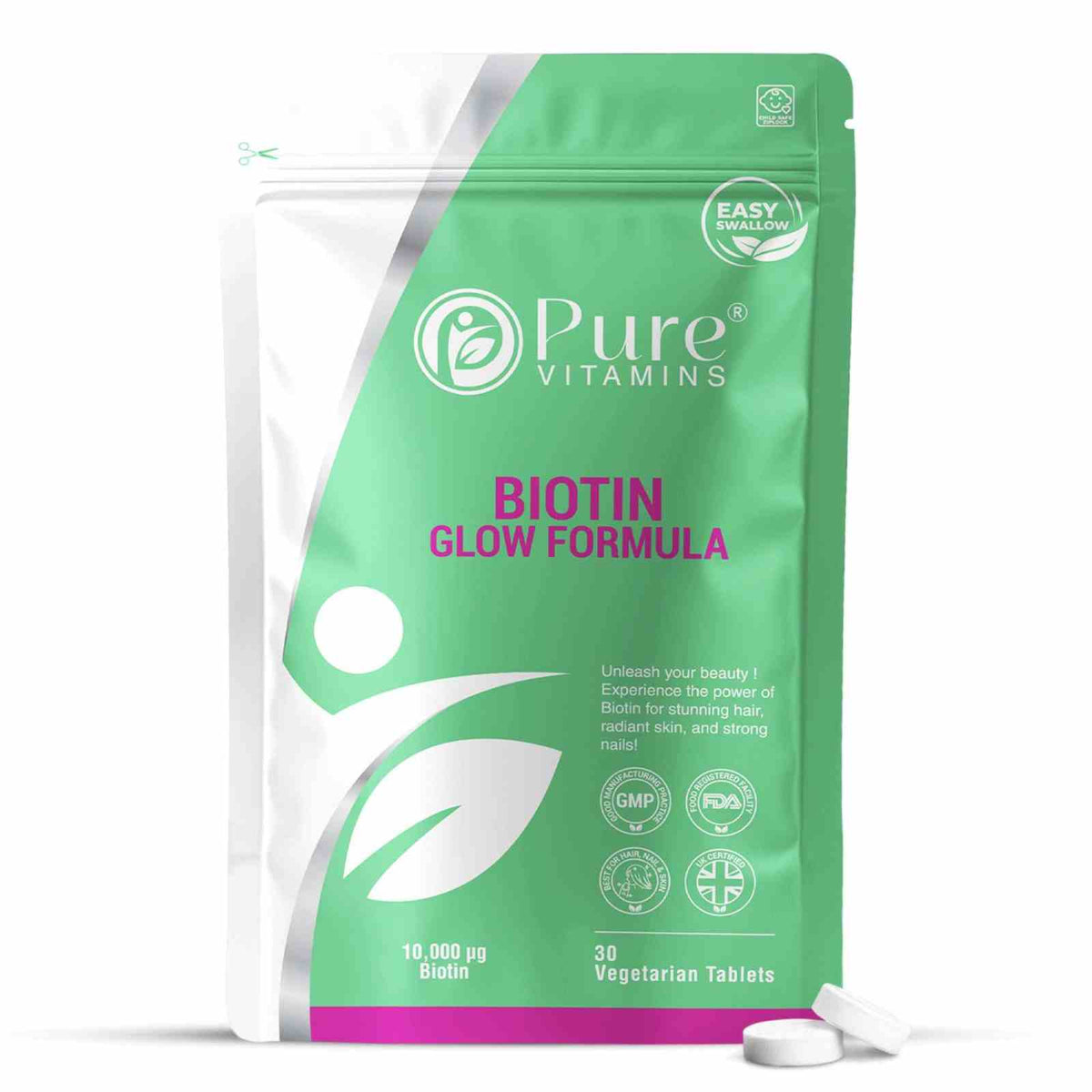
If you would like a straightforward, vegan-friendly high-strength option, our Biotin 10,000 mcg tablets are formulated in the UK and manufactured in a GMP-certified facility. You can also browse the rest of our range on our home page, or read our honest guide to the best vitamins for hair, skin and nails.
Shop Biotin 10,000 mcg Tablets
Warmly,
Dr. Miron, Founder of Pure Vitamins UK
Food supplements are not a substitute for a varied, balanced diet and a healthy lifestyle. This article is for general information and is not medical advice. If you are pregnant, breastfeeding, taking medication or have a health condition, speak to your GP or pharmacist before starting a new supplement.
