


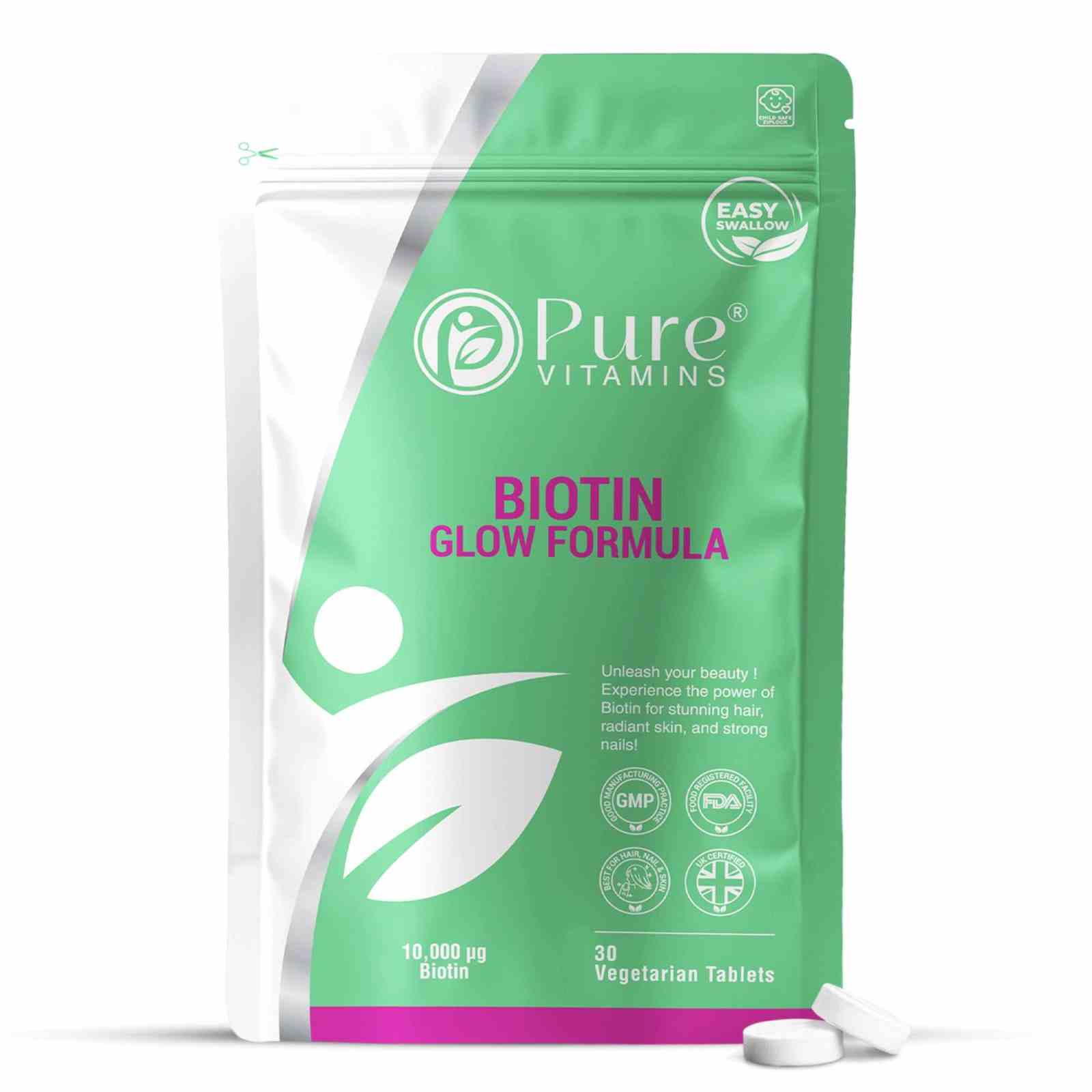
Biotin dosage: how much do you actually need?
On biotin dosage, the honest answer is that your body needs very little: the daily reference intake is just 50 micrograms, so a 10,000 microgram tablet is 200 times that. High-strength biotin is common simply because biotin is water-soluble and very well tolerated, not because more does more. Biotin contributes to the maintenance of normal hair and normal skin, and this guide sets the dose in plain, sensible perspective.
Reviewed and updated: 23 July 2026

TL;DR
- What it is: a B vitamin (B7) that contributes to the maintenance of normal hair and skin and to normal energy-yielding metabolism.
- How much you need: only 50 micrograms a day as a reference intake. High-strength tablets go far beyond that because biotin is well tolerated, not because more works better.
- The one thing to know: biotin can skew certain blood tests. Tell your doctor you take it before any testing.
What the reference intake tells you
Biotin's daily reference intake, the amount considered adequate, is just 50 micrograms. So a 10,000 microgram tablet supplies 200 times that. It sounds dramatic, but biotin is water-soluble, meaning your body takes what it needs and passes the rest out in urine rather than storing it. That is why high-strength biotin is so common and so well tolerated. Even modest biotin tablets comfortably cover the amount needed for biotin to support the maintenance of normal hair and skin.
Why do supplements use such high doses?
It is largely about positioning and reassurance. People have come to associate bigger biotin numbers with beauty supplements, so brands offer high-strength options such as our High-Strength Biotin 10,000mcg. I would rather be straight with you here: once your needs are met, extra biotin does not do extra for normal hair. The high number is a preference and a margin of comfort, not a multiplier.

Is 10,000 mcg of biotin too much?
For most healthy adults, high-strength biotin is well tolerated, and there is no established tolerable upper intake level flagging 10,000 micrograms as unsafe. The genuinely important caveat is not toxicity, it is that biotin can interfere with certain blood tests, including some thyroid, hormone and cardiac markers, causing falsely high or low readings. Based on a review retrieved from PubMed, high-dose biotin is a recognised cause of erroneous immunoassay results and laboratories are advised to be alert to it (Avery, 2019, DOI). If you are having blood tests, tell your doctor you take biotin and ask whether to pause it beforehand. That is the single most useful thing to know about high-dose biotin.
Signs of low biotin
True biotin deficiency is uncommon, because a normal diet supplies it, but when it does occur it can show as thinning hair, a scaly red rash around the eyes, nose and mouth, and brittle nails. It is more likely with long-term raw egg-white consumption (which binds biotin), certain medications, or specific medical conditions. If you have these signs, they are worth discussing with your GP rather than assuming a supplement is the whole answer.
Natural food sources of biotin
Biotin is needed in tiny amounts and a varied diet usually supplies it. Good sources include eggs (cooked), nuts and seeds, wholegrains, oily fish, liver, and vegetables such as sweet potato. A supplement simply adds a measured, well-tolerated top-up on that foundation.

How to take biotin
- One tablet daily, since biotin is water-soluble and suits consistent daily intake.
- With or without food; both are fine, and with food can feel gentler.
- Mention it before any blood tests, the one genuinely important practical point.
- Be realistic: it supports the maintenance of normal hair and skin. It is not a growth treatment.
What to realistically expect
Here is the honest bit. Beyond correcting a genuine biotin shortfall, the evidence that extra biotin visibly improves hair in people who are already well-nourished is weak. Most of us are not short of it. So the sensible way to think about biotin is as steady support for normal hair and skin, not as a treatment that will transform them. If your hair or nail concerns are ongoing, a broader look at your diet, iron, and general health is usually more useful than chasing a bigger biotin number. And if your concern is specifically hair loss rather than dosage, see our dedicated guide on whether biotin helps hair loss.
Solo biotin or a combination?
If you specifically want biotin on its own at high strength, the solo 10,000mcg tablet is the focused choice. If you would rather cover hair, skin and nails more broadly, our Biotin, Zinc and Selenium combination is the wider option: zinc contributes to the maintenance of normal hair, skin and nails, and selenium to the maintenance of normal hair and nails, so together they cover the nail side that biotin alone does not. We lay out the full picture in our guide to the best vitamins for hair, skin and nails.
A few cautions worth knowing
The blood-test point above is the main one. Beyond that, if you are pregnant, breastfeeding, taking medication or managing a medical condition, have a quick word with your GP or pharmacist before starting. Check the label for allergen and vegetarian or vegan suitability if that matters to you.
The takeaway
Your body needs only about 50 micrograms of biotin a day; high-strength tablets go far beyond that safely because biotin is water-soluble, but more does not do more for normal hair; and the one thing to remember is to flag biotin before blood tests. Our High-Strength Biotin 10,000mcg is the solo one-a-day option, Formulated in the UK and tested for purity and heavy metals at our GMP-certified facility, with a Certificate of Analysis available on request. Browse the range on our Pure Vitamins UK home page.

Frequently asked questions
How much biotin per day? The reference intake is 50 micrograms. High-strength tablets provide far more, which is well tolerated because biotin is water-soluble, but more does not increase the effect on normal hair.
Is 10,000 mcg of biotin safe? For most healthy adults it is well tolerated. The key caveat is that biotin can interfere with some blood tests, so tell your doctor before testing.
Does more biotin grow hair faster? No. Biotin supports the maintenance of normal hair and skin, not faster growth.
When should I take biotin? Once daily, with or without food. Consistency matters more than timing.
Food supplements should not be used as a substitute for a varied, balanced diet and a healthy lifestyle. Tell your doctor you take biotin before any blood tests. If you are pregnant, breastfeeding, taking medication or managing a medical condition, speak to your GP or pharmacist before starting a new supplement.
Dr. Miron, Founder of Pure Vitamins UK.
Related articles
- Best vitamins for hair, skin and nails UK
- Biotin vs collagen: which is better for hair and skin?
- Is biotin water-soluble? What happens to the excess
- What actually supports normal nails?
- B12 vs biotin: which is better?
- How many days to take biotin for hair growth
- Can you take selenium and biotin together?
- High-Strength Biotin 10,000mcg tablets
