


News

What is the best time to take biotin 10,000 mcg?
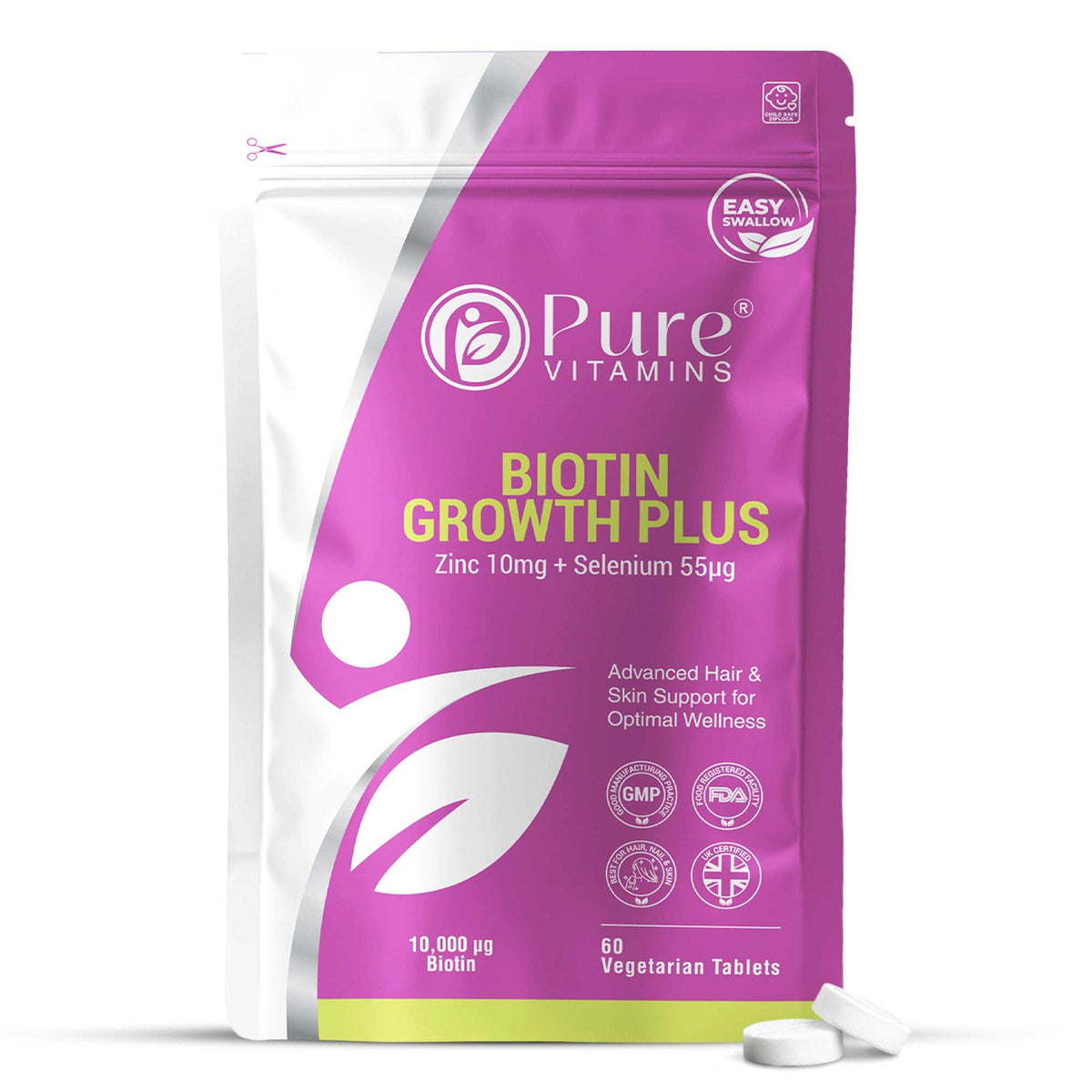
Reviewed and updated: 26 July 2026 The best time to take biotin 10,000 mcg is simply the time you will remember to take it every day, ideally with a meal. There is no established "magic hour" for biotin, so consistency and taking it alongside food matter far more than whether you swallow it at 8am or 8pm. Below I will explain why that is, put the big 10,000 mcg number in proper context, and cover the one practical thing worth planning around: upcoming blood tests. The best time to take biotin 10,000 mcg: the short answer Here is the quick version if you are in a hurry. What it is: a high-strength dose of vitamin B7 (biotin), the B vitamin that contributes to the maintenance of normal hair and normal skin. Best time: whenever fits your routine, taken consistently. Morning with breakfast is the most popular choice, mainly because it is easy to remember. With or without food: with food. It is gentler on the stomach and folds neatly into a daily habit. One thing to know: a high biotin dose can skew certain laboratory blood tests, so tell your GP you take it and pause it before tests if asked. Why timing matters far less than most people think Biotin is a water-soluble vitamin. Your body absorbs what it needs from the small intestine and passes the surplus out in urine rather than storing large reserves in fat tissue. Because of that, there is no clever window where the tablet suddenly works better. What genuinely drives any benefit is keeping a steady daily intake over weeks and months, not the exact minute on the clock. So if you have been agonising over morning versus evening, you can relax. The single most useful habit is picking a time you will not skip. If that is with your morning coffee, brilliant. If it is next to your toothbrush at night, that works just as well. I would rather someone take biotin reliably at a slightly imperfect time than perfectly on a schedule they abandon after a fortnight. Take it with food, and here is why My honest, practical tip is to take your 10,000 mcg tablet with a meal. There are two reasons. First, taking any supplement with food tends to be kinder on a sensitive stomach and reduces the chance of mild queasiness. Second, tying a tablet to something you already do every day, like breakfast, is the simplest way to make it stick. Biotin does not need a large, fatty meal to be absorbed the way the fat-soluble vitamins (A, D, E and K) do. A normal meal or snack is plenty. If you take other supplements, it is perfectly fine for biotin to join them. Morning or night? What actually helps People often ask whether biotin is better in the morning or at night. There is no reliable evidence that either is more effective, so the choice comes down to habit and personal preference. Morning: the most common pick. Biotin contributes to normal energy-yielding metabolism, so many people like the idea of taking their B vitamins early with breakfast. Mostly, mornings just make a supplement easy to remember. Evening: equally valid. Biotin is not a stimulant and will not keep you awake, so a bedtime routine is fine if that is when you are most consistent. If I had to pick one for a client with no strong preference, I would say morning with breakfast, purely for the memory habit. But the "right" answer is the one you will actually stick to. Putting 10,000 mcg in context It helps to understand just how large 10,000 mcg is. Biotin needs are tiny. The European Food Safety Authority set an adequate intake of around 40 mcg a day for adults, and the NHS gives a similar figure. The Nutrient Reference Value used on UK labels is 50 mcg. A 10,000 mcg tablet therefore provides roughly 200 times the reference value, which is why you will see 20,000% NRV on the label. Two things follow from that. First, biotin deficiency is uncommon in people eating a varied diet, because the small amount we need is widely available in food. Second, a high-strength dose like 10,000 mcg is not "topping up a gap" in the way a modest multivitamin does; it is a deliberately generous amount that people choose for hair and skin support. Biotin does contribute to the maintenance of normal hair and normal skin, and that authorised role is the same whether the dose is modest or high. For a fuller breakdown of how much biotin different people actually need, I have written a separate guide on biotin dosage that is worth a read alongside this one. Who a high-strength dose suits, and who it does not A 10,000 mcg tablet is popular with people focused on the appearance of their hair, skin and nails who want a simple, consistent high-strength option. Because biotin is water-soluble, the body handles a surplus by excreting it, which is why high doses are generally well tolerated. That said, more is not automatically better. The research is honest about this. According to PubMed, a widely cited review of biotin for hair and nails by Patel and colleagues found that biotin supplementation produced clear benefit mainly in people who had an underlying deficiency or a specific condition affecting hair and nails, and concluded there is limited evidence for supplementing otherwise healthy individuals (Patel et al., 2017). In plain terms: if your diet already covers your biotin needs, a very high dose will not necessarily do more for your hair than a sensible one. Many people still choose 10,000 mcg for reassurance and simplicity, which is a fair personal choice, just made with clear eyes. The one thing to plan around: blood tests This is the part of biotin timing that genuinely matters, and it is worth more attention than morning versus night. High-dose biotin can interfere with certain laboratory blood tests. Many common tests use a biotin and streptavidin binding step, and a large amount of biotin in your bloodstream can push those results falsely high or falsely low, depending on the test. This is not a fringe concern. According to PubMed, a published case report described a man taking 10,000 mcg of biotin a day whose thyroid blood results looked like overactive thyroid until the biotin was identified and stopped, after which his results returned to normal within about five days (James et al., 2023). Laboratory work has also shown that biotin interference is dose-dependent and affects several hormone assays, including tests for aldosterone and renin (Knudsen et al., 2021). So the practical advice is simple: Always tell your doctor and the nurse taking your blood that you take high-strength biotin. If you have a blood test coming up, especially thyroid or cardiac (troponin) tests, ask whether you should pause biotin beforehand. A short break of a couple of days is commonly suggested, though your clinic may advise longer. Do not stop any prescribed medicine to "make room" for a supplement. This is only about pausing biotin around a test if advised. How long before you notice anything? Be patient and realistic. Hair grows slowly, on a cycle measured in months, so any visible change from a hair-focused supplement is a matter of months rather than days. A sensible trial is around three months of consistent daily use before you judge whether it is doing anything you value. It is also worth remembering the point from the research above: biotin's clearest benefit is in people who were genuinely short of it. If hair thinning is bothering you and it is not settling, that is a conversation to have with your GP rather than a reason to keep pushing the dose ever higher, because thinning hair can have many causes that a single vitamin will not address. Can you stack or split biotin with other vitamins? Yes on both counts. Biotin sits comfortably alongside other vitamins and minerals and does not compete with them for absorption in any way you need to manage. It is a standard ingredient in hair, skin and nail formulas precisely because it pairs so easily. A useful thing to know: biotin carries the authorised role for the maintenance of normal hair and normal skin, but the mineral partners are the ones with the nails role. Zinc contributes to the maintenance of normal nails, and so does selenium, which is why a combined hair, skin and nail supplement makes sense. There is no need to split a single 10,000 mcg tablet across the day. One tablet, once daily, with food, is the straightforward approach. Is it safe to take biotin every day? For most healthy adults, taking biotin daily is well tolerated. It is water-soluble, so the body excretes what it does not use rather than banking it up, which is the main reason high doses are generally handled well. You can read more on that in my explainer on whether biotin is water-soluble and what happens to the excess. The genuine caveat is not toxicity but the blood-test interference covered above. That is a testing-accuracy issue rather than a safety-of-the-vitamin issue, but it is the reason a little planning around medical appointments is sensible with any high-strength biotin. Signs of low biotin and where to find it in food True biotin deficiency is rare in the UK, but the recognised signs include thinning hair, a scaly red rash (often around the eyes, nose and mouth), and brittle nails, sometimes alongside tiredness or low mood. These signs overlap with many other things, so they are not proof of a biotin problem on their own. Biotin is found across a normal varied diet. Good sources include eggs (especially the cooked yolk), liver and other organ meats, salmon, nuts and seeds, and some vegetables. A balanced diet supplies the small daily amount most people need, which is exactly why a high-strength supplement is a personal choice for extra support rather than a correction of a common shortfall. A few cautions worth knowing Biotin is a gentle nutrient, but a little care is still sensible: Blood tests: as above, high-dose biotin can distort several laboratory tests. Always mention it to your healthcare team and pause it before tests if advised. Pregnancy and breastfeeding: if you are pregnant, breastfeeding or trying to conceive, check with your midwife, GP or pharmacist before taking a high-strength supplement. Existing conditions or medicines: if you have a health condition or take regular medication, a quick word with your pharmacist confirms everything sits well together. Persistent symptoms: if hair thinning, skin changes or fatigue persist, please see your GP rather than relying on a supplement, as these can have causes worth investigating. Frequently asked questions What is the best time of day to take biotin 10,000 mcg? There is no single best hour established by research. Take it once daily with a meal at whatever time you will remember consistently. Morning with breakfast is the most popular choice simply because it is easy to build into a routine. Should I take biotin 10,000 mcg with food or on an empty stomach? With food. It is gentler on the stomach and easier to remember. Biotin does not need a fatty meal to be absorbed, so any normal meal or snack is fine. Is 10,000 mcg of biotin too much? It is a high dose, far above the roughly 40 mcg adequate intake and the 50 mcg label reference value, but biotin is water-soluble and the surplus is excreted, so it is generally well tolerated. The main thing to manage is its effect on blood tests, not toxicity. Does the time I take biotin change how well it works? No. Consistent daily use over weeks and months is what matters, not the exact time of day. How long before I see results from biotin? Hair grows on a cycle of months, so give it around three months of consistent use before judging. Biotin's clearest benefit is seen in people who were genuinely short of it. Can biotin affect my blood test results? Yes. High-dose biotin can skew certain laboratory tests, including some thyroid and cardiac tests. Tell your doctor you take it and pause it before a test if advised. My best advice, then, is refreshingly boring: take your biotin once a day, with food, at a time you will not forget, and give it a few months. Save your attention for the one detail that genuinely matters, which is flagging it before any blood test. If you would like a straightforward, vegan-friendly high-strength option, our Biotin 10,000 mcg tablets are formulated in the UK and manufactured in a GMP-certified facility. You can also browse the rest of our range on our home page, or read our honest guide to the best vitamins for hair, skin and nails. Shop Biotin 10,000 mcg Tablets Warmly,Dr. Miron, Founder of Pure Vitamins UK Food supplements are not a substitute for a varied, balanced diet and a healthy lifestyle. This article is for general information and is not medical advice. If you are pregnant, breastfeeding, taking medication or have a health condition, speak to your GP or pharmacist before starting a new supplement.
Learn moreIs Biotin Water-Soluble? What Happens to the Excess
Is biotin water-soluble? Yes. The body uses what it needs and excretes much of the excess rather than storing it, giving a wide safety margin. The one practical catch: high-dose biotin can interfere with some blood tests.
Learn moreWhat Are Keratin Tablets?
What keratin tablets are: usually a hair, skin and nail nutrient supplement built around biotin, zinc and selenium, not a tablet of keratin protein. The authorised claims and an honest look at the evidence.
Learn more
Can You Take Selenium and Biotin Together?
Reviewed and updated: 2 August 2026 Can You Take Selenium and Biotin Together? Yes, you can take selenium and biotin together, and in practice the two are very often combined, usually alongside zinc, in a single hair, skin and nails formula. There is no known interaction between them, they work on different parts of the body, and a sensible daily amount of each sits comfortably within safe limits. I am Dr. Miron, founder of Pure Vitamins UK, and this is the honest, practical answer to a question I get asked constantly, with the doses, the timing and the one or two cautions that actually matter. Below I will walk through why these three nutrients keep turning up in the same tablet, what each one genuinely does, the authorised wording that applies to them, and the couple of things worth knowing before you start, including the selenium upper limit and the blood-test quirk that catches people out with high-strength biotin. The quick answer Can you take them together? Yes. Selenium and biotin have no known interaction and are routinely combined, most often with zinc. Who it suits: anyone focused on hair, skin and nails who wants more than biotin on its own, and who prefers one simple daily tablet. The one thing to know: respect the selenium ceiling. Selenium is helpful in small amounts and genuinely harmful in large ones, so more is not better. The other thing to know: high-strength biotin can interfere with some blood tests, so tell whoever is taking your blood and pause it beforehand. Why biotin, selenium and zinc end up in the same tablet Hair, skin and nails are not built by a single nutrient. They are living tissue that relies on a whole cast of vitamins and minerals working quietly in the background, so a formula that leans on one hero ingredient tends to be doing less than the label suggests. Pairing biotin with selenium and zinc is simply a way of covering more of that cast in one go, and each of the three carries its own recognised role in keeping these tissues normal. These are three distinct nutrients handled by different pathways in the body, which is exactly why they combine so cleanly. There is no competition or clash between them at everyday doses. That is the short reason you will see them together in almost every serious hair, skin and nails product, including our own Biotin, Zinc and Selenium tablets. What each nutrient actually does Biotin Biotin is a water-soluble B vitamin (sometimes called vitamin B7) that acts as a cofactor for enzymes involved in energy metabolism and the building blocks your body uses to make keratin, the structural protein in hair and nails. In authorised terms, biotin contributes to the maintenance of normal hair and to the maintenance of normal skin. It also contributes to normal macronutrient metabolism and to normal psychological function. Here is the honest part, because it matters. According to PubMed, a systematic review of biotin for hair loss found that clear benefits showed up in people who had an underlying biotin deficiency or a specific condition affecting hair and nails, while evidence for supplementation in people who are not deficient is limited (Patel et al., 2017, DOI:10.1159/000462981). A separate chart review of people with hair loss and abnormal blood results similarly found supplementation was most useful where a genuine shortfall existed (Klein et al., 2022, DOI:10.1016/j.jdin.2022.08.013). The realistic way to think about it: these nutrients help keep normal hair, skin and nails normal, and they are most likely to make a visible difference when you were short on them to begin with. Zinc Zinc is an essential mineral involved in hundreds of enzyme reactions, including the protein synthesis that keratin depends on. Zinc contributes to the maintenance of normal hair, skin and nails, to normal protein synthesis, and to the normal function of the immune system. It is a genuine workhorse for these tissues, which is why it so often sits alongside biotin. Well-absorbed chelated forms such as zinc bisglycinate are a sensible choice for a daily tablet. Selenium Selenium is a trace mineral your body needs in tiny amounts. It is built into selenoproteins that act as part of your antioxidant defences and it plays a role in thyroid metabolism. Selenium contributes to the maintenance of normal hair and normal nails, to the normal function of the immune system, and to normal thyroid function. The organic form, selenomethionine, is a common and well-absorbed choice in supplements. Typical UK amounts and how much you need For context, UK reference nutrient intakes are modest. Adults are advised to get roughly 75 micrograms of selenium a day for men and 60 micrograms for women, and around 9.5 milligrams of zinc for men and 7 milligrams for women. Biotin has no formal UK requirement, with a safe daily intake generally taken to be in the region of a few tens of micrograms, though the cosmetic-strength doses used in hair supplements are much higher than that. A well-designed tablet is not trying to megadose you. Our own formula provides high-strength biotin with 10 milligrams of zinc as zinc bisglycinate and 55 micrograms of selenium as selenomethionine, which keeps the two minerals comfortably within everyday territory while still giving a meaningful daily amount. If you want the deeper detail on biotin dosing specifically, I have written a full piece on how much biotin you actually need. The selenium ceiling, and the hair-loss paradox This is the single most important safety point in the whole topic, so I will be direct about it. Selenium is one of those nutrients where the gap between "helpful" and "too much" is smaller than people assume. EFSA sets a tolerable upper intake level for selenium of 255 micrograms a day for adults, and the UK's older expert guidance put a safe upper level around 450 micrograms a day from all sources. A 55 microgram tablet sits far below either figure, but stacking several selenium-containing products, or taking a poorly made one, is where people run into trouble. There is a genuine and slightly cruel irony here. Take far too much selenium over time and one of the first signs is the very thing you were trying to support, because chronic selenium excess (selenosis) can cause hair loss and brittle, damaged nails, along with gastrointestinal upset and a garlic-like odour on the breath. According to PubMed, a case series from a US supplement with a serious formulation error, which delivered roughly 200 times the labelled selenium, documented exactly this pattern of hair loss, nail changes and stomach symptoms (Aldosary et al., 2011, DOI:10.3109/15563650.2011.641560), and an individual case of selenosis from a supplement told the same story (Sutter et al., 2008, DOI:10.7326/0003-4819-148-12-200806170-00015). The lesson is not to fear selenium. It is to keep to sensible amounts, choose a properly made product, and not layer multiple selenium sources on top of each other. Selenium and your thyroid Selenium contributes to normal thyroid function, and the thyroid is one of the most selenium-rich tissues in the body, so this is a fair and authorised thing to mention. That said, this is an area where balance genuinely matters, both too little and too much selenium can be unhelpful for thyroid health, which is another reason the sensible-dose message runs through everything here. If you have a known thyroid condition or take thyroid medication, take that as a reason to talk to your GP or pharmacist before adding selenium, rather than a reason to self-prescribe a high dose. Absorption and timing: when to take them The good news is that this trio is easy to take. My default advice is one tablet a day with food, which is gentler on the stomach, since minerals like zinc can occasionally cause mild nausea on an empty stomach. Consistency matters far more than clock-watching, because hair and nails grow on their own slow cycle, so think in terms of eight to twelve weeks of steady daily use rather than days. There are a couple of spacing points worth knowing. Minerals can bind to certain medicines and reduce how well they are absorbed, so if you take levothyroxine for your thyroid, take it on its own and separate it from any mineral supplement by around four hours. Similarly, zinc can interfere with some antibiotics such as tetracyclines and quinolones, so leave a gap of a couple of hours around those. Iron and zinc also compete a little, so if you take a separate high-dose iron tablet, spacing them apart is tidier. The blood-test quirk with high-strength biotin This one deserves its own section because it genuinely catches people out, and it has nothing to do with safety and everything to do with accuracy. Many laboratory blood tests use a biotin-streptavidin binding step in their design, so if you have a lot of biotin in your blood from a supplement, it can skew the result, either falsely high or falsely low depending on the test. According to PubMed, high-dose biotin (above roughly 5 milligrams a day) can interfere with immunoassays including thyroid function tests, troponin (used to assess the heart) and some hormone tests, and the standard advice is to stop biotin for around 48 hours before testing (Gifford et al., 2018, DOI:10.1016/j.clinbiochem.2018.12.007; Dasgupta, 2022, DOI:10.1016/bs.acc.2022.03.005). The practical takeaway is simple. If you take a high-strength biotin product and you have blood tests coming up, especially thyroid or cardiac tests, tell the person taking your blood that you take biotin and pause it for a couple of days beforehand. It will not harm you, but it can muddy an otherwise clear result. A few cautions worth knowing Stick to sensible amounts of selenium and avoid stacking multiple selenium-containing products, given the upper limits above. Long-term high zinc (well above everyday amounts, generally north of 25 milligrams a day from supplements) can lower copper over time, which is why megadosing zinc is not a good idea. A 10 milligram daily amount is not in that territory. Medication spacing: separate minerals from levothyroxine, and from tetracycline or quinolone antibiotics, as described above. Pregnancy and breastfeeding, thyroid conditions, kidney disease, or any regular medication: check with your GP or pharmacist before starting. Blood tests: pause high-strength biotin for about 48 hours beforehand and mention it to your clinician. What to realistically expect My honest framing is this. Biotin, zinc and selenium help keep normal hair, skin and nails normal, and a combined tablet is a convenient way to cover three useful nutrients at once. If you were genuinely running low on any of them, topping up is where you are most likely to notice a difference, and the research points the same way. If your diet is already rich in these nutrients, a supplement is more about insurance than transformation. Either way, give it a proper run of a couple of months, because these tissues simply do not change overnight. For the wider picture of what supports these tissues, my guide to the best vitamins for hair, skin and nails puts it all in context, and you can browse everything in one place in our supplement guides hub. Frequently asked questions Is it safe to take biotin, zinc and selenium in one tablet every day? Yes, at sensible amounts. There is no known interaction between the three, and everyday doses of each sit within safe limits. Take one tablet a day with food and keep to a single selenium source. Can too much selenium cause hair loss? Yes, chronically. Excess selenium over time (selenosis) can cause hair loss and brittle nails, which is the opposite of what most people are aiming for. This is why the dose matters and why you should not stack multiple selenium products. Does biotin affect blood tests? It can. High-strength biotin may skew certain lab tests, including thyroid and cardiac markers. Pause biotin for around 48 hours before a blood test and tell whoever takes your blood. Should I take these with or without food, and when? With food is best, mainly to keep zinc gentle on the stomach. The time of day barely matters. Consistent daily use over eight to twelve weeks matters far more. If you take levothyroxine, separate it from the minerals by about four hours. Do I still need biotin if I am not deficient? The visible benefits are clearest when you were short to begin with. If your diet already covers these nutrients well, a supplement is more of a safety net than a dramatic change. Think of it as maintaining normal hair, skin and nails rather than transforming them. The bottom line Selenium and biotin are safe to take together, and pairing them with zinc is a sensible, well-established approach to supporting normal hair, skin and nails in one daily tablet. Keep selenium within its limits, be mindful of the biotin blood-test quirk, space your minerals away from thyroid medication and certain antibiotics, and give it a couple of months of steady use. If you would like a single tablet that brings the three together in well-absorbed forms, take a look at our Biotin, Zinc and Selenium tablets. You might also find my guides on what supports normal nails, what zinc does for skin and nails and whether B12 or biotin is better useful, or start from our homepage. Shop Biotin, Zinc & Selenium Tablets Warmly,Dr. MironFounder, Pure Vitamins UK Food supplements should not be used as a substitute for a varied, balanced diet and a healthy lifestyle. This article is for general information and is not medical advice. If you are pregnant, breastfeeding, have a medical condition or take medication, speak to your GP or pharmacist before starting a supplement.
Learn more
How many days should I take biotin for hair growth?
Reviewed and updated: 3 August 2026 If you have just started taking biotin for your hair, you are almost certainly wondering when you will actually see something in the mirror. The honest, useful answer is that biotin is not measured in days at all. Hair grows slowly and on a fixed cycle, so a daily biotin habit is something you give weeks and months, not days, before you judge it, and it tends to matter most for people who were genuinely low in it to begin with. How many days should I take biotin for hair growth? The short version of how many days you should take biotin for hair growth is this: take it every day, consistently, and give it at least two to three months before you decide whether it is doing anything for you. There is no magic number of days after which a biotin tablet "kicks in" the way a painkiller does. Because a hair on your head grows only around a centimetre a month, any nutritional support shows up gradually, over full weeks and months, as new hair works its way out. If your interest is really about visible thinning or a shedding pattern rather than general upkeep, the honest window is longer still, closer to six to twelve months, because that is how long a hair takes to grow out to a length you would notice. I would rather tell you that plainly than promise a two-week transformation that biology simply will not deliver. The quick answer What to do: take biotin daily, ideally with a meal, and stay consistent. Skipping days is the main thing that undoes it. How long before you judge it: around two to three months to notice anything, and six to twelve months for a fuller change, because that is how slowly hair grows. Who it helps most: people who were actually low in biotin. If your levels are already fine, extra biotin is unlikely to speed things up. One thing to know: high-dose biotin can skew certain blood tests, so mention it to your doctor before you have bloods taken. Why the timeline is set by your hair, not by the tablet To understand the "how long" question, it helps to know how hair actually grows. Every follicle on your scalp runs through a repeating cycle. There is a long growing phase, called anagen, that lasts anywhere from about two to six years and is when the hair is actively lengthening. Then a brief transition, catagen, lasting a couple of weeks. Then a resting phase, telogen, of roughly three months, after which the old hair sheds and a new one begins. At any moment most of your hair is in the growing phase, and it advances at a fairly steady pace of about a centimetre, or half an inch, each month. That single fact reframes the whole "how many days" question. Ninety days, the length people often have in mind, is roughly one resting-phase turnover, barely a first checkpoint rather than a finish line. Micronutrients like biotin, iron, zinc and vitamin D are woven into that cycle because the cells in the hair bulb divide rapidly and need a steady nutritional supply. According to PubMed, a review of vitamins and minerals in hair loss describes these micronutrients as major elements in the normal hair follicle cycle, while being honest that the evidence for supplementing them in people who are not deficient is still limited and calls for larger trials (Almohanna et al., 2019, DOI). The practical upshot is simple: because the cycle turns over slowly, you are giving your hair the raw materials now and seeing the result later. Does biotin actually speed up hair growth? Here is where I want to be straight with you, because a lot of marketing is not. Biotin, also called vitamin B7, contributes to the maintenance of normal hair and normal skin, and that is a genuine, authorised role. What it is not is a guaranteed accelerator that makes anyone's hair grow faster on demand. According to PubMed, a systematic review of biotin for hair loss found that in every reported case where biotin visibly helped, the person had an underlying reason for poor hair or nail growth, such as a genuine biotin deficiency or a specific condition like brittle nail syndrome or uncombable hair. The authors concluded there is a lack of sufficient evidence to expect a benefit in otherwise healthy people who are not deficient (Patel et al., 2017, DOI). In plain terms, biotin tends to help most when it is filling a real gap. If you already get plenty from your diet, topping up further is unlikely to be the thing that changes your hair. That is not a reason to feel deflated. Biotin deficiency is more common than people assume in certain situations, and where it exists, correcting it genuinely matters. It just means the sensible expectation is "supporting normal, healthy hair over time," not "regrowing a full head in a fortnight." How much biotin, in numbers, and how long to keep taking it Your body actually needs only a tiny amount of biotin each day. To put real figures on it, the European Food Safety Authority sets an adequate intake of around 40 micrograms a day for adults, and the reference value used on UK supplement labels, the NRV, is 50 micrograms. Most people reach that comfortably from a normal diet. Supplements often go far higher, up to 10,000 micrograms, which is roughly 200 times the label NRV. That sounds dramatic, but biotin is water-soluble and very well tolerated, so the surplus your body cannot use is simply passed in urine rather than stored. Being water-soluble is also exactly why daily use matters: you are not building up a big reserve, so a steady daily intake supports the maintenance of normal hair far better than an occasional big dose. If you want the detail on dosing, I have written a separate guide on how much biotin you actually need. As for how long to keep going: think in terms of months, not a countdown of days. Most people give it two to three months of consistent daily use before forming a view, and many stay on it as an ongoing part of their routine because the point is maintenance, not a one-off fix. The biggest mistake I see is people quitting at three weeks because nothing has visibly happened, when three weeks was never going to be long enough for slow-growing hair to show a change. Where biotin comes from in your diet Since biotin works best when it is filling a genuine gap, it is worth knowing that a varied diet supplies a fair amount of it. Some of the richest everyday sources are eggs, particularly the cooked yolk, along with liver and other organ meats, nuts and seeds such as almonds, walnuts and sunflower seeds, and pulses. Smaller but useful amounts come from salmon, sweet potatoes, mushrooms, bananas and wholegrains, and your gut bacteria produce some biotin too. For most people eating normally, deficiency is genuinely uncommon, which is another honest reason a supplement is most useful for those with a specific reason to be low rather than as a universal accelerator. Signs you might be low in biotin Because biotin helps most when it is filling a genuine shortfall, it is worth knowing who tends to run low. Frank deficiency is uncommon, but it is more likely during pregnancy, in people who drink heavily, in some people on long-term anti-seizure medication, and in anyone eating a lot of raw egg white, which binds biotin. Possible signs of a real shortfall include thinning hair, brittle nails, and dry or scaly skin around the eyes, nose and mouth. If any of that sounds like you, or if you are shedding noticeably, it is genuinely worth a chat with your GP, because hair loss is often driven by things biotin cannot touch, such as low iron or an underactive thyroid. What to realistically expect, week by week If you like a rough map, here is an honest one. In the first few weeks, you will likely notice nothing on your head, and that is normal. Around the two to three month mark is when any change would start to become visible, because that is roughly one growth cycle's worth of new hair emerging. From there, if biotin was addressing a real gap for you, the effect keeps building gradually across six to twelve months rather than arriving in a dramatic jump. Nails, which also grow slowly, follow a similar unhurried pattern, typically taking a few months to grow out from base to tip. None of this is a promise about your specific head of hair, and any brand that offers you one is overselling. What I can say with confidence is that consistency over months beats intensity over days every single time. A few cautions worth knowing Biotin is one of the safer supplements to take, but two things are worth flagging. First, more is not automatically better; once you have enough, extra biotin does not do extra for your hair. Second, and this is the important one, high-dose biotin can interfere with certain blood tests that use biotin-streptavidin technology, including some thyroid and heart (troponin) assays, which can produce misleading results. According to PubMed, this interference is well documented, so the practical step is easy: tell your doctor or nurse you take biotin before any blood test, and they can advise on pausing it beforehand (Weimann et al., 2021, DOI). If you are pregnant, breastfeeding, or taking regular medication, have a quick word with a healthcare professional before starting. How to choose a biotin supplement If you have decided biotin is worth a proper try, choose on a few simple points. Look for the actual dose in micrograms clearly stated on the label, the pure D-biotin form, and a product made to a proper standard. Our high-strength biotin tablets deliver 10,000 mcg of pure D-biotin in a one-a-day tablet, are vegan and gluten-free, and are manufactured in GMP-certified facilities and tested for purity and heavy metals at our own facility, so what is on the label is what is in the tablet. If you would rather cover hair, skin and nails more broadly, a biotin, zinc and selenium formula adds two more nutrients that carry their own authorised roles for normal nails and skin. It is also worth remembering biotin is only one lever. For the bigger picture, see our guide to the best vitamins for hair, skin and nails, how biotin and collagen compare, and what genuinely supports normal nails. You can browse everything in one place in all our supplement guides, and see the full range at Pure Vitamins UK. Shop High-Strength Biotin Tablets Frequently asked questions How many days does biotin take to work for hair? It is measured in weeks and months rather than days. Because hair grows only about a centimetre a month on a fixed cycle, most people give a daily biotin habit at least two to three months before judging it, and six to twelve months for a fuller change. Do you have to take biotin every day? Yes. Biotin is water-soluble, so your body does not hold a large reserve. A steady daily intake is what supports the maintenance of normal hair, rather than occasional high doses. Will biotin regrow my hair? Biotin contributes to the maintenance of normal hair, and it tends to help most when someone is genuinely low in it. It is not a guaranteed hair-growth treatment, and if you are losing hair it is worth seeing your GP to check for causes like low iron or a thyroid issue. Can you take biotin long term? For most healthy adults a daily biotin supplement is well tolerated over the long term. The main thing to know is that high-dose biotin can interfere with some blood tests, so tell your doctor you take it before having bloods done. Warm wishes, Dr. Miron, Founder of Pure Vitamins UK Food supplements should not be used as a substitute for a varied, balanced diet and a healthy lifestyle. This article is for general information and is not medical advice. If you are pregnant, breastfeeding, taking medication or have a medical condition, please speak to a healthcare professional before starting a supplement.
Learn more
Splitting Nails: What Actually Supports Normal Nails?
Why do nails split, and what helps? Most causes are everyday wear, not deficiency. Zinc and selenium contribute to the maintenance of normal nails. An honest guide, plus when to see a GP.
Learn more
Biotin vs Collagen: Which Is Better for Hair and Skin?
Biotin vs collagen, honestly: biotin is a vitamin with an authorised maintenance-of-normal-hair-and-skin claim; collagen is a structural protein with no authorised UK claim. How to choose, and whether to take both.
Learn more
Biotin Dosage: How Much Do You Actually Need?
How much biotin do you need? The NRV is just 50mcg; high-strength tablets are 10,000mcg. Why high doses are well-tolerated (biotin is water-soluble), and the key caveat: blood test interference.
Learn more
Best Vitamins for Hair, Skin & Nails UK: An Honest Guide
Which vitamins genuinely support hair, skin and nails? Biotin, zinc and selenium each contribute to the maintenance of normal hair, skin and nails. An honest UK guide to choosing combo vs solo.
Learn more