


Reviewed and updated: 2 August 2026
Can You Take Selenium and Biotin Together?
Yes, you can take selenium and biotin together, and in practice the two are very often combined, usually alongside zinc, in a single hair, skin and nails formula. There is no known interaction between them, they work on different parts of the body, and a sensible daily amount of each sits comfortably within safe limits. I am Dr. Miron, founder of Pure Vitamins UK, and this is the honest, practical answer to a question I get asked constantly, with the doses, the timing and the one or two cautions that actually matter.
Below I will walk through why these three nutrients keep turning up in the same tablet, what each one genuinely does, the authorised wording that applies to them, and the couple of things worth knowing before you start, including the selenium upper limit and the blood-test quirk that catches people out with high-strength biotin.

The quick answer
- Can you take them together? Yes. Selenium and biotin have no known interaction and are routinely combined, most often with zinc.
- Who it suits: anyone focused on hair, skin and nails who wants more than biotin on its own, and who prefers one simple daily tablet.
- The one thing to know: respect the selenium ceiling. Selenium is helpful in small amounts and genuinely harmful in large ones, so more is not better.
- The other thing to know: high-strength biotin can interfere with some blood tests, so tell whoever is taking your blood and pause it beforehand.
Why biotin, selenium and zinc end up in the same tablet
Hair, skin and nails are not built by a single nutrient. They are living tissue that relies on a whole cast of vitamins and minerals working quietly in the background, so a formula that leans on one hero ingredient tends to be doing less than the label suggests. Pairing biotin with selenium and zinc is simply a way of covering more of that cast in one go, and each of the three carries its own recognised role in keeping these tissues normal.
These are three distinct nutrients handled by different pathways in the body, which is exactly why they combine so cleanly. There is no competition or clash between them at everyday doses. That is the short reason you will see them together in almost every serious hair, skin and nails product, including our own Biotin, Zinc and Selenium tablets.
What each nutrient actually does
Biotin
Biotin is a water-soluble B vitamin (sometimes called vitamin B7) that acts as a cofactor for enzymes involved in energy metabolism and the building blocks your body uses to make keratin, the structural protein in hair and nails. In authorised terms, biotin contributes to the maintenance of normal hair and to the maintenance of normal skin. It also contributes to normal macronutrient metabolism and to normal psychological function.
Here is the honest part, because it matters. According to PubMed, a systematic review of biotin for hair loss found that clear benefits showed up in people who had an underlying biotin deficiency or a specific condition affecting hair and nails, while evidence for supplementation in people who are not deficient is limited (Patel et al., 2017, DOI:10.1159/000462981). A separate chart review of people with hair loss and abnormal blood results similarly found supplementation was most useful where a genuine shortfall existed (Klein et al., 2022, DOI:10.1016/j.jdin.2022.08.013). The realistic way to think about it: these nutrients help keep normal hair, skin and nails normal, and they are most likely to make a visible difference when you were short on them to begin with.
Zinc
Zinc is an essential mineral involved in hundreds of enzyme reactions, including the protein synthesis that keratin depends on. Zinc contributes to the maintenance of normal hair, skin and nails, to normal protein synthesis, and to the normal function of the immune system. It is a genuine workhorse for these tissues, which is why it so often sits alongside biotin. Well-absorbed chelated forms such as zinc bisglycinate are a sensible choice for a daily tablet.
Selenium
Selenium is a trace mineral your body needs in tiny amounts. It is built into selenoproteins that act as part of your antioxidant defences and it plays a role in thyroid metabolism. Selenium contributes to the maintenance of normal hair and normal nails, to the normal function of the immune system, and to normal thyroid function. The organic form, selenomethionine, is a common and well-absorbed choice in supplements.

Typical UK amounts and how much you need
For context, UK reference nutrient intakes are modest. Adults are advised to get roughly 75 micrograms of selenium a day for men and 60 micrograms for women, and around 9.5 milligrams of zinc for men and 7 milligrams for women. Biotin has no formal UK requirement, with a safe daily intake generally taken to be in the region of a few tens of micrograms, though the cosmetic-strength doses used in hair supplements are much higher than that.
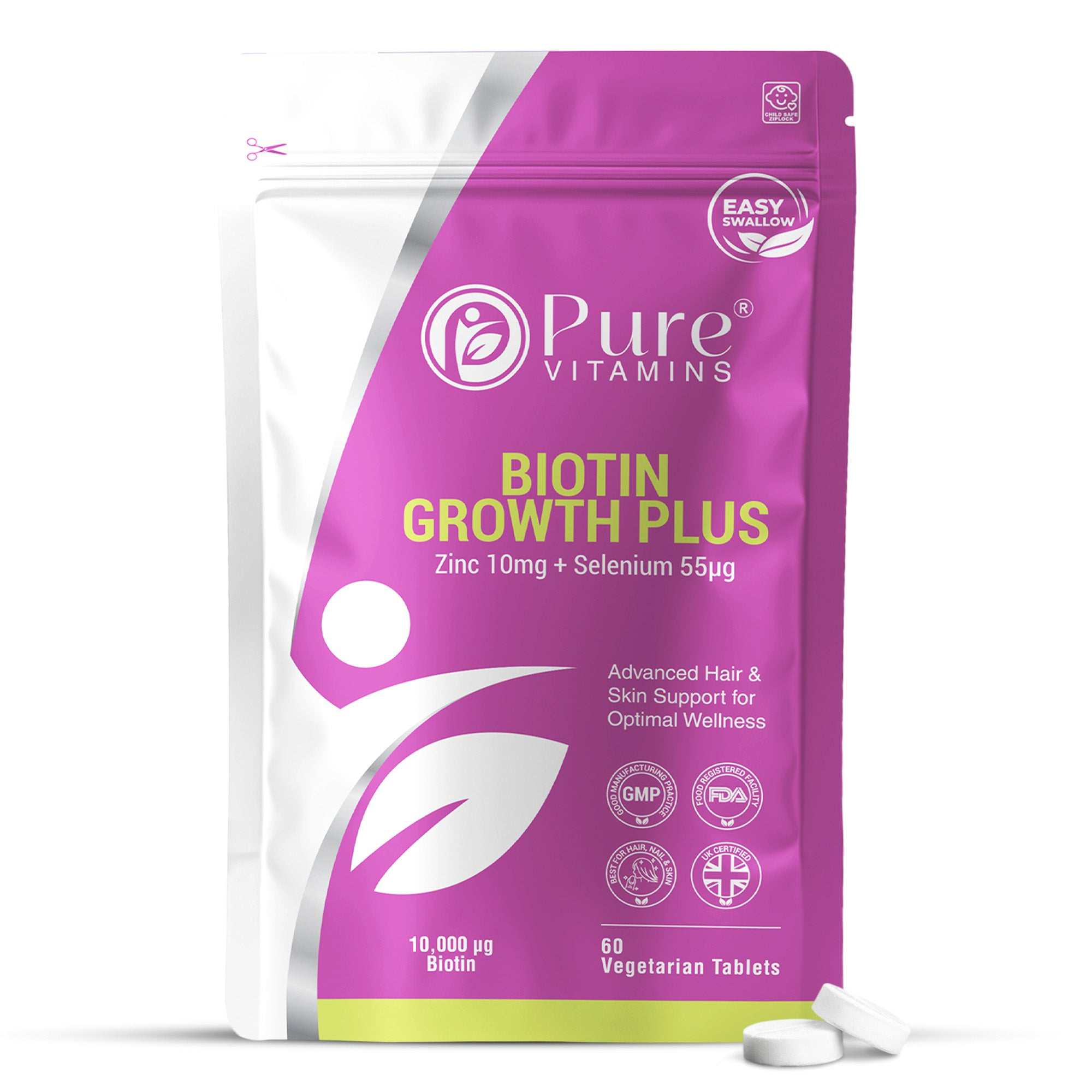
A well-designed tablet is not trying to megadose you. Our own formula provides high-strength biotin with 10 milligrams of zinc as zinc bisglycinate and 55 micrograms of selenium as selenomethionine, which keeps the two minerals comfortably within everyday territory while still giving a meaningful daily amount. If you want the deeper detail on biotin dosing specifically, I have written a full piece on how much biotin you actually need.
The selenium ceiling, and the hair-loss paradox
This is the single most important safety point in the whole topic, so I will be direct about it. Selenium is one of those nutrients where the gap between "helpful" and "too much" is smaller than people assume. EFSA sets a tolerable upper intake level for selenium of 255 micrograms a day for adults, and the UK's older expert guidance put a safe upper level around 450 micrograms a day from all sources. A 55 microgram tablet sits far below either figure, but stacking several selenium-containing products, or taking a poorly made one, is where people run into trouble.
There is a genuine and slightly cruel irony here. Take far too much selenium over time and one of the first signs is the very thing you were trying to support, because chronic selenium excess (selenosis) can cause hair loss and brittle, damaged nails, along with gastrointestinal upset and a garlic-like odour on the breath. According to PubMed, a case series from a US supplement with a serious formulation error, which delivered roughly 200 times the labelled selenium, documented exactly this pattern of hair loss, nail changes and stomach symptoms (Aldosary et al., 2011, DOI:10.3109/15563650.2011.641560), and an individual case of selenosis from a supplement told the same story (Sutter et al., 2008, DOI:10.7326/0003-4819-148-12-200806170-00015). The lesson is not to fear selenium. It is to keep to sensible amounts, choose a properly made product, and not layer multiple selenium sources on top of each other.
Selenium and your thyroid
Selenium contributes to normal thyroid function, and the thyroid is one of the most selenium-rich tissues in the body, so this is a fair and authorised thing to mention. That said, this is an area where balance genuinely matters, both too little and too much selenium can be unhelpful for thyroid health, which is another reason the sensible-dose message runs through everything here. If you have a known thyroid condition or take thyroid medication, take that as a reason to talk to your GP or pharmacist before adding selenium, rather than a reason to self-prescribe a high dose.
Absorption and timing: when to take them
The good news is that this trio is easy to take. My default advice is one tablet a day with food, which is gentler on the stomach, since minerals like zinc can occasionally cause mild nausea on an empty stomach. Consistency matters far more than clock-watching, because hair and nails grow on their own slow cycle, so think in terms of eight to twelve weeks of steady daily use rather than days.
There are a couple of spacing points worth knowing. Minerals can bind to certain medicines and reduce how well they are absorbed, so if you take levothyroxine for your thyroid, take it on its own and separate it from any mineral supplement by around four hours. Similarly, zinc can interfere with some antibiotics such as tetracyclines and quinolones, so leave a gap of a couple of hours around those. Iron and zinc also compete a little, so if you take a separate high-dose iron tablet, spacing them apart is tidier.

The blood-test quirk with high-strength biotin
This one deserves its own section because it genuinely catches people out, and it has nothing to do with safety and everything to do with accuracy. Many laboratory blood tests use a biotin-streptavidin binding step in their design, so if you have a lot of biotin in your blood from a supplement, it can skew the result, either falsely high or falsely low depending on the test. According to PubMed, high-dose biotin (above roughly 5 milligrams a day) can interfere with immunoassays including thyroid function tests, troponin (used to assess the heart) and some hormone tests, and the standard advice is to stop biotin for around 48 hours before testing (Gifford et al., 2018, DOI:10.1016/j.clinbiochem.2018.12.007; Dasgupta, 2022, DOI:10.1016/bs.acc.2022.03.005).
The practical takeaway is simple. If you take a high-strength biotin product and you have blood tests coming up, especially thyroid or cardiac tests, tell the person taking your blood that you take biotin and pause it for a couple of days beforehand. It will not harm you, but it can muddy an otherwise clear result.
A few cautions worth knowing
- Stick to sensible amounts of selenium and avoid stacking multiple selenium-containing products, given the upper limits above.
- Long-term high zinc (well above everyday amounts, generally north of 25 milligrams a day from supplements) can lower copper over time, which is why megadosing zinc is not a good idea. A 10 milligram daily amount is not in that territory.
- Medication spacing: separate minerals from levothyroxine, and from tetracycline or quinolone antibiotics, as described above.
- Pregnancy and breastfeeding, thyroid conditions, kidney disease, or any regular medication: check with your GP or pharmacist before starting.
- Blood tests: pause high-strength biotin for about 48 hours beforehand and mention it to your clinician.

What to realistically expect
My honest framing is this. Biotin, zinc and selenium help keep normal hair, skin and nails normal, and a combined tablet is a convenient way to cover three useful nutrients at once. If you were genuinely running low on any of them, topping up is where you are most likely to notice a difference, and the research points the same way. If your diet is already rich in these nutrients, a supplement is more about insurance than transformation. Either way, give it a proper run of a couple of months, because these tissues simply do not change overnight. For the wider picture of what supports these tissues, my guide to the best vitamins for hair, skin and nails puts it all in context, and you can browse everything in one place in our supplement guides hub.
Frequently asked questions
Is it safe to take biotin, zinc and selenium in one tablet every day?
Yes, at sensible amounts. There is no known interaction between the three, and everyday doses of each sit within safe limits. Take one tablet a day with food and keep to a single selenium source.
Can too much selenium cause hair loss?
Yes, chronically. Excess selenium over time (selenosis) can cause hair loss and brittle nails, which is the opposite of what most people are aiming for. This is why the dose matters and why you should not stack multiple selenium products.
Does biotin affect blood tests?
It can. High-strength biotin may skew certain lab tests, including thyroid and cardiac markers. Pause biotin for around 48 hours before a blood test and tell whoever takes your blood.
Should I take these with or without food, and when?
With food is best, mainly to keep zinc gentle on the stomach. The time of day barely matters. Consistent daily use over eight to twelve weeks matters far more. If you take levothyroxine, separate it from the minerals by about four hours.
Do I still need biotin if I am not deficient?
The visible benefits are clearest when you were short to begin with. If your diet already covers these nutrients well, a supplement is more of a safety net than a dramatic change. Think of it as maintaining normal hair, skin and nails rather than transforming them.
The bottom line
Selenium and biotin are safe to take together, and pairing them with zinc is a sensible, well-established approach to supporting normal hair, skin and nails in one daily tablet. Keep selenium within its limits, be mindful of the biotin blood-test quirk, space your minerals away from thyroid medication and certain antibiotics, and give it a couple of months of steady use. If you would like a single tablet that brings the three together in well-absorbed forms, take a look at our Biotin, Zinc and Selenium tablets. You might also find my guides on what supports normal nails, what zinc does for skin and nails and whether B12 or biotin is better useful, or start from our homepage.
Shop Biotin, Zinc & Selenium Tablets
Warmly,
Dr. Miron
Founder, Pure Vitamins UK
Food supplements should not be used as a substitute for a varied, balanced diet and a healthy lifestyle. This article is for general information and is not medical advice. If you are pregnant, breastfeeding, have a medical condition or take medication, speak to your GP or pharmacist before starting a supplement.

