


Reviewed and updated: 3 August 2026
Is micronised creatine better than monohydrate?
The honest answer is that micronised creatine is not better than monohydrate in any way that changes your results, because micronised creatine is creatine monohydrate. It is simply the same molecule milled into a much finer powder, so the only real difference is that it mixes more smoothly and tends to sit more comfortably. I am Dr. Miron, founder of Pure Vitamins UK, and this is the straight, practical answer to a question I get asked constantly, with the science, the dosing, and the one or two things that genuinely matter when you are choosing a tub.

The quick answer
- Are they different products? No. Micronised creatine is creatine monohydrate that has been ground into finer particles. Same molecule, same active ingredient.
- Is one more effective? No. The evidence base sits with creatine monohydrate, and micronising it does not change what it does in your muscles.
- So why pay attention to micronised? It dissolves more cleanly, feels less gritty, and is gentler for people who find coarse creatine sits heavy.
- The one thing to know: what matters far more than the word on the tub is an honest, full 5g dose of pure monohydrate, taken every day.
What micronised creatine actually is
Let us clear up the confusion first, because the marketing genuinely muddies it. "Micronised" is not a different type of creatine. It is a description of how the powder has been processed. Ordinary creatine monohydrate is milled down so its particles are far smaller, which is where the name comes from. The chemistry is untouched. You are still taking creatine monohydrate, molecule for molecule, just in a finer form that behaves better in a glass of water.
Think of it like caster sugar versus granulated sugar. Both are sugar and both sweeten your tea in exactly the same way, but the finer grind dissolves faster and feels smoother. Nobody would say caster sugar is a "better" sugar. It is simply easier to work with in certain situations. Micronised creatine is the same idea applied to a supplement.
And what "creatine monohydrate" means
Creatine monohydrate is creatine bound to a single molecule of water, and it is the form that has been studied more than any other by a wide margin. When you read about the benefits of creatine for strength, power and short bursts of hard effort, almost all of that research was done on plain creatine monohydrate. It is the reference standard the whole field is built on, which is exactly why it remains the sensible default.
Creatine itself is nothing exotic. Your body already makes it, mostly in the liver and kidneys, and you also get it from foods like red meat and fish. Most of it is stored in your muscles as phosphocreatine, where it helps top up the quick-burst energy your muscles use during heavy sets and sprints. A supplement simply tops those stores up more fully than diet alone usually manages. If you want the full picture of how it works, I have written a plain-English guide to what creatine is and how it works.
The one real difference: particle size
Here is the whole story of what micronising actually changes. The powder is milled so the individual particles are dramatically smaller, often cited as being around twenty times finer than standard creatine. Smaller particles have more surface area for water to get at, so the powder disperses more evenly and settles less. In practice that means three things you can actually feel:
- It mixes more smoothly, with less of that gritty layer clinging to the bottom of the shaker.
- It is easier to drink, because it stays suspended a little better rather than sinking into a lump.
- Some people find it easier on the stomach, since undissolved grit is part of what makes coarse creatine feel heavy for a minority of users.
That is genuinely it. Finer powder, nicer to mix and drink. What it does not change is how much creatine reaches your muscles or what happens once it gets there.

So is micronised creatine better than monohydrate?
On the thing that actually counts, no. Because micronised creatine is monohydrate, it delivers the same active compound, and the science backs this up rather than my say-so. According to a review retrieved from PubMed, creatine monohydrate is already extremely well absorbed, with close to 99% of an oral dose either taken up by muscle or passed in the urine, and the same paper found little to no evidence that any of the newer or reformulated versions of creatine are more effective or safer than plain monohydrate (Jager et al., 2011, DOI:10.1007/s00726-011-0874-6).
That is the honest crux of it. When a form of creatine is already absorbed at around 99%, there is very little room for a "better absorbing" version to add anything meaningful, because you cannot improve much on nearly complete. The wider expert consensus agrees that monohydrate is the reference form, and the International Society of Sports Nutrition position stand concluded, based on decades of research, that creatine monohydrate is the most effective and best studied form for increasing muscle creatine stores and supporting high-intensity performance (Kreider et al., 2017, DOI:10.1186/s12970-017-0173-z). Micronising that same monohydrate is a texture upgrade, not a performance upgrade.
So the fair way to describe the difference: micronised is not more effective, it is more pleasant to use. If gritty creatine has put you off in the past, the finer grind is a real quality-of-life improvement, and that is a perfectly good reason to choose it.
What the evidence base actually supports
It is worth being clear about what creatine genuinely does, because it is one of the few supplements with a properly strong evidence base and an authorised claim to match. According to a review retrieved from PubMed, supplementing with creatine expands the muscle's creatine pool, which improves the cell's ability to regenerate ATP, the fast energy currency your muscles burn through during short, intense effort (Wax et al., 2021, DOI:10.3390/nu13061915). In regulatory terms, the recognised wording is precise and I will use it exactly: creatine increases physical performance in successive bursts of short-term, high-intensity exercise, for adults doing high-intensity exercise, at 3g a day.
Notice what that says and what it does not. It is about performance in repeated short, hard efforts, the kind you get from lifting, sprinting and intervals. It is not a promise that a scoop of powder builds muscle on its own. Creatine helps you train a little harder and recover between sets a little better, and it is the training that drives the adaptation over time. Whether you buy micronised or standard monohydrate, this is the benefit you are buying into, and it is identical for both.
The bloating and water-weight myth
This is the fear that sends people hunting for a "better" form in the first place, so let me deal with it honestly. Creatine does pull a little extra water into the muscle cells, which is part of how it works, and a small early rise on the scales in your first week or two is usually that intracellular water rather than fat. That is not the same as the puffy, bloated look people worry about. A large evidence-based review retrieved from PubMed examined the common concerns around creatine, including water retention, cramping and stomach upset, and concluded that at sensible everyday doses the frightening version of these claims is not supported in healthy people (Antonio et al., 2021, DOI:10.1186/s12970-021-00412-w).
Where micronised creatine can genuinely help is at the milder end of stomach comfort. Because it dissolves more fully, there is less undissolved grit reaching your gut, which is often what people are really describing when they say coarse creatine made them feel heavy. If the scales jumping in week one has ever worried you, I have written a whole piece on why the number can rise early and why it is water, not fat, and a broader look at the common creatine myths worth ignoring.

How to take it, and how much
The good news is that dosing does not change one bit between micronised and standard monohydrate, because it is the same creatine. The widely studied maintenance dose is around 3 to 5g a day, every day. Our own tub is built around a full, transparent 5g serving, which sits comfortably in that researched range with a little headroom.
You will often see a "loading phase" mentioned, where you take a higher dose for the first week to saturate your muscles faster. It works, but it is optional. A steady 3 to 5g daily reaches the same full saturation within a few weeks, just more gradually, so most people are perfectly fine skipping loading entirely. I dig into the trade-offs in creatine loading, dosing and saturation, and cover the finer points of when to take it in creatine timing and usage. The short version on timing: it barely matters, so pick a moment you will remember and stick to it. Consistency beats clock-watching every time.
Practically, stir a level 5g scoop into 200 to 250ml of water, juice or your usual shake. This is exactly where the finer micronised grind earns its keep, because it disperses cleanly instead of leaving sludge at the bottom of the glass.
Purity matters more than the word "micronised"
If you take one buying lesson from this, let it be this: the label word matters far less than what is actually in the tub. A finely milled powder is only as good as the creatine it started as. Two things are worth checking before you spend your money.
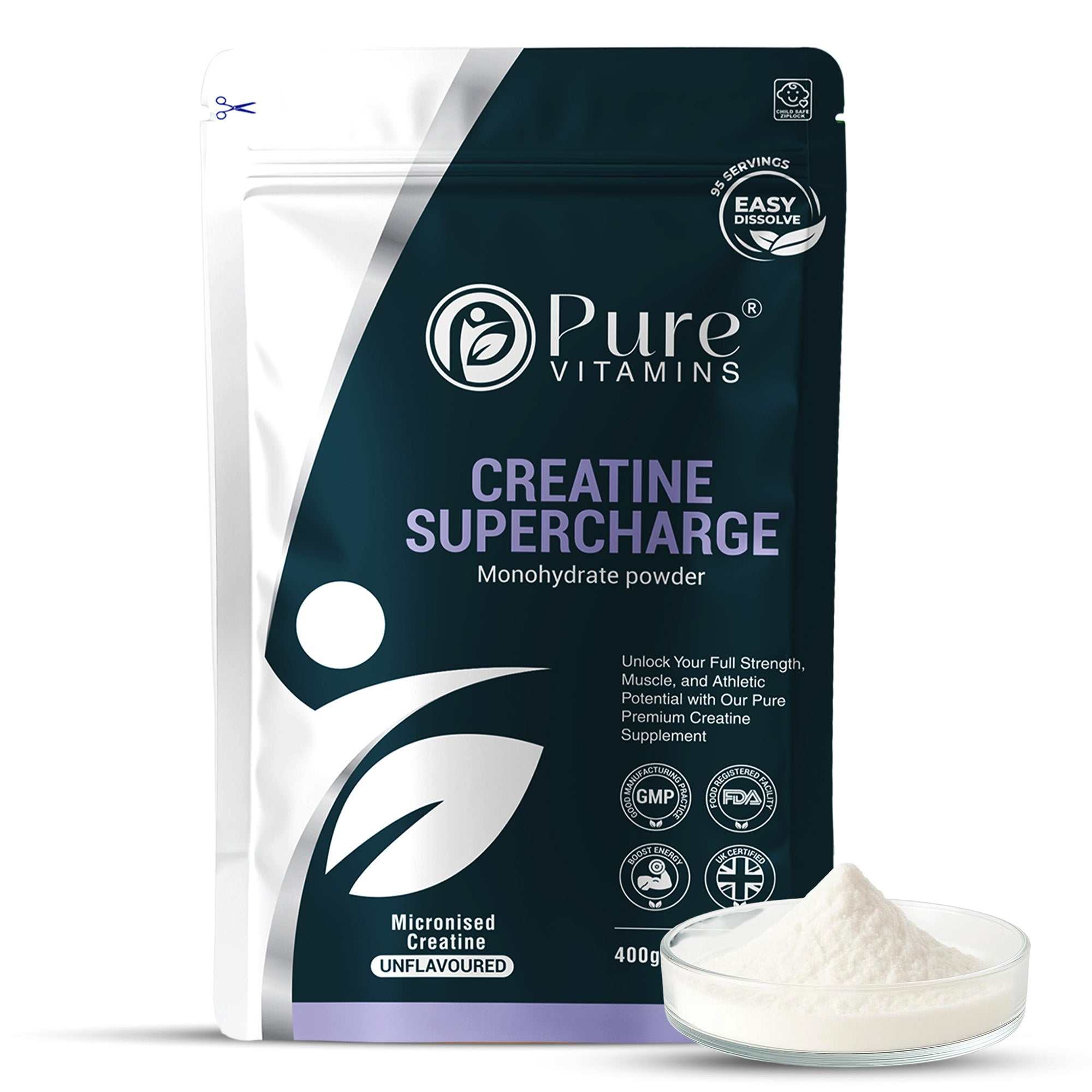
First, the dose. Some blends quietly provide only 2 to 3g per serving and lean on a "convenient" flavoured mix to disguise it. You want a full, honest amount, and our creatine gives a straight 5g of nothing but creatine, with no fillers, flavourings or anti-caking agents added to pad it out. Second, purity. Creatine is a processed ingredient, so how carefully it is made and checked genuinely matters. Ours is manufactured in a GMP-certified facility and tested for purity and heavy metals, which is the reassurance I would want as a buyer myself. It is also vegan-friendly, since the creatine is made synthetically rather than from any animal source.

Is micronised creatine more expensive?
Not necessarily, and this surprises people. Because micronising is just an extra milling step on ordinary monohydrate, it does not have to add much to the price, and plenty of micronised tubs sit at the same everyday price as coarse creatine. Where cost really varies is with the exotic, heavily marketed forms such as hydrochloride or buffered creatine, which often charge a premium for benefits the research has not shown over plain monohydrate. Our micronised creatine monohydrate is deliberately priced as an everyday staple, at around 80 full 5g servings per tub, which works out to roughly a two to three month supply. Fine powder should not mean a fancy price.
Which should you choose?
For almost everyone, plain creatine monohydrate is the right pick, and micronised monohydrate is the same right pick that happens to mix more nicely. Here is how I would decide:
- Choose micronised monohydrate if you have ever been put off by gritty, clumpy creatine, or you mix your creatine into water rather than a thick smoothie. The cleaner mix is a genuine everyday pleasure.
- Standard monohydrate is completely fine too if you do not mind a little texture and you tend to blend it into a shake anyway.
- Be wary of the "advanced" forms such as HCl, ethyl ester or buffered creatine that market themselves as superior. The evidence does not support paying more for them over monohydrate.
In other words, the meaningful choice is not micronised versus monohydrate at all, since they are the same thing. It is monohydrate versus the pricier novelty forms, and monohydrate wins on evidence and value. For a full run through every form side by side, see which type of creatine is best.
What to realistically expect
Whichever grind you choose, keep your expectations grounded and give it time. Creatine is not a stimulant, so you will not feel a hit when you take it. What it does is quietly top up your muscle stores over the first few weeks, after which you may notice you can squeeze out an extra rep or two on hard sets, or recover a touch faster between them. That edge, applied consistently to your training, is what adds up over months. It is a steady, reliable helper rather than a dramatic one, and that is exactly why it has earned its reputation.
A few cautions worth knowing
- Creatine is well tolerated in healthy adults at everyday doses, but if you have a kidney condition, or any ongoing health concern, check with your GP before starting.
- If you are pregnant or breastfeeding, or taking regular medication, have a quick word with your GP or pharmacist first.
- Drink normally and stay hydrated, especially if you train hard in the heat.
- If coarse creatine has upset your stomach in the past, taking a micronised version with food and plenty of water usually settles it.
Frequently asked questions
Is micronised creatine the same as creatine monohydrate?
Yes. Micronised creatine is creatine monohydrate that has been milled into a finer powder. It is the same molecule and the same active ingredient, just processed to mix more smoothly.
Does micronised creatine work better than monohydrate?
No. It does not raise your muscle creatine stores any more than standard monohydrate, because it is standard monohydrate. The benefit of micronising is smoother mixing and, for some people, better stomach comfort, not stronger results.
Is micronised creatine easier on the stomach?
It can be. Because the fine powder dissolves more fully, there is less undissolved grit reaching your gut, which is often what people mean when they say coarse creatine felt heavy. Taking it with food and enough water helps too.
How much micronised creatine should I take?
The same as any monohydrate: around 3 to 5g a day, taken consistently. A loading phase is optional and not required, since a steady daily dose reaches full muscle saturation within a few weeks.
Does micronised creatine cause less bloating?
Any early rise on the scales is usually water drawn into the muscle, not fat or puffiness, and that is the same for both forms. Micronised creatine can feel less heavy simply because it dissolves better, but it is not a different substance.
The bottom line
Micronised creatine is not better than monohydrate, because it is monohydrate, just milled finer so it mixes cleanly and sits more comfortably. The performance, the dosing and the science are identical, and creatine monohydrate remains the most researched, best value form for supporting physical performance in short, high-intensity bursts. So choose micronised for the smoother mix if grit has ever bothered you, insist on a full 5g dose of pure monohydrate, and take it every day. If you would like exactly that, our Micronised Creatine Monohydrate is a clean 5g serving with no fillers, made in a GMP-certified facility and tested for purity and heavy metals. You can also browse everything in one place in our supplement guides hub, or start from our home page.
Shop Micronised Creatine Monohydrate
Warmly,
Dr. Miron
Founder, Pure Vitamins UK
Food supplements should not be used as a substitute for a varied, balanced diet and a healthy lifestyle. This article is for general information and is not medical advice. If you are pregnant, breastfeeding, have a medical condition or take medication, speak to your GP or pharmacist before starting a supplement.

