


Reviewed and updated: 23 July 2026
Creatine loading, dosing and saturation: what you actually need to do
Here is the honest answer on creatine loading, dosing and saturation: loading is optional. You can take a higher dose for a week to fill your muscle stores quickly, or you can simply take a steady daily dose and reach the same fully saturated stores in about three to four weeks. Both roads arrive at the same destination.
I am Dr. Miron, and creatine is one of the most researched supplements in the world, so we can be refreshingly concrete about how to use it. Let me walk you through saturation, the loading protocol, the maintenance dose and how to take it.

The short version
- Loading (fast route): around 20 g a day, split into four 5 g doses, for 5 to 7 days, then drop to maintenance.
- No loading (steady route): 3 to 5 g a day from the start. Stores fill fully in about three to four weeks.
- Maintenance: 3 to 5 g every day, indefinitely, to keep your muscles saturated.
What saturation actually means
Your muscles store creatine as phosphocreatine, a rapid-fire energy reserve for short, hard efforts. Most people are not fully topped up from diet alone. Supplementing simply fills those stores to their ceiling, which is what we mean by saturation. Once you are saturated, more creatine does not help; you just maintain the level. According to PubMed, the International Society of Sports Nutrition position stand confirms that supplementation reliably raises intramuscular creatine and that this underpins the performance benefits seen in high-intensity exercise (Kreider et al., 2017, Journal of the International Society of Sports Nutrition).
This is also where the one authorised claim for creatine comes from: creatine increases physical performance in successive bursts of short-term, high-intensity exercise, at a daily intake of 3 g. That is the sprint-and-lift benefit, and saturation is how you unlock it.

Should you do a loading phase?
Loading is a convenience, not a requirement. If you want the effect as fast as possible, say before a training block or a season starts, load with about 20 g a day (four 5 g servings spread across the day) for five to seven days. You will be saturated within a week.
If you are not in a hurry, skip it. A steady 3 to 5 g a day reaches the same saturation point in roughly three to four weeks with less powder, less faff and a gentler experience for your stomach. For most people, I quietly recommend the steady route. The end result is identical.
The maintenance dose
Once saturated, 3 to 5 g a day keeps your stores full. Larger people or those with more muscle mass sit at the upper end; most people do well on a single 5 g scoop. There is no need to cycle on and off. The research supports continuous daily use, and stores gradually drift down if you stop.
Why micronised monohydrate
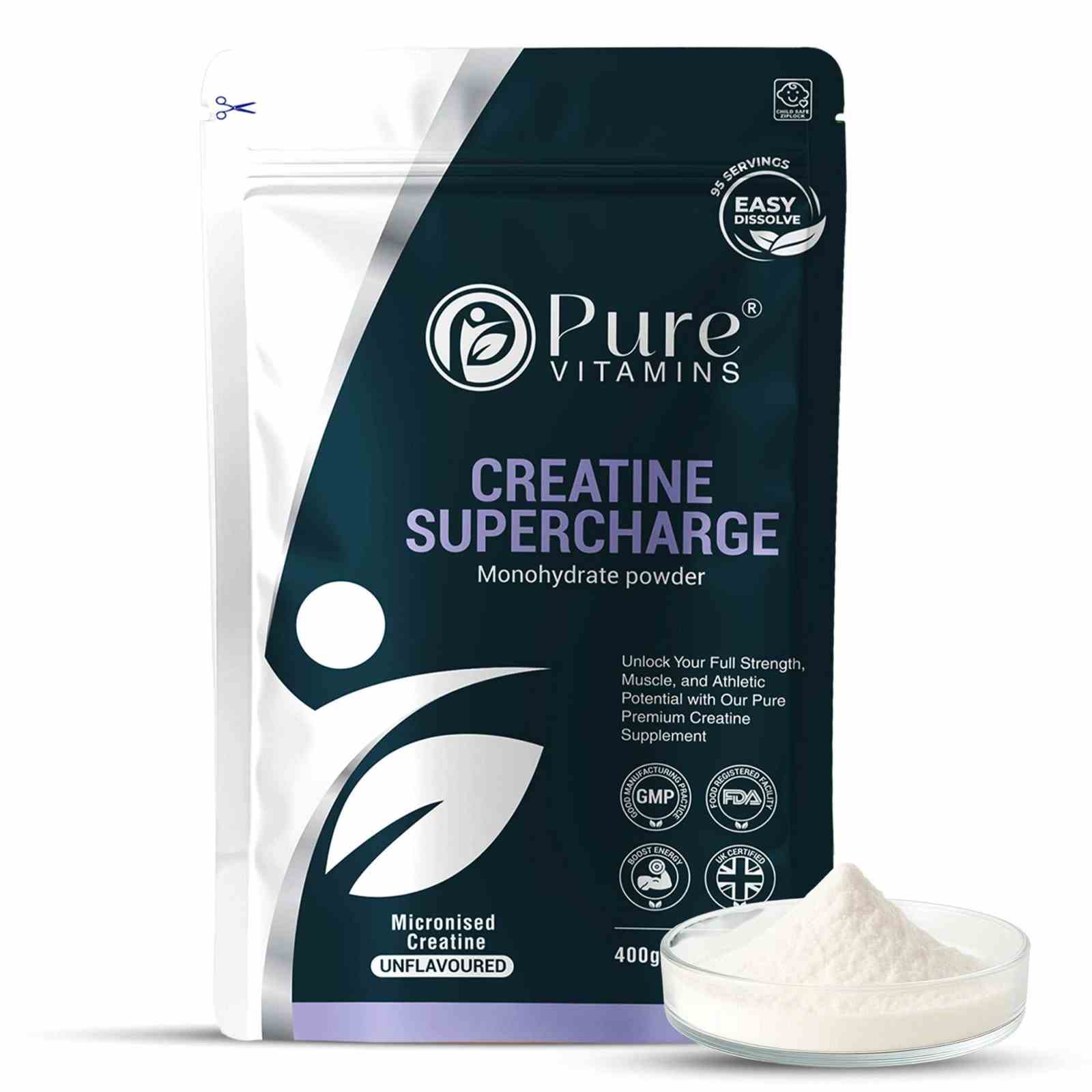
Creatine monohydrate is the form with by far the most evidence behind it, and it is what the position stand is built on. Micronised simply means the powder is milled finer, so it mixes more smoothly and is easier on the stomach than gritty older powders. If you have wondered whether that finer grind actually performs any better, I answer whether micronised creatine is any better than monohydrate. Our micronised creatine monohydrate gives a clean 5 g dose that stirs into water without clumping. If you want the fundamentals first, see what is creatine and how does it work. If you are weighing up the different forms, I compare them all in which type of creatine is best.

How to take it
- Mix it: stir 5 g into water, juice or a shake. Warm liquid dissolves it faster.
- Timing: it barely matters day to day, because the benefit comes from being saturated, not from a single dose. More on that in creatine timing.
- Stay hydrated: creatine draws a little water into muscle, so drink normally across the day.
- Be consistent: a missed day now and then is nothing to worry about; the daily habit is what keeps you topped up.
A few cautions worth knowing
Creatine monohydrate has an excellent safety record in healthy adults, with the position stand noting that even long-term use is well tolerated. The main niggle is mild stomach upset, which is far more likely during a high-dose loading week than on a steady 3 to 5 g. If that bothers you, skip loading. If you have kidney disease or are pregnant or breastfeeding, check with your GP before starting, and if you take regular medication, a quick word with your pharmacist is sensible.
Frequently asked questions
Do I have to load creatine?
No. Loading only fills your muscle stores faster. A steady 3 to 5 g a day reaches full saturation in about three to four weeks and works just as well.
How long does creatine take to saturate muscles?
About five to seven days with a loading protocol of roughly 20 g a day, or about three to four weeks on a steady 3 to 5 g daily dose.
What is the maintenance dose of creatine?
3 to 5 g a day, taken continuously. Most people do well on a single 5 g scoop; larger, more muscular individuals sit at the top of the range.
Do I need to cycle creatine on and off?
No. The research supports continuous daily use. If you stop, your stores simply drift back down over a few weeks.
Shop Micronised Creatine Monohydrate
Curious about the myths? Read creatine myths, honestly, or browse the full range on the Pure Vitamins UK home page.
Dr. Miron, Founder of Pure Vitamins UK
Food supplements are not a substitute for a varied, balanced diet and a healthy lifestyle.
