


Reviewed and updated: 23 July 2026
Creatine timing: when to take it, and why it barely matters
The honest truth about creatine timing is that it barely matters. Creatine works by keeping your muscles saturated with a rapid energy reserve, and that saturation builds up over days and weeks, not from any single well-timed dose. So the best time to take creatine is simply the time you will remember to take it every day.
I am Dr. Miron, and I know that is a slightly boring answer, so let me explain why timing is a footnote, where a tiny edge might exist, and how to handle rest days.

The short version
- The rule: take it daily and consistently. That matters far more than the clock.
- Any edge? a little evidence hints at a small advantage taking it near your workout, but the effect is minor and not settled.
- Rest days: still take your usual 3 to 5 g to keep stores topped up. The time of day is up to you.
Why timing barely matters
Creatine is not a stimulant or a pre-workout hit. Its benefit comes from your muscles being fully stocked with phosphocreatine, which happens once you have been supplementing for a week or a few weeks. Once you are saturated, a dose taken at 8am and a dose taken at 8pm do exactly the same job: they keep the tank full. According to PubMed, the International Society of Sports Nutrition position stand centres the benefit on raised intramuscular creatine and total daily intake rather than on precise timing (Kreider et al., 2017, Journal of the International Society of Sports Nutrition). This is also why the authorised claim, that creatine increases physical performance in successive bursts of short-term, high-intensity exercise, is tied to a daily 3 g intake, not to a magic window.

Is there a small edge to taking it after training?
A handful of studies have explored whether taking creatine close to a workout, particularly afterwards, offers a slight advantage, possibly because blood flow and nutrient uptake are elevated. The signal is small and the evidence is mixed, so I would treat it as a tie-breaker rather than a rule. If it is easy to have your creatine in a post-workout shake, do that. If it is not, do not lose a moment's sleep over it.
What about with food or carbs?
Taking creatine with a meal, especially one containing carbohydrate, may modestly help uptake, but again the effect is small. In practice, stirring 5 g into your morning coffee, a juice or a shake is perfectly fine. The convenience of a habit you keep beats a theoretically optimal dose you forget.
Rest days and consistency
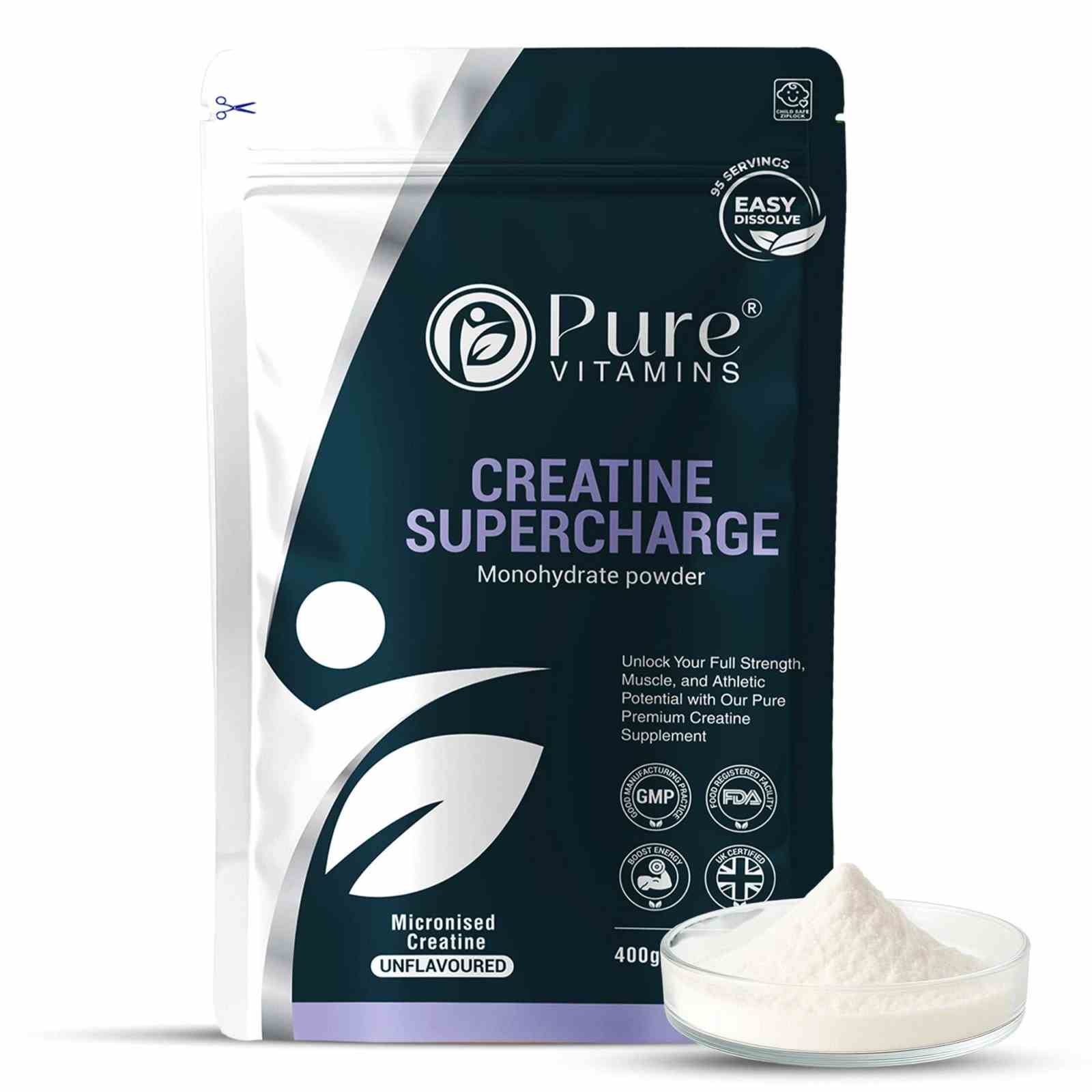
On days you do not train, still take your usual 3 to 5 g. You are maintaining saturation, not fuelling a session, so any time of day works. A missed day here and there will not undo your progress, because your stores deplete slowly, but the daily habit is what keeps you topped up. Our micronised creatine monohydrate mixes smoothly into any drink, which makes the daily routine easy to keep.

How to build the habit
- Anchor it: attach your creatine to something you already do daily, like your first coffee or your post-workout shake.
- Keep it visible: leave the tub and scoop by the kettle or in your gym bag.
- One scoop, done: 5 g stirred into liquid is the whole ritual. There is nothing to optimise beyond doing it.
If you are still deciding whether to load, see creatine loading, dosing and saturation.
A few cautions worth knowing
Creatine is well tolerated in healthy adults. Mild stomach upset is the most common complaint and is usually linked to high loading doses rather than a normal serving. If you have kidney disease, are pregnant or breastfeeding, or take regular medication, check with your GP or pharmacist first.
Frequently asked questions
When is the best time to take creatine?
Whenever you will remember it daily. Because the benefit comes from staying saturated, the exact time of day makes little practical difference.
Should I take creatine before or after a workout?
A little evidence hints at a small advantage taking it after training, but the effect is minor and not settled. If it is convenient, take it post-workout; if not, any time is fine.
Do I take creatine on rest days?
Yes. Take your usual 3 to 5 g on rest days to maintain saturation. The time of day does not matter.
Does it matter if I miss a day?
Not much. Your muscle stores deplete slowly, so an occasional missed day will not undo your progress. Just keep the daily habit going.
Shop Micronised Creatine Monohydrate
Curious about the rumours? Read creatine myths, honestly, or explore the range on the Pure Vitamins UK home page.
Dr. Miron, Founder of Pure Vitamins UK
Food supplements are not a substitute for a varied, balanced diet and a healthy lifestyle.
