


Reviewed and updated: 24 July 2026
What is a nootropic? An honest explainer
A nootropic is any substance people take in connection with focus, clarity or mental performance, but the honest answer is that "nootropic" is a popular category term, not proof of benefit. Calling something a nootropic does not mean it has been shown to sharpen your thinking. This explainer covers where the word comes from, what the research actually shows for the usual examples, and how to judge a "nootropic" supplement honestly rather than by the buzzword. For a closer look at one popular example, see lion's mane and focus: what the research says.

TL;DR
- What it is: an umbrella term for things associated with mental performance, from caffeine and L-theanine to certain herbs and mushrooms.
- Who it is for: anyone curious about "focus" supplements who wants to understand the label rather than the hype.
- Key idea: "nootropic" is a cultural and marketing category, not proof of benefit.
- How to judge one: ignore the buzzword and look at the actual ingredient, the dose, the form and the quality of the evidence.
Where the word comes from
"Nootropic" was coined in the 1970s from Greek roots meaning roughly "mind" and "to turn or bend". It was first used for specific compounds studied in relation to cognition. Over the following decades, especially within wellness and "biohacking" culture, the term broadened into a loose umbrella for anything people associate with focus and clarity: caffeine, the amino acid L-theanine, B vitamins, omega-3, creatine, and various herbs and mushrooms.
Why the label tells you very little
Here is the part that matters. "Nootropic" is a marketing and cultural category, not a scientific status. Describing an ingredient as a nootropic tells you where the culture files it, not whether it has actually been shown to help you think. Plenty of things get called nootropics on the strength of tradition, a mechanism, or a single small study, so the word on a label is a starting point for questions, never the answer. Treat it as a category descriptor and judge the ingredient itself.
What the research actually shows for common examples
The evidence behind popular "nootropics" is uneven, and honesty means saying so.
- Caffeine with L-theanine: this is one of the better-studied combinations in healthy people. A randomised crossover study in healthy volunteers found that 50 mg caffeine with 100 mg L-theanine improved speed and accuracy on a demanding attention-switching task and reduced susceptibility to distraction, more so than caffeine alone (Owen and colleagues, Nutritional Neuroscience, https://doi.org/10.1179/147683008X301513). These are short-term effects on test performance, not a lasting upgrade in intelligence.
- Lion's mane: research interest centres on its compounds (hericenones and erinacines). A small double-blind pilot in healthy young adults reported faster performance on a Stroop task 60 minutes after a single 1.8 g dose and a trend towards lower subjective stress over 28 days, but it also reported null and some negative findings and called for larger trials (Docherty and colleagues, Nutrients, https://doi.org/10.3390/nu15224842). Promising and worth watching, but far from settled.
- Others often listed: caffeine on its own reliably increases short-term alertness; omega-3 and creatine are studied for brain-related outcomes with mixed results; and B vitamins matter mainly when you are short of them. None of this makes any product a guaranteed "focus pill".

Prescription nootropics are a different category
It is worth separating supplements from medicines. Some substances discussed online as "nootropics", such as modafinil, are prescription-only medicines with specific medical uses and real side-effect profiles. They are not food supplements, should only be used under medical supervision, and are outside the scope of anything sold as a wellness product.
Where lion's mane fits the category
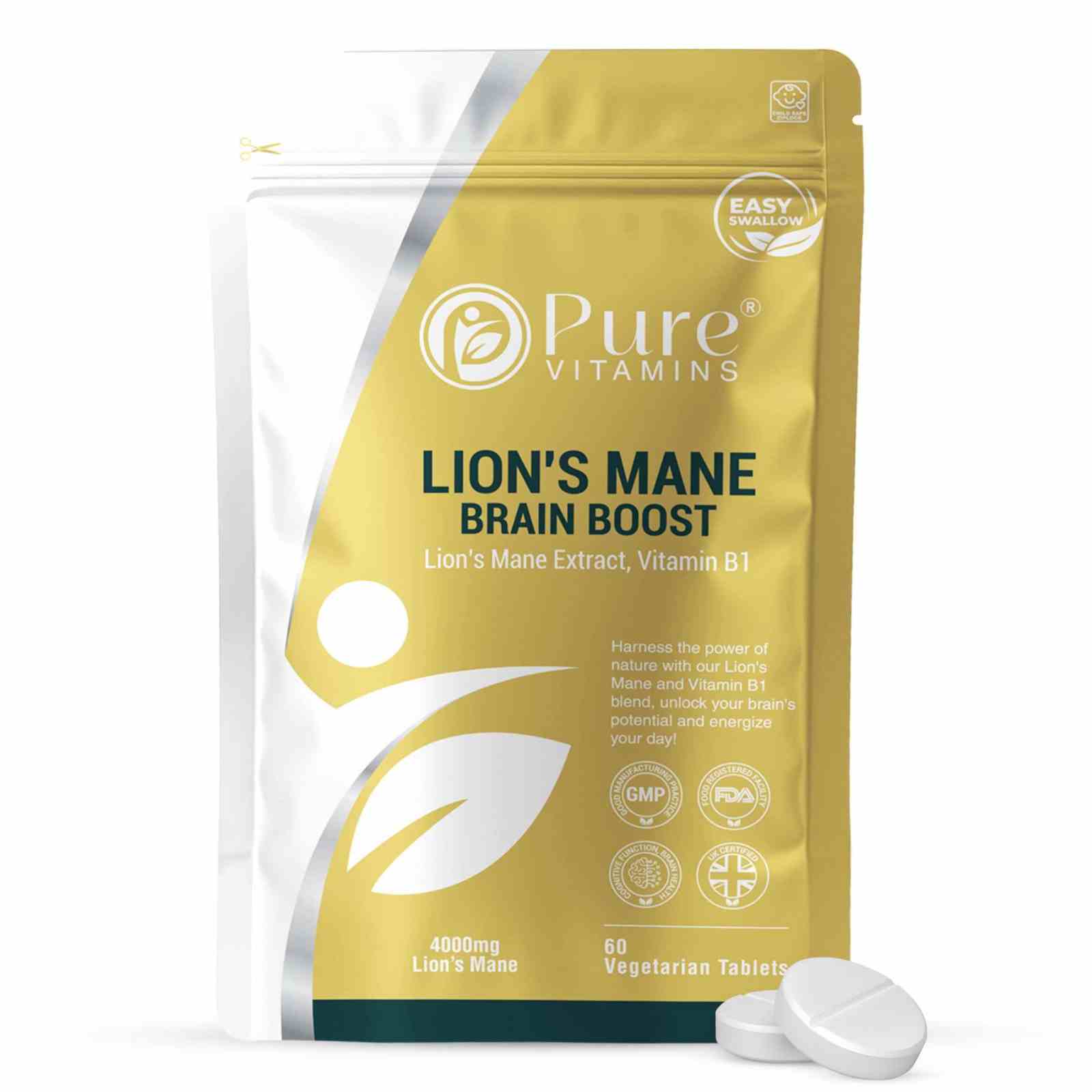
Lion's mane, a mushroom long valued as both food and tonic in East Asia, is grouped into the nootropic category mainly through that heritage and the ongoing research interest in its compounds, which we cover in what's in lion's mane. That is the honest basis for the association: tradition and research, not a proven-benefit promise. Our Lion's Mane 4000mg is a concentrated extract paired with vitamin B1 (thiamine), and the thiamine is a nice touch because it contributes to the normal functioning of the nervous system and to normal psychological function, giving the formula a genuine everyday role alongside the traditional mushroom. If you are weighing it up against the other herb that comes up most in this conversation, we put the two side by side in is lion mane better than ashwagandha.
How to judge a "nootropic" supplement
- Read past the buzzword: what is the actual ingredient and how much of it is in a daily dose?
- Check the form: for mushrooms, an extract with a stated ratio (such as 8:1) tells you more than vague "powder". Our lion's mane dosage and usage guide explains this.
- Demand evidence, not adjectives: look for cited studies in humans, and be sceptical of "clinically proven".
- Mind the basics: sleep, exercise and a decent diet move cognition far more than any single capsule.
A few cautions worth knowing
Caffeine-based products can cause jitteriness, a racing heart and disrupted sleep in sensitive people, and total daily caffeine matters. Pregnant and breastfeeding women should keep caffeine low and check any new supplement first. If you take medication, including for blood pressure, mood or sleep, or you have a health condition, speak to your GP or pharmacist before adding a "focus" supplement. For a calmer angle on mental wellbeing, see our guide to magnesium for stress and a busy mind.
The takeaway
"Nootropic" is a useful shorthand for things people associate with mental performance, but it is not proof of anything. Caffeine with L-theanine has the most consistent short-term evidence; lion's mane is an interesting, early-stage research story; and the rest is a mix. Judge any "nootropic" on its composition, dose and evidence rather than the label. For the deeper dive, read lion's mane and focus: what the research says, when to take lion's mane, or browse the full range on our home page.

Frequently asked questions
What is a nootropic in simple terms?
It is an umbrella term for substances people take in connection with focus, clarity or mental performance, such as caffeine, L-theanine, certain B vitamins and herbs or mushrooms. It is a category label, not a proven benefit.
Do nootropics actually work?
It depends entirely on the ingredient. Caffeine with L-theanine has reasonable short-term evidence for attention in healthy people, while many others are mixed or early-stage. "Nootropic" on a label is not evidence on its own.
Is lion's mane a nootropic?
It is commonly grouped into the category through its long heritage and research interest in its compounds. The honest basis is tradition and ongoing science rather than a proven benefit, so judge it on composition, extract quality and dose.
Are nootropics safe?
Food-grade ingredients are generally well tolerated, but caffeine can cause jitteriness and sleep problems, and prescription "nootropics" like modafinil are medicines, not supplements. If you are pregnant, breastfeeding, taking medication or have a health condition, check with your GP or pharmacist first.
Signed, Dr. Miron, Founder of Pure Vitamins UK. This article is for general information and education only and is not medical advice. Food supplements are not a substitute for a varied, balanced diet and a healthy lifestyle. If you are pregnant, breastfeeding, taking medication or living with a health condition, speak to your GP or pharmacist before starting a supplement.
