


If you are asking what magnesium is good for stress and a busy mind, the honest, practical answer is a gentle, well-absorbed form such as magnesium glycinate, taken to support normal nervous-system and psychological function, not as a treatment for anxiety. This guide explains what magnesium is genuinely recognised for, why it has become associated with calm, and how to choose, while being clear about what a supplement can and cannot do.
Reviewed and updated: 24 July 2026

What magnesium is good for stress and a busy mind
For everyday stress, gentle, well-absorbed magnesium glycinate is the sensible default. Magnesium contributes to the normal functioning of the nervous system and to normal psychological function, which is why it is popular with people managing day-to-day tension. But supporting normal nervous-system function is a long way from treating anxiety, and I will not blur that line.
TL;DR
- Best everyday form: magnesium glycinate, well absorbed and gentle on the stomach.
- What it is recognised for: normal nervous-system and psychological function, muscle function, and reduction of tiredness.
- What it is not: a treatment for anxiety; if anxiety affects daily life, please speak to your GP.
- Upper limit: 350 mg a day from supplements (to avoid loose stools); food magnesium is separate.
- If anxiety affects daily life: speak to your GP; effective, evidence-based help exists.
Magnesium is not a treatment for anxiety
Let me be straight, because it matters. Magnesium is not a treatment for anxiety. Anxiety is a real health condition, and if you are struggling with persistent anxiety the most useful step by far is to speak to your GP, where genuinely effective options exist that a supplement is not a substitute for. What magnesium genuinely does is contribute to the normal functioning of the nervous system, normal psychological function, normal muscle function and the reduction of tiredness and fatigue. That is why people include it in a general self-care routine, and it is worth keeping those two things clearly apart.
Why magnesium gets associated with calm
Magnesium is a cofactor in hundreds of enzyme reactions and is involved in normal nerve and muscle signalling, and a low intake is fairly common, which is part of why people reach for it. The research is best read as supportive of correcting a shortfall rather than as a calming drug. In healthy active adults, magnesium bisglycinate shifted heart-rate-variability toward a calmer, more vagal profile (Brilla et al., 2010, DOI), and in stressed but otherwise healthy adults with low magnesium, supplementation (especially with vitamin B6) improved self-reported stress scores over eight weeks (Noah et al., 2021, DOI). These describe how the mineral behaves in people who were low; they are not a promise of a result.

Which form, if you are choosing one?
For everyday use, a well-absorbed, gentle form is the sensible choice.
- Magnesium glycinate is the form most people choose for daily use: well absorbed and gentle on the stomach. The glycine it is bound to is itself an amino acid some people associate with calm, though the key practical point is tolerability, and a pilot study reported good tolerance with no diarrhoea (DiSilvestro et al., 2013, DOI).
- Magnesium citrate is also well absorbed but can have a laxative effect at higher doses, which some find less suitable for daily use.
- Magnesium oxide is poorly absorbed; a bioavailability review found it less suitable than citrate and chelated forms (Merschmann et al., 2025, DOI).
So if you are choosing magnesium to support normal nervous-system and psychological function as part of managing everyday stress, a gentle, well-absorbed glycinate is the practical default. See the full comparison in glycinate vs citrate and which magnesium is gentlest on the stomach.
How much, and the upper limit
The magnesium nutrient reference value on UK labels is 375 mg. Crucially, supplemental magnesium has a separate guidance upper level of 350 mg a day, set because higher supplemental doses tend to cause loose stools; this does not apply to the magnesium naturally present in food. So a sensible daily supplement sits around the NRV, and chasing very high doses for a stronger calming effect is neither supported nor comfortable. Timing is flexible; many people prefer the evening, which we cover in when to take magnesium glycinate. There is more detail in what's actually in a natural sleep supplement.

Magnesium-rich foods and signs of a low intake
Food first is always reasonable. Magnesium is found in leafy greens, nuts and seeds, wholegrains, beans, dark chocolate and oily fish. A genuinely low magnesium intake can show up as muscle cramps or twitches, fatigue and poor sleep, though these overlap with many other causes and are not proof on their own. A supplement is most logical when the diet is limited or intake is low, rather than as a default for everyone.
Interactions and who should be cautious
Magnesium is generally well tolerated, but it can reduce the absorption of certain antibiotics (such as tetracyclines and quinolones) if taken at the same time, so space them apart. People with significant kidney disease should only take magnesium under medical advice, as the kidneys clear excess. If you are pregnant, breastfeeding, taking medication or managing a health condition, speak to your GP or pharmacist before starting a supplement. If you also use ashwagandha in your routine, see magnesium and ashwagandha.
When to seek help instead
Please take this part seriously. If anxiety is affecting your daily life, your sleep, your relationships or your work, that is worth a conversation with your GP rather than a supplement. Effective, evidence-based help exists. Magnesium can be part of looking after yourself generally, but it is not a treatment, and reaching for support is a sign of strength, not failure.

Where Pure Vitamins fits
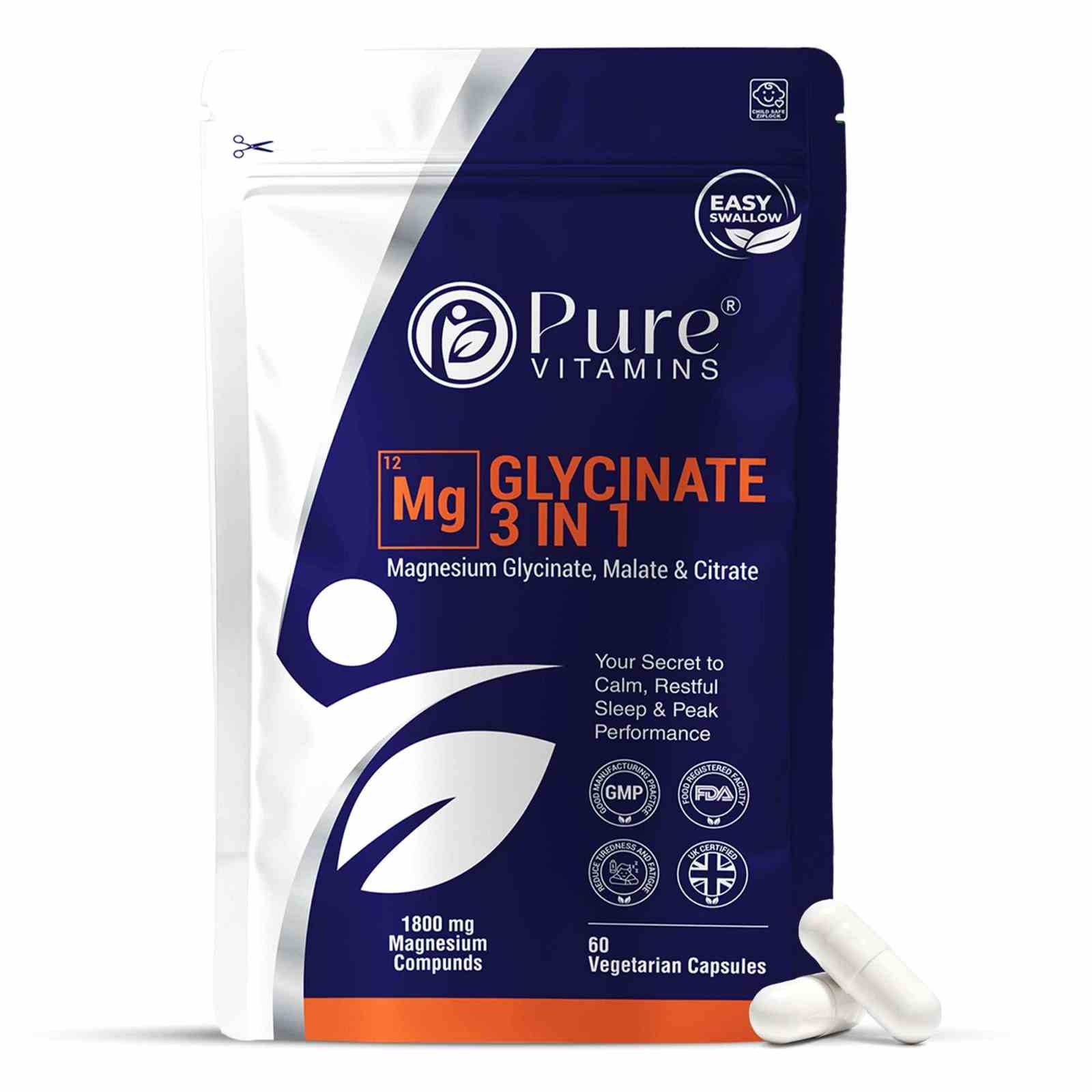
Our Magnesium Glycinate 3-in-1 uses gentle, well-absorbed magnesium glycinate alongside two others; magnesium contributes to the normal functioning of the nervous system and to normal psychological function. It is formulated in the UK and tested for purity and heavy metals at our GMP-certified facility, with every dose declared on the label. For form choice, see the best magnesium for an evening routine, or browse the range on the Pure Vitamins UK home page.
Frequently asked questions
Does magnesium help with anxiety?
Magnesium is not a treatment for anxiety. It contributes to normal nervous-system and psychological function, which is why many people include it in a self-care routine. If anxiety affects your daily life, please speak to your GP.
Which magnesium do people choose for everyday stress?
A gentle, well-absorbed form like glycinate is the usual choice for daily use, because it is kind to the stomach and absorbed well.
Is magnesium glycinate calming?
Magnesium contributes to normal nervous-system and psychological function; it is not a sedative or a treatment. Many people include it in a general self-care routine rather than expecting a drug-like effect.
When should I see a doctor about anxiety?
If anxiety is affecting your sleep, work, relationships or daily life, please speak to your GP. Effective, evidence-based help is available.
Sources retrieved from the published literature; see linked DOIs above. Study findings are paraphrased as science. This article is for general information, not medical advice. If you are struggling with anxiety, please speak to your GP. Food supplements should not be used as a substitute for a varied, balanced diet and a healthy lifestyle. If you are pregnant, breastfeeding, taking medication or managing a medical condition, speak to your GP or pharmacist before starting a new supplement. Signed, Dr. Miron, Founder of Pure Vitamins UK.
