


Magnesium and ashwagandha are two of the most popular additions to an evening routine, and the question I get asked most is whether you can take them together. For most healthy adults the answer is yes. It helps to know that you are pairing an essential mineral that genuinely supports normal muscle and nervous-system function with a root that has been central to Ayurveda for well over two thousand years, traditionally taken to help people feel calm and grounded. This guide explains sensible doses and who should be careful. We also look at taking ashwagandha and L-theanine together and the best things to pair with ashwagandha.
Reviewed and updated: 24 July 2026

Magnesium and ashwagandha: can you take them together?
For most healthy adults, magnesium and ashwagandha are commonly taken together, and many evening routines combine them. The sensible rules apply: follow the dose on each label, do not exceed recommended amounts, and check with your GP or pharmacist first if you are pregnant, breastfeeding, taking medication or managing a health condition, because ashwagandha in particular is not recommended in pregnancy.
TL;DR
- Magnesium: an essential mineral that contributes to normal muscle and nervous-system function, normal psychological function and the reduction of tiredness and fatigue.
- Ashwagandha: a root long used in Ayurveda, traditionally taken to help people feel calm and grounded.
- Together: generally fine for healthy adults; follow each label and do not double up on magnesium.
- Upper limit: supplemental magnesium has a guidance limit of 350 mg a day to avoid loose stools (food magnesium is separate).
- Caution: avoid ashwagandha in pregnancy; check with a clinician if on thyroid, sedative or other medicines.
A mineral and a traditional herb, side by side
It helps to be precise about what each one is. Magnesium is an essential mineral your body relies on for hundreds of reactions; it contributes to normal muscle function, the normal functioning of the nervous system, normal psychological function, electrolyte balance and the reduction of tiredness and fatigue. Ashwagandha (Withania somnifera) is a small evergreen shrub whose root has been a cornerstone of Ayurvedic practice for over two thousand years, traditionally reached for during demanding, tiring periods to help the body feel steady and calm. So when people stack the two, they are pairing a well-understood mineral with a herb valued for its long heritage.
What the research says about magnesium
Magnesium itself is reasonably well studied. A randomised study in stressed but otherwise healthy adults with low magnesium found that magnesium supplementation, especially combined with vitamin B6, improved stress and anxiety scores over eight weeks (Noah et al., 2021, DOI). In healthy active adults, magnesium bisglycinate shifted heart-rate-variability measures toward a calmer, more vagal profile (Brilla et al., 2010, DOI). These are honestly modest findings, most relevant to people who were low to begin with, and they describe how the mineral behaves rather than promising a result from any product. On the ashwagandha side, the picture is traditional use plus early, ongoing research.

Why people pair them in an evening routine
Both have become associated with the wind-down part of the day. Magnesium contributes to normal muscle and nervous-system function and normal psychological function; ashwagandha is traditionally taken in the evening by many people to help them feel settled. The honest framing is that they are two popular components of a calm evening routine, best taken alongside the things that genuinely matter for rest: consistent sleep timing, winding down off screens, and managing stress at the source. Neither is a sleeping pill. For form choice, see best magnesium for an evening routine and the deeper dive in magnesium for stress and a busy mind. There is more detail in what's actually in a natural sleep supplement.
How much, and the magnesium upper limit
Magnesium from supplements has a UK guidance upper level of 350 mg a day, set because higher supplemental doses tend to cause loose stools; this is separate from the magnesium you get in food, which does not carry the same limit. Well-absorbed, gentle forms such as glycinate are less likely to cause that effect than poorly absorbed forms like oxide, which a bioavailability review confirms is poorly absorbed compared with citrate and chelated forms (Merschmann et al., 2025, DOI). For ashwagandha, follow the serving on the product; more is not better. If you take both, you are not at risk of doubling magnesium unless both products contain it, so always read the labels.
Interactions and who should be cautious
Ashwagandha is the one to be careful with. It is not recommended in pregnancy or breastfeeding, and people taking thyroid medication, sedatives, immunosuppressants or diabetes or blood-pressure medicines, or with a liver condition or autoimmune disease, should speak to a clinician first, as rare reports of liver issues exist. Magnesium can interact with certain antibiotics and is used with care in significant kidney disease. When in doubt, check with your GP or pharmacist before combining supplements. For timing, see when to take ashwagandha.

If you would rather keep it simple
You do not need both. If you want an essential mineral with recognised roles in nervous-system and muscle function, magnesium alone is a sound, well-studied choice. If you are drawn to the traditional-herb side, ashwagandha can be taken on its own. Plenty of people use just one; the more-is-better instinct does not apply here. Compare forms in magnesium glycinate vs citrate.
Where Pure Vitamins fits
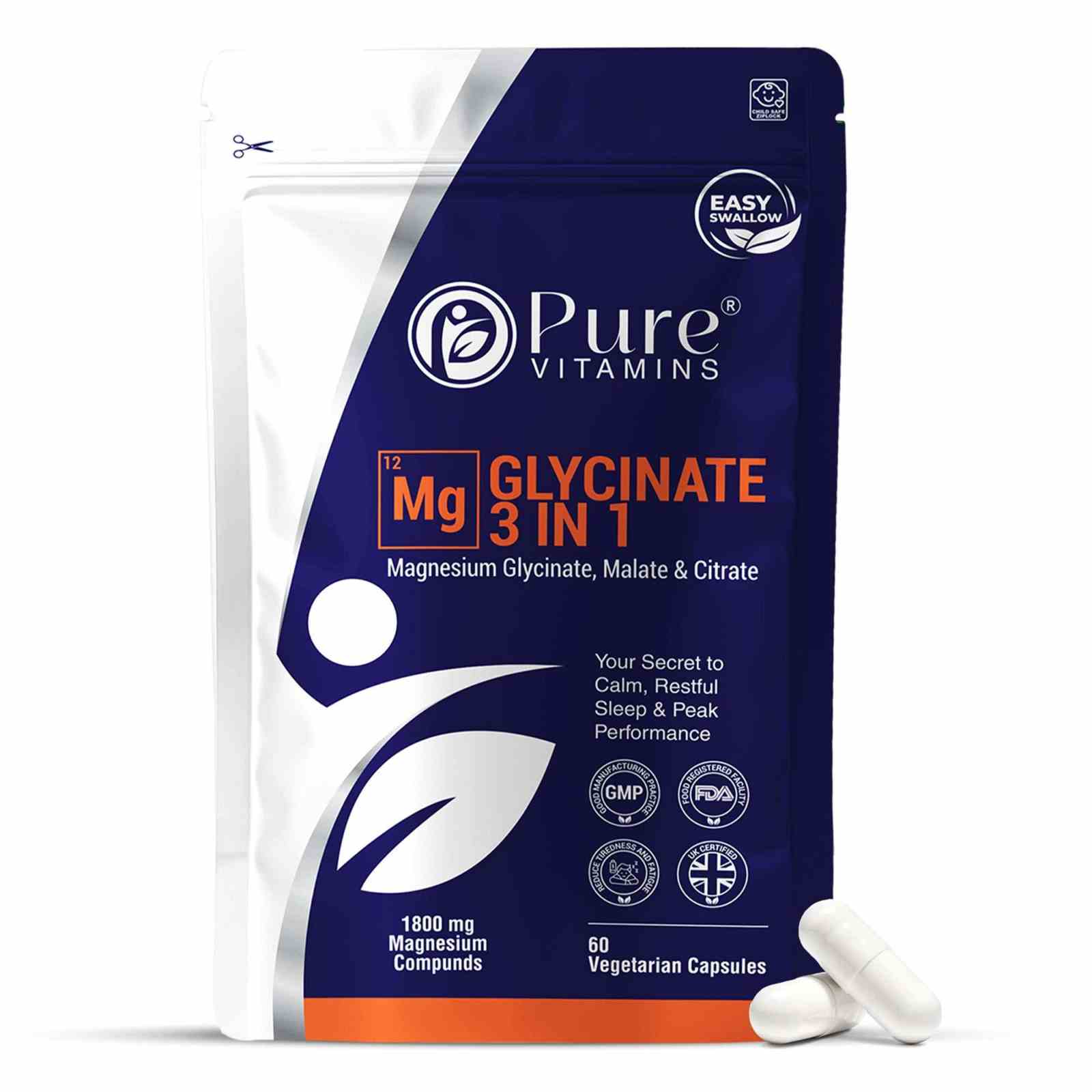
Our Magnesium Glycinate 3-in-1 uses the gentle, well-absorbed glycinate form alongside two others; magnesium contributes to the normal functioning of the nervous system and normal psychological function. If you would like to explore the herb side, our KSM-66 Ashwagandha pairs ashwagandha root extract with L-theanine and vitamin B6, and vitamin B6 contributes to normal psychological function and the normal functioning of the nervous system. Both are formulated in the UK and tested for purity and heavy metals at our GMP-certified facility. Browse everything on the Pure Vitamins UK home page. We cover the pairing more fully in why L-theanine is added to ashwagandha.

Frequently asked questions
Can you take magnesium and ashwagandha together?
For most healthy adults they are commonly taken together. Follow each label, do not exceed recommended doses, and check with your GP or pharmacist if pregnant, breastfeeding, on medication or managing a condition. Ashwagandha is not recommended in pregnancy.
Which is better, magnesium or ashwagandha?
They are different. Magnesium is an essential mineral that supports normal muscle and nervous-system function; ashwagandha is a root long valued in Ayurveda for helping people feel calm. Many people use one or the other, and some use both. For a side-by-side, see is ashwagandha KSM-66 better than magnesium.
How much magnesium is too much?
Supplemental magnesium has a UK guidance upper level of 350 mg a day, mainly because higher doses cause loose stools. Magnesium from food is separate and not capped in the same way.
When do people take them?
Both are popular in an evening routine. Follow the dose on each product, and remember that sleep timing and winding down matter more than any single supplement.
Sources retrieved from the published literature; see linked DOIs above. Study findings are paraphrased as science. This article is for general information, not medical advice. Food supplements should not be used as a substitute for a varied, balanced diet and a healthy lifestyle. Ashwagandha is not recommended during pregnancy. If you are pregnant, breastfeeding, taking medication or managing a medical condition, speak to your GP or pharmacist before starting a new supplement. Signed, Dr. Miron, Founder of Pure Vitamins UK.
