


Magnesium glycinate vs citrate: what is the difference?
Magnesium glycinate vs citrate really comes down to comfort and use. Both are well-absorbed forms of magnesium, but glycinate is gentler on the stomach and suited to comfortable daily or evening use, while citrate can have a mild laxative effect at higher doses, which is why it is sometimes chosen for occasional constipation. Whichever you pick, you are getting a good form of an essential mineral. The difference is in how they feel to take and what people use them for. For a buyer's guide, see what to look for in a magnesium supplement before buying.
Reviewed and updated: 23 July 2026

TL;DR
- Both: well-absorbed forms of magnesium, which contributes to normal muscle and nervous-system function and the reduction of tiredness and fatigue.
- Glycinate: gentle on the stomach, a popular choice for comfortable daily and evening use.
- Citrate: also well absorbed, but can be mildly laxative at higher doses, which suits some people and puts others off.
Both are well-absorbed forms of magnesium
First, the reassuring part. Both magnesium glycinate and magnesium citrate are well absorbed, and both deliver magnesium, which contributes to normal muscle function, the normal functioning of the nervous system, normal psychological function, normal energy-yielding metabolism, and the reduction of tiredness and fatigue. Based on a human crossover study retrieved from PubMed comparing several magnesium formulations, the organic, chelated and citrate forms were better taken up than magnesium oxide (Brilli et al., 2018, DOI). So whichever of glycinate or citrate you choose, you are in good company on absorption; the real difference is tolerability and use. Many people reach for glycinate for a calmer evening, and while the evidence there is still developing, a systematic review retrieved from PubMed found magnesium supplementation was suggestive of a benefit for subjective anxiety in vulnerable groups, though it noted the quality of studies was poor (Boyle et al., 2017, DOI). We look at that use in magnesium for stress and a busy mind.
Magnesium glycinate
Magnesium glycinate, sometimes called bisglycinate, is magnesium bound to the amino acid glycine. Its practical advantages are that it is gentle on the stomach, being one of the least likely forms to cause digestive upset, which makes it well suited to daily and evening use; it is well absorbed, as the glycine binding helps uptake; and it is popular for evening routines precisely because it is gentle and well tolerated. We look at the evening angle in best magnesium for sleep, and if those two names on the shelf have ever confused you, our guide to magnesium glycinate compared with bisglycinate explains why they describe the same compound.

Magnesium citrate
Magnesium citrate is magnesium bound to citric acid. It is a well-absorbed, widely available form. Its distinguishing feature is that it can have a laxative effect at higher doses, because it draws water into the gut, which is why it is sometimes used specifically for occasional constipation. For some people that is a genuine plus; for others taking magnesium nightly, it is a reason to prefer glycinate. We cover comfort in detail in which magnesium is gentlest on the stomach.
So which should you choose?
A simple way to decide. For comfortable daily or evening use, magnesium glycinate is usually the better pick, being gentle, well absorbed and easy to take consistently. If you also tend toward occasional constipation, citrate's mild laxative effect might suit you, though that same effect puts others off. Either way, check the elemental magnesium per serving (the actual magnesium content) rather than the weight of the compound, since that is what varies between products. For most people who simply want a comfortable, well-absorbed daily magnesium, glycinate is the sensible default. If you like to pair magnesium with other evening staples, see taking magnesium and ashwagandha together.

How much magnesium, and the upper limit
The daily reference intake for magnesium is around 375 mg, and most well-formulated supplements sit near that. Worth knowing: European food-safety guidance sets a tolerable upper level of 250 mg of magnesium a day from supplements specifically (separate from food), largely because higher supplemental doses are what tend to loosen the stool. That threshold is more relevant to citrate than glycinate. Food magnesium is not subject to that limit.
Natural food sources and signs of low magnesium
Magnesium is found in leafy greens, nuts and seeds (pumpkin seeds and almonds are especially rich), wholegrains, legumes, and dark chocolate. Modern diets can run a little short, and low intake can show up as muscle cramps or twitches, tiredness, and poor sleep, though these are non-specific. A supplement is a simple way to top up on top of a good diet rather than replace it.
A few cautions worth knowing
For most healthy adults, magnesium at sensible doses is well tolerated, with the laxative effect (more likely with citrate) being the most common issue. People with reduced kidney function should not take magnesium supplements without medical advice, since the kidneys clear excess magnesium. If diet matters to you, check whether the capsule is suitable for vegetarians or vegans, and if you are pregnant, breastfeeding, taking medication or managing a condition, speak to your GP or pharmacist first.
Where Pure Vitamins fits
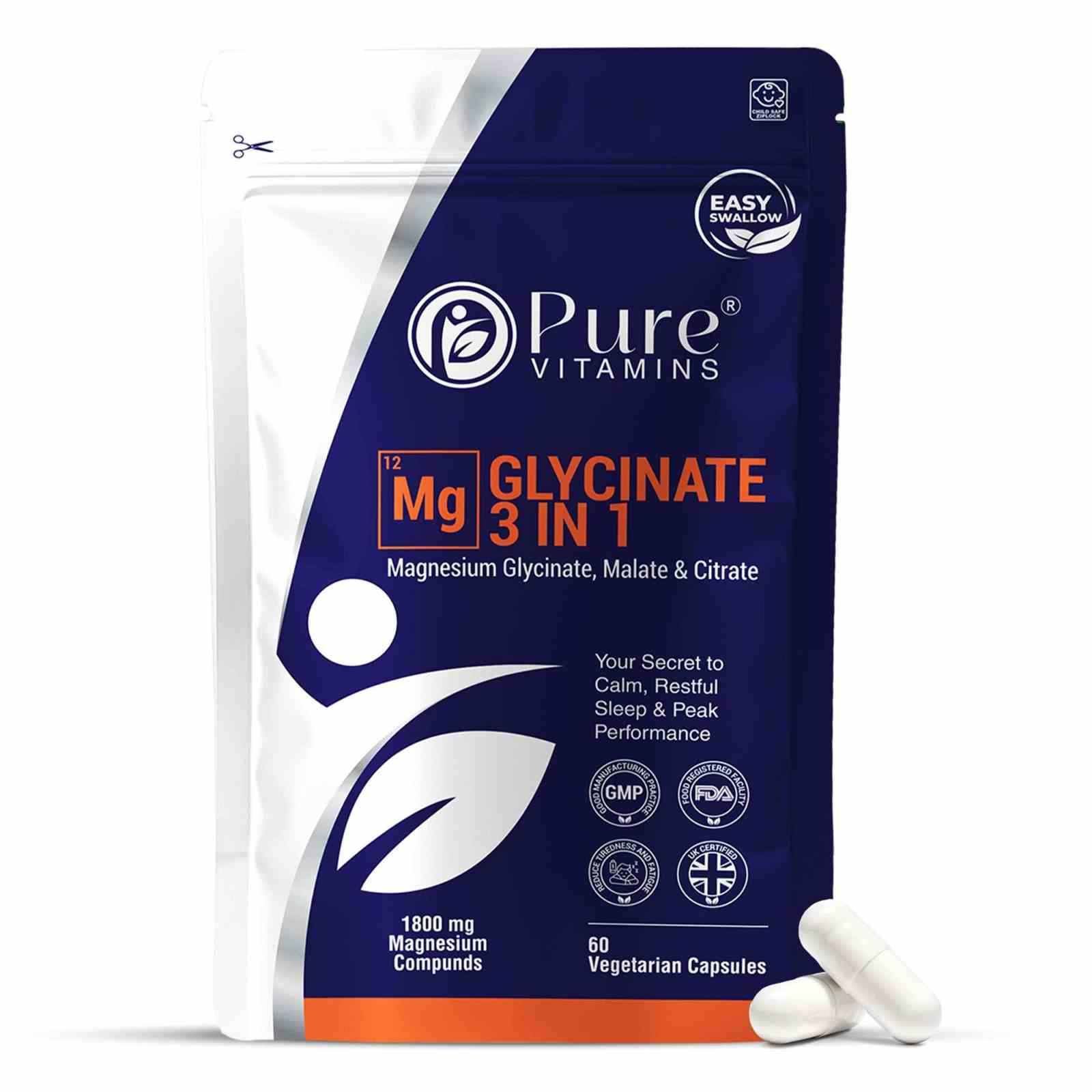
Our Magnesium Glycinate 3-in-1 is built around the gentle, well-absorbed glycinate form, as a triple-form complex delivering 384mg of elemental magnesium per serving in vegetarian capsules. Magnesium contributes to normal muscle function, the normal functioning of the nervous system and normal psychological function. Every dose is declared on the label, and it is Formulated in the UK and tested for purity and heavy metals at our GMP-certified facility, with a Certificate of Analysis available on request. For the bigger picture, see what a 3-in-1 magnesium is, or browse the range on our Pure Vitamins UK home page.
View Magnesium Glycinate 3-in-1

Frequently asked questions
Is glycinate or citrate better? Neither universally. Both are well absorbed. Glycinate is gentler and better for comfortable daily use; citrate can have a mild laxative effect that suits some people and not others.
Which magnesium is gentlest on the stomach? Magnesium glycinate is one of the gentlest, which is why it is popular for daily and evening use.
Does magnesium citrate cause loose stools? At higher doses it can, because it draws water into the gut, which is why it is sometimes used for occasional constipation.
Which is better for an evening routine? Most people prefer glycinate at night for its gentleness and tolerability.
Food supplements should not be used as a substitute for a varied, balanced diet and a healthy lifestyle. People with reduced kidney function should seek medical advice before taking magnesium. If you are pregnant, breastfeeding, taking medication or managing a medical condition, speak to your GP or pharmacist before starting a new supplement.
Dr. Miron, Founder of Pure Vitamins UK.
