

Lion's mane dosage: ratios, timing and daily use
On lion's mane dosage, the most useful thing to know is that the form matters as much as the milligrams. Look for a stated extract with a ratio (such as 10:1), ideally from the fruiting body, check whether a figure is extract weight or raw equivalent, and take it daily with food at a time that suits you. Get those right and the number on the front of the pack finally makes sense.
Reviewed and updated: 23 July 2026

Lion's mane (Hericium erinaceus) has been eaten and brewed in East Asia for centuries, prized both as a delicacy and as a traditional tonic long valued for supporting focus and mental clarity. That heritage is part of why it is so popular today. But because supplement labels are inconsistent, working out how much you are actually getting takes a little decoding, which is what this guide is for.
TL;DR
- What to look for: a stated extract ratio (like 10:1), the fruiting body named, and ideally a beta-glucan figure.
- How to read the number: check whether a big milligram figure is extract weight or raw-mushroom equivalent. They are not the same.
- When to take it: daily, with food, at whatever time you will keep to. It is not a stimulant, so timing is not a sleep issue.
Why dosage is hard to compare across products
The biggest source of confusion is that lion's mane products are not labelled consistently. Some state raw powder amounts, others state concentrated extract amounts, and the two are not comparable gram for gram. That is why understanding the form matters as much as the number, and the most meaningful figure is the strength of an extract, which brings us to ratios.
What an extract ratio (8:1, 10:1) means
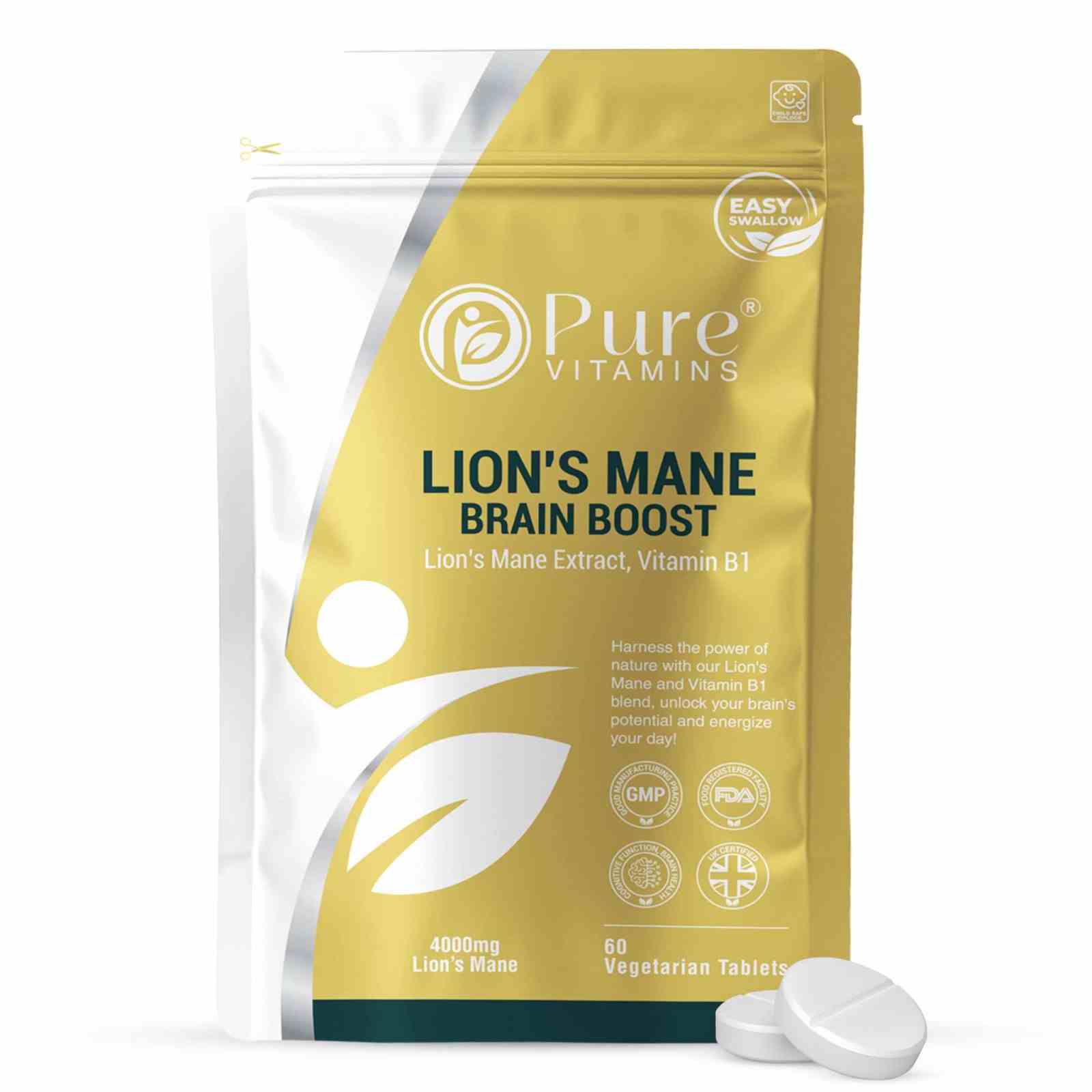
An extract ratio tells you how concentrated the extract is. A 10:1 extract means 10 parts of raw mushroom were concentrated down into 1 part of extract, so a smaller amount of a 10:1 extract represents a larger amount of starting mushroom. A higher first number means a more concentrated extract. When you see something like 4000mg on a lion's mane label, it often refers to the raw-mushroom equivalent that the concentrated extract represents, which is the case for our Lion's Mane 4000mg. Always read whether a figure is extract weight or raw equivalent.
Extract vs powder: the practical difference
Plain dried mushroom powder is the whole mushroom ground up, less concentrated, so you would need more of it. A concentrated extract delivers a stronger preparation in a smaller serving and lets the strength be expressed as a ratio. For most people choosing a supplement, a stated extract, with a ratio and ideally from the fruiting body (see fruiting body vs mycelium), is the clearer, more comparable option.

When should you take lion's mane?
There is no rule here, so timing is a matter of preference rather than a hard requirement. Many people take it in the morning with breakfast or coffee, simply as a convenient routine (see lion's mane coffee). Taking it with food is a sensible, gentle default. Consistency helps it become a habit you actually keep. And because lion's mane is not a stimulant, the time of day is not a sleep consideration, unlike caffeine. We look at the morning-versus-evening question in when should you take lion's mane.
What the research has explored
Lion's mane is a genuinely interesting subject for researchers, which is part of its modern appeal. Based on a double-blind, placebo-controlled trial retrieved from PubMed in older adults, taking lion's mane over 16 weeks was associated with improved scores on a cognitive scale, although the study was small and the effect faded after people stopped (Mori et al., 2009, DOI). I would read that as early, promising science rather than a settled conclusion, and it pairs with the mushroom's long traditional use rather than replacing it. There is more in what the research says about lion's mane and focus.
Can you take it every day, and is it safe?
Lion's mane is typically taken daily as part of a routine, and it is a culinary mushroom with a long history of dietary use. On the safety side, a 28-day oral feeding study of an erinacine-enriched lion's mane mycelium retrieved from PubMed reported no adverse effects, with a no-observed-adverse-effect level greater than 3 g per kg of body weight per day in the animal model used (Li et al., 2014, DOI). As with any new supplement, if you have a health condition, take medication, or are pregnant or breastfeeding, check with your GP or pharmacist first, and avoid it if you have a mushroom allergy. If it is the size of the number on the pack you are wondering about, we take that apart in is 4000 mg of lion's mane safe.

What to look for on the label
When buying, look for a stated extract ratio, the fruiting body named on the label, and ideally a stated beta-glucan content, which is a fair marker of a quality mushroom extract. In our formula, the added vitamin B1 (thiamine) is a nice supporting reason the pairing works, since thiamine contributes to normal energy-yielding metabolism and to the normal functioning of the nervous system. If you are wondering whether the mushroom and the vitamin can be taken together at all, we answer that in can I take lion's mane with vitamin B. If diet matters to you, check the capsule is suitable for vegetarians or vegans.
The takeaway
For lion's mane, the form matters as much as the milligrams: look for a stated extract with a ratio, check whether a figure is extract weight or raw equivalent, take it with food at a time that suits you, and be consistent. Our Lion's Mane 4000mg is a concentrated extract with vitamin B1 added, Formulated in the UK and tested for purity and heavy metals at our GMP-certified facility, with a Certificate of Analysis available on request. Browse the range on our Pure Vitamins UK home page.

Frequently asked questions
How much lion's mane should I take? Doses vary by product and form. The most meaningful figure is the extract strength and ratio; follow the serving on the label.
What does a 10:1 extract mean? Ten parts of raw mushroom concentrated into one part of extract, so a more concentrated preparation.
When should I take it? Whenever you will take it consistently, ideally with food. It is not a stimulant, so timing is not a sleep issue.
Can I take it daily? Yes, it is typically taken daily. Check with your GP first if pregnant, breastfeeding, on medication or managing a condition.
Food supplements should not be used as a substitute for a varied, balanced diet and a healthy lifestyle. If you are pregnant, breastfeeding, taking medication or managing a medical condition, speak to your GP or pharmacist before starting a new supplement.
Dr. Miron, Founder of Pure Vitamins UK.
