


Reviewed and updated: 23 July 2026
Ferrous fumarate: iron with vitamin C and folic acid, explained
Ferrous fumarate is one of the most common and well-absorbed forms of iron in supplements, and when it is paired with vitamin C and folic acid you get a thoughtfully built formula rather than iron on its own. The logic is simple: vitamin C helps you absorb the iron, and folic acid works alongside iron in the making of healthy blood.
I am Dr. Miron, and iron is a supplement worth getting right, because more is not better and the pairing on the label genuinely matters. Let me walk you through what each part does.

The short version
- Ferrous fumarate: a well-absorbed iron salt that delivers a good amount of elemental iron per tablet.
- Vitamin C: increases iron absorption, which is why the two are paired.
- Folic acid and B12: both contribute to normal blood formation, working alongside iron.
What ferrous fumarate actually is
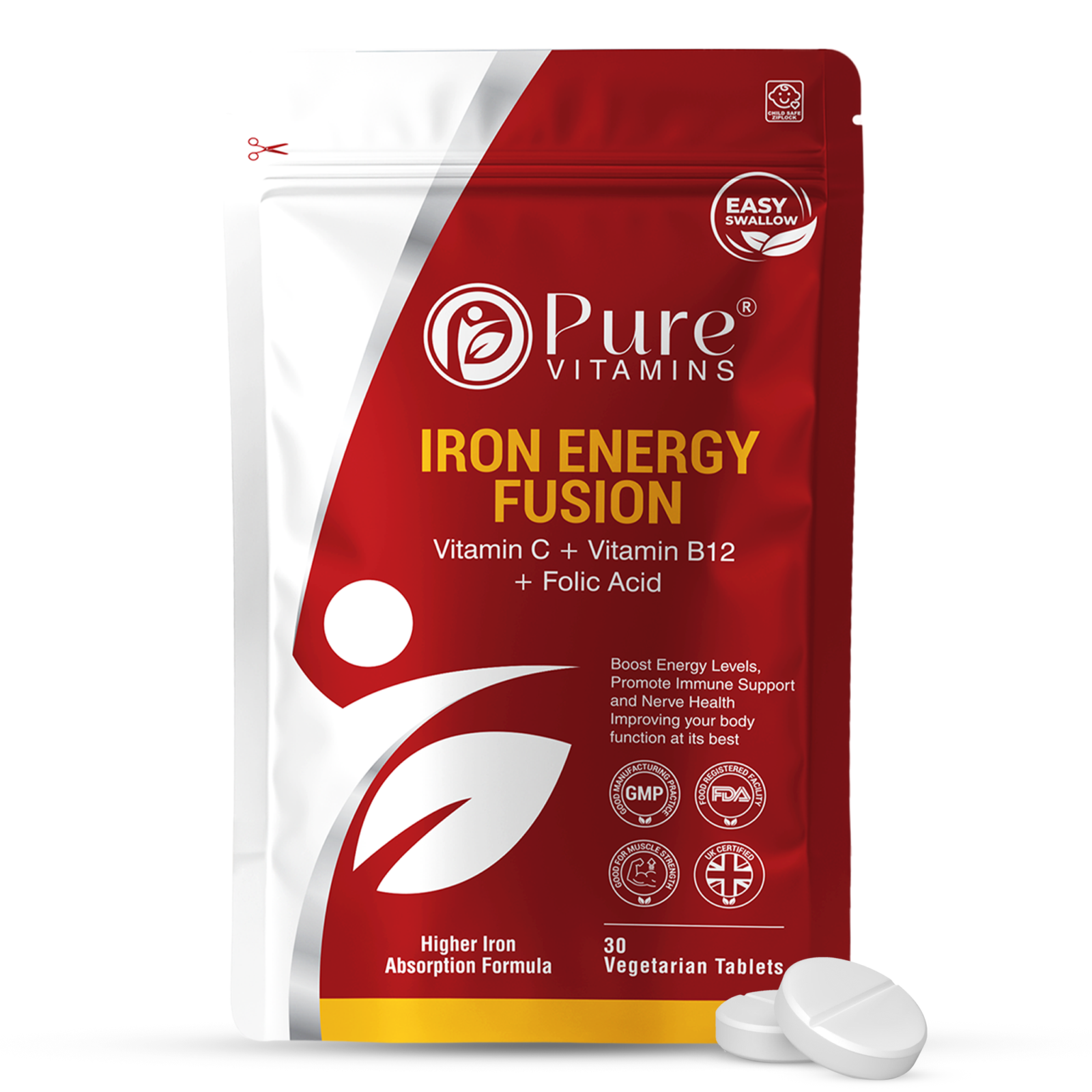
Ferrous fumarate is iron bound to fumaric acid. It is a ferrous (iron two) salt, the form the gut absorbs most readily, and it carries a relatively high proportion of elemental iron, the iron your body can actually use, per tablet. That makes it an efficient, widely used choice. Our iron tablets use ferrous fumarate alongside vitamin C, folic acid and B12 in a single daily tablet.
Why vitamin C is included
This is the part that makes the biggest practical difference. Vitamin C increases iron absorption, especially the non-haem iron found in supplements and plant foods, by keeping it in the more absorbable ferrous form. Building vitamin C into the tablet means the absorption boost is there in every dose, rather than relying on you remembering a glass of orange juice. It is a genuinely useful pairing, not marketing.

Why folic acid and B12 are in there too
Iron, folic acid and vitamin B12 are the three nutrients most closely tied to making healthy red blood cells. Iron contributes to the normal formation of red blood cells and haemoglobin and to normal oxygen transport in the body. Folic acid contributes to normal blood formation, and is especially important before and during early pregnancy. B12 contributes to normal red blood cell formation too. Putting them together in one tablet covers the common shortfalls that tend to travel together.
The wider role of iron
Beyond blood, iron does a lot of quiet heavy lifting. It contributes to normal energy-yielding metabolism, to the reduction of tiredness and fatigue, to normal cognitive function and to the normal function of the immune system. That is why running low on iron so often shows up first as fatigue and feeling wiped out, a pattern we explore in how to increase ferritin.

How to take it
- With vitamin C, away from tea and coffee: tannins in tea and coffee, and calcium from dairy, blunt iron absorption. Leave a couple of hours between them.
- Consider alternate-day dosing: according to PubMed, a study in iron-depleted women found that a single dose on alternate days optimised iron absorption compared with daily or twice-daily dosing, because it kept the body's absorption-blocking hormone lower (Stoffel et al., 2017, The Lancet Haematology). If daily iron upsets your stomach, every-other-day may be gentler and just as effective.
- Mind the amount: more iron is not better. Supplemental iron above roughly 20 mg a day is a common cause of constipation, so stick to the labelled dose. For what a standard 14mg daily strength actually covers, see is 14mg of iron a day enough.
If tolerance is your issue, see iron supplement without constipation, and for the timing question, can you take iron tablets at night.
Who actually needs iron
Iron is one to take because you need it, not just in case. The people most likely to run low include those with heavy periods, pregnant women, regular blood donors, and some vegetarians and vegans. If you are tired and suspect low iron, the right first step is a GP blood test to check your ferritin, rather than supplementing blind, because too much iron carries its own risks.
A few cautions worth knowing
Only supplement iron if you have reason to think you are low, ideally confirmed by a blood test, because the body has no easy way to get rid of excess iron. Keep iron tablets well away from children, as iron overdose is genuinely dangerous for small children. Iron can interact with certain medicines, including some thyroid and antibiotic medications, so leave a gap and check with your pharmacist. If you are pregnant, take iron on your midwife's or GP's advice.
Frequently asked questions
Why is ferrous fumarate taken with vitamin C?
Vitamin C increases iron absorption by keeping iron in its more absorbable form, so pairing the two helps your body take up more of the iron in each dose.
What does the folic acid do in an iron supplement?
Folic acid contributes to normal blood formation and works alongside iron and B12 in making healthy red blood cells. It is also especially important before and during early pregnancy.
Is ferrous fumarate a good form of iron?
Yes. Ferrous fumarate is a well-absorbed ferrous salt with a relatively high elemental iron content, which is why it is one of the most widely used forms in supplements.
How should I take iron for the best absorption?
Take it with vitamin C and away from tea, coffee and dairy. Some people absorb iron better and tolerate it more comfortably by taking a single dose on alternate days rather than every day.
Shop Iron with Vitamin C & Folic Acid
Want to raise your levels sensibly? Read how to increase ferritin, or browse the range on the Pure Vitamins UK home page.
Dr. Miron, Founder of Pure Vitamins UK
Food supplements are not a substitute for a varied, balanced diet and a healthy lifestyle.
