


Reviewed and updated: 23 July 2026
How to increase ferritin: a practical, evidence-led guide
If you want to know how to increase ferritin, the honest headline is that it takes the right iron, the right helpers and a bit of patience. Ferritin is your body's iron store, so raising it means both topping up iron intake and making sure you actually absorb it, then giving it weeks, not days, to climb.
I am Dr. Miron, and low ferritin is one of the most common reasons people feel persistently drained. Here is how to raise it sensibly, and why testing first matters.

The short version
- Use a well-absorbed iron with vitamin C: vitamin C increases iron absorption, so the pairing does real work.
- Consider alternate-day dosing: a single dose every other day can optimise absorption and be gentler on the stomach.
- Be patient and retest: ferritin rises over weeks to months, so recheck with your GP rather than guessing.
What ferritin actually is
Ferritin is the protein that stores iron in your body, and a blood test for it is the best everyday snapshot of how much iron you have in reserve. You can have a normal haemoglobin but a low ferritin, meaning your stores are running down even before full-blown anaemia shows up. That is why ferritin, not just a standard blood count, is the number to watch if you feel tired and suspect iron is the culprit.
Why ferritin drops
Common reasons include heavy periods, pregnancy, blood donation, a diet low in absorbable iron, and gut issues that reduce absorption. Eating much less than usual is another common route in, because iron intake falls along with everything else on the plate, and our guide to what supplements to take on a calorie deficit sets out the wider nutrient picture. Because a low ferritin sometimes points to something worth investigating, the first move is always a GP blood test rather than self-diagnosing and reaching for high-dose iron.

Practical steps to raise your ferritin
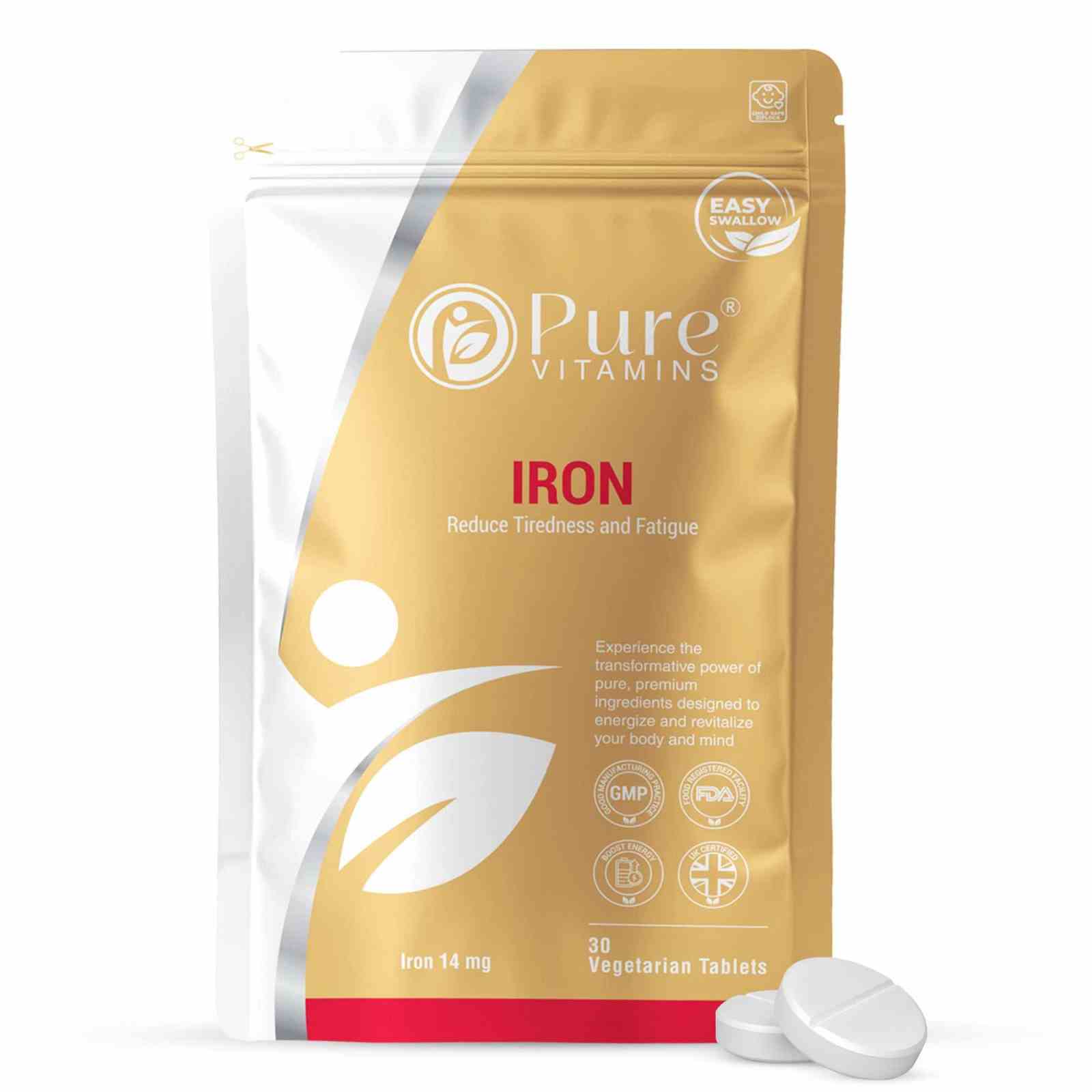
- Choose a well-absorbed iron: a ferrous salt such as ferrous fumarate is efficiently absorbed. Our iron tablets combine it with vitamin C, folic acid and B12, the nutrients that work together on healthy blood.
- Pair it with vitamin C: vitamin C increases iron absorption, so take your iron with a vitamin C source or a formula that already includes it.
- Try alternate-day dosing: according to PubMed, a study in iron-depleted women found that a single dose taken on alternate days optimised absorption compared with daily or split dosing (Stoffel et al., 2017, The Lancet Haematology).
- Avoid absorption blockers around your dose: tea, coffee and calcium-rich dairy all reduce iron uptake, so keep them a couple of hours apart from your tablet.
- Eat for iron: haem iron from meat and fish is well absorbed; plant (non-haem) iron from beans, lentils, tofu and leafy greens is absorbed better when eaten with vitamin C.

How long does it take to raise ferritin?
This is where patience comes in. Iron stores rebuild slowly. Many people need two to three months, sometimes longer, of consistent, well-absorbed iron to move ferritin meaningfully, and correcting a deep deficit can take longer still. The sensible rhythm is to supplement consistently, then retest with your GP after a few months to see how far you have come and whether to continue.
Why it is worth the effort
Iron contributes to normal oxygen transport in the body, to normal formation of red blood cells and haemoglobin, to normal energy-yielding metabolism, and to the reduction of tiredness and fatigue. So rebuilding your stores is not about a number for its own sake; it is about how you feel day to day. Read more in ferrous fumarate, iron with vitamin C and folic acid.
A few cautions worth knowing
Do not take high-dose iron long term without a blood test, because the body cannot easily remove excess iron and too much carries its own risks. Supplemental iron above roughly 20 mg a day commonly causes constipation, which we cover in iron supplement without constipation. Keep iron away from children, mind interactions with thyroid and antibiotic medicines, and take iron in pregnancy on your midwife's or GP's advice. If you are wondering whether a standard daily strength covers your needs, see is 14mg of iron a day enough.
Frequently asked questions
What is the fastest way to increase ferritin?
Take a well-absorbed iron with vitamin C, keep tea, coffee and dairy away from your dose, and be consistent. There is no true shortcut, because iron stores rebuild over weeks to months.
Does taking iron every other day work better?
For many people, yes. A study in iron-depleted women found that a single dose on alternate days optimised absorption and can be gentler on the stomach than daily dosing.
How long does it take for ferritin to go up?
Usually two to three months of consistent, well-absorbed iron, and sometimes longer for a deeper deficit. Retest with your GP to track progress.
Should I supplement iron without a test?
It is better not to. Because excess iron carries risks and low ferritin can have causes worth investigating, start with a GP blood test rather than supplementing blind.
Shop Iron with Vitamin C & Folic Acid
Curious about timing? Read can you take iron tablets at night, or browse the range on the Pure Vitamins UK home page.
Dr. Miron, Founder of Pure Vitamins UK
Food supplements are not a substitute for a varied, balanced diet and a healthy lifestyle.
