

Reviewed and updated: 4 September 2026
Zinc forms, why copper is added, and how much to take
Zinc forms differ mainly in how well they are absorbed, with zinc picolinate a well-absorbed and popular choice; copper is added because higher-dose zinc over time can interfere with copper absorption, so the two are balanced together; and a sensible daily amount sits around the 10 mg reference intake rather than a megadose. That is the short answer. Below I will walk through the forms, the copper pairing, food sources, the signs of low zinc, and how much to take.

Quick answer (TL;DR)
- Forms: picolinate, citrate and bisglycinate are well absorbed; gluconate is common and economical; oxide is cheapest but least well absorbed.
- Why copper: sustained higher-dose zinc can lower copper absorption, so a little copper keeps the balance.
- How much: the reference intake is 10 mg; a tolerable upper level of about 25 mg a day from supplements applies for long-term use.
- How to take: often with food to reduce the chance of stomach upset.
Is zinc picolinate better than zinc gluconate?
Zinc comes bound to different carriers, and that affects absorption. Zinc picolinate is zinc bound to picolinic acid and is widely regarded as a well-absorbed form, which is why it is a popular premium choice and the basis of our Triple Zinc with Copper. Zinc gluconate is a common, economical form found in many everyday supplements and lozenges. Zinc citrate, sulphate and oxide are other forms varying in absorption, with oxide the cheapest but least well absorbed. According to a randomised double-blind crossover trial retrieved from PubMed in 15 healthy volunteers, zinc picolinate significantly raised hair, urine and red-blood-cell zinc over four weeks while zinc citrate and gluconate did not differ significantly from placebo, suggesting absorption can be improved by complexing zinc with picolinic acid (Barrie et al., 1987, DOI). Honestly, any reputable form provides zinc; picolinate is favoured for absorption, but a well-made product matters more than the form name. I cover the detail in zinc picolinate benefits.
Why is copper added to zinc supplements?
This is genuinely important, not just marketing. Taking higher-dose zinc over time can interfere with copper absorption, which can gradually lead to a copper shortfall, so including a sensible amount of copper alongside zinc helps maintain that balance. The NIH Office of Dietary Supplements notes this same zinc-copper interaction, which is exactly why a considered formula pairs the two. Both are minerals with real, useful roles: zinc contributes to the normal function of the immune system, and copper contributes to the normal function of the immune system and to normal energy-yielding metabolism. I expand on it in why copper is added to zinc supplements.

What zinc and copper do for you
Stated plainly, zinc contributes to the normal function of the immune system, to normal cognitive function, to the protection of cells from oxidative stress, to normal DNA synthesis, and to the maintenance of normal skin, hair, nails and bones, among other roles. Copper contributes to the normal function of the immune system, to normal energy-yielding metabolism, to the protection of cells from oxidative stress, and to the maintenance of normal connective tissue. Those contributions are the honest reasons a balanced zinc-and-copper supplement is worth considering, and I cover the skin angle in what zinc does for skin and nails.
Zinc in food
Food is the foundation here too. The richest sources of zinc are shellfish, especially oysters, and red meat, followed by poultry, cheese, and plant sources like pumpkin seeds, nuts, beans, lentils and wholegrains. One thing worth knowing is that the phytates in some wholegrains and legumes bind zinc and reduce how much you absorb, which is part of why people following mostly plant-based diets can find zinc a little harder to get. A varied diet covers most people, and a supplement simply tops up a shortfall.

What are the signs of low zinc?
I will be careful here, because these signs are non-specific. Zinc is involved in immune function, skin and many enzyme processes, and low zinc is associated with things like more frequent minor infections, slower wound healing, or changes to skin, hair and nails. But these overlap with many other causes and cannot confirm a deficiency on their own. True zinc deficiency is uncommon in people eating a varied diet in the UK. If you are concerned, your GP can advise rather than self-diagnosing. There is more in what are the signs of low zinc.
How much zinc a day, and the upper limit
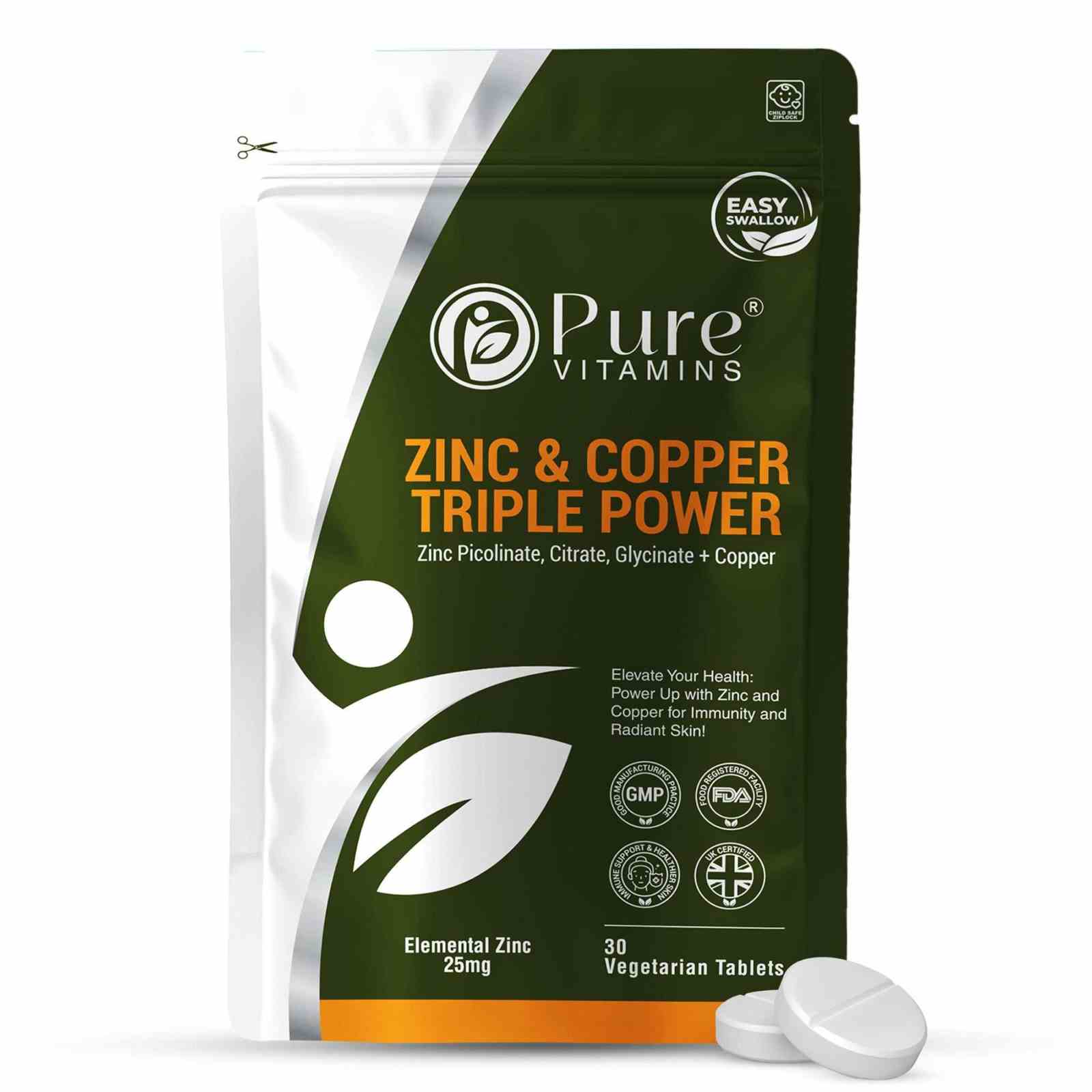
The EU and UK reference intake (NRV) for zinc is 10 mg, and supplements commonly provide around this to modestly above. There is a recognised tolerable upper level of about 25 mg a day from supplements for long-term use, and it is sustained high zinc that risks the copper-balance issue above, so more is genuinely not better. Our Triple Zinc with Copper provides 25 mg of elemental zinc with copper as a balanced higher-strength option; if you prefer a lower everyday amount, take it less frequently per the label. Zinc is often taken with food to reduce the chance of stomach upset.
A few cautions worth knowing
For most healthy adults, zinc with copper is well tolerated. Do not exceed recommended zinc intakes over the long term without advice, since sustained high zinc can affect copper status. Zinc can also reduce the absorption of certain antibiotics and interact with some medicines, so space them apart and check with your pharmacist. If you are pregnant or breastfeeding, take medication, or are managing a health condition, speak to your GP or pharmacist before starting.
Where Pure Vitamins fits
Our Triple Zinc with Copper combines well-absorbed zinc forms including zinc picolinate with copper to maintain the zinc-copper balance, delivering 25 mg of elemental zinc per tablet, formulated in the UK, made in a GMP-certified facility and tested for purity and heavy metals at our GMP-certified facility. For the immunity picture, see our immunity guide, or browse the range on our Pure Vitamins UK home page.
Frequently asked questions
Which zinc form is best? Picolinate is well absorbed and a popular premium choice, but any reputable form provides zinc; a well-made product matters more than the name.
Why is copper added to zinc? Higher-dose zinc over time can reduce copper absorption, so a sensible amount of copper keeps the two in balance.
How much zinc per day? The NRV is 10 mg, with a tolerable upper level around 25 mg a day from supplements for long-term use. More is not better.
Should I take zinc with food? Often yes, to reduce the chance of stomach upset.
Food supplements should not be used as a substitute for a varied, balanced diet and a healthy lifestyle. Do not exceed recommended zinc intakes long-term without advice. If you are pregnant, breastfeeding, taking medication or managing a medical condition, speak to your GP or pharmacist before starting a new supplement.
Dr. Miron, Founder of Pure Vitamins UK.
