

Reviewed and updated: 24 July 2026
Zinc picolinate benefits come down to one thing: it is a well-regarded, chelated form of zinc, and zinc itself is an essential mineral with a genuinely broad set of recognised roles, from normal immune function to the maintenance of normal skin, hair and nails. "Picolinate" describes the form, how the zinc is bound for absorption, not a separate set of benefits. This guide is honest about that distinction, about how picolinate really compares on absorption, and about how to choose a zinc supplement sensibly.
TL;DR: zinc picolinate in a nutshell
- What it is: zinc bound to picolinic acid, a chelated, organic form long favoured for absorption.
- The benefits: are zinc's roles, immune function, skin/hair/nails, DNA and protein synthesis, oxidative-stress protection, cognitive function and more.
- Honest on absorption: human head-to-head data are mixed; some studies rank glycinate ahead, so the best modern approach combines well-absorbed organic forms.
- Balance: pair zinc with a little copper for long-term use.
- Upper limit: 25 mg/day for adults from all sources.

What "picolinate" actually means
Zinc has to be bound to a carrier to be taken as a supplement, and that carrier affects how well it is absorbed. Zinc picolinate is zinc chelated to picolinic acid, an organic form that has long been popular over cheaper options like zinc oxide, which is poorly absorbed especially at higher stomach pH. The zinc itself is the active part; picolinate is simply a delivery vehicle. Zinc is absorbed mainly in the upper small intestine via dedicated transporter proteins, and the body tightly regulates how much it takes up across a wide range of intakes (Shi et al., 2024, doi.org/10.1002/jsfa.13325).
What zinc actually does
Zinc is an essential mineral with one of the broadest role profiles of any nutrient. It contributes to:
- the normal function of the immune system
- the maintenance of normal skin, hair and nails
- normal DNA synthesis and normal protein synthesis
- the protection of cells from oxidative stress
- normal cognitive function
- the maintenance of normal vision
- normal acid-base and carbohydrate metabolism
That is a genuinely broad, well-established profile, not marketing spin. It reflects zinc's role in hundreds of enzymes and in the structure of many proteins (Shi et al., 2024).
How well is picolinate actually absorbed? (the honest answer)
This is where many guides overstate the case. The honest position is that human head-to-head comparisons are limited and the results are mixed. In one zinc tolerance test in healthy women, zinc glycinate showed the best acute uptake, with picolinate roughly on a par with oxide for the change in plasma zinc, though picolinate ranked higher for red-cell zinc (DiSilvestro & Swan, 2008, doi.org/10.1096/fasebj.22.1_supplement.693.3). A 2025 review likewise notes that picolinate may raise zinc in tissues but does not always significantly raise serum zinc, and that the bioavailability findings are inconsistent, while glycinate is consistently well absorbed (Patil et al., 2025, doi.org/10.1002/jsfa.70210). The sensible takeaway is that picolinate is a reasonable, well-tolerated organic form, but it is not a guaranteed winner, which is why a modern formula often combines several well-absorbed organic forms rather than relying on one.

Why we pair zinc with copper
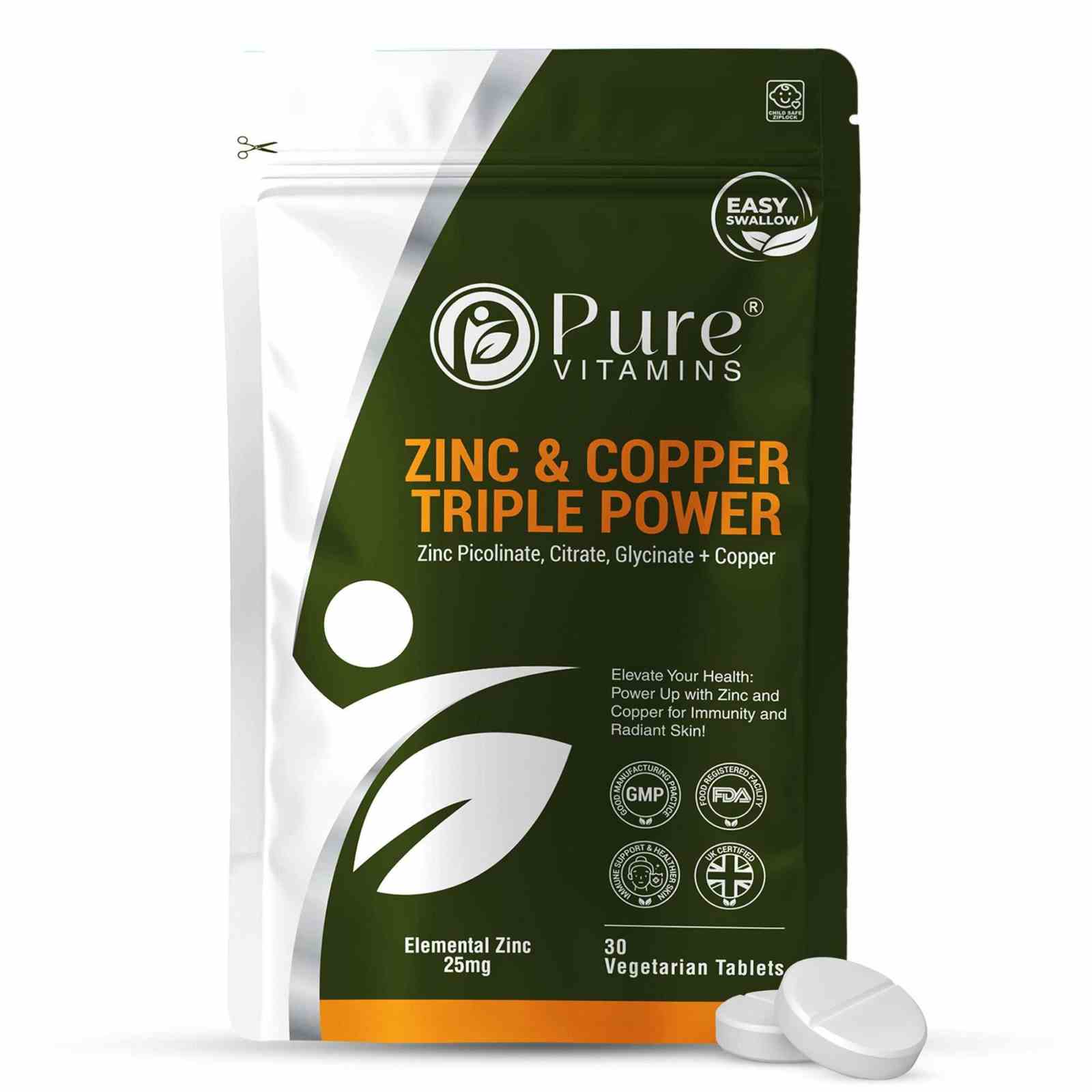
A detail many zinc supplements ignore: taking zinc on its own over time can affect copper balance, because the two compete for absorption. A well-designed zinc supplement includes a little copper to keep things balanced, which is exactly why our Triple Zinc & Copper formula includes copper glycinate. Copper itself contributes to the normal function of the immune system and to normal energy-yielding metabolism. We cover the detail in why copper is added to zinc.
How much zinc, and the safe upper limit
For adults the upper intake level for zinc from all sources is 25 mg per day. More is not better: very high zinc intakes can cause nausea, upset the copper balance and, over time, lower copper status. Most everyday zinc supplements supply around 10 to 25 mg of elemental zinc, which is sensible for ongoing use. Signs of low zinc are covered in what are the signs of low zinc.
Natural food sources and who tends to top up
Zinc is found in meat, shellfish (oysters are especially rich), dairy, beans, nuts, seeds and wholegrains. Because plant sources also contain phytates that reduce zinc absorption, people on lower-meat or plant-based diets sometimes choose to top up. Zinc is also one of the core nutrients in a sensible immune routine alongside vitamin D and vitamin C, which we cover in best vitamins for immunity. If that is useful, see also zinc and vitamin C for normal immune function.
How to choose a zinc supplement
- Form: a well-absorbed organic form such as glycinate, picolinate or citrate, ideally a blend, rather than plain oxide.
- Copper balance: a small amount of copper included alongside, for long-term use.
- Sensible dose: declared clearly and within the 25 mg/day ceiling.
- Quality: formulated in the UK and tested for purity and heavy metals at a GMP-certified facility.
A few cautions worth knowing
Zinc on an empty stomach can cause nausea, so take it with food. It can reduce the absorption of certain antibiotics (tetracyclines and quinolones), which should be spaced several hours apart. Avoid stacking multiple high-dose zinc products, since total intake adds up against the 25 mg ceiling. If you are pregnant, breastfeeding, take medication or manage a condition, check with your GP or pharmacist first.
Frequently asked questions
What are the benefits of zinc picolinate?
The benefits are zinc's own roles, including the normal function of the immune system, the maintenance of normal skin, hair and nails, normal DNA and protein synthesis, and protecting cells from oxidative stress. Picolinate is simply a well-regarded form of the mineral.
Is zinc picolinate the best-absorbed form?
Not necessarily. Human comparisons are limited and mixed; some studies rank glycinate ahead. Picolinate is a reasonable, well-tolerated organic form, which is why blends of organic forms are a sensible approach.
How much zinc picolinate should I take?
Stay within the adult upper limit of 25 mg of elemental zinc per day from all sources, and pair it with a little copper for ongoing use.
Should zinc be taken with food?
Yes. Taking zinc with food avoids the nausea that can occur on an empty stomach.
Explore the full range any time at Pure Vitamins UK.
Food supplements should not be used as a substitute for a varied, balanced diet and a healthy lifestyle. If you are pregnant, breastfeeding, taking medication or managing a medical condition, speak to your GP or pharmacist before starting a new supplement. Signed, Dr. Miron, Founder of Pure Vitamins UK.
