

Reviewed and updated: 23 July 2026
Best vitamins for immunity UK: zinc, vitamin D and vitamin C
The best vitamins for immunity UK shoppers should focus on are zinc, vitamin D and vitamin C, the three nutrients with recognised roles in the normal function of the immune system, and the ones UK diets and winters most often fall short on. That is the short answer. Below I explain what each genuinely does, what the research shows about forms and absorption, sensible amounts and upper limits, and who should be cautious, without the hype. For a broader view, see how to compare multivitamin formulas.

Quick answer (TL;DR)
- The three to know: zinc, vitamin D and vitamin C all contribute to the normal function of the immune system.
- Who it's for: adults wanting to cover the nutrients most relevant to immunity, especially over the darker UK months.
- Key caution: more is not better, each has an upper limit. Keep supplemental zinc near 25 mg a day and vitamin D at or below 100 mcg a day.
Zinc: the front-line immune mineral
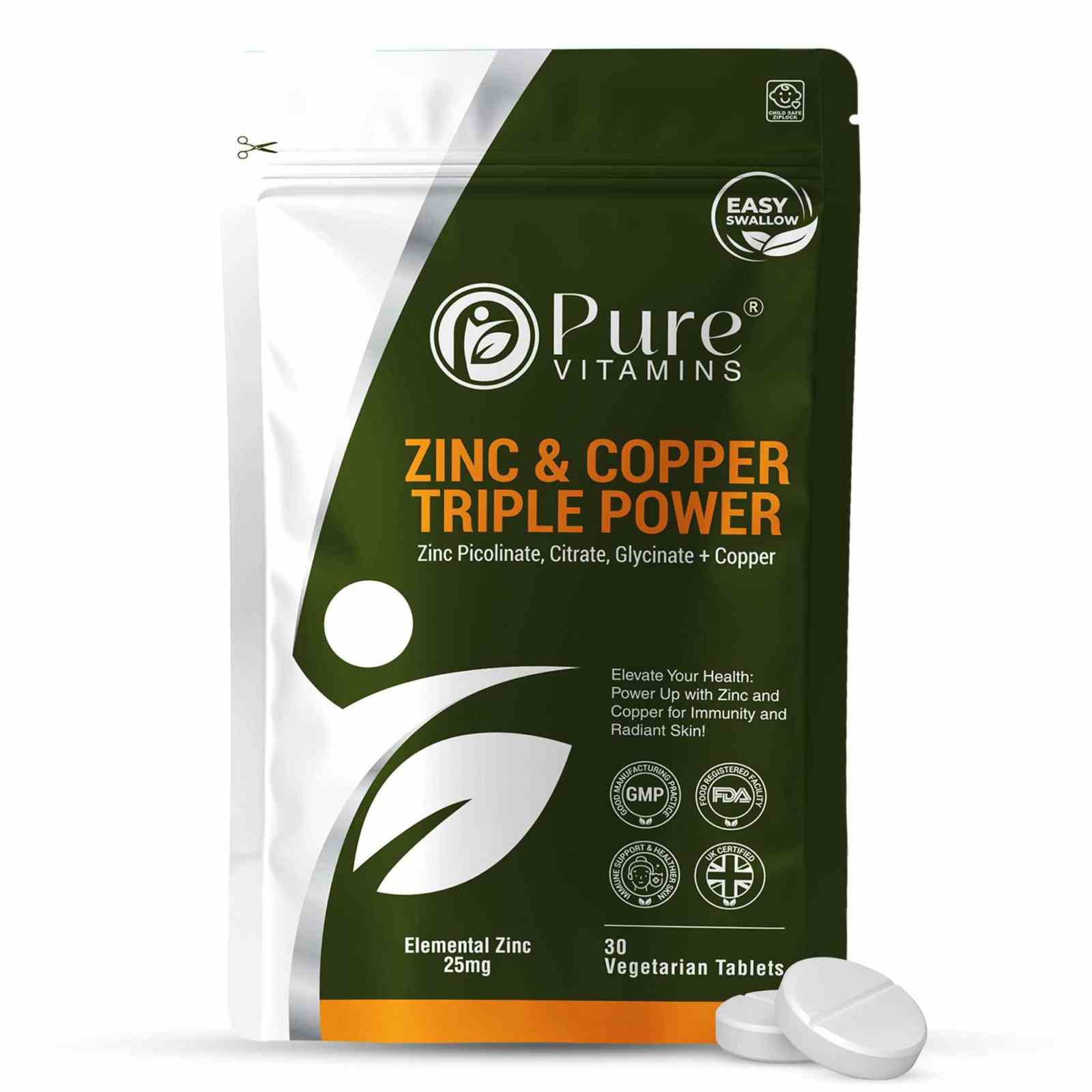
Zinc contributes to the normal function of the immune system, and also to normal cognitive function, the protection of cells from oxidative stress, and normal DNA synthesis. Form affects absorption. According to research retrieved from PubMed, a randomised double-blind crossover trial in 15 healthy adults found that zinc picolinate raised zinc status (hair, urine and red-blood-cell zinc) over four weeks while citrate and gluconate did not differ significantly from placebo (Barrie et al., 1987, DOI). That is why a well-absorbed form matters. Our Triple Zinc with Copper uses zinc picolinate alongside other forms, with copper added to keep the zinc-copper balance, since higher-dose zinc over time can reduce copper absorption. I cover the pairing more fully in zinc and vitamin C for normal immune function.

Vitamin D: the UK winter priority
Vitamin D contributes to the normal function of the immune system as well as to normal muscle function and the maintenance of normal bones. Because the UK gets little vitamin-D-making sunlight from October to March, public-health advice suggests considering a daily 10 microgram (400 IU) supplement over autumn and winter. Choose D3 (cholecalciferol): according to research retrieved by Scholar Gateway, a randomised trial in 95 healthy adults found daily D3 reached a significantly higher 25-hydroxyvitamin D level than D2 over six months (81 vs 52 nmol/L, p<0.001) (Houghton et al., 2011, DOI). See our Vitamin D3 + K2 tablets and the D3 and K2 buyer's guide, plus more on the season in vitamin D in winter in the UK.
Vitamin C: the everyday antioxidant
Vitamin C contributes to the normal function of the immune system and to the protection of cells from oxidative stress, and it also contributes to normal collagen formation. It is water-soluble, so the body does not store it and a steady daily intake matters. Citrus fruit, peppers, broccoli and berries are rich sources; a supplement simply tops up your intake when the diet falls short.

How much should you take, and the upper limits
Here is the sensible version. Zinc: the NRV is 10 mg; UK guidance puts the supplemental upper level around 25 mg a day for long-term use, and sustained high zinc is what risks the copper-balance issue, so do not megadose. Vitamin D: 10 mcg a day is the standard autumn-winter suggestion, with 100 mcg a day the adult upper limit from all sources. Vitamin C: the NRV is 80 mg; large doses (above roughly 1,000 mg a day) can cause stomach upset and loose stools, with little added benefit. Across all three, topping up to adequacy is the goal, not loading.
Deficiency correction vs optimisation: an honest note
The clearest benefit from these nutrients is in people who are genuinely low and bring their levels back to normal. In someone already well-nourished, taking more does not add an extra layer of protection. Think of them as insurance against a shortfall, alongside sleep, diet and activity, rather than a shortcut.
A few cautions worth knowing
Zinc can reduce the absorption of some antibiotics (tetracyclines, quinolones) if taken together, so separate them by a few hours, and long-term high zinc affects copper status. High-dose vitamin D needs caution in people with high blood calcium, kidney problems or sarcoidosis. Vitamin C in large doses may not suit people prone to kidney stones. If you are pregnant or breastfeeding, take medication, or manage a health condition, check with your GP or pharmacist before starting.
Building a sensible immunity stack
- Zinc in a well-absorbed form, balanced with copper, near 25 mg a day.
- Vitamin D3 over autumn and winter, within the 100 mcg a day limit.
- Vitamin C daily to cover intake, no need to megadose.
- All from a GMP-certified facility, tested for purity and heavy metals.
Where Pure Vitamins fits
Our Triple Zinc with Copper (25 mg elemental zinc with copper) and Vitamin D3 + K2 tablets cover two of the three immune nutrients, formulated in the UK, made in a GMP-certified facility and tested for purity and heavy metals at our GMP-certified facility. Browse the full range on our Pure Vitamins UK home page.
Frequently asked questions
What are the best vitamins for immunity? Zinc, vitamin D and vitamin C, the three nutrients with recognised immune-function roles and the ones most often short in UK diets.
Should I take them all year? Vitamin D is most important in autumn and winter; zinc and vitamin C can be taken year-round to cover intake.
How much zinc is safe? Around 25 mg a day from supplements long-term; avoid sustained higher doses.
What do these actually do for immunity? Their recognised role is contributing to the normal function of the immune system, best seen as covering a nutritional shortfall rather than a boost on top of an already good diet.
Sources: Barrie et al. 1987 (PubMed) and Houghton et al. 2011 (Scholar Gateway), DOIs linked. Food supplements should not replace a varied, balanced diet and a healthy lifestyle. This is information, not medical advice. If you are pregnant, breastfeeding, take medication or manage a medical condition, speak to your GP or pharmacist before starting.
Dr. Miron, Founder of Pure Vitamins UK.
