


Reviewed and updated: 23 July 2026
Collagen and vitamin C: why they're paired
Collagen and vitamin C are so often sold together for a genuinely good reason: vitamin C contributes to normal collagen formation, so it is the nutrient your body actually uses to build its own collagen. Pair the two and the vitamin C is doing real, useful work alongside the collagen. This guide explains the biochemistry behind the pairing, how much vitamin C you need, where to get it, and how to choose a collagen product well.
Collagen and vitamin C: the quick answer
- The pairing: vitamin C contributes to normal collagen formation for the normal function of skin, bones, cartilage, gums, teeth and blood vessels.
- Why it matters: vitamin C is a required cofactor your body uses to make collagen, so it is the part of the pairing doing genuine, well-understood work.
- Collagen itself: is a protein made of amino acids like glycine, proline and hydroxyproline, best described by what it is rather than by big promises.
- For hair and nails specifically: the nutrients with recognised roles are biotin, zinc and selenium.

Why vitamin C is the key to the pairing
Vitamin C contributes to normal collagen formation for the normal function of skin, bones, cartilage, gums, teeth and blood vessels. That is not a marketing line, it is a well-established nutritional role, and it is exactly why pairing vitamin C with a collagen supplement makes sense: when you are interested in your body's collagen, vitamin C is the nutrient with a direct, understood part to play in forming it. Weaving vitamin C into a collagen product simply means the formula is supporting your body's own collagen-building rather than resting on the collagen alone.
The science: why vitamin C is needed to build collagen
The pairing reflects real biochemistry. Vitamin C (ascorbate) acts as a cofactor for the enzymes prolyl hydroxylase and lysyl hydroxylase, which stabilise and cross-link the collagen molecule. Without enough vitamin C, those enzymes cannot do their job properly and collagen is not formed normally, which is the underlying reason scurvy, the classic vitamin C deficiency, shows up in skin, gums and blood vessels. A review of vitamin C in skin health summarises that normal skin holds high concentrations of vitamin C and that it stimulates collagen synthesis and assists antioxidant protection (Pullar et al., 2017). That is the honest mechanistic basis for the pairing.

Why pair vitamin C with a collagen supplement specifically?
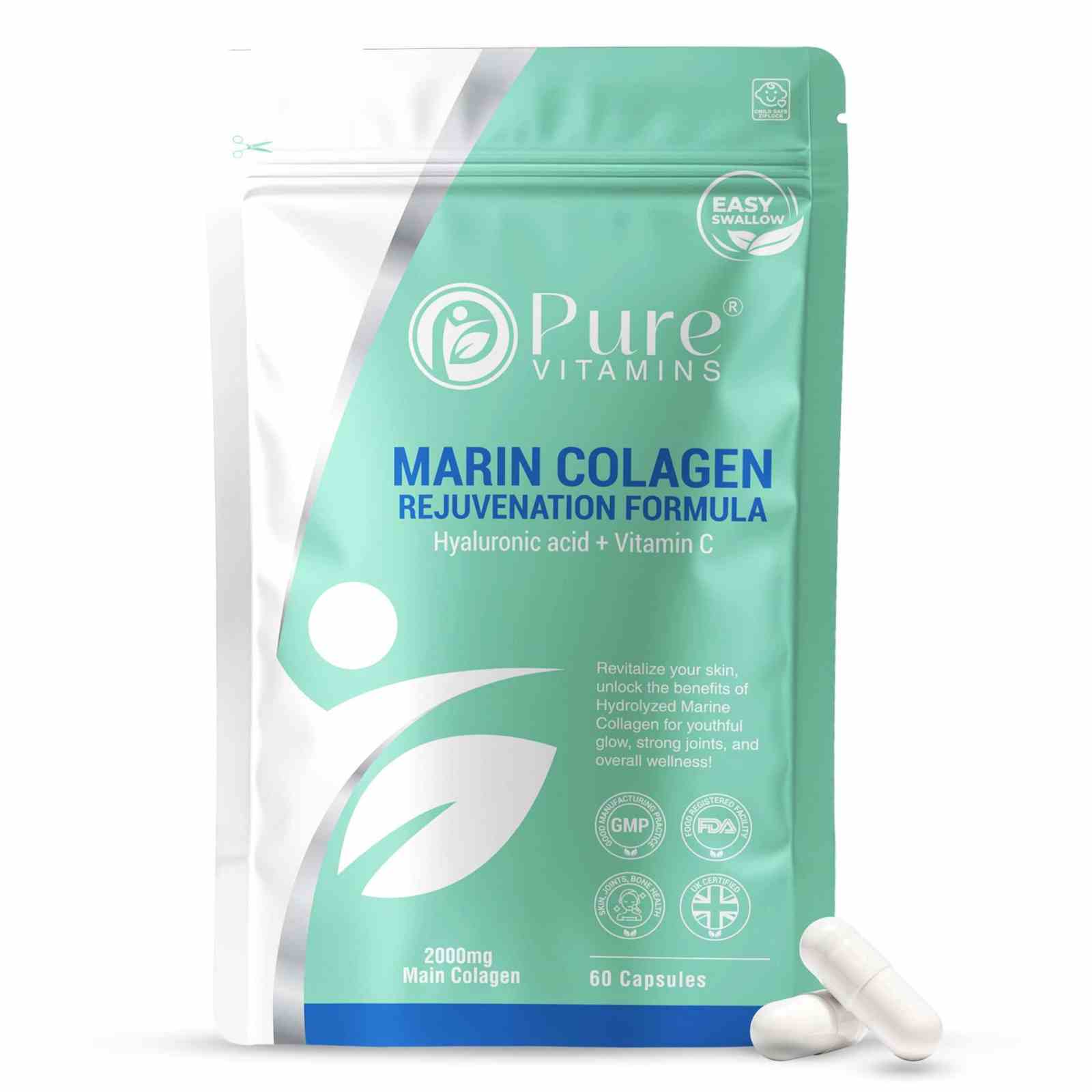
It is a neat fit. You are taking collagen because you are interested in your body's collagen, and vitamin C is the nutrient with the direct, mechanistic role in forming it. That is why our vitamin-C collagen capsules, the marine collagen capsules and the bovine collagen capsules, include vitamin C alongside the collagen and hyaluronic acid. If you prefer plain peptides to combine with your own vitamin C or vitamin-C-rich foods, our unflavoured collagen peptides powder is the additive-free option. Collagen is a protein rather than a vitamin, a distinction I unpack in whether collagen is a vitamin, and I cover the types in what Type I and III collagen mean.
What else vitamin C does
Vitamin C earns its place for more than collagen formation. It also contributes to the normal function of the immune system, to the protection of cells from oxidative stress, to the reduction of tiredness and fatigue, and to normal energy-yielding metabolism. Its role in supporting both the innate and adaptive immune system and the skin's barrier is well described in the research (Carr and Maggini, 2017). So the vitamin C in a collagen capsule is genuinely multi-tasking.

How much vitamin C, and can you get it from food?
The nutrient reference value for vitamin C is 80 mg a day, and it is found readily in citrus fruit, berries, peppers, broccoli and many other fruits and vegetables, so a varied diet often supplies plenty. Vitamin C is water-soluble, so excess is largely excreted, and while no strict upper limit is set, very high doses above roughly 1,000 mg a day can cause digestive upset in some people. A supplement simply offers a reliable, declared amount, and more is not better once you are replete.
An honest word on collagen peptides themselves
Collagen peptides are simply collagen broken down into shorter chains of amino acids such as glycine, proline and hydroxyproline. Hydrolysing them this way is intended to aid mixing and digestion, which I explain in what hydrolysed collagen is. Research into collagen peptides and skin or joints is ongoing and genuinely interesting, and I would rather describe collagen by what it is, type I and III collagen and its amino-acid profile, than overstate where the evidence currently sits.

What to check when comparing products
- A collagen supplement that includes vitamin C has a genuine collagen-formation rationale behind it, which a collagen-only product does not.
- Check the vitamin C is present at a meaningful, declared level on the label.
- Be a little sceptical of very bold skin or joint promises, and favour products that are straight with you.
- Decide between a capsule with vitamin C built in and a plain powder you pair with your own vitamin C, depending on your routine.
If hair and nails are your main goal
Worth knowing: for hair and nails specifically, the nutrients with recognised roles are biotin, zinc and selenium rather than collagen or vitamin C. If that is your priority, our biotin, zinc and selenium tablets contribute to the maintenance of normal hair, skin and nails, and some people pair them with a collagen-and-vitamin-C product as part of a wider routine.
The takeaway
The collagen-and-vitamin-C pairing is not just marketing; it rests on real biochemistry, because vitamin C is a required cofactor for building collagen and contributes to its normal formation. Choose a product that is honest about what it is, ideally with vitamin C at a meaningful level. For the full set of factors, see my guide to choosing a collagen supplement in the UK, compare sources in marine versus bovine collagen, or browse the wider Pure Vitamins range.
Frequently asked questions
Why is vitamin C added to collagen? Because vitamin C contributes to normal collagen formation and acts as a cofactor your body uses to build collagen, so it does genuine work alongside the collagen.
Do you need vitamin C with collagen? Vitamin C is the nutrient directly involved in forming collagen, so pairing them, or getting vitamin C from food, is a sensible way to support your body's own collagen formation.
How much vitamin C do you need? The nutrient reference value is 80 mg a day, easily reached from fruit and vegetables; a supplement gives a reliable declared amount.
Is collagen a vitamin? No. Collagen is a protein made of amino acids; vitamin C is the vitamin involved in forming it.
Food supplements should not be used as a substitute for a varied, balanced diet and a healthy lifestyle. Our collagen products are formulated in the UK and tested for purity and heavy metals at our GMP-certified facility. If you are pregnant, breastfeeding, taking medication or managing a medical condition, speak to your GP or pharmacist before starting a new supplement.
Dr. Miron, Founder of Pure Vitamins UK.
