


Table of Contents
- Best Supplements for Men's Mental Performance: A Comparison
- Best Supplements for Focus and Concentration
- Supplements for Memory and Brain Health
- Do Brain Supplements Work? Evidence and Effect Sizes
- Caffeine and L-Theanine for Focus: Why This Combination Works
- Dosage, Timing and Safety: What You Need to Know
- Medication Interactions and When to Consult a Healthcare Professional
- Frequently Asked Questions
Last Updated: October 12, 2026
Best Supplements for Men's Mental Performance: A Comparison
When mental performance matters, complex projects, long workdays, thinking clearly, the right supplements for mental performance can make a genuine difference. But not all brain health supplements deliver equal results, and most men don't know which ingredients work or what dosage matters. (Source: the European Food Safety Authority (EFSA) on the role of thiamine)
Some supplements for mental performance are backed by solid evidence, others rely on tradition, and many are simply underdosed. This guide shows which ingredients support focus, memory, and cognitive function, and how to use them safely.
Quick Comparison Table
| Supplement | Best For | Key Ingredient | Typical Dose | Time to Notice |
|---|---|---|---|---|
| Lion's Mane with B1 | Memory and cognitive clarity | 4000mg extract + Thiamine | 1-2 tablets daily | 4-8 weeks |
| Vitamin B12 (active forms) | Energy and mental fatigue | Methylcobalamin + Adenosylcobalamin | 1000µg daily | 2-4 weeks |
| Omega-3 Fish Oil | Brain function and circulation | EPA 1040mg + DHA 692mg | 2 capsules daily | 6-12 weeks |
| Ashwagandha KSM-66 + L-Theanine | Calm focus and stress resilience | KSM-66 extract + L-Theanine | 1-2 capsules daily | 3-6 weeks |
| NAD+ with Nicotinamide Riboside | Cellular energy and mental stamina | NR 500mg + Quercetin + Resveratrol | 2 capsules daily | 4-8 weeks |
Best Supplements for Focus and Concentration
Sharp mental performance comes down to two things: whether your brain has the nutrients it needs, and whether you're supporting the right neurological pathways. Focus supplements for mental performance work best when they target both.

Vitamin B1 (thiamine) contributes to normal psychological function and normal functioning of the nervous system, so your ability to concentrate depends partly on having enough.
Lion's Mane mushroom is one of the most talked-about focus ingredients in recent years. Our Lion's Mane Supplement 4000mg with Vitamin B1 pairs a high-strength extract standardised to 50% polysaccharides with B1. The 4000mg equivalent dose matters.
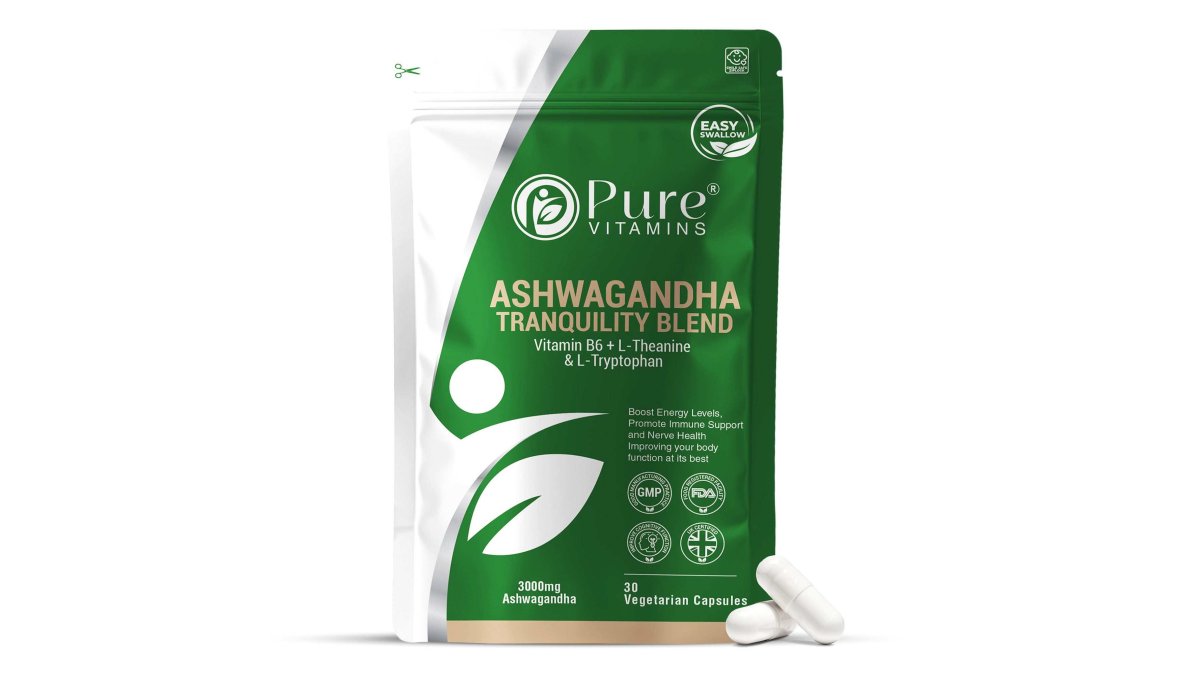
L-Theanine works differently. Paired with other ingredients, as in our Ashwagandha KSM-66 Capsules with L-Theanine & Vitamin B6, it helps you stay focused under pressure without caffeine's jittery edge.
Supplements for Memory and Brain Health
Memory is about how well your brain encodes, stores, and retrieves information. Supplements for memory and brain health support the cellular structures and chemical messengers your brain relies on.
DHA, one of the two main omega-3 fatty acids, contributes to the maintenance of normal brain function. Your brain's cell membranes are built partly from DHA, so a consistent supply matters.
Vitamin B12 in its active forms (methylcobalamin and adenosylcobalamin) supports normal psychological function and normal functioning of the nervous system. The form matters: most B12 supplements use cyanocobalamin, which your body must convert first.
NAD+ is a coenzyme your cells use for energy production at the mitochondrial level.
Do Brain Supplements Work? Evidence and Effect Sizes
Some brain supplements work, some don't, and many work only for specific people in specific circumstances. The evidence varies enormously by ingredient, and any benefit is usually smaller than the marketing implies.
A useful way to read the evidence is to grade it. The strongest tier is nutrients with authorised GB health claims. The middle tier is ingredients with promising but mixed human trial data. The weakest tier is ingredients supported mainly by mechanistic reasoning, animal studies, or tradition.
Tier 1: Nutrients with authorised GB health claims
Vitamin B12 carries authorised claims that it contributes to normal energy-yielding metabolism, the reduction of tiredness and fatigue, normal functioning of the nervous system, and normal psychological function. The key word is normal: these claims describe correcting a deficiency, not boosting a healthy brain beyond baseline.
Omega-3 DHA also carries authorised claims: it contributes to the maintenance of normal brain function and normal vision. Again, the claim is about maintenance. DHA is a structural component of brain cell membranes, and the evidence supports keeping levels adequate rather than pushing them above normal.
Tier 2: Ingredients with promising but mixed human data
Lion's Mane, ashwagandha, and nicotinamide riboside sit here. None carries an authorised GB health claim, meaning the evidence has not met the regulatory threshold, which is not the same as saying they do nothing.
Lion's Mane has small human trials suggesting possible improvements in processing speed and subjective mental clarity, but samples are small and durations short.
Ashwagandha has the most consistent human data of the three, mainly for stress and anxiety rather than direct cognition. Effect sizes are modest and vary by extract standardisation.
Nicotinamide riboside is of significant scientific interest for cellular energy metabolism, but human cognitive outcome data remains limited, an emerging ingredient rather than an established one.
Tier 3: Ingredients with weak or preliminary evidence
Many nootropic ingredients fall here. They may have plausible mechanisms, but the human evidence is thin, inconsistent, or absent. That doesn't make them unsafe, but claims about them deserve scepticism.
How to read effect sizes realistically
When a study reports a cognitive benefit, ask three questions: how many people were studied, how long it ran, and whether the result was measured against a placebo. Small, short studies often produce results that don't replicate. A realistic expectation for most ingredients is a small, gradual improvement in how you feel day to day, not a step change in intelligence or memory.
Caffeine and L-Theanine for Focus: Why This Combination Works
Caffeine and L-Theanine are a different category: not nutrients you can be deficient in, but compounds that influence how your brain operates in real time.
Caffeine increases alertness by blocking adenosine receptors, the molecules that signal fatigue, but alone it can cause jitteriness and a crash. L-Theanine, the amino acid from green tea, promotes alpha brain waves, a state associated with calm focus.
This is why our Ashwagandha KSM-66 Capsules with L-Theanine & Vitamin B6 pair the amino acid with ashwagandha, a traditional adaptogen.
Lion's Mane Supplement 4000mg with Vitamin B1 →
Timing matters. Caffeine is usually taken in the morning and felt within 15-30 minutes; L-Theanine works on a similar timescale. With a caffeine-and-L-Theanine approach, consistency matters more than occasional use, your nervous system adapts to regular patterns.
Dosage, Timing and Safety: What You Need to Know
Dosage and timing separate supplements that work from those that sit unused in a drawer. But before worrying about milligrams, ask whether you actually need the nutrient.
Test before you supplement where possible
Correcting a diagnosed deficiency differs from supplementing when your levels are already adequate. If you suspect low vitamin B12, iron, or vitamin D, ask your GP about testing, a blood test confirms whether supplementation will help or just add cost.
Dosage and timing by ingredient
Vitamin B12 is water-soluble, so excess is excreted rather than stored, consistent daily intake matters more than a large occasional dose.
Omega-3 fish oil should be taken with a meal containing fat to improve absorption. DHA accumulates in brain tissue over time, so consistency beats occasional high doses.

Lion's Mane is typically taken as a standardised extract, often 500-3000mg per day, though research doesn't establish an optimal dose.
Ashwagandha is usually taken as a standardised extract, commonly 300-600mg daily standardised to a defined withanolide content. Some men prefer evening use for its calming effect; others tolerate it in the morning.
Nicotinamide riboside is commonly dosed at 250-500mg daily in research. Long-term human data is limited, so treat higher doses with caution.
Product quality and label evaluation
How a supplement is made matters as much as what it contains. Look for:
- Third-party testing. Independent testing for purity and potency reduces the risk of contamination or underdosing. Certifications such as Informed Sport or equivalent schemes are a useful signal.
- Clear ingredient amounts. Avoid proprietary blends that hide individual doses behind a single figure. You cannot judge whether an ingredient is present at a meaningful level if the label does not tell you.
- Standardisation. For botanical extracts, a stated standardisation (for example, a minimum percentage of withanolides or polysaccharides) is a sign the manufacturer is controlling the active fraction.
- Manufacturing standards. GMP and ISO 22000 are recognised benchmarks for quality management in supplement manufacturing.
- Contamination risk. Fish oil in particular can vary in freshness and oxidation; reputable brands test for heavy metals and peroxides.
Realistic timelines and caveats
No supplement produces overnight change. Nutrient status builds over weeks. If you notice nothing after two to three months of consistent use at an appropriate dose, stop and reassess rather than continuing indefinitely. Research doesn't establish an optimal dose or duration for most ingredients here, so personal response varies.
Never combine supplements without checking for interactions. If you are taking medication, particularly blood thinners, antidepressants, or medications for blood pressure, consult a healthcare professional before starting any new supplement routine. Some ingredients can interact with medications or affect their effectiveness.
Medication Interactions and When to Consult a Healthcare Professional
This is where many men make serious mistakes. Supplements aren't inert, they contain active compounds that can interact with medications and medical conditions.
Omega-3 fish oil is the most common culprit.
Ashwagandha can interact with sedatives and medications for anxiety or depression. If you're on any psychiatric medication, check with your healthcare provider first.
NAD+ precursors are newer, and long-term interaction data is still being gathered.
The rule is simple: if you're managing a health condition or taking medication, consult a healthcare professional before starting supplements for mental performance.
Our Energy & Focus Bundle brings together four formulas, Lion's Mane, Ashwagandha, NAD+, and Vitamin B12, in one place for men who want comprehensive mental performance support.

The best supplements for men to improve mental performance aren't a magic solution, they're a foundation.
Frequently Asked Questions
Can vitamin B12 deficiency affect concentration or memory?
Yes. Vitamin B12 is essential for normal psychological function and nervous system operation. Deficiency causes persistent tiredness and fatigue, which directly impairs concentration and mental clarity. B12 contributes to normal energy-yielding metabolism, the process your brain relies on to maintain focus. If you follow a plant-based diet or experience afternoon energy crashes, B12 supplementation with active forms like methylcobalamin can restore mental performance.
How long do supplements take to affect focus and concentration?
Timeline varies by ingredient. B vitamins like B12 and B1 support immediate energy metabolism, though consistent daily use over 2-4 weeks shows clearer results. Lion's Mane and ashwagandha typically require 4-6 weeks of daily use to build cognitive benefit. L-Theanine paired with caffeine works within 30-60 minutes. Omega-3 fish oil supports brain function over 8-12 weeks. Consistency matters more than immediate effect; daily supplementation allows nutrients to accumulate and support sustained mental performance.
Are nootropics and brain supplements safe to take every day?
Most established ingredients are safe for daily use when taken at recommended doses. Vitamin B12, B1, B6, and Omega-3 fish oil have no upper toxicity limits and support normal cognitive function. Ashwagandha and Lion's Mane are well-tolerated at standardised doses. However, some ingredients interact with medications or medical conditions. Always consult a healthcare professional before starting supplements if you take prescription medication, have a medical condition, or are pregnant or breastfeeding. Quality matters: batch-tested formulas from reputable manufacturers reduce contamination risk.
What's the difference between brain supplements that work and those that don't?
Efficacy depends on ingredient form, dose, and standardisation. Poor-quality supplements use underdosed or poorly extracted ingredients with no guarantee of active content. Effective formulas use standardised extracts (e.g., Lion's Mane at 50% polysaccharides, ashwagandha at 5% withanolides), bioavailable vitamin forms (methylcobalamin B12 instead of synthetic cyanocobalamin), and transparent dosing so you know exactly what you're taking. Third-party batch testing for purity and potency confirms what's actually in the bottle.

