


News
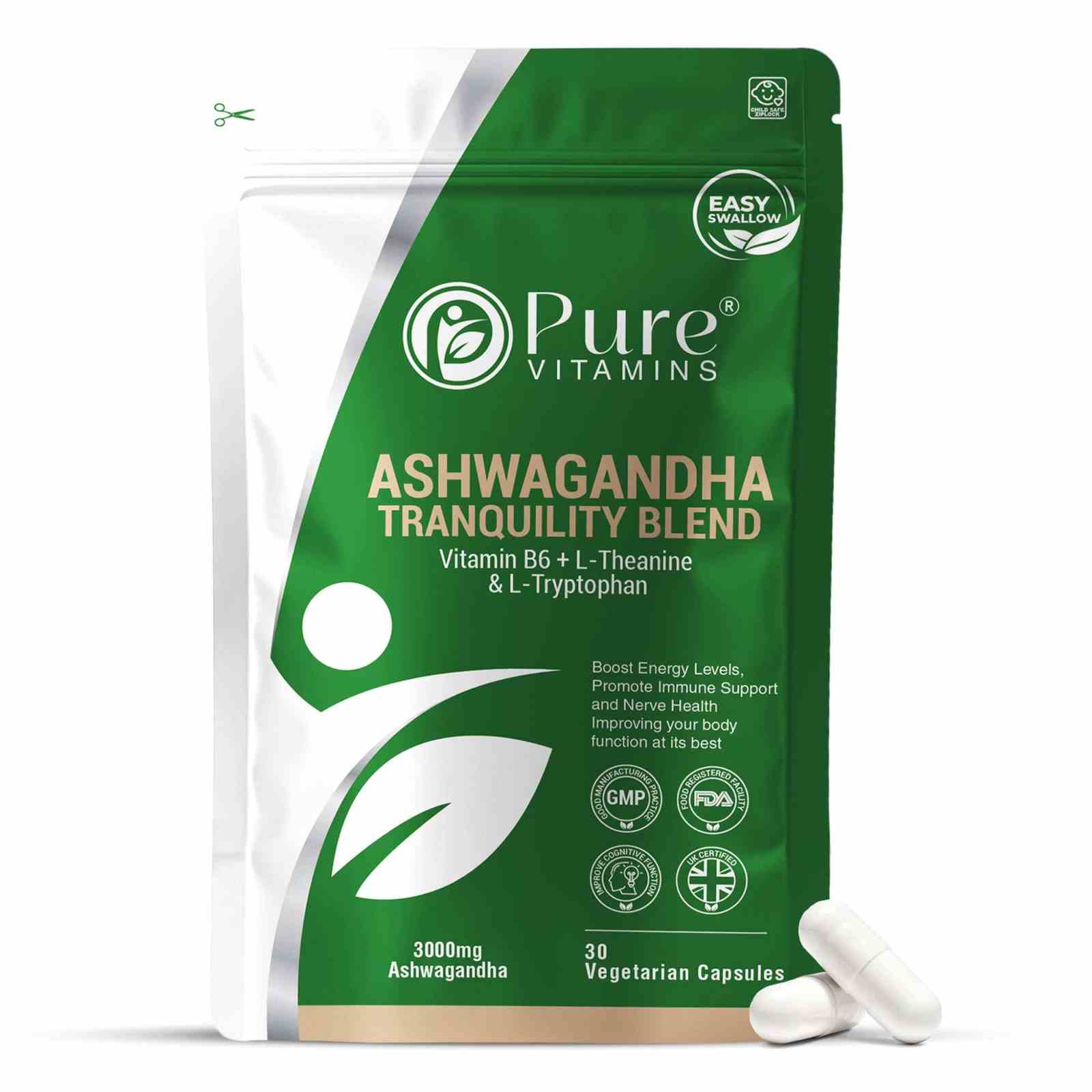
Why Is L-Theanine Added to Ashwagandha?
Why L-theanine is added to ashwagandha: L-theanine is an amino acid unique to the tea plant, paired with ashwagandha as a formulation choice combining two complementary ingredients with a shared theme, often alongside vitamin B6 which carries authorised claims.
Learn moreWhat Does 'Standardised to 5% Withanolides' Mean?
What 'standardised to 5% withanolides' means: the extract is measured so 5% by weight is the marker withanolide compounds, giving a consistent dose. Why the raw plant's natural variability makes standardisation matter.
Learn moreWhat Is Maca Root? (Black, Red and Yellow Maca Explained)
Maca root explained by composition and traditional use: what the Andean root vegetable is, an honest answer on why men take it (heritage, not authorised claims), the black/red/yellow colour varieties, and powder vs capsule forms.
Learn moreWhat Is Inulin in a Probiotic?
What inulin is in a probiotic: a prebiotic fibre (a fermentable fructan) that acts as a food source for gut bacteria, not a bacterium itself. Why it's paired with live cultures and what research links it to.
Learn moreWhy Is Copper Added to Zinc Supplements?
Why copper is added to zinc supplements: zinc and copper compete for absorption, so sustained high-dose zinc can lower copper status. A small, balanced amount of copper keeps the two minerals in proportion.
Learn more
Creatine for Women Over 40: What the Research Explores
An honest guide to creatine for women over 40: what creatine is, why women have lower baseline stores, what research is exploring, and the practical usage and safety facts. No claims, no hype.
Learn more
Omega-3 for Dry Eyes: An Honest Look at the Vision Role
Omega-3 for dry eyes, honestly: DHA contributes to the maintenance of normal vision, but isn't a treatment for dry eye. DHA's eye role, plus sensible steps for eye comfort.
Learn more
Omega-3 and Brain Fog: An Honest Look
Omega-3 and brain fog, honestly: DHA contributes to the maintenance of normal brain function, but no supplement treats 'brain fog'. What DHA does, and the basics to sort first.
Learn more
Biotin for Hair Loss: Does It Work and How Much?
Reviewed and updated: 27 July 2026 If you are asking how much biotin for hair loss, the honest short answer is this: most people take somewhere between 1,000 mcg and 10,000 mcg a day, but the amount matters far less than whether you were actually low in biotin to begin with. Biotin, also known as vitamin B7, contributes to the maintenance of normal hair and normal skin. Where the marketing gets ahead of the science is the idea that a big dose will regrow hair for everyone. I am Dr. Miron, and I would rather give you the useful, honest version. How much biotin do people take for hair loss? When people search for how much biotin to take, they usually land on strengths like 1,000 mcg, 5,000 mcg or 10,000 mcg. To put those numbers in context, the body only needs a very small amount of biotin each day. In the UK and Europe there is no formal recommended daily allowance, but the widely used adequate intake is around 40 mcg a day for adults, and the Nutrient Reference Value used on labels is 50 mcg. So a 10,000 mcg tablet supplies roughly 200 times the NRV. That sounds dramatic, but biotin is water-soluble, so the body simply uses what it needs and passes the rest out in urine. The high strengths you see on shelves are less about "the more the better" and more about giving a generous, consistent daily top-up. Our own high-strength biotin tablets deliver 10,000 mcg of pure D-biotin per tablet, and biotin contributes to the maintenance of normal hair. If you want the wider picture on dosing, we cover it in more depth in our biotin dosage guide. The honest quick answer What it is: biotin (vitamin B7), a water-soluble B vitamin that contributes to the maintenance of normal hair and normal skin, and to normal energy-yielding metabolism. Typical amounts: 1,000 to 10,000 mcg a day. A 10,000 mcg dose is common and well tolerated, but is not "better" for everyone. Who it genuinely helps: people who are actually low in biotin. In that group, correcting the shortfall can make a real difference. The honest catch: if you are not deficient, the evidence that extra biotin transforms your hair is thin. And high doses can throw off some blood tests. Persistent hair loss: worth a chat with your GP to check for the common causes (iron, thyroid, hormones) rather than guessing. What the research actually shows This is the part most articles skate over. The most useful review here is a systematic look at every reported case of biotin used for hair and nail changes. According to PubMed, Patel and colleagues found 18 documented cases where biotin helped, and in every single one the person had an underlying reason for poor hair or nail growth, such as an inherited or acquired biotin deficiency, brittle nail syndrome or uncombable hair syndrome. The authors were clear that there is a lack of good evidence for biotin supplementation in otherwise healthy people (Patel et al., 2017, DOI: 10.1159/000462981). A broader review of vitamins and minerals in hair loss reached a similar conclusion. Micronutrients matter for the hair follicle cycle, and a shortfall can be a modifiable factor in hair thinning, but the authors called for large placebo-controlled trials before anyone claims a specific supplement regrows hair in people who are not deficient (Almohanna et al., 2019, DOI: 10.1007/s13555-018-0278-6). In plain English: biotin can help if you were low; it is not a guaranteed fix if your levels were already fine. What the studies actually showed It is worth being specific about what the research demonstrated, because the detail is reassuring rather than hyped. The cases in the Patel review were mostly children with genuine biotin deficiency or specific hair-shaft disorders, plus some adults with brittle nails. Doses in the nail research were often around 2,500 mcg a day, and in some deficiency cases considerably higher, taken consistently over months. Improvement followed once the deficiency was corrected. That is the pattern across the literature: biotin restores what is missing, it does not add a bonus on top of an already adequate intake. So if you take it and your hair looks and feels healthier over time, wonderful; just keep your expectations grounded in that "correcting a shortfall" reality. Are you likely to be biotin deficient? The signs to know True biotin deficiency is genuinely uncommon in the UK, because a normal varied diet usually supplies plenty. When it does happen, the classic signs include thinning hair, a scaly red rash around the eyes, nose and mouth, brittle nails, and sometimes low mood or tiredness. You are more likely to run low if you are pregnant or breastfeeding, drink heavily, eat a lot of raw egg white over long periods, take certain long-term anti-seizure medicines, or have a rare inherited condition affecting how you use biotin. If none of those apply to you, a dramatic deficiency is unlikely, which also tells you how much of a difference a supplement is realistically going to make. The authorised claim: biotin and normal hair Here is the honest, accurate way to describe biotin and hair. Biotin contributes to the maintenance of normal hair, and it contributes to the maintenance of normal skin. The key word there is maintenance. Biotin helps keep hair that is already growing in good condition; it is not a fix for a medical cause of thinning. Keeping that in mind is genuinely useful when you are comparing products, because a lot of packaging quietly implies far more than the science actually supports. Natural food sources of biotin Before reaching for a high-strength tablet, it is worth knowing biotin is spread across everyday foods. Good sources include egg yolks (cooked, not raw), liver and other organ meats, salmon, nuts and seeds, sweet potato, and some leafy greens and pulses. For most people eating a mixed diet, everyday food already covers the small daily requirement, which is exactly why deficiency is rare. A supplement is really about a consistent, generous top-up, or for people who suspect their intake genuinely falls short. How long before you would notice anything? Hair is slow, and any supplement works to the timetable of your hair-growth cycle, not to a two-week transformation. If a shortfall is being corrected, most people are looking at something like two to three months of daily, consistent use before they might notice a change in how their hair and nails feel, and longer for anything more visible. My best tip is to treat it as a steady daily habit rather than a quick fix, and to give it a fair few months before you judge it. Taking it with food and at the same time each day makes it easy to stay consistent, and consistency matters more than the exact hour of the day, as I explain in the best time to take biotin 10,000 mcg. The high-dose blood-test catch worth knowing This is the one genuinely important safety point with high-strength biotin, and most hair articles skip it. Large biotin doses can interfere with certain laboratory blood tests. According to PubMed, biotin can distort common immunoassays, including thyroid tests, some hormone tests, ferritin, vitamin D and vitamin B12, and even cardiac troponin, producing falsely high or falsely low results depending on the test design (Moerman and Delanghe, 2020, DOI: 10.1080/17843286.2020.1780770). A laboratory analysis confirmed that high-dose biotin interfered with a wide panel of time-critical assays such as thyroid function, troponin and hormones (Mrosewski et al., 2020, DOI: 10.5858/arpa.2019-0425-OA). The practical takeaway is simple and reassuring: if you are having blood tests, tell whoever is arranging them that you take a high-strength biotin supplement, and it is sensible to pause it for a couple of days beforehand if they advise it. This matters most for thyroid and heart tests, where a misread could genuinely change decisions. It is not a reason to avoid biotin, just a reason to mention it. We go into the water-soluble side of biotin, including how the excess is handled, in is biotin water-soluble? Hair needs more than biotin If hair thinning is really bothering you, biotin is rarely the whole story, and I would not want you to pin all your hopes on it. In the UK the more common nutritional culprits behind hair shedding are low iron (ferritin), low vitamin D, and sometimes thyroid changes or hormonal shifts. Zinc and selenium also contribute to the maintenance of normal hair, which is why we combine all three in our biotin, zinc and selenium tablets rather than relying on biotin alone. You can see how these nutrients fit together in our honest guide to vitamins for hair, skin and nails. Most importantly, if your hair loss is sudden, patchy or ongoing, please see your GP. A simple blood test can check iron, thyroid and other common causes, and that is far more valuable than guessing at supplements. All of our formulas are made to tight specifications and manufactured in a GMP-certified facility, but a supplement is a support for a healthy routine, not a substitute for finding out what is actually going on. A few cautions worth knowing Biotin is water-soluble and generally very well tolerated, even at high strengths, because the body excretes what it does not use. High doses can interfere with blood tests, so mention your supplement to your GP or nurse and pause it before testing if advised. If you are pregnant or breastfeeding, or take regular medication, check with your GP or pharmacist before starting a high-strength supplement. Biotin is not a treatment for a medical cause of hair loss. Persistent or patchy shedding deserves a proper look by a professional. Frequently asked questions How much biotin do people take for hair loss? Most people take between 1,000 mcg and 10,000 mcg a day. A 10,000 mcg dose is common and well tolerated, but higher is not automatically better; biotin mainly makes a difference where you were genuinely low in it to begin with. Will biotin regrow my hair? Biotin contributes to the maintenance of normal hair, but it is not a regrowth treatment. The research shows benefit mainly in people with a biotin deficiency or a specific hair or nail disorder, not in people whose levels were already fine. How long does biotin take to work? Because it works to your hair-growth cycle, expect two to three months of daily, consistent use before you might notice a change in how your hair and nails feel, and longer for anything more visible. Can biotin affect my blood tests? Yes. High-dose biotin can distort some laboratory immunoassays, including thyroid, hormone and heart tests. Tell your GP you take it and pause it for a couple of days before blood tests if advised. Is 10,000 mcg of biotin too much? Biotin is water-soluble and well tolerated, so a 10,000 mcg daily dose is not considered harmful for most healthy adults. The main practical issue is blood-test interference rather than toxicity. Warmly, Dr. Miron, Founder of Pure Vitamins UK Shop High-Strength Biotin 10,000 mcg Food supplements should not be used as a substitute for a varied and balanced diet and a healthy lifestyle. This article is for general information and is not medical advice; if you have concerns about hair loss, please speak to your GP.
Learn more