


Reviewed and updated: 20 September 2026
The best form of curcumin to take is the one that actually reaches your bloodstream at a dose you can afford to take every single day, and for most people in the UK that means a standardised turmeric extract paired with black pepper extract, swallowed alongside a meal that contains some fat. The clever delivery technologies you see advertised, the phytosomes and micelles and liposomes, do genuinely raise blood levels further. They also cost more per day, and the eye-catching numbers printed next to them are almost never comparable between brands. This guide walks you through every main form, what each one actually does, and the small piece of label arithmetic that tells you which one is giving you the most for your money.

The Best Form of Curcumin to Take: the Short Answer
- For most people: a standardised turmeric extract, with a declared extract ratio and a declared curcuminoid percentage, paired with black pepper extract (piperine), taken with food that contains fat.
- If you want the highest measured blood levels: one of the enhanced-delivery forms, usually a phospholipid (phytosome), micellar or water-dispersible preparation. Expect to pay noticeably more per day.
- If you mainly cook with it: culinary turmeric powder is lovely in food and worth keeping in the cupboard, but the curcuminoid content is low, so treat it as a food rather than as a way to reach the amounts used in research.
- The one thing to ignore: a bare "X times more bioavailable" figure on a label. It is measured against different reference products, with different maths, and cannot be compared brand to brand.
- One honest caution: if you take blood-thinning medication, have gallstones or a bile duct problem, are pregnant or breastfeeding, or have surgery coming up, speak to your GP or pharmacist before you start any form.
A Root with Thousands of Years Behind It
Turmeric is not a modern invention, and I think that is worth saying out loud before we get into absorption science. Curcuma longa is a rhizome, a knobbly underground stem in the ginger family, and people across South Asia have grown it, cooked with it and used it in Ayurvedic practice for thousands of years. It was the colour in the pot and the warmth in the bowl long before anyone had a mass spectrometer. In traditional practice it has long been valued as a warming, grounding kitchen staple, the sort of thing reached for at the end of a long day, and in India it still turns up in everything from a simple dal to a cup of hot milk before bed.
That heritage is why turmeric became one of the most studied plants in the world. And it is also why the modern supplement aisle is so confusing: researchers wanted to study the active compounds properly, discovered that those compounds are stubbornly hard to absorb, and the industry has spent the last twenty years inventing ways around that problem. Every one of those ways has become a product you can buy, which is exactly why you are reading a page like this one.
What Curcumin Actually Is, and Why Plain Curcumin Barely Gets In
Turmeric root is mostly starch and fibre. The yellow pigment fraction is a group of three closely related compounds called curcuminoids: curcumin itself, which makes up the majority, plus demethoxycurcumin and bisdemethoxycurcumin. In a raw dried turmeric root, the whole curcuminoid fraction typically sits somewhere around two to five per cent of the weight. That is a small slice, which is why almost every serious supplement uses a concentrated extract rather than plain powder.
The trouble is what happens after you swallow it. Reviews of the chemistry, such as the overview of curcumin's pharmaceutical and analytical properties by Kotha and Luthria in Molecules (DOI 10.3390/molecules24162930), describe four separate obstacles stacked on top of each other:
- It barely dissolves in water. Curcumin is strongly lipophilic, which means it prefers fat to water. Your gut is a watery environment, so a lot of it simply never gets into solution and passes through.
- It is unstable at neutral and alkaline pH. The small amount that does dissolve starts degrading, particularly once it leaves the acidic stomach.
- It is metabolised extremely fast. The gut wall and liver conjugate curcumin almost immediately, attaching glucuronide and sulfate groups to it. Those conjugates are water soluble and easy to excrete, but they are not the free parent compound.
- What does get through is cleared quickly. Even after a large dose, free curcumin does not hang around in the blood for long.
How dramatic is this in practice? In a study of healthy volunteers published in Molecular Pharmaceutics (Cheng and colleagues, DOI 10.1021/acs.molpharmaceut.8b01246), twelve people took a four gram dose of an ordinary commercial curcumin product with breakfast. Free parent curcumin in plasma came back below the detection limit of the analytical method. The curcumin glucuronide metabolite was measurable within thirty minutes, so the curcumin had clearly been absorbed and processed, but the unmodified compound was effectively invisible. Four grams. That is the problem every delivery technology on the market is trying to solve.

The Main Curcumin Forms, Compared Honestly
Here is every approach you are likely to meet on a UK shelf, in plain language, with what it does and what it costs you.
1. Plain standardised extract, usually 95 per cent curcuminoids
This is the reference point everything else is measured against. A concentrated turmeric extract, purified until curcuminoids make up around 95 per cent of the powder. It is inexpensive, it is chemically well characterised, and it delivers a lot of curcuminoids per tablet. On its own, though, it inherits every absorption problem described above. It is the honest baseline, not the endpoint.
2. Paired with black pepper extract (piperine)
The oldest and cheapest fix, and the one with the most familiar evidence behind it. Piperine, the pungent compound in black pepper, slows down the glucuronidation step in the gut wall and liver, so more free curcumin survives long enough to circulate. The classic human study here is Shoba and colleagues in Planta Medica (DOI 10.1055/s-2006-957450): in healthy volunteers, two grams of curcumin alone produced serum levels that were undetectable or very low, while the same dose taken with 20 mg of piperine produced a substantial measurable rise. It is a small study by modern standards and the percentage figure it reported is often quoted more confidently than the data justify, but the direction of effect has held up, it costs almost nothing to include, and it is why so many UK formulas pair the two. Our own turmeric, ginger and black pepper tablets are built on exactly this logic.
3. Phospholipid complexes, often called phytosomes
Here the curcuminoids are bound to phospholipids, typically from sunflower or soy lecithin, so that the molecule arrives at the gut wall already wrapped in something fat-like and membrane-friendly. The curcuminoid content per capsule is lower, because the phospholipid takes up mass, but the proportion that gets absorbed is higher. These are well-studied preparations and a reasonable choice if absorption is your priority and the extra cost does not bother you.
4. Micellar and water-dispersible preparations
These use food-grade emulsifiers to pre-package curcuminoids inside tiny micelles, essentially doing the work your bile would otherwise have to do. The powder disperses in water and turns it bright yellow, which is a decent visual clue that something has genuinely changed. In the published human pharmacokinetic comparisons these preparations tend to sit at the very top for measured blood levels. The trade-offs are cost, a much lower curcuminoid percentage by weight, and the fact that you are also swallowing the emulsifier.
5. Liposomal curcumin
Curcuminoids enclosed in a lipid bilayer vesicle. Conceptually similar to the micellar approach and popular in liquid formats. Human data on oral liposomal curcumin is thinner than the marketing suggests, and liquid liposomal products can be fragile in storage, so I would want to see the standardisation clearly declared before paying a premium.
6. Solid lipid particles and nanoparticle systems
Curcumin dispersed in a solid fat matrix or reduced to nanoscale particles so that surface area increases and dissolution improves. Some of these have genuine human pharmacokinetic work behind them. As a buyer, the practical issue is that the category name tells you almost nothing: two products both labelled "nano" can be completely different preparations.
7. Fenugreek galactomannan matrix
A newer approach in which curcuminoids are held in a soluble dietary fibre matrix from fenugreek. The stated aim is to deliver more of the free, unconjugated curcuminoids rather than the conjugates. It is an interesting piece of food-science engineering with a growing but still relatively young literature, and much of that literature comes from groups connected to the ingredient itself, which is worth knowing when you read the numbers.
8. Whole-turmeric matrix and the food-first approach
Some products deliberately step back from isolation and use the whole root or a lightly concentrated extract, on the argument that the essential oils and other root components matter. And then there is simply cooking with it, the way it has been used for millennia: turmeric simmered in a fatty sauce, or whisked into warm milk. The curcuminoid amounts here are far lower than any extract, so this is not the route to research-level intakes, but it is genuinely pleasant, genuinely cheap, and the fat is doing real work. If you want the practical detail on that, I have written it up separately in how to take turmeric, and on why the two spices belong together in turmeric and ginger.

Why "185 Times More Bioavailable" Is Not a Number You Can Compare
This is the part I most want you to take away, because it is where almost everyone buying curcumin gets misled.
There is a genuinely useful review by Jamwal in the Journal of Integrative Medicine (DOI 10.1016/j.joim.2018.07.001) that gathered every commercial curcumin preparation with published human pharmacokinetic data, eleven of them, and put the reported figures side by side. Three came in at more than a hundredfold higher relative bioavailability than unformulated curcumin, with the highest reported figure around 185-fold. Those are real published numbers from real studies.
And yet you still cannot use them to rank two products in your basket. Here is why:
- The comparison product differs. A fold-increase is always measured against something. Some studies use 95 per cent curcuminoid extract, some use turmeric powder, some use a different branded product. Change the denominator and the multiple changes.
- The thing being measured differs. Some studies report free curcumin. Some report total curcuminoids after enzymatic treatment, which counts the glucuronide conjugates back in. Those are not the same quantity, and the second gives much larger numbers.
- The parameter differs. Peak concentration and total exposure over time are different measures, and a formula can look spectacular on one and ordinary on the other.
- The dose differs. A twentyfold increase achieved from 50 mg of curcuminoids and a fivefold increase achieved from 500 mg are not the same outcome for you.
That last point is the one that matters in a shop. Douglass and Clouatre made exactly this argument in the Journal of the American College of Nutrition (DOI 10.1080/07315724.2014.950392) when they reviewed the commercial absorption technologies against each other and introduced a relative mass efficiency measure, precisely so that preparations with wildly different curcuminoid percentages could be judged on a level playing field. Their conclusion was twofold: delivery strategies really do improve curcuminoid absorption, and total formula mass genuinely matters when you are making practical decisions about dose, cost and how many capsules you can realistically swallow.
So the honest reading of the literature is: yes, the enhanced forms work; no, you cannot rank them from the marketing; and the sensible response is to stop chasing the multiple and start reading the label. If you want the wider version of that argument, I have written about why bioavailability matters in supplements more generally.
How to Read a UK Curcumin Label
Three numbers decide what you are actually buying. Everything else on the front of the pack is decoration.
The extract ratio, for example 35:1
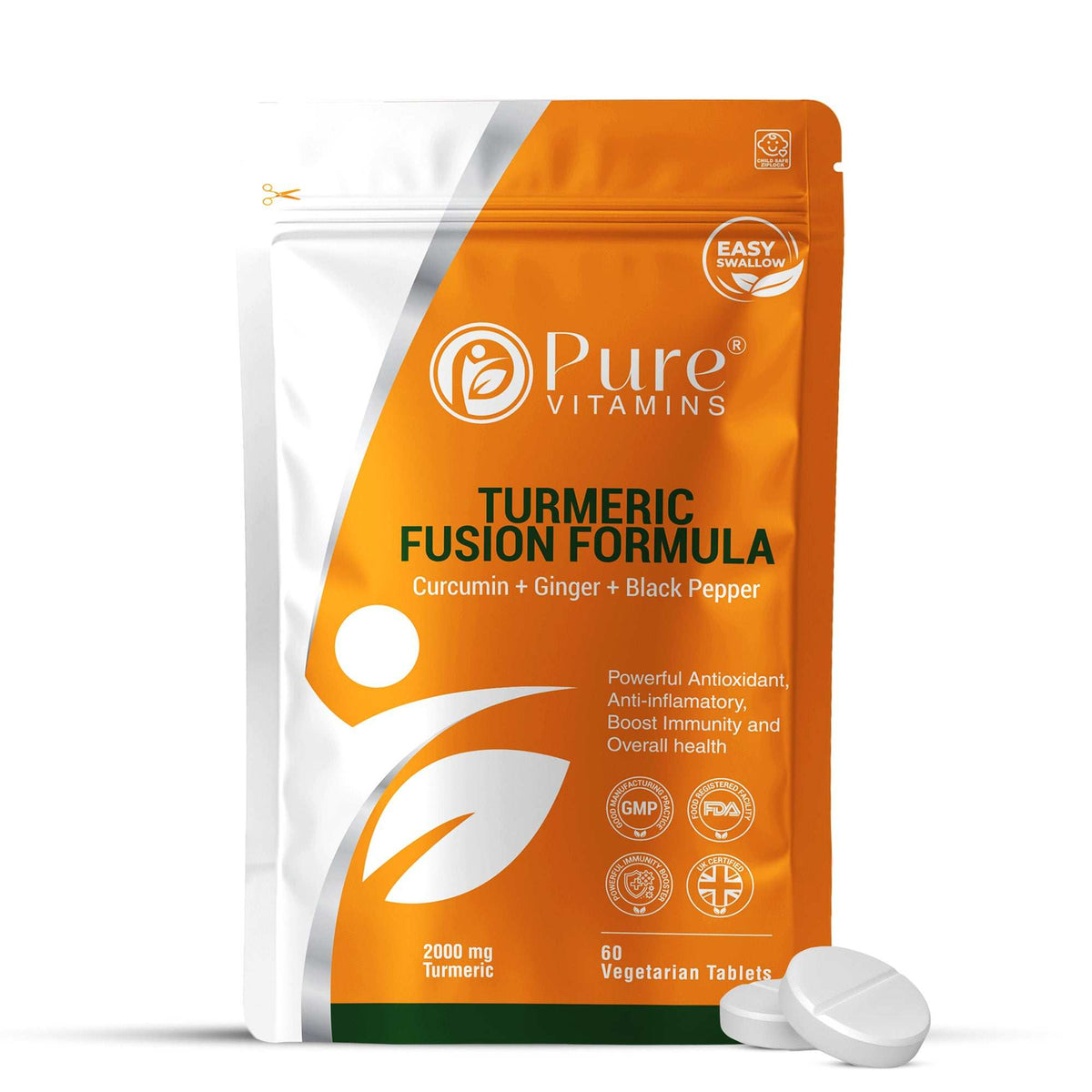
This tells you how much raw root went into each unit of extract. A 35:1 turmeric extract means 35 kg of dried root was concentrated down to 1 kg of extract, so 100 mg of that extract represents 3,500 mg of root. UK labels often state both, which is why you will see a pack saying something like "Turmeric 2,000 mg" when the tablet plainly does not contain two grams of powder. Neither figure is dishonest, but only one of them is in the tablet. If a label gives you a big root-equivalent number and no extract ratio at all, you have no way to check the arithmetic, and that itself tells you something.
The standardisation, for example "standardised to 95 per cent curcuminoids"
This is the percentage of the extract that is the active curcuminoid fraction. A high extract ratio with no declared curcuminoid percentage is a gap, because concentration and standardisation are not the same thing. My rule of thumb is simple: if a brand will not tell you what the extract is standardised to, they are asking you to trust a number they have chosen not to print.
The piperine amount
Where black pepper extract is included, look for a stated milligram amount of the extract and, ideally, its own standardisation for piperine. "Contains black pepper" without a number is a marketing gesture. Around 5 to 20 mg of a standardised black pepper extract is the range most formulas use.
Now do the maths
Take a tablet containing 200 mg of a 35:1 turmeric extract standardised to 95 per cent curcuminoids. The curcuminoid content is 200 multiplied by 0.95, which is 190 mg. At two tablets a day that is 380 mg of curcuminoids. Compare that against a micellar product providing, say, 40 mg of curcuminoids per serving with a much higher absorbed fraction, and you can finally have a sensible conversation with yourself about which you would rather pay for. You cannot have that conversation from the fold-increase figure alone. If label reading is not yet second nature, my walkthrough on how to read supplement labels covers the same discipline across other categories.
Cost Per Day Against Milligrams Delivered
This is the calculation nobody does and everybody should. Take the pack price, divide by the number of days the pack lasts at the recommended serving, and you have cost per day. Then set that next to the curcuminoid milligrams that serving delivers.
A 60-tablet pack taken at two tablets daily is a 30-day supply. If it costs around fourteen pounds, that is roughly 47p a day, delivering a few hundred milligrams of curcuminoids from a standardised extract with piperine. A premium enhanced-delivery product might cost two or three times that per day while delivering a fraction of the curcuminoid mass at a higher absorbed percentage. Neither is automatically the better buy. But once both are expressed as pence per day and milligrams per day, you are comparing two real things rather than two claims, and in my experience most people quietly conclude that the cheaper standardised-plus-piperine route is the one they will still be taking in six months. Consistency beats sophistication, every time.

How to Check a Form Really Is What the Label Says
A delivery technology is only worth paying for if the product genuinely contains it. Four practical checks:
- Is the extract ratio declared? A named ratio such as 35:1 is checkable. "Turmeric complex" is not.
- Is the standardisation declared? A curcuminoid percentage should be printed, not implied.
- Are there proprietary blends? If several ingredients share one combined weight, you cannot work out how much of anything you are getting. That is the point of the format.
- Is purity testing described honestly? Turmeric is a root crop, so heavy metals and adulteration with synthetic colourants are the real quality risks in this category. Our tablets are formulated in the UK and tested for purity and heavy metals at our GMP-certified facility, and every extract ratio is declared on the pouch. You should expect that level of detail from anyone asking for your money, and my guide to verifying supplement purity sets out how to press for it.
A Simple Way to Choose
- You want good value and something you will actually keep taking: a standardised extract with a declared ratio and declared curcuminoids, plus black pepper extract, taken with a meal containing fat.
- You want the highest measured blood levels and cost is secondary: a phospholipid, micellar or water-dispersible preparation with published human pharmacokinetic data, and check the curcuminoid milligrams so you know what you are getting.
- You struggle with tablets or capsules: a water-dispersible powder is the practical answer, since it mixes into a drink and the dispersibility is doing real work rather than just sounding impressive.
- You are not sure you want a supplement at all: cook with turmeric, keep the fat in the pan, and enjoy it. That is how the plant earned its reputation in the first place.
What to Realistically Expect
Turmeric has no authorised function claim behind it in this market, and I am not going to dress up what the science does and does not show. What the research genuinely tells us is narrower and more specific than the advertising: curcuminoids are poorly absorbed on their own; particular delivery approaches measurably raise the amount that circulates; and the differences between those approaches are real but routinely overstated. Everything else you may have read sits somewhere on a spectrum from early laboratory work to enthusiastic extrapolation. I have set out where I stand on the most commonly asked-about area in my honest position on turmeric and joints, and it is deliberately more cautious than most pages you will find.
My practical advice is unglamorous. Pick a form you can afford daily, take it with food that has fat in it, give it a proper run of several weeks rather than several days, and judge it on your own experience rather than on a percentage printed on a box.
A Few Cautions Worth Knowing
Turmeric is a food, and at culinary amounts it is about as familiar as an ingredient gets. Concentrated extracts are a different proposition, and a few people should check before starting any form of them.
- Blood-thinning medication. If you take warfarin or another anticoagulant or antiplatelet medicine, speak to your GP or pharmacist first.
- Gallstones or bile duct obstruction. Turmeric stimulates bile flow, so it is usually one to avoid if you have either.
- Surgery coming up. Standard advice is to stop supplements a couple of weeks beforehand, and to tell your surgical team what you take.
- Pregnancy and breastfeeding. Culinary use in food is normal. Concentrated extracts are not recommended, since there is not enough safety data.
- Low iron. Polyphenols can reduce non-haem iron absorption, so if you are managing low iron, separate an extract from iron-rich meals and from any iron supplement.
- Higher intakes. Digestive upset, loose stools and nausea are the commonly reported effects at larger doses. For context, international food-additive assessments have set an acceptable daily intake for curcumin of 3 mg per kilogram of body weight per day, which works out at about 210 mg of curcumin daily for a 70 kg adult. That figure was set for curcumin used as a colouring in food rather than as a supplement, and many supplements exceed it, which is a reason to be deliberate about your dose rather than a reason to panic.
- Existing liver conditions. Rare cases of liver injury have been reported with concentrated turmeric supplements, so if you have a liver condition, take medical advice first.
I go through all of this in more detail in turmeric safety and interactions. If you are unsure, the conversation to have is with your GP or pharmacist, not with a blog.
Frequently Asked Questions
What is the best form of curcumin to take?
For most people, a standardised turmeric extract with a declared extract ratio and a declared curcuminoid percentage, paired with black pepper extract and taken with a meal containing fat. If you want the highest measured blood levels and cost is not the deciding factor, a phospholipid, micellar or water-dispersible preparation with published human pharmacokinetic data will go further, though it delivers fewer curcuminoid milligrams per serving.
Do I need an enhanced-delivery curcumin, or will a standard extract do?
A standard extract with piperine, taken with fat, is a perfectly reasonable choice and is what most UK formulas use. Enhanced-delivery forms measurably raise how much curcumin circulates, so they are a genuine upgrade on absorption, but they cost more per day and they are not necessary for everyone. Whichever you pick, the form you will still be taking in three months beats the one that sounds most advanced.
Does black pepper really make a difference?
The mechanism is well described: piperine slows the conjugation reactions that clear curcumin so quickly, so more of the free compound survives. In healthy volunteers given curcumin with and without piperine, serum concentrations were clearly higher with piperine present. The commonly quoted percentage comes from one small study and is repeated with more confidence than the data deserve, but the direction of effect is consistent and the ingredient costs almost nothing to include.
Are the "times more bioavailable" numbers on labels comparable between brands?
No. Each figure is measured against a different reference product, sometimes counts total curcuminoids including conjugates rather than free curcumin, uses different pharmacokinetic parameters, and starts from a different dose. Two products both claiming a fiftyfold increase can be delivering very different amounts to you. Compare curcuminoid milligrams per serving and cost per day instead.
Should I take curcumin with food?
Yes, and ideally with food that contains some fat. Curcuminoids are fat soluble, so a meal containing oil, butter, nuts, dairy or oily fish gives them a much better chance than water on an empty stomach. This is the single easiest improvement most people can make, and it is free.
How do I work out how much curcumin is actually in my tablet?
Multiply the extract weight by the standardised curcuminoid percentage. A 200 mg extract standardised to 95 per cent curcuminoids gives 190 mg of curcuminoids per tablet. Then multiply by the number of tablets in a daily serving. Ignore the root-equivalent figure on the front of the pack for this calculation, since that number describes the raw material, not the tablet.
The Bottom Line
The best form of curcumin to take is the one whose label tells you exactly what is in it, at a price that lets you take it every day, swallowed with a meal that has some fat in it. Everything beyond that is optimisation, and useful optimisation at that, but it is optimisation of a supplement you have to actually keep taking for any of it to matter. If you want the neighbouring pieces, turmeric versus curcumin explains the difference between the root and the isolated compound, and the full set of ingredient explainers lives on our supplement guides hub. You can also browse everything we make from the Pure Vitamins UK home page.

Shop Turmeric, Ginger & Black Pepper Tablets
Dr. Miron, Founder of Pure Vitamins UK
Sources
Papers located and verified via PubMed. Each reference below carries its DOI as the identifier, with a stable PubMed or PMC permalink as the link.
- Jamwal R. Bioavailable curcumin formulations: a review of pharmacokinetic studies in healthy volunteers. Journal of Integrative Medicine, 2018. DOI 10.1016/j.joim.2018.07.001. PubMed record
- Douglass BJ, Clouatre DL. Beyond yellow curry: assessing commercial curcumin absorption technologies. Journal of the American College of Nutrition, 2015. DOI 10.1080/07315724.2014.950392. Full text on PMC
- Shoba G, Joy D, Joseph T, Majeed M, Rajendran R, Srinivas PS. Influence of piperine on the pharmacokinetics of curcumin in animals and human volunteers. Planta Medica, 1998. DOI 10.1055/s-2006-957450. PubMed record
- Kotha RR, Luthria DL. Curcumin: biological, pharmaceutical, nutraceutical and analytical aspects. Molecules, 2019. DOI 10.3390/molecules24162930. Full text on PMC
- Cheng D, Li W, Wang L, et al. Pharmacokinetics, pharmacodynamics and PKPD modeling of curcumin in healthy human volunteers. Molecular Pharmaceutics, 2019. DOI 10.1021/acs.molpharmaceut.8b01246. Full text on PMC
Food supplements should not be used as a substitute for a varied, balanced diet and a healthy lifestyle. This article is for general information and is not medical advice. If you are pregnant, breastfeeding, taking medication or have a medical condition, please speak to your GP or pharmacist before starting a new supplement.
