



Table of Contents
- Why Verifying Supplement Purity Matters
- How to Read Supplement Labels Correctly
- Third-Party Supplement Testing UK Standards
- How to Interpret a Certificate of Analysis
- Are Expensive Vitamins Actually Better
- Step-by-Step Verification Checklist
- Common Mistakes When Checking Supplement Quality
- Conclusion
Last Updated: August 18, 2026
Why Verifying Supplement Purity Matters
The supplement industry operates with minimal regulatory oversight compared to pharmaceutical drugs, placing responsibility on consumers to ensure products are genuine, pure, and free from contaminants. According to research on supplement contamination from ConsumerLab, roughly one in four supplements tested contained contaminants or failed to match label claims. Understanding how to verify supplement purity protects your health from adulterated products, heavy metals, microbial contamination, and undisclosed fillers that accumulate in your body over time.
At Pure Vitamins UK, we've built our approach around transparency, publishing batch testing results and manufacturing to ISO 22000, HACCP, and GMP standards. Distinguishing high-quality supplements requires knowing what to look for: understanding ingredient forms, recognising third-party certification marks, interpreting Certificates of Analysis, and spotting red flags in labelling. This guide walks you through each step.
How to Read Supplement Labels Correctly
Understanding the Supplement Facts Panel
The Supplement Facts panel lists each ingredient, its amount per serving, and the serving size. Start by checking the serving size at the top, many supplements list ingredients per serving, not per bottle. Next, look at ingredient amounts. Quality supplements list specific quantities in measurable units: milligrams (mg), micrograms (mcg), or International Units (IU). Vague descriptions like "proprietary blend" without quantities signal poor quality control.
The ingredient list should specify the form of each nutrient. Magnesium glycinate absorbs differently than magnesium oxide. Vitamin D3 is more bioavailable than vitamin D2. If the label simply says "magnesium" without specifying the form, the manufacturer is either being deliberately vague or using a cheaper, less absorbable version. Pure Vitamins UK specifies ingredient forms precisely because the form determines whether your body can actually use what you're taking.

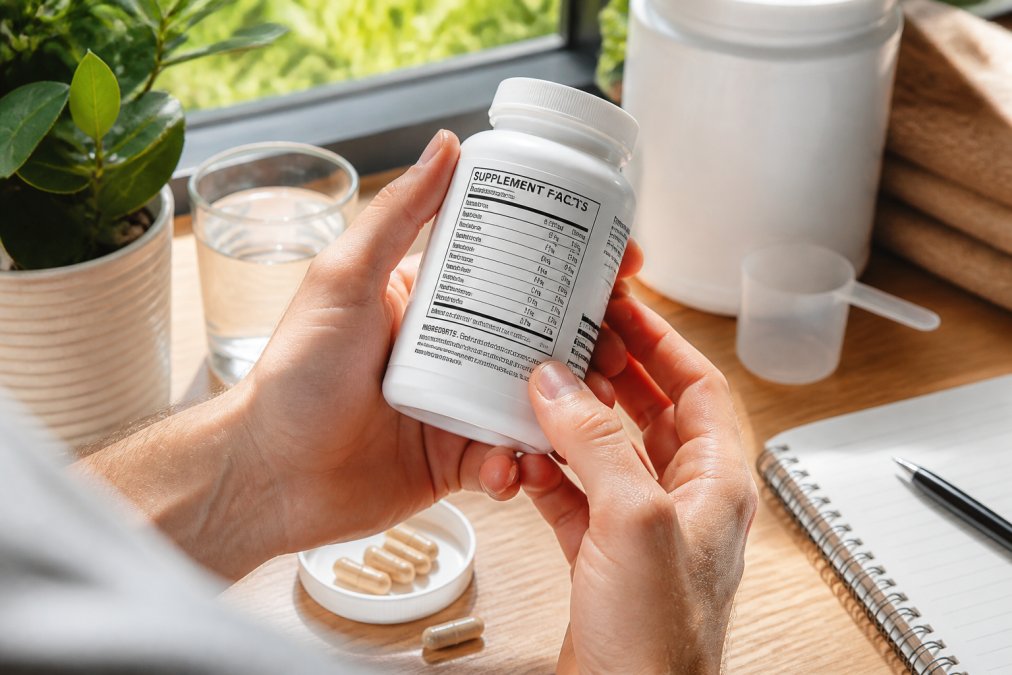
Check the "Other Ingredients" section carefully. This is where fillers, binders, and flow agents appear. While these aren't inherently harmful in small amounts, excessive fillers dilute active ingredients. Some manufacturers use more filler than active ingredient, which explains significant price differences between seemingly identical formulations.
Spotting Red Flags in Ingredient Lists
Synthetic fillers like titanium dioxide (used as a whitening agent) have no nutritional purpose and suggest the manufacturer prioritises appearance over substance. Artificial colours and flavours in unflavoured capsules indicate unnecessary additives.
Watch for "natural flavours" paired with sweeteners in products that don't need sweetening. A mineral supplement doesn't require vanilla flavour. If it has it, the manufacturer is either masking an unpleasant taste from low-quality ingredients or adding unnecessary ingredients to justify a higher price.
Proprietary blends are particularly problematic. When a label lists "Joint Support Complex (500mg)" containing turmeric, glucosamine, and MSM without specifying amounts, you have no way of knowing if you're receiving therapeutic doses. Quality manufacturers list each ingredient separately with its specific amount.
Avoid supplements claiming to treat, prevent, or cure specific diseases. UK law prohibits health claims suggesting a supplement can treat medical conditions. If a label says "cures arthritis" or "prevents cancer," that's a regulatory violation signalling the manufacturer doesn't respect the rules governing supplement marketing.
Third-Party Supplement Testing UK Standards
What Third-Party Testing Actually Covers
Third-party testing means an independent laboratory, separate from the manufacturer, tests the product. The laboratory checks whether the product contains the ingredients and amounts claimed on the label, whether contaminants like heavy metals or microbial pathogens are present, and whether the product has been adulterated with undisclosed substances.
Testing doesn't guarantee perfection, but it significantly reduces risk. A tested supplement has been through standardised protocols measuring potency, purity, and safety. An untested supplement could contain anything. Heavy metals testing is particularly important, as supplements derived from plants, herbs, or minerals can accumulate lead, cadmium, arsenic, and mercury from soil or water sources. Microbial testing checks for bacteria like E. coli and Salmonella, which can contaminate supplements during manufacturing.
Recognising Accredited Testing Marks
Several organisations provide third-party certification for supplements in the UK and internationally:
NSF Certified for Sport indicates the product has been tested for banned substances and is safe for athletes. The NSF tests for over 270 banned substances and verifies label accuracy.
USP Verified products have been tested to verify they contain the ingredients listed in the amounts claimed, are free from harmful contaminants, and have been manufactured according to quality standards. This is one of the most respected marks globally.
Informed Choice certification is specifically designed for sports supplements and tests for banned substances while verifying label accuracy and checking for contamination.
Quality Assurance International (QAI) certifies supplements for purity, potency, and safety.
ConsumerLab publishes independent test results for thousands of supplements. If you find your supplement listed on ConsumerLab's website with passing test results, that's strong evidence of quality.
The absence of these marks doesn't automatically mean a supplement is poor quality, but their presence is a positive indicator. Use certification as one factor among several rather than the only criterion.
How to Interpret a Certificate of Analysis
Key Sections of a COA Explained
A Certificate of Analysis is a technical document issued by a testing laboratory detailing product testing results. The header identifies the product, batch number, test date, and testing laboratory. The batch number is critical, as test results apply specifically to that production batch, not all products with that name.
The "Assay Results" section lists each ingredient tested and the amount found in the product, compared against the label claim. If the label says 1000mg of vitamin C and the assay shows 980mg, that's acceptable, as most regulatory standards allow 90-110% of the claimed amount. If the assay shows 600mg, the product is under-dosed.
The "Impurities" or "Contaminants" section reports levels of heavy metals, microbial pathogens, and other unwanted substances, compared against established safety limits. The "Microbial Testing" section checks for bacteria, yeast, and mould. Total aerobic microbial count, E. coli, Salmonella, and Listeria are standard tests.

Most COAs include a "Conclusion" or "Summary" section stating whether the product passed or failed testing. A passing result means the product meets the laboratory's quality standards.
What Heavy Metals and Microbial Testing Show
Heavy metals accumulate in the body over time and cause long-term damage. Lead affects cognitive function and bone health. Cadmium damages kidneys. Arsenic increases cancer risk. Mercury harms the nervous system. Microbial contamination causes acute illness and food poisoning-like symptoms.
A COA showing "Heavy Metals: Not Detected" is ideal but rare. More commonly, heavy metals are detected at levels below safety thresholds, which is normal and acceptable. What matters is that levels are documented and within regulatory limits. Microbial testing results should show either "None Detected" for pathogens or levels below safety limits.
Are Expensive Vitamins Actually Better
Price vs. Quality: What Justifies Higher Cost
The relationship between price and quality in supplements is real but complicated. Ingredient form is a primary cost driver. Magnesium glycinate costs more than magnesium oxide because it's more bioavailable and easier on the digestive system. Vitamin D3 costs more than vitamin D2. These differences determine whether your body can actually absorb and use the supplement.
Manufacturing standards add cost. ISO 22000, HACCP, and GMP certifications require documented processes, regular testing, and quality control systems. A manufacturer maintaining these standards must charge more to cover expenses. Third-party testing is another cost factor, with each batch tested by an independent laboratory costing £500-2000 depending on scope.
Dosing transparency costs money too. Specifying exact ingredient amounts, listing ingredient forms, and publishing test results requires documentation and systems. Vague labelling with proprietary blends costs less because there's no accountability.
Budget-Friendly Brands That Meet Quality Standards
High quality doesn't require premium pricing. Look for budget brands that publish third-party testing results. If a £10 supplement includes a COA showing it passed heavy metals and microbial testing, that's a strong signal of quality regardless of price. Compare ingredient forms across price points. A £12 magnesium supplement using magnesium glycinate is better value than a £25 magnesium supplement using magnesium oxide.
Avoid the cheapest options in any category. A £2.99 multivitamin almost certainly contains mostly fillers and poorly absorbable ingredient forms. Similarly, avoid the most expensive options unless you can identify specific reasons for the premium.
Pure Vitamins UK positions itself between these extremes. Our Biotin Tablets at £9.95 deliver 10,000mcg of pure D-biotin with transparent dosing and batch testing. Our Magnesium Glycinate Capsules at £11.99 use three bioavailable forms of magnesium. Our Probiotic Capsules at £12.50 contain 14 strains and 100 billion CFU with documented quality standards. We've eliminated unnecessary marketing spend and focused on delivering genuine quality at fair prices.
Step-by-Step Verification Checklist
Use this checklist when evaluating any supplement:
| Step | What to Check | Red Flags | Pass Indicators |
|---|---|---|---|
| 1. Label Clarity | Ingredient amounts listed specifically | Proprietary blends, vague descriptions, missing amounts | Specific mg/mcg amounts for each ingredient |
| 2. Ingredient Forms | Specific forms listed (glycinate, D3, etc.) | Generic terms like "magnesium" without form | Bioavailable forms specified (glycinate, chelated, D3) |
| 3. Fillers & Additives | Unnecessary additives checked | Excessive fillers, artificial colours, titanium dioxide | Minimal additives, no unnecessary sweeteners |
| 4. Certification Marks | Third-party marks visible | No certification marks present | NSF, USP, Informed Choice, or QAI marks |
| 5. COA Availability | Certificate of Analysis accessible | Manufacturer refuses to provide COA | COA readily available, recent batch tested |
| 6. Assay Results | Label claims match test results | Assay shows <90% of claimed amounts | Assay shows 90-110% of label claims |
| 7. Contaminant Testing | Heavy metals and microbial results reviewed | Contaminants above safety limits | All contaminants below safety thresholds |
| 8. Manufacturing Standards | ISO, HACCP, GMP certification present | No manufacturing certifications listed | ISO 22000, HACCP, GMP standards documented |
How to use this checklist: For any supplement you're considering, work through each step. If the product passes all eight, it's a quality product. If it fails more than two steps, consider alternatives.
Common Mistakes When Checking Supplement Quality
Assuming price equals quality. A supplement costing £30 isn't automatically better than one costing £12. Evaluate based on ingredients and testing, not price alone.
Trusting retailer reputation over product evaluation. A supplement sold at a reputable retailer has only passed that retailer's purchasing standards, not necessarily rigorous quality testing. Evaluate the supplement itself, not just where it's sold.
Ignoring ingredient forms. Many consumers see "magnesium 400mg" and assume all magnesium supplements are equivalent. Magnesium glycinate 400mg delivers far more usable magnesium than magnesium oxide 400mg.
Accepting proprietary blends without question. When a label lists "Joint Support Blend (500mg)" without specifying individual ingredient amounts, you have no way of knowing if you're receiving therapeutic doses. Avoid products using this approach.
Skipping COA verification. If a manufacturer won't provide a Certificate of Analysis or claims they don't have one, that's a serious red flag. Quality manufacturers test their products and publish results.
Confusing "natural" with "pure." Natural ingredients can still be contaminated with heavy metals or microbial pathogens. Purity requires testing and verification, not just natural sourcing.
Overlooking batch numbers. COAs are batch-specific. If you're concerned about a specific purchase, check the batch number on your bottle and request the COA for that exact batch.
Verifying supplement purity requires effort, but it's the most reliable way to ensure you're purchasing products that deliver what they promise. Reading labels carefully, checking for third-party certification, requesting and reviewing Certificates of Analysis, and understanding ingredient forms takes 10-15 minutes per product but protects your health and your investment. At Pure Vitamins UK, we've made this process simpler by publishing batch testing results, specifying ingredient forms, and maintaining manufacturing standards that exceed regulatory minimums. When you choose supplements backed by transparent testing and clear labelling, you're choosing products formulated to deliver genuine results without fillers or hidden compromises. Start with our Biotin Tablets, Magnesium Glycinate Capsules, or Probiotic Capsules, each one comes with documented batch testing and transparent dosing so you know exactly what you're purchasing. Shop now and experience the difference genuine quality makes.

Frequently Asked Questions
What does 'third-party tested' actually mean for supplements?
Third-party testing means an independent laboratory, not the manufacturer, has tested the supplement for potency, purity, and contaminants. The lab verifies that what's listed on the label matches what's actually in the bottle, and checks for heavy metals, microbial contamination, and banned substances. A Certificate of Analysis (COA) documents these results. Look for accreditation from bodies like NSF International or the British Retail Consortium to confirm the testing laboratory meets recognised standards.
How can I verify supplement purity using a Certificate of Analysis?
A COA shows test results for potency (ingredient strength), identity (correct ingredients present), and contaminants (heavy metals, bacteria, mould). Request the COA from the brand or check their website. Look for the batch number on your bottle and match it to the corresponding COA. Check that potency results fall within acceptable ranges (usually 90-110% of label claim), and that heavy metal and microbial results show 'pass' or are below safe limits. If a brand won't provide a COA, that's a red flag.
Are expensive vitamins actually better than budget options?
Price doesn't guarantee quality. What matters is third-party testing, transparent dosing, ingredient form (bioavailable forms cost more), and manufacturing standards like GMP and ISO 22000. A £9.95 supplement with a COA and proper testing can be superior to a £30 option without verification. Compare brands on certification marks, batch testing records, and ingredient transparency rather than price alone. Pure Vitamins UK products at £8.99-£29.99 all meet the same rigorous testing and manufacturing standards regardless of cost.
How do I know if a supplement contains fillers or synthetic additives?
Check the full ingredient list and look for synthetic binders, flow agents, and unnecessary additives. Common fillers include maltodextrin, microcrystalline cellulose, and magnesium stearate. Request the COA, which identifies all ingredients used in manufacturing. Brands committed to clean labels clearly state 'no artificial fillers' or 'no synthetic additives' and provide supporting documentation. Read the supplement facts panel carefully, if inactive ingredients are vague or unlisted, ask the brand for clarification before buying.


