

Table of Contents
- What Does Batch Tested Mean?
- Why Batch Testing Matters for Athlete Safety
- How the Batch Testing Process Works
- Understanding Banned Substances and Contamination Risks
- Informed Sport Certification and Third-Party Testing
- UKAD Supplement Risk Management for UK Athletes
- How to Identify and Verify Batch-Tested Products
- Limitations of Batch Testing and What It Cannot Guarantee
- Frequently Asked Questions
Last Updated: August 14, 2026
What Does Batch Tested Mean?
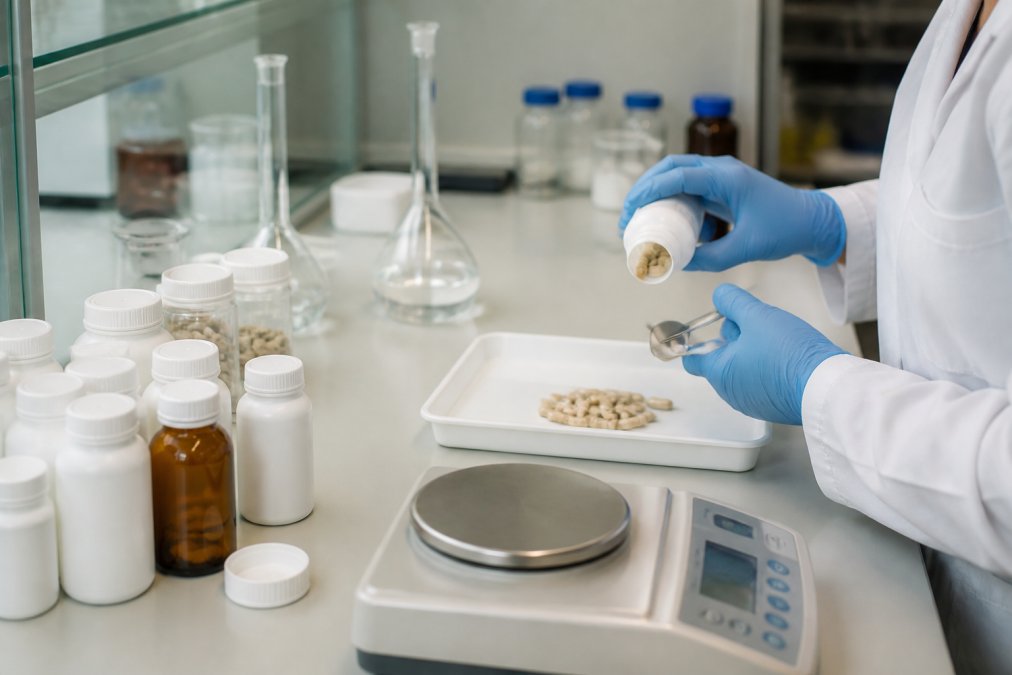
Batch testing is the analytical process of verifying that a specific production batch of supplements contains exactly what's listed on the label and is free from harmful contaminants like banned substances and heavy metals. When a supplement is batch tested, samples from that production run are sent to an independent laboratory where they undergo rigorous quality assurance testing to confirm ingredient identity, purity, and safety.
Think of it this way: a batch is a group of identical products manufactured together under the same conditions. Rather than testing every single capsule or tablet (which would be impossible), manufacturers test representative samples from that batch. If those samples pass, the entire batch is considered verified. This approach balances thorough quality assurance with practical manufacturing economics.
The key distinction is that batch testing happens AFTER manufacturing but BEFORE products reach consumers. It's a verification step, not a guarantee. A product can be batch tested and still have limitations, which we'll explore later. But for athletes, fitness enthusiasts, and anyone concerned about supplement integrity, batch testing represents a meaningful layer of protection against contamination and mislabelling.
At Pure Vitamins UK, we maintain documented in-house batch testing protocols for every production run, ensuring transparency from formulation through to the finished product you receive. This commitment to analytical verification is central to how we approach supplement safety.
Why Batch Testing Matters for Athlete Safety
For athletes, whether competing at elite level or training recreationally, contamination risk is real and consequential. A supplement that contains even trace amounts of a banned substance can trigger a positive doping test, regardless of whether the athlete knowingly consumed it. This is called strict liability in anti-doping law: intent doesn't matter. The substance in your system is what counts.
Batch testing mitigates this risk by identifying contamination before you consume the product. The risk comes from three sources: intentional adulteration (a manufacturer deliberately adds a banned ingredient to boost effect), cross-contamination (banned substances accidentally mix during production), or mislabelling (the label claims one ingredient but the product contains something else entirely).
For non-elite athletes, the stakes are different but still significant. Contaminated supplements can cause unexpected side effects, interact dangerously with medications, or simply fail to deliver what you paid for. You're investing time and money into your health, you deserve to know what's actually in the bottle.
The psychological benefit matters too. Knowing your supplements have been independently tested creates confidence. You're not gambling. You're making an informed choice based on verified information.
How the Batch Testing Process Works
Batch testing follows a structured analytical protocol. Here's what actually happens in the laboratory:
1. Sample Collection and Documentation A representative sample is drawn from the production batch and documented with a unique batch number, production date, and intended use. This traceability is essential, the lab needs to know exactly which batch they're testing and when it was made.
2. Visual and Physical Inspection The sample is examined for colour, texture, odour, and appearance. Any visual anomalies (discolouration, unusual texture, contamination visible to the naked eye) are flagged immediately.
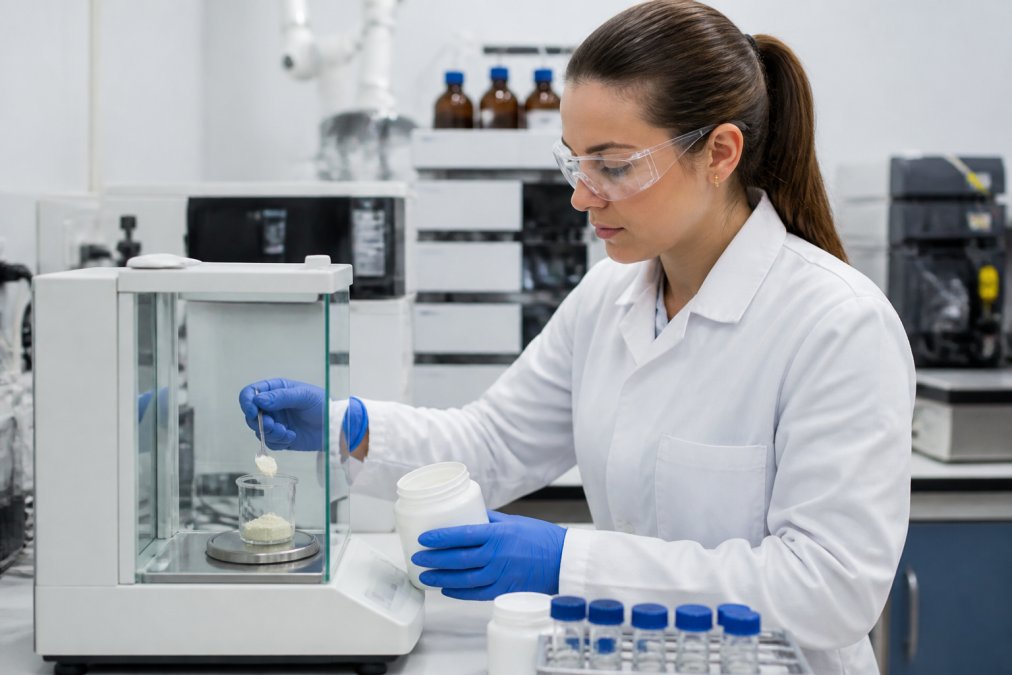
3. Analytical Testing for Identity and Purity This is where the real work happens. Laboratories use techniques like high-performance liquid chromatography (HPLC) and mass spectrometry to:
- Confirm the identity of each active ingredient
- Measure the quantity of each ingredient against label claims
- Detect undeclared substances (ingredients not listed on the label)
- Identify banned substances or prohibited compounds
4. Contamination Screening Samples are tested for heavy metals (lead, cadmium, mercury, arsenic), microbial contamination, and pesticide residues. These tests use atomic absorption spectroscopy and other advanced methods.
5. Documentation and Reporting The laboratory issues a detailed Certificate of Analysis (CoA) that documents every test performed, the results, pass/fail status, and the testing date. This becomes the official record of that batch's compliance.
The entire process typically takes 2-4 weeks, depending on the complexity of the supplement and the laboratory's workload. This is why batch testing adds cost, it's genuinely expensive to run these analyses properly.
Understanding Banned Substances and Contamination Risks
Contamination in supplements happens more often than most consumers realise. The supplement manufacturing sector operates under less stringent regulatory oversight than pharmaceuticals, which creates gaps where contamination can occur.
Types of Banned Substances Found in Supplements:
Stimulants like ephedrine, sibutramine, and various synthetic compounds appear in weight-loss and energy supplements. Anabolic steroids or prohormones show up in muscle-building formulas. Prescription drugs (particularly erectile dysfunction medications) contaminate sexual performance supplements. Selective androgen receptor modulators (SARMs), research chemicals never approved for human use, appear in products marketed for muscle gain.
How Contamination Happens:
Cross-contamination occurs when a manufacturing facility produces multiple supplements on shared equipment without thorough cleaning between runs. If the facility makes a banned substance product and then switches to your "clean" supplement without properly sanitising, residue transfers. Intentional adulteration happens when manufacturers add banned ingredients to make their products more effective, knowing consumers won't detect it without testing. Supplier fraud occurs when raw material suppliers mislabel ingredients, you order one thing, receive another.
The risk is highest with products marketed for performance enhancement, weight loss, or sexual function. These categories attract both unscrupulous manufacturers and consumers willing to take higher risks.
Informed Sport Certification and Third-Party Testing
Informed Sport is the gold-standard certification for supplements tested for banned substances. It's run by LGC, a UK-based laboratory with decades of experience in anti-doping testing. Products carrying the Informed Sport logo have been tested and verified to be free from the World Anti-Doping Agency (WADA) prohibited list.
The certification process is rigorous. Manufacturers submit their products for testing. LGC screens for over 200 banned substances and then retests periodically throughout the product's shelf life. If a batch fails, it's not certified. If it passes, the manufacturer receives the right to display the Informed Sport logo and receives a Certificate of Analysis.
This matters because Informed Sport testing is specifically designed for athletes. The laboratory understands doping control standards and tests for the exact compounds that could trigger anti-doping violations. It's not a general purity test, it's anti-doping focused.
Other third-party certifications exist. NSF Certified for Sport, BSCG (Banned Substances Control Group), and various ISO accreditations all represent quality assurance, but they're not identical to Informed Sport. Each has different testing protocols and scope.
For UK athletes, Informed Sport is the most relevant because it aligns with UK Anti-Doping (UKAD) standards and is widely recognised by UK sports organisations.
UKAD Supplement Risk Management for UK Athletes
UK Anti-Doping (UKAD) publishes clear guidance on supplement risk. Their position is straightforward: supplements are inherently risky from an anti-doping perspective because they're not regulated as strictly as pharmaceuticals.
UKAD recommends a tiered approach:
Tier 1: Minimise Supplementation The safest option is to meet nutritional needs through food whenever possible. Whole foods don't contain banned substances. If you must supplement, be selective.
Tier 2: Choose Tested Products If you do supplement, prioritise products that have been tested for banned substances. Informed Sport certification is the primary marker of this in the UK.
Tier 3: Maintain Documentation Keep records of what you're taking, when you started, and why. If you test positive, documentation showing you took a certified product in good faith provides some defence (though not a guarantee of avoiding sanctions).
UKAD also emphasises that athletes are strictly liable for what's in their system. Ignorance is not a defence. Taking a contaminated supplement won't protect you from anti-doping consequences, it's your responsibility to verify what you consume.
This creates a practical reality: if you're a UK athlete subject to anti-doping testing, batch-tested and certified supplements aren't optional, they're a professional necessity.
How to Identify and Verify Batch-Tested Products
Identifying a batch-tested product requires looking for specific markers on the label and packaging.
Visual Markers:
The Informed Sport logo is the clearest signal. It's a distinctive badge that appears on the label or packaging. If you see it, the product has been tested. Other certification logos include NSF Certified for Sport, BSCG Certified, and various ISO marks. These indicate quality assurance, though not all are anti-doping specific.
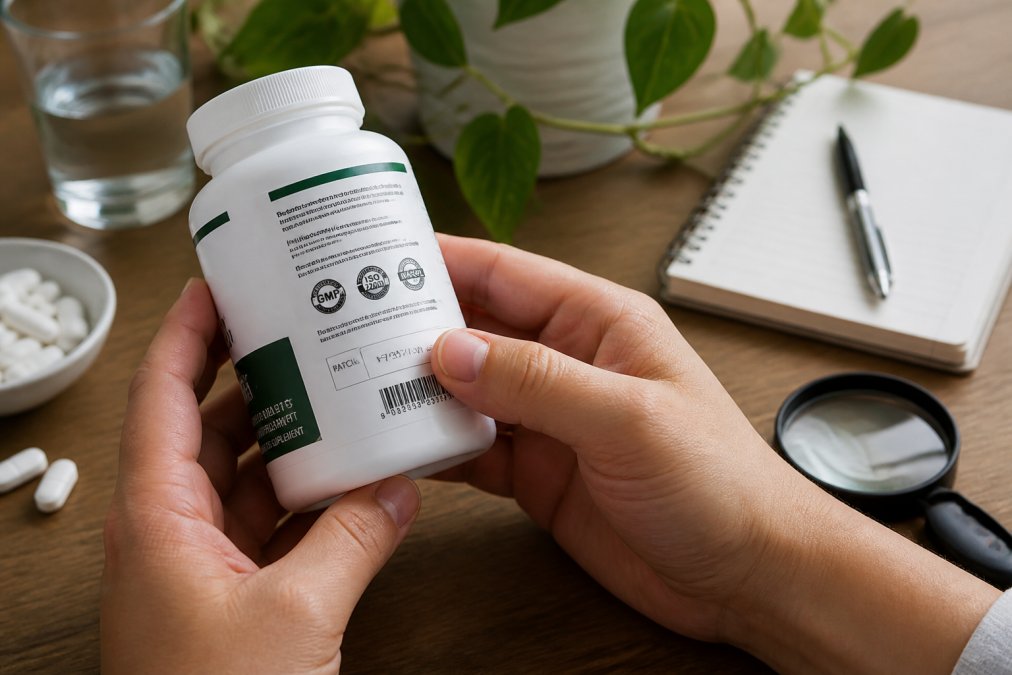
The batch number itself is crucial. Every batch-tested product should display a batch number on the label. This number links to the Certificate of Analysis. Without a batch number, you have no way to verify which production run you're purchasing.
Verification Steps:
- Find the batch number on your product (usually on the back label or bottom of the container)
- Visit the manufacturer's website and look for a "batch lookup" or "test results" section
- Enter your batch number, you should receive a Certificate of Analysis
- Review the CoA for the testing date, lab name, and pass/fail status
If the manufacturer doesn't provide a way to verify batch results online, that's a red flag. Transparent manufacturers make this process easy.
What to Look For on the Certificate of Analysis:
The CoA should list every active ingredient with the measured quantity versus the label claim. Look for results within ±10% of label claims (industry standard tolerance). Any ingredient marked "not detected" when it should be present is a problem. Any undeclared substance is a major concern.
The testing date matters. A CoA from three years ago doesn't guarantee the product you're holding now is still compliant, ingredients can degrade, contamination can occur. Ideally, the CoA should be from within the last 12-18 months.
Pure Vitamins UK provides batch verification through our website. Every product includes a batch number, and you can access the corresponding Certificate of Analysis to confirm testing results and ingredient accuracy.
Limitations of Batch Testing and What It Cannot Guarantee
Batch testing is valuable, but it has real boundaries. Understanding these limitations prevents false confidence.
What Batch Testing Cannot Do:
It cannot guarantee that every individual product in the batch is identical. Testing samples representative samples, not every unit. If contamination was extremely localised to one part of a production run, it might not appear in the samples tested.
It cannot predict degradation over time. A product that passes testing on day one might degrade if stored improperly. Heat, moisture, and light break down ingredients. Batch testing captures a snapshot at one moment, not the product's entire shelf life.
It cannot verify bioavailability or absorption. A supplement can contain the correct ingredient at the correct dose and still be poorly absorbed. Batch testing confirms what's in the bottle, not how well your body uses it.
It cannot replace medical advice. If you have a specific health condition or take medications, batch testing doesn't replace consultation with a healthcare provider about potential interactions.
It cannot account for individual variation. Two people taking the same batch-tested supplement may experience completely different results based on genetics, diet, sleep, stress, and dozens of other factors.
Cost and Accessibility:
Batch testing is expensive. A full analytical panel costs manufacturers £200-500 per batch. This cost is built into product pricing. Budget supplements often skip batch testing because they can't afford it. This creates a market reality: batch-tested products cost more. That's not marketing, it's economics.
This also means smaller manufacturers or niche products may not be batch tested simply due to volume and cost constraints, not because they're inferior.
The Verification Challenge:
You can verify a batch number only if the manufacturer provides access to test results. Many brands don't. Some manufacturers test their products but don't publicise results. Others claim testing but provide no way for consumers to verify. Without transparency, batch testing claims are unverifiable.
This is where Pure Vitamins UK differs. We publish batch results openly. You can verify any product you purchase. That transparency is a choice, not every brand makes it.
The Bottom Line: Batch testing is one layer of quality assurance, not a complete guarantee. It significantly reduces contamination risk and confirms label accuracy. For athletes and anyone concerned about supplement integrity, it's an essential marker. But it's not infallible, and it doesn't replace common sense about storage, shelf life, and individual health circumstances.
If you're serious about supplement safety, choose brands that batch test, provide transparent verification, and are willing to publish results. At Pure Vitamins UK, we've made this commitment because we believe your health deserves that level of transparency. Shop now to explore our batch-tested range, including our Biotin Tablets for Hair Growth at £9.95 and our Probiotic Capsules for Women at £12.50, both formulated in the UK and verified through documented batch testing.

Frequently Asked Questions
What does batch tested mean for supplements?
Batch testing means each production batch of a supplement has been independently analysed by a third-party laboratory to verify that it contains the ingredients listed on the label and is free from banned substances and harmful contaminants. This process provides traceability and quality assurance, giving consumers confidence that what they are purchasing matches the product description and meets manufacturing standards.
How can I verify if a supplement is batch tested?
Look for certification logos on the product label or packaging, such as Informed Sport or third-party testing seals. Request the batch number from the supplier and ask for the corresponding test certificate. Reputable brands like Pure Vitamins UK provide batch test results upon request. Check the product information page or contact customer service to confirm that your specific batch has been tested and obtain documentation.
Why is batch testing important for athletes?
Athletes face strict liability under anti-doping rules, meaning they are responsible for all substances in their body, whether intentional or accidental. Batch testing reduces the risk of inadvertent consumption of banned substances that may contaminate a supplement during manufacturing. This protection is especially critical for competitive athletes subject to doping control, as a positive test can result in disqualification and sanctions regardless of intent.
Are batch-tested supplements guaranteed to be 100% safe?
Batch testing significantly reduces risk but does not guarantee absolute safety. Testing protocols check for known banned substances and common contaminants, but cannot detect every possible harmful agent. Additionally, batch testing verifies the tested batch only, it does not guarantee safety if a product is stored improperly or if manufacturing standards change. It is one layer of quality assurance within a broader manufacturing and regulatory framework.

