


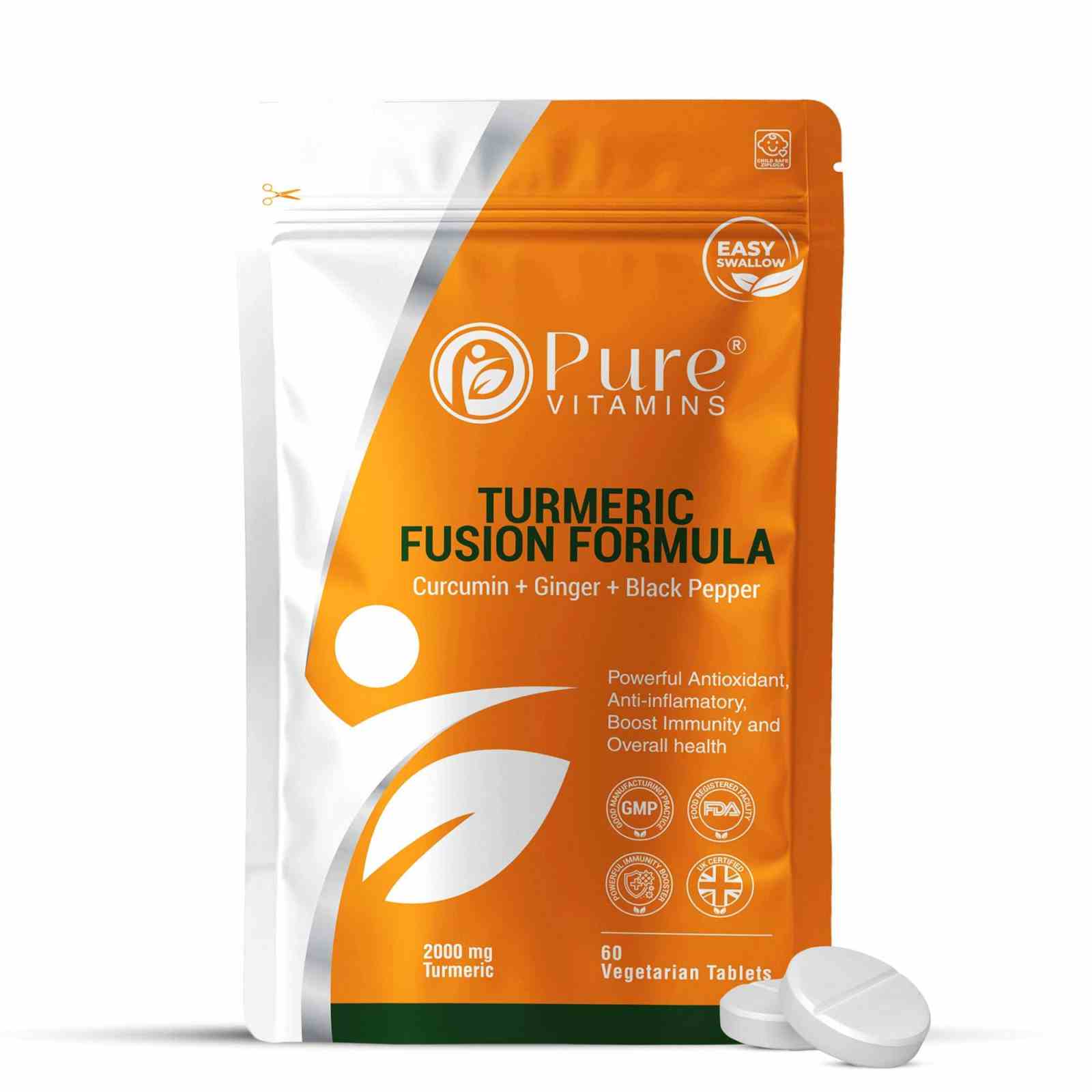
Turmeric and joints is one of the most-searched supplement pairings, and I want to give you the honest, grounded version. Turmeric is a heritage botanical that people have valued for thousands of years, and it is best chosen on that heritage and its composition rather than on dramatic promises. This guide sets out what turmeric actually is, what the joint research genuinely shows, and which nutrients have the strongest established role if joints and bones are your real concern.
Reviewed and updated: 24 July 2026

Turmeric and joints: the honest position (TL;DR)
- Turmeric is a heritage botanical: we present it on its long tradition and its composition, not on bold outcome promises.
- What the research shows: some short trials of curcuminoids in people with knee osteoarthritis reported reduced pain versus placebo, but the studies are small, lower-quality and less effective than standard painkillers, so the picture stays preliminary.
- If joints are your goal: the nutrients with the clearest, established role for cartilage, bone and collagen are vitamin C, vitamin D, calcium, manganese and copper, not turmeric.
- See a professional: persistent or worsening joint pain should be assessed by your GP.
A spice with deep heritage
Turmeric (Curcuma longa) has been used for thousands of years in Ayurvedic and traditional Asian practice, both as a culinary spice and a treasured botanical. That long history is genuine and interesting in its own right, and it is the honest reason turmeric is so widely reached for today. It is one of those golden roots people have simply trusted for generations.
What is actually in it: curcuminoids
The compounds turmeric is known for are the curcuminoids, of which curcumin is the most abundant. They give turmeric its deep yellow colour and are the focus of most research interest. A practical limitation runs through all of that research: curcumin is poorly absorbed, with low water solubility and rapid metabolism, which is why black pepper extract is so often added (Zeng et al., 2016). We go deeper in turmeric vs curcumin.
What the joint research actually shows
Here is the straight talk, reported as science. A systematic review of seven randomised trials (797 participants, all conducted in Asia) found that curcuminoids reduced knee pain versus placebo in people with knee osteoarthritis, but were less effective at relieving pain than ibuprofen, and the trials were small with variable reporting quality, so the authors called for further studies (Onakpoya et al., 2017). A broader review of supplements for osteoarthritis reached a similar verdict: curcumin was among those showing a short-term effect on pain, but the overall quality of evidence was very low, and no supplement showed clinically important effects at medium or long term (Liu et al., 2017). In short, there is genuine research interest, but the evidence is preliminary and mixed. That is interesting science to know about, and I would rather share it honestly than overstate it.

If joints and bones are your goal, here is where the evidence is strongest
This is the genuinely useful part. If you are thinking about cartilage, bones and connective tissue, the substances with the clearest, established role are vitamins and minerals:
- Vitamin C contributes to normal collagen formation for the normal function of cartilage and bones.
- Vitamin D, calcium, manganese, magnesium, zinc and phosphorus each contribute to the maintenance of normal bones (per their conditions of use).
- Manganese and copper contribute to the maintenance of normal connective tissue.
So if joint and bone support is your actual aim, those are the nutrients worth building your routine around. We set this out in our guide to supplements for bones and joints.
Why the black pepper matters
Curcumin is poorly absorbed on its own, which is why black pepper, providing piperine, is widely paired with turmeric to support curcumin uptake (Zeng et al., 2016). This is a composition and absorption point. Ginger is added as a complementary traditional botanical. Full detail in why turmeric needs black pepper and how to take turmeric.

Choosing a turmeric supplement well
- A standardised extract: curcuminoid content stated, not just "turmeric powder".
- Black pepper or piperine included: for absorption.
- Quality: tested for purity and heavy metals at a GMP-certified facility, and formulated in the UK.
- Judge on composition, not drama: be wary of turmeric marketed as a joint or arthritis remedy. Turmeric is a heritage botanical, chosen on tradition and composition, rather than a treatment.
Safety and who should be cautious
- Gallstones or bile duct issues: concentrated turmeric or curcumin can stimulate the gallbladder, so avoid it in these cases unless your GP advises otherwise.
- Blood thinners: turmeric may affect bleeding tendency, so check with your GP or pharmacist if you take anticoagulant or antiplatelet medicines.
- Kidney stones: turmeric contains oxalates, which matter for some people prone to stones; we cover this in turmeric safety and interactions.
- Pregnancy, breastfeeding and before surgery: seek advice before taking a concentrated extract, and tell your clinical team ahead of procedures.

The takeaway
Turmeric earns its place on heritage and composition: a centuries-old botanical, rich in curcuminoids, best taken with black pepper for absorption. The joint research is real but preliminary, mixed and lower-quality, so it is worth knowing rather than leaning on. If joints and bones are your genuine focus, the nutrients with the clearest established role, such as vitamin C, vitamin D and manganese, are the place to look. Browse the full range at the Pure Vitamins UK home page.
Signed, Dr. Miron, Founder of Pure Vitamins UK.
Findings are paraphrased from the published literature as science and are not product claims. This article is for general information, not medical advice. Food supplements should not be used as a substitute for a varied, balanced diet and a healthy lifestyle. If you are pregnant, breastfeeding, taking medication (turmeric may interact with blood thinners) or managing a medical condition, speak to your GP or pharmacist before starting a new supplement. Persistent joint pain should be assessed by your GP.
