


Reviewed and updated: 23 July 2026
Supplements for bones and joints in the UK: what actually carries a claim
If you are shopping for supplements for bones and joints in the UK, here is the honest starting point: only a specific handful of nutrients have earned a genuine, authorised bone claim, and collagen, for all its popularity, is not yet one of them. That does not make collagen pointless. It means the strongest label promises belong to vitamins and minerals like vitamin D, calcium and vitamin C, while collagen earns its place on real research and on how neatly it pairs with them.
I am Dr. Miron, and my aim here is to save you from the two traps I see most often: paying for a blend built around an ingredient with no authorised claim, or overlooking the inexpensive, well-evidenced nutrients that genuinely support your skeleton.

The short version
- What carries a real bone claim: vitamin D, calcium, vitamin C, vitamin K, magnesium, zinc, manganese and copper each have an authorised role in bones or connective tissue.
- Who this is for: anyone thinking about bone strength with age, active people who ask a lot of their joints, and post-menopausal women, who lose bone density faster.
- The one thing to know: collagen has promising research behind it, but for a label you can trust, make sure the formula also delivers the nutrients that genuinely carry a bone claim.
The nutrients that actually carry a bone claim
When UK and EU regulators reviewed the evidence, a specific set of nutrients earned the right to state a bone or connective-tissue role in exact wording. These are the workhorses worth having in any bones-and-joints routine.
- Vitamin D contributes to the maintenance of normal bones and to normal muscle function. It also helps the body use calcium properly, which is why it sits at the centre of almost every bone routine.
- Calcium is needed for the maintenance of normal bones. It is the raw material of the skeleton, and vitamin D helps you absorb it.
- Vitamin C contributes to normal collagen formation for the normal function of bones and cartilage. This is the quiet hero, and the reason collagen and vitamin C are so often mentioned in the same breath.
- Vitamin K contributes to the maintenance of normal bones, working alongside vitamin D and calcium.
- Magnesium contributes to the maintenance of normal bones, and a large share of the body's magnesium is stored in the skeleton.
- Zinc, manganese and copper each contribute to the maintenance of normal bones or normal connective tissue, the scaffolding that holds joints together.
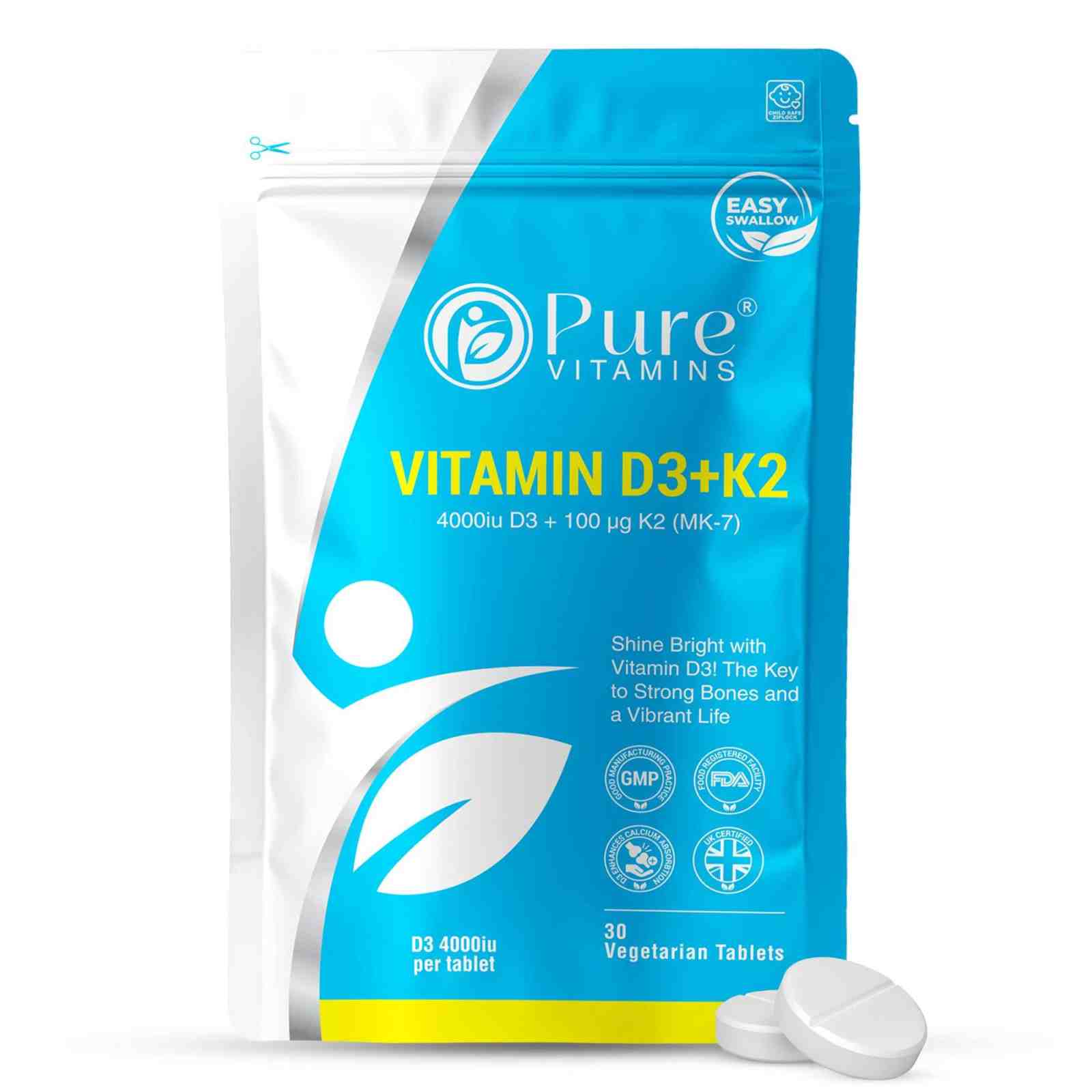
If a bones-and-joints product delivers a meaningful amount of these, it is doing real work. You can read more on the pairing in our note on vitamin D3 and K2 for bone health.

Where collagen fits for bones and joints
Collagen is the main structural protein in bone, cartilage, tendons and skin, so it is a sensible thing to be curious about. It does not yet hold an authorised bone or joint claim in the UK, but the research is genuinely interesting and worth presenting honestly as science.
In a 12-month randomised controlled trial, König and colleagues found that 5 g of specific collagen peptides daily was associated with improvements in bone mineral density in post-menopausal women compared with placebo (König et al., 2018, Nutrients). Separately, Zdzieblik and colleagues reported that 5 g of collagen peptides over 12 weeks improved activity-related knee discomfort in young, active adults (Zdzieblik et al., 2017, Applied Physiology, Nutrition, and Metabolism). These are single trials, not a settled case, and results across the wider literature are mixed, so I would treat collagen as a promising extra rather than the foundation.
Our hydrolysed collagen peptides are Type I and III at 14,000 mg per serving. Because collagen formation depends on vitamin C, I usually suggest taking collagen with a vitamin C source. There is more on that logic in collagen and vitamin C, and a plain explainer in what is hydrolysed collagen.
Vitamin D: the one most of us in the UK fall short on
If you only add one thing for bones, vitamin D is the strongest candidate in a British climate. The NHS advises that adults consider a daily 10 microgram (400 IU) supplement through the autumn and winter, when sunlight is too weak for the skin to make enough. The tolerable upper intake level for adults is 100 micrograms (4,000 IU) a day from supplements, so there is a comfortable, sensible range to work within. Our post on vitamin D and bone health goes deeper.

How to choose a bones and joints supplement
- Check the nutrients that carry a claim first. Look for meaningful amounts of vitamin D, calcium, vitamin C, vitamin K, magnesium and the trace minerals, ideally at or above 15 percent of the reference intake.
- Treat collagen as a bonus, not the headline. If a product leans entirely on collagen and skips the claim-carrying nutrients, you are paying for hope over substance.
- Mind the form and dose. Collagen research clusters around 5 to 10 g of peptides a day; vitamin D around 10 to 25 micrograms for maintenance.
- Keep it clean. Fewer fillers, clear labelling, and honest amounts beat a long ingredient list with pixie-dust doses.
How much and how to take
For collagen, a daily 5 to 10 g scoop of peptides is the amount most studies use, stirred into coffee, water or a smoothie. For vitamin D, 10 micrograms daily is a reasonable maintenance dose through winter. Consistency matters more than timing with all of these, so pick a moment in your day you will not forget.
A few cautions worth knowing
If you take calcium or vitamin D at higher doses, or you have kidney problems, check with your GP first, as calcium in particular needs to stay within sensible limits. Vitamin K can interact with anticoagulant medicines such as warfarin, so speak to your prescriber before adding it. If you are pregnant or breastfeeding, or managing a health condition, a quick word with a healthcare professional is always the right call before starting something new.
Frequently asked questions
Does collagen carry an authorised bone or joint claim in the UK?
No. Collagen does not currently hold an authorised bone or joint claim in the UK. The research on collagen peptides is promising, but the label claims for bones sit with nutrients like vitamin D, calcium and vitamin C.
What is the single best supplement for bone health in the UK?
For most people in the UK, vitamin D is the most useful single addition, because sunlight is too weak to make enough from roughly October to March. Calcium from diet and vitamin D together are the backbone of bone support.
Can I take collagen and vitamin C together?
Yes, and it is a sensible pairing. Vitamin C contributes to normal collagen formation, so taking collagen peptides alongside a vitamin C source is a logical routine.
How long before I notice anything?
Bone and connective-tissue changes are slow. The bone density study ran for 12 months and the joint comfort study for 12 weeks, so think in terms of months of consistent use, not days.
Shop Hydrolysed Collagen Peptides
For more buying guidance, see our guide to choosing a collagen supplement, or browse the full range on the Pure Vitamins UK home page.
Dr. Miron, Founder of Pure Vitamins UK
Food supplements are not a substitute for a varied, balanced diet and a healthy lifestyle.
