


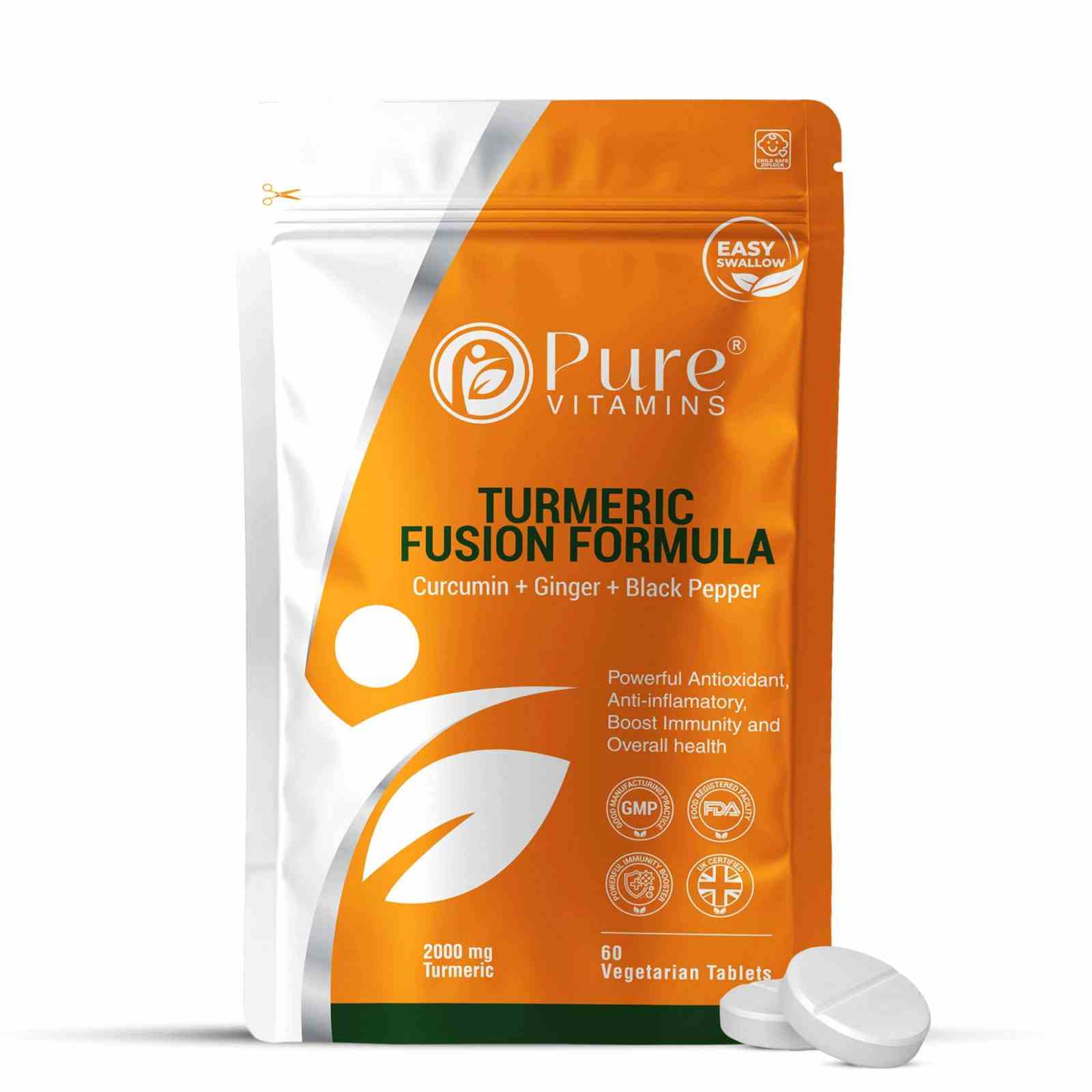
Turmeric safety is the sensible thing to read before taking a concentrated turmeric supplement. Turmeric has been a kitchen and wellness staple across India and South East Asia for thousands of years and has a long history of safe dietary use, but a high-strength extract is a different proposition from the pinch you cook with. There are a few genuine points worth knowing: medication interactions, rare reports of liver injury, kidney stones, and who should take particular care. This guide covers them honestly.
Reviewed and updated: 24 July 2026

Turmeric safety: the quick answer (TL;DR)
- Medication: if you take any prescription medicine, especially blood thinners, check with your GP or pharmacist before a concentrated turmeric supplement.
- Liver: rare cases of liver injury have been linked to high-dose, high-bioavailability turmeric supplements; stop and seek advice if you notice jaundice, dark urine or unusual tiredness.
- Kidney stones: turmeric contains oxalates, so be cautious if you have a history of calcium-oxalate stones.
- Special groups: people with gallstones, those who are pregnant or breastfeeding, and anyone facing surgery should seek advice first.
Does turmeric interact with medications?
This is the most important point. Concentrated turmeric and curcumin can potentially interact with certain medicines, most notably blood-thinning (anticoagulant and antiplatelet) medication, where there is a theoretical concern about additive effects on bleeding. There is also a mechanism behind interaction concerns with the black pepper extract that is usually added: piperine can reversibly inhibit the liver and gut enzymes (such as CYP3A and the UGT and SULT conjugating enzymes) that process many medicines, which is the very property that increases curcumin absorption (Zeng et al., 2016). I deliberately do not give a definitive drug-by-drug list, because the right answer depends on your specific medication: if you take any prescription medicine, check with your GP or pharmacist before starting a concentrated turmeric supplement. That brief conversation is genuinely worth it. There is more detail in what piperine is and what it does.
Turmeric and the liver: rare but real reports
Turmeric is generally well tolerated, but it would be dishonest to call a concentrated extract consequence-free. A pharmacovigilance analysis and systematic review documented cases of acute liver injury linked to Curcuma longa supplements, and noted that the affected products tended to be high-dose, high-bioavailability formulations, with many patients also taking other medicines (Lombardi et al., 2020). A separate case report described turmeric-associated liver injury and highlighted that piperine-enhanced products may be a relevant factor (Ajitkumar et al., 2023). These events are uncommon and usually resolve after stopping the supplement, but the practical message is sensible: use a reasonable dose, do not assume more is better, and stop and seek medical advice if you develop jaundice, unusually dark urine, pale stools or unexplained fatigue.

Turmeric and kidney stones
Turmeric naturally contains oxalates, compounds that, in high amounts, can contribute to the formation of calcium-oxalate kidney stones in susceptible people. For most people eating normal culinary amounts this is not a concern, but if you have a history of kidney stones, particularly oxalate stones, it is sensible to be cautious with high-dose turmeric supplements and to discuss it with your GP. An honest, useful fact rather than a scare.
Gallbladder considerations
Because turmeric is traditionally associated with stimulating bile flow, people with gallstones or a bile-duct obstruction are generally advised to be cautious and to seek medical advice before taking concentrated turmeric. Again, this is about responsible use, not alarm.
Turmeric and iron
One less-discussed point: curcumin can bind iron in the gut, so very high turmeric intakes may, in theory, reduce iron absorption. This is mainly relevant if you already have low iron or are working to raise your ferritin, in which case spacing turmeric away from iron-rich meals or an iron supplement is a reasonable precaution. See our guide to raising ferritin if that applies to you.
Other interactions and digestive tolerance
A couple more points round out the picture honestly. Turmeric and curcumin have been studied for effects on blood glucose, so if you take medication for diabetes it is worth mentioning turmeric to your GP or pharmacist, in case it adds to a glucose-lowering effect. The same applies to blood pressure medication. On tolerance, concentrated turmeric can cause mild digestive upset in some people, such as nausea or loose stools, particularly at higher doses or on an empty stomach; taking it with food usually helps. None of this means turmeric is unsafe for most people. It simply means a high-strength botanical deserves the same common-sense attention you would give any supplement, rather than being treated as if dose does not matter.
Who should take particular care
- Anyone on blood thinners or regular medication: check for interactions first.
- People with a history of kidney stones: due to the oxalate content.
- People with gallstones or bile-duct issues: seek medical advice.
- People with existing liver conditions: given the rare liver-injury reports, discuss with your GP.
- Those with low iron: mind the timing around iron-rich meals or supplements.
- Pregnant or breastfeeding: speak to your GP before concentrated turmeric supplements.
- Before surgery: many clinicians advise pausing supplements like turmeric beforehand; follow your surgical team's guidance.

Using turmeric responsibly
- Stick to a sensible dose: follow the label rather than stacking multiple high-strength products.
- Choose a transparent product: one that states its curcuminoid content and is tested for purity and heavy metals at a GMP-certified facility. If you are still deciding which delivery format to buy, my guide to the best form of curcumin to take compares them side by side.
- Take it with food: sensible for tolerance, since curcumin is fat-soluble; see how to take turmeric.
- Review your other supplements and medicines: so nothing overlaps unexpectedly.
The honest bottom line
For most healthy adults, turmeric is well tolerated; it is a food spice humans have used for millennia. The supplement-specific cautions above matter mainly for people with particular conditions or medications, or who take very high doses of high-bioavailability extracts. I would always rather give you the genuine safety facts than pretend a concentrated botanical is consequence-free for everyone. Our Turmeric with Ginger & Black Pepper is tested for purity and heavy metals at a GMP-certified facility and formulated in the UK.

The takeaway
The key turmeric safety points: check with your GP or pharmacist if you take medication (especially blood thinners), be aware of rare liver-injury reports with high-dose extracts, be cautious if you have a history of kidney stones or gallbladder issues, mind iron timing if you run low, and seek advice if pregnant, breastfeeding or facing surgery. For how to take it well, see how to take turmeric; for the joints question, see turmeric and joints; and browse the range at the Pure Vitamins UK home page.
Signed, Dr. Miron, Founder of Pure Vitamins UK.
Sources are drawn from the published literature; see the linked DOIs above. This article is for general information, not medical advice. Food supplements should not be used as a substitute for a varied, balanced diet and a healthy lifestyle. If you are pregnant, breastfeeding, taking medication or managing a medical condition, speak to your GP or pharmacist before starting a new supplement.
