



Table of Contents
- Why People Switch from Cytoplan
- What Makes a Strong Cytoplan Alternative
- Transparent Supplement Brands in the UK Worth Considering
- Clean Label Multivitamins in the UK: Ingredient Quality and Dosing
- Bioavailable Mineral Supplements: Form Matters More Than You Think
- Price-Per-Dose Comparison: Best Value Cytoplan Alternatives
- Which Cytoplan Alternative Should You Choose?
- Conclusion
Last Updated: August 28, 2026
Why People Switch from Cytoplan
People leave established supplement brands when they feel they're not getting value for money. While Cytoplan has built a reputation for quality, reputation doesn't always translate to results or affordability. The most common complaint isn't about efficacy, it's about cost-per-dose and whether the formulation matches your specific needs.
Many users report that switching to a targeted alternative delivers better results at a lower price point. Today, brands match or exceed Cytoplan's transparency standards and ingredient quality without the premium pricing. For budget-conscious consumers, this shift represents a practical recalibration: why pay for a brand name when you can get the same science at a fraction of the cost?

The second reason people switch involves specificity. Cytoplan offers broad-spectrum formulas, which work well for general health support. But if you're managing hormonal balance, digestive resilience, or targeted energy support, a specialised alternative often outperforms a one-size-fits-all multivitamin.
What Makes a Strong Cytoplan Alternative
A legitimate alternative must demonstrate ingredient transparency, showing the exact form of each nutrient (magnesium glycinate versus magnesium oxide makes a measurable difference in absorption), the dose in milligrams, and the source. Vague labelling like "mineral complex" or "proprietary blend" hides weak dosing or inferior ingredient forms.
Second, bioavailability matters more than ingredient count. A formula with eight nutrients in poorly absorbed forms will underperform a formula with four nutrients in highly bioavailable forms. Magnesium glycinate absorbs significantly better than magnesium oxide. Vitamin D3 is more effective than D2. Zinc citrate outperforms zinc oxide.

Third, third-party testing and batch verification separate serious brands from marketing-driven ones. This means independent laboratory testing for purity, heavy metals, and potency. Demand transparency: ask for certificates of analysis, and if a brand won't provide them, move on.
Fourth, pricing structure reveals intent. If a brand charges £50 for what should cost £25, they're banking on brand loyalty or clever marketing, not ingredient quality. Price-per-dose comparison cuts through marketing noise. A strong alternative typically costs 20-40% less than Cytoplan for equivalent or superior formulations.
Finally, the brand should operate within GB nutrition and health claims rules. Any claim about what a supplement "does" must be authorised by the Food Standards Agency (FSA) or backed by legitimate science.
Food Standards Agency nutrition and health claims guidance
Transparent Supplement Brands in the UK Worth Considering
The UK supplement market now includes several brands that match or exceed Cytoplan's transparency standards while undercutting their pricing.
Pure Vitamins UK stands out for transparent dosing and bioavailable ingredient forms. Every formula is formulated in the UK and manufactured to ISO 22000, HACCP, and GMP standards, with batch testing for purity and heavy metals. The range spans 23 products from £8.99 to £29.99, positioned deliberately between under-dosed budget supplements and overpriced premium brands. What differentiates Pure Vitamins UK is the commitment to ingredient form: magnesium glycinate instead of oxide, vitamin D3 with K2 instead of D2 alone, and zinc balanced with copper.
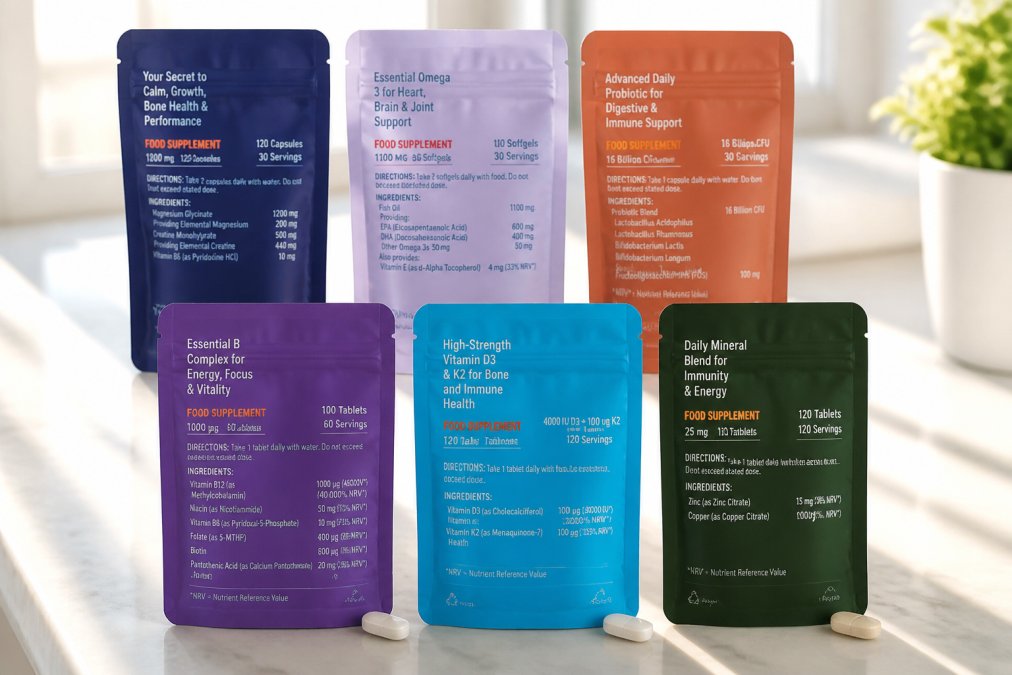
The Complete Daily Bundle from Pure Vitamins UK (£49.00) is the closest direct comparison to a Cytoplan daily multivitamin. It includes six core formulas: magnesium glycinate, vitamin D3 with K2, omega-3 EPA and DHA, a 14-strain probiotic, vitamin B12, and zinc with copper, each in the form the body absorbs best. For most users, this single bundle replaces multiple bottles and costs significantly less than assembling equivalent formulas from Cytoplan.
Clean Label Multivitamins in the UK: Ingredient Quality and Dosing
Clean label means no artificial colours, flavours, preservatives, or fillers, just the active nutrients and minimal inactive ingredients required for stability and absorption. The second layer is ingredient form. A multivitamin using synthetic forms (magnesium oxide, vitamin D2, zinc oxide) is technically "clean" but functionally inferior. Your gut absorbs these forms poorly. Brands that prioritise absorption use better forms: magnesium glycinate, vitamin D3, zinc citrate, with 30-50% higher bioavailability.
Dosing transparency is where many UK brands fall short. A multivitamin should list the exact milligram amount of each nutrient, not just percentages of recommended daily intake. Percentages hide weak dosing. Clean label brands state the actual dose clearly on the label.
The best clean label multivitamins avoid mega-dosing while staying above the bare minimum reference intake. For example, magnesium reference intake is 375mg for adults, but most people benefit from 300-400mg daily. Vitamin D reference intake is 10 micrograms, but most UK adults need 25-50 micrograms daily through autumn and winter.
Cost per dose is a practical measure of value. A £25 multivitamin taken daily for 60 days costs about 42p per dose. A £15 multivitamin costs about 25p per dose. If both contain similar ingredient forms and doses, the cheaper option is objectively better value.
Pure Vitamins UK's Daily Foundation Duo (£22.49) contains vitamin D3 with K2 and magnesium glycinate, the two most commonly deficient nutrients in UK diets with the strongest evidence behind them. Rather than a bloated multivitamin with 20 ingredients at token doses, this duo prioritises potency and absorption.
Bioavailable Mineral Supplements: Form Matters More Than You Think
Bioavailability is the percentage of a nutrient your body actually absorbs and uses. Two supplements can contain identical mineral amounts but deliver vastly different results based on the form used.
Magnesium oxide is cheap and commonly used in mass-market supplements, but your gut absorbs only 3-5% of it (peer-reviewed research). Magnesium glycinate is absorbed at 25-30%, five to ten times better (peer-reviewed research). For someone taking magnesium for muscle function, nervous system support, or sleep quality, the difference is the gap between noticing nothing and noticing real improvement.
Zinc absorption depends on form as well. Zinc oxide and zinc carbonate are poorly absorbed. Zinc citrate and zinc gluconate are significantly better. Vitamin D exists in two primary forms: D2 (ergocalciferol) and D3 (cholecalciferol). D3 is the form your skin produces naturally and is absorbed more completely, raising blood levels more effectively than D2.

The practical test is simple: if you're taking a supplement and not noticing results after 8-12 weeks, the form is likely the culprit. Switching to a higher-bioavailability form often produces noticeable improvement within 2-4 weeks.
Price-Per-Dose Comparison: Best Value Cytoplan Alternatives
Price per dose is the fairest comparison metric because it accounts for both cost and quantity. A £30 multivitamin lasting 60 days costs 50p per dose. This metric cuts through marketing and reveals true value.
Most Cytoplan multivitamins cost between 45p and 75p per dose. Competitive alternatives typically cost 20-40% less, roughly 30p to 50p per dose, for equivalent or superior ingredient forms and dosing.
| Supplement Type | Pure Vitamins UK Option | Typical Cost | Servings | Cost Per Dose |
|---|---|---|---|---|
| Daily Foundation | Daily Foundation Duo | £22.49 | 60 | 37p |
| Immunity & Energy | Immunity & Energy Support Trio | £26.99 | 60 | 45p |
| Comprehensive | Complete Daily Bundle | £49.00 | 60 | 82p |
| Women's Support | Iron & Energy Bundle for Women | £40.99 | 60 | 68p |
| Stress & Sleep | Magnesium & Adaptogen Bundle | £35.99 | 60 | 60p |
The Complete Daily Bundle at 82p per dose appears expensive until you account for what you're buying: six full-size formulas that would cost £80-100 if purchased separately. At £49.00 for the bundle, you're saving £30-50 upfront.
For someone currently spending £50-60 monthly on Cytoplan, switching to a Pure Vitamins UK bundle typically saves £15-25 per month without sacrificing quality. Over a year, that's £180-300 in savings.
Which Cytoplan Alternative Should You Choose?
The answer depends on your specific health goal. If you're managing general wellness with no particular deficiency, the Daily Foundation Duo from Pure Vitamins UK (£22.49) covers the two nutrients most UK diets run short on: vitamin D and magnesium.
If energy and immunity are your priorities, the Immunity & Energy Support Trio (£26.99) adds zinc and copper, addressing three of the most commonly under-dosed nutrients in UK diets. This is the sweet spot for most people switching from Cytoplan.

If you're managing specific health concerns, hormonal imbalance, digestive issues, stress and sleep quality, or women's health, a specialised bundle often outperforms a generic multivitamin. Pure Vitamins UK's Magnesium & Adaptogen Bundle (£35.99) pairs the mineral most depleted by stress with a premium adaptogenic botanical. For women, the Iron & Energy Bundle for Women (£40.99) addresses iron deficiency alongside supporting nutrients.
The decision framework is straightforward:
- General wellness: Daily Foundation Duo
- Energy and immunity: Immunity & Energy Support Trio
- Comprehensive daily support: Complete Daily Bundle
- Stress and sleep: Magnesium & Adaptogen Bundle
- Women's specific needs: Iron & Energy Bundle for Women
Each formula uses bioavailable ingredient forms, transparent dosing, and batch testing. The cost per dose is 30-50% lower than equivalent Cytoplan products. For most people, the switch delivers noticeable improvement within 4-8 weeks.
Switching from Cytoplan doesn't mean sacrificing quality, it means recalibrating your expectations around value. Brands like Pure Vitamins UK prove that transparent dosing, bioavailable ingredient forms, and rigorous batch testing don't require premium pricing. The real question isn't whether an alternative exists; it's whether you're willing to test one. Most people who make the switch report better results and lower costs within the first month. Shop the Pure Vitamins UK range now and experience the difference ingredient form and transparent dosing actually make.
Frequently Asked Questions
What should I look for when choosing a high-quality supplement brand as a Cytoplan alternative?
Prioritise third-party testing, transparent dosing on the label, and ingredient forms that absorb well (such as magnesium glycinate rather than oxide). Check that the brand is manufactured to GMP, ISO 22000 and HACCP standards. Verify the brand publishes certificates of analysis on request and uses non-GMO, additive-free ingredients. Avoid products that hide doses or use cheap forms purely to reduce cost.
How do bioavailable mineral supplements differ from standard formulas?
Bioavailable minerals are bound to amino acids or other compounds that the body absorbs more efficiently. Magnesium glycinate, for example, is gentler on the gut and more completely absorbed than magnesium oxide. This means you get more active nutrient per dose, not just more filler. The difference is especially noticeable with minerals like magnesium and iron, where form directly affects how much your body actually uses.
Are there affordable Cytoplan alternatives that don't compromise on quality?
Yes. Many clean-label brands in the UK offer transparent, well-formulated supplements at £20-£40 per bundle rather than premium prices. The Complete Daily Bundle from Pure Vitamins UK, for instance, covers six essential nutrients at £49, which is often cheaper per ingredient than buying Cytoplan formulas individually. Focus on bundles rather than single supplements to reduce cost while maintaining quality standards and transparent dosing.
How can I verify that a supplement is manufactured to GMP standards?
Ask the brand directly for their GMP certificate or look for it on their website. Reputable brands publish certificates of analysis and manufacturing credentials on request. In the UK, GMP certification is not legally mandatory for food supplements, but it is a strong signal of quality control. Cross-check the certificate issuer and manufacturing facility to confirm legitimacy. Brands that hide this information are a red flag.
This article was written using GrandRanker

