


Reviewed and updated: 23 July 2026
Can vitamin D3 without K2 actually hurt you? For most healthy adults taking a sensible everyday dose, the honest answer is no, the alarming version of that story is not supported by hard human evidence. The mechanism behind the worry is real and worth respecting, but the leap from a plausible idea on paper to "D3 alone harms you" runs well ahead of what the trials show. This guide explains the science fairly, where the genuine evidence sits, the real safety limit that does matter, and when pairing D3 with K2 is the considered choice.
Vitamin D3 without K2: the quick answer
- For most healthy adults at sensible doses: there is no good evidence that D3 on its own is harmful.
- The mechanism is real: vitamin D helps you absorb calcium, and vitamin K2 helps activate proteins that direct calcium into bone and away from soft tissue.
- But the scare is overstated: the best trial showed K2 hit its biochemical target yet did not slow calcification over two years.
- The safety point that genuinely matters: taking too much vitamin D over time, not the absence of K2, is what can actually cause harm. The adult upper limit is 100 micrograms (4000 IU) per day.
- Pair D3 with K2 as a considered choice for higher-dose, long-term daily use, not out of fear.

Why people worry about D3 without K2
The worry is not invented out of nothing; it rests on real physiology. One of vitamin D's jobs is helping the body absorb calcium from food, which is part of why vitamin D contributes to the normal absorption and utilisation of calcium and to the maintenance of normal bones. More vitamin D in the system tends to mean more calcium available. That part is genuine and uncontroversial.
Calcium is useful, but only in the right place, and the body uses a family of proteins to manage where it ends up. Several of those proteins need vitamin K to become active. Two are worth naming: osteocalcin, which helps bind calcium into the bone matrix, and matrix Gla protein, which helps keep calcium out of soft tissue such as artery walls. Vitamin K2 acts as the cofactor that switches these proteins on through a process called carboxylation. A 2023 review describes exactly this role for vitamin K2 in activating matrix Gla protein and supporting bone through osteocalcin (Skalny et al., 2023). So the logic the warnings are built on is: vitamin D raises calcium availability, and vitamin K2 helps direct that calcium toward bone. The problem is the jump from "this makes sense on paper" to "therefore D3 alone will harm you."
What the human evidence actually shows
This is the part most articles skip, because it complicates a clean sales pitch. One of the better tests of the idea was a randomised, double-blind trial published in Circulation in 2022, in which older men with existing aortic valve calcification took menaquinone-7 (vitamin K2) plus vitamin D, or placebo, for two years (Diederichsen et al., 2022). Two findings matter and they pull in different directions. The supplement clearly improved the vitamin K biomarker, with the marker of inactive matrix Gla protein dropping significantly, so the K2 was doing its biochemical job. But over two years it did not meaningfully slow the progression of calcification compared with placebo.
Read that carefully, because it cuts both ways. It shows the K2 mechanism is genuinely active in the body, so this is not pseudoscience, but activating the mechanism did not translate into the dramatic protective outcome the marketing implies, at least not in that group over that timeframe. Much of the remaining supportive evidence comes from observational studies and from specific higher-risk medical groups, where reviews note that poor vitamin K status is associated with calcification while stating plainly that the relationship is still poorly studied (Fusaro et al., 2010). Association in a high-risk population is a long way from "D3 will hurt a healthy adult." The honest summary: the mechanism is real, biomarkers respond, yet the strong claim that vitamin D3 on its own causes harm in otherwise healthy people is not something the trial evidence supports.

The safety point that genuinely matters: how much vitamin D is too much
If you want the real answer to "can vitamin D hurt you," it is about dose, not about K2. Vitamin D is fat-soluble, so unlike water-soluble vitamins the body stores it, and taking very high amounts over a long period can raise blood calcium too far, a state called hypercalcaemia, which can cause nausea, excessive thirst and, in serious cases, kidney problems. For adults, the tolerable upper intake level is 100 micrograms, which is 4000 IU, per day, and UK guidance advises not to exceed this from supplements (NIH Office of Dietary Supplements, Vitamin D fact sheet). A typical everyday maintenance dose is around 10 micrograms (400 IU), the amount UK health guidance suggests adults consider, especially in winter. The practical message is that the genuine risk lies in taking excessive vitamin D over time, not in pairing it with or without K2 at sensible doses.

The piece almost everyone forgets: magnesium
If we are going to talk honestly about vitamin D not acting in isolation, we cannot stop at K2, because magnesium belongs in the same conversation. Vitamin D does not act in its raw form; it has to be converted through several steps before the body can use it, and magnesium is involved in that processing. It is entirely possible to take plenty of vitamin D while having a magnesium intake that does not support using it well. Yet magnesium rarely gets a mention in the "D3 needs K2" content, because it does not fit neatly into a single upsell. The same logic that says do not take D in isolation applies just as much to magnesium.

Choosing between D3 and D3 with K2
In practice it comes down to how you intend to use it, not fear:
- Plain vitamin D3 is a sensible, straightforward choice for everyday support, particularly through the darker UK months when sunlight is scarce. Our Vitamin D3 1000 IU is built for exactly that.
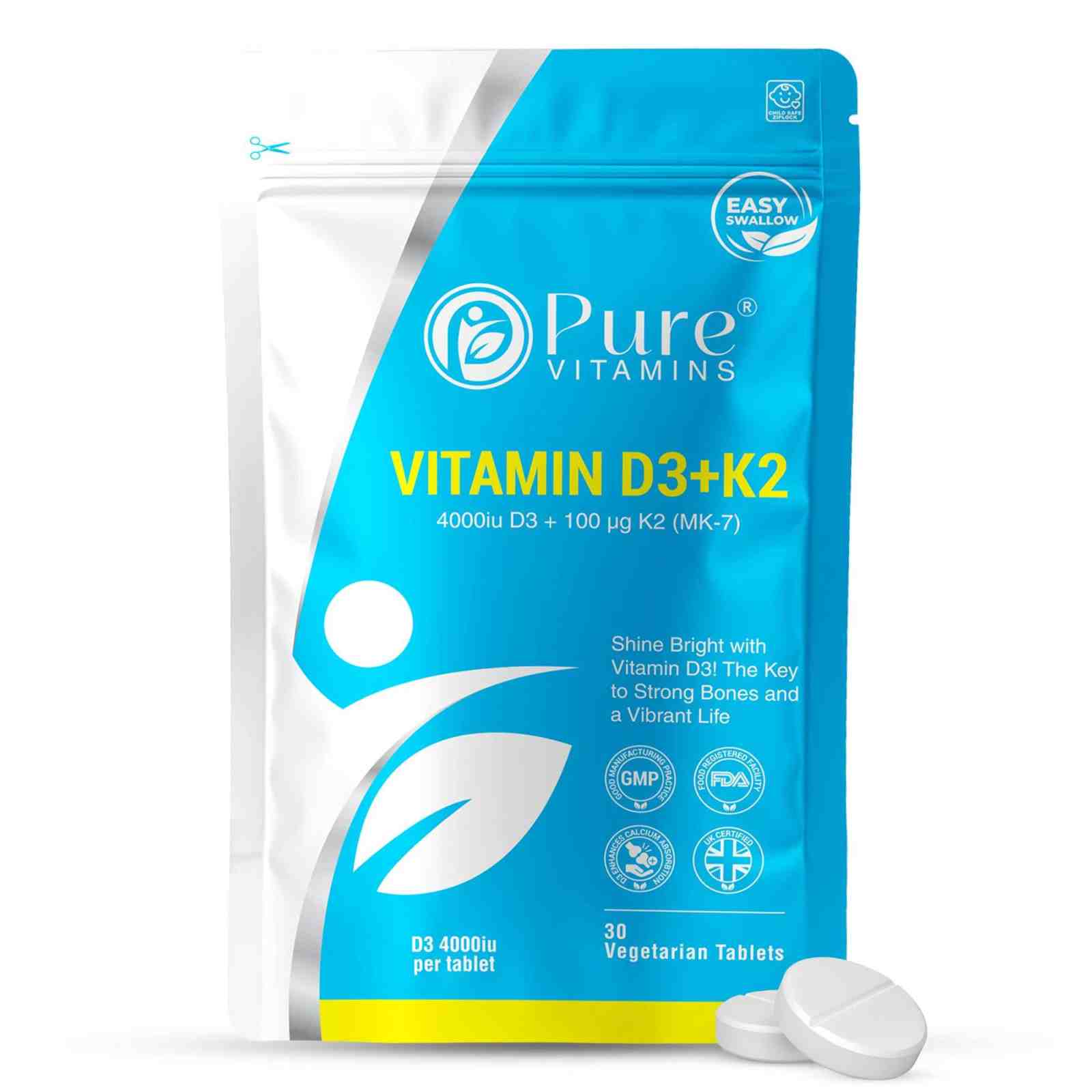
- D3 with K2 makes sense if you want a higher daily dose with the wider mechanism accounted for in the formulation. Our Vitamin D3 4000 IU with K2 MK-7 is designed for that long-term daily use.
If you want a fuller breakdown of dosage and what K2 MK-7 actually is, see how much vitamin D3 and K2 to take daily and what vitamin K2 MK-7 is.
A few cautions worth knowing
There is one situation where vitamin K2 is not a casual add-on, and it is the opposite of the usual scare story. Vitamin K affects how certain anticoagulant medicines work. If you take warfarin or any prescribed anticoagulant, do not start a vitamin K2 supplement without first speaking to your GP, pharmacist or anticoagulation clinic. This is not about a supplement being dangerous in general; it is a specific, well-recognised interaction with that class of medicine that needs proper oversight. More generally, if you have kidney disease, take calcium supplements, are pregnant or breastfeeding, or manage any medical condition, check with your GP or pharmacist before starting a new vitamin D or K2 product.
How I actually think about this
I look at supplements through the lens of systems, not isolated ingredients. Calcium, bone, vitamin D, vitamin K2 and magnesium interact constantly, so the question is not which single nutrient is the hero, but whether the body is being given the right context to use what you give it. That is why Pure Vitamins UK pairs D3 with K2 in one product. Not because D3 on its own is dangerous for everyone, the evidence does not support that, but because for long-term daily support at a higher dose, D3 and K2 together is a more considered design than high-dose D3 on its own. Pairing D3 with K2 is intelligent formulation, not panic. If a brand has to frighten you to sell you something, that tells you more about the brand than about the nutrient.
The takeaway
Can vitamin D3 without K2 actually hurt you? For most healthy adults at sensible doses, the evidence does not support the alarming version of that story. The mechanism that worries people is real and the biomarkers genuinely respond, but the leap to "D3 alone causes harm" runs ahead of what human trials show. The safety point that truly matters is not skipping K2, it is not exceeding the 100 microgram (4000 IU) daily upper limit for vitamin D over time. Pairing D3 with K2, and remembering magnesium, is worth considering for higher-dose, long-term use, because thinking about the whole system beats chasing one nutrient.
Frequently asked questions
Is it bad to take vitamin D3 without K2? For most healthy adults at sensible doses, there is no good evidence that D3 on its own is harmful. The worry is based on a real mechanism but overstated in marketing.
What actually makes vitamin D risky? Taking too much over time, not the absence of K2. The adult upper limit is 100 micrograms (4000 IU) a day, and very high intakes can raise blood calcium too far.
Should I pair D3 with K2? It is a considered choice for higher-dose, long-term daily use, not something to do out of fear at everyday doses.
Who should be careful with vitamin K2? Anyone on warfarin or another anticoagulant should speak to their GP or anticoagulation clinic before starting K2, because vitamin K interacts with those medicines.
Food supplements should not be used as a substitute for a varied, balanced diet and a healthy lifestyle. Do not exceed 100 micrograms (4000 IU) of vitamin D per day from supplements. If you take warfarin or another anticoagulant, have kidney disease, take calcium, or are pregnant, breastfeeding, managing a medical condition or taking other medication, speak to your GP or pharmacist before starting a new supplement.
Dr. Miron, Founder of Pure Vitamins UK.

