

News

Is Ashwagandha KSM 66 better than magnesium?
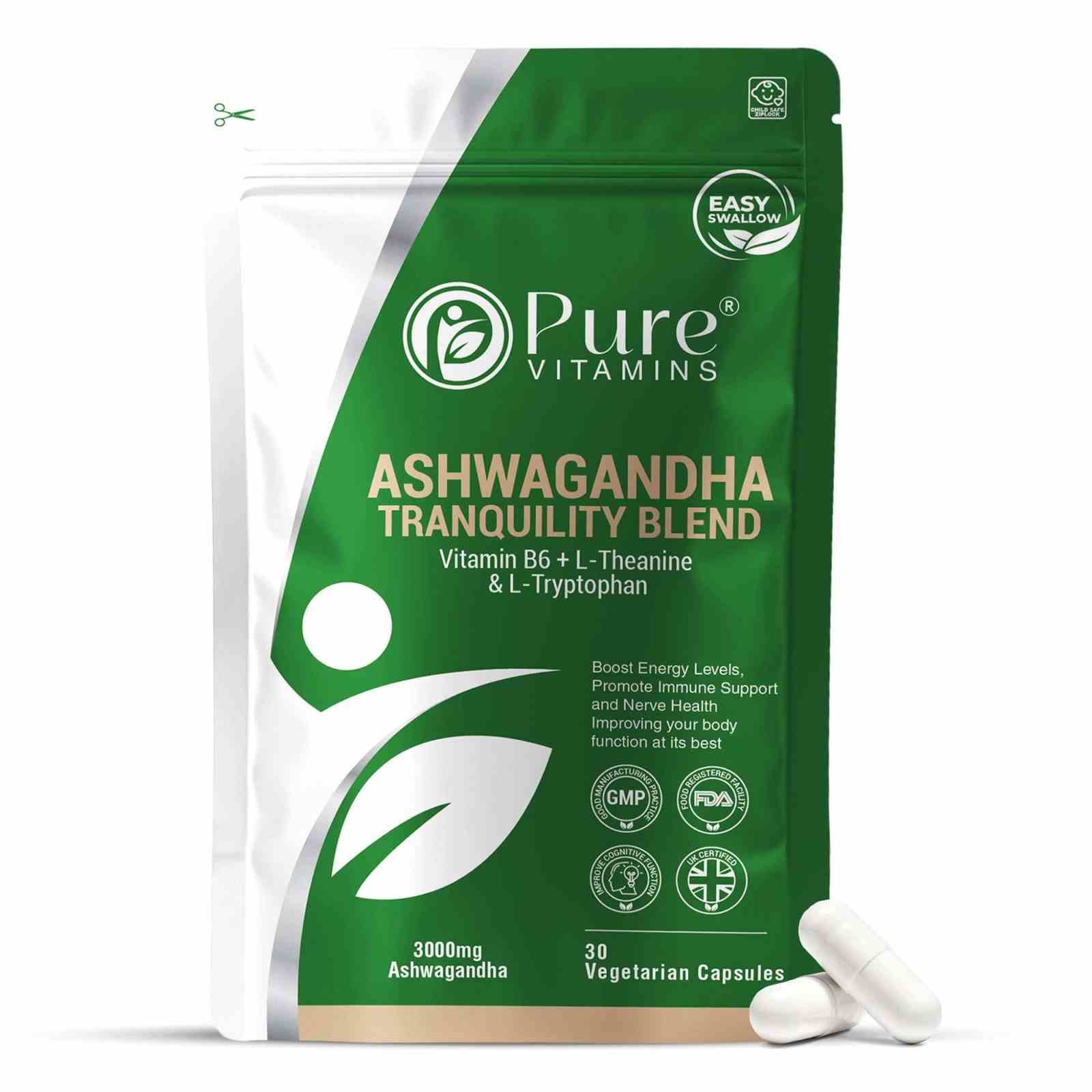
Is ashwagandha KSM-66 better than magnesium? An honest UK guide to what each does, the authorised claims, the evidence on stress and sleep, dosage, safety and how to choose.
Learn moreWhy Is L-Theanine Added to Ashwagandha?
Why L-theanine is added to ashwagandha: L-theanine is an amino acid unique to the tea plant, paired with ashwagandha as a formulation choice combining two complementary ingredients with a shared theme, often alongside vitamin B6 which carries authorised claims.
Learn moreWhat Does 'Standardised to 5% Withanolides' Mean?
What 'standardised to 5% withanolides' means: the extract is measured so 5% by weight is the marker withanolide compounds, giving a consistent dose. Why the raw plant's natural variability makes standardisation matter.
Learn moreWhat Is Maca Root? (Black, Red and Yellow Maca Explained)
Maca root explained by composition and traditional use: what the Andean root vegetable is, an honest answer on why men take it (heritage, not authorised claims), the black/red/yellow colour varieties, and powder vs capsule forms.
Learn moreWhat Part of the Milk Thistle Plant Is Used?
What part of the milk thistle plant is used: the seed (fruit), where the silymarin flavonolignan complex is concentrated alongside an oil fraction with vitamin E and sterols. Why a standardised seed extract matters for quality.
Learn moreThe Silymarin Complex: Components and Why They Vary
The silymarin complex in detail: the flavonolignans (silybin, isosilybin, silychristin, silydianin) plus the seed's oil fraction with vitamin E and sterols. Why composition varies by plant variety and region, and why standardisation matters.
Learn moreRoot-Only vs Full-Spectrum Ashwagandha Extract
Root-only vs full-spectrum ashwagandha extract: withanolides and other compounds are distributed differently between root and leaf, so the plant part changes the chemistry. Root-only uses the traditionally favoured part; full-spectrum uses a broader range. Why the label should state the part.
Learn moreWhat Is Dandelion and What's in Dandelion Root?
What dandelion is: the common name for Taraxacum plants, a daisy-family herb with a long culinary and traditional history. What dandelion root contains, including triterpenes, phenolic acids, flavonoids, inulin and beta-sitosterol, and why it's paired with milk thistle.
Learn more
Ginkgo Biloba 50:1: Flavonoids, Terpene Lactones and Blood Flow
A mechanism-first guide to Ginkgo biloba 50:1: its flavonoids and terpene lactones, how they are absorbed, and the blood-flow and circulation science behind the leaf.
Learn more