


Reviewed and updated: 10 August 2026
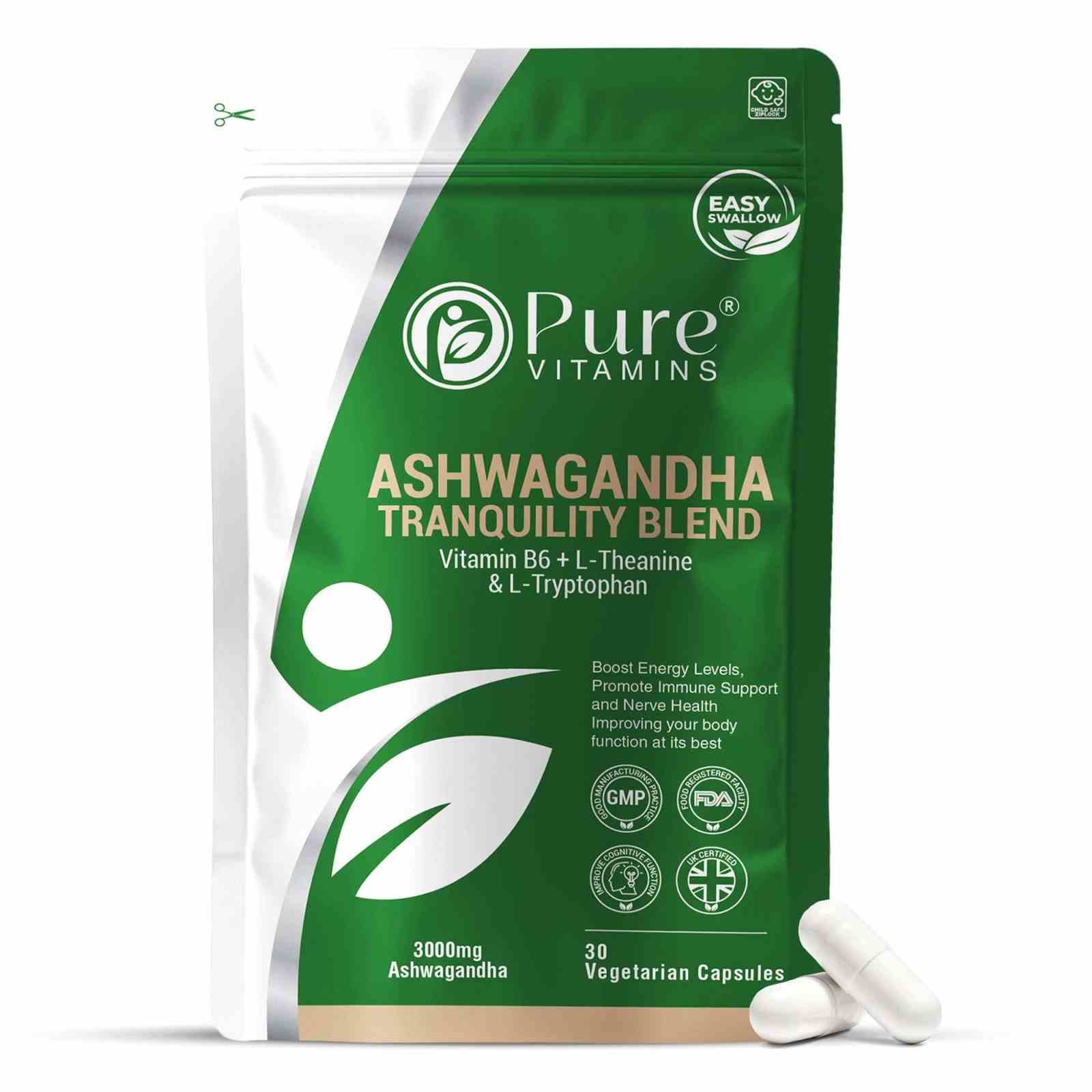
If you are weighing ashwagandha or maca, for most people ashwagandha is the more practical choice: it is the better-studied of the two adaptogens, it comes as a properly standardised root extract you can actually compare between brands, and it is the one we have built our Ashwagandha KSM-66 Tranquility Blend around. Maca is a nutrient-dense Andean food with a long heritage, but its modern claims still rest on thin, inconclusive research, so this guide leads with ashwagandha and uses maca as an honest point of comparison. For a closer look, see Panax ginseng, its ginsenosides and absorption.
Ashwagandha or maca: the quick answer (TL;DR)
- Our pick for most people: ashwagandha, specifically a standardised KSM-66 root extract, because it has the deepest human research and a clear quality standard (withanolide content).
- What ashwagandha is: the root of Withania somnifera, a traditional Ayurvedic adaptogen. Our blend pairs KSM-66 ashwagandha with L-theanine, L-tryptophan, black pepper extract and vitamin B6.
- What maca is: the root of Lepidium meyenii, an Andean cruciferous root vegetable eaten as a food. Interesting chemistry, but the clinical evidence is far thinner.
- The compliance reality: both are food supplements, and as botanicals neither ashwagandha nor maca carries an authorised UK health claim. The only authorised claims we make on our blend belong to the vitamin B6 in it.
- Key safety note: our ashwagandha blend is for adults only (not under 18s) and is not recommended in pregnancy or breastfeeding; maca is generally well tolerated as a food but is a cabbage-family plant, which matters if you have a thyroid condition.

What is ashwagandha?
Ashwagandha (Withania somnifera) is one of the most established herbs in Ayurveda, the traditional medical system of the Indian subcontinent, where the root has been used for centuries as a "rasayana", a category of restorative tonics. The plant is a small woody shrub, and the part used in a quality supplement is the root rather than the leaf. The name is often translated as "smell of the horse", a nod to the root's earthy aroma and the traditional idea of imparting strength.
The compounds most associated with ashwagandha are a family of naturally occurring steroidal lactones called withanolides. The concentration of withanolides is the usual marker of an extract's strength, which is why a serious product states a standardisation percentage. If that idea is new, our explainer on what "standardised to 5% withanolides" means is a good starting point, and our overview of what KSM-66 ashwagandha is goes deeper on the specific extract. It also helps to understand what an adaptogen actually is before comparing two of them.
The heritage matters because it shapes how ashwagandha is used today. In Ayurveda the root was not treated as a quick fix but as part of a broader daily routine, often prepared with warm milk or ghee and taken over sustained periods. That idea of consistency, rather than a one-off dose, still carries through to the modern guidance to take a standardised extract daily for several weeks. It is also why a quality product uses the root specifically: traditional preparations and the best modern extracts both concentrate on the root, where the withanolide profile is best characterised, rather than diluting it with leaf material. Our explainer on root-only versus full-spectrum ashwagandha goes into that distinction.
Inside our Ashwagandha KSM-66 Tranquility Blend
Rather than talk about ashwagandha in the abstract, it helps to look at exactly what is in a quality blend. Here is the per-capsule composition of our Ashwagandha KSM-66 Tranquility Blend, taken straight from the label, so you can see how a considered formula is put together. You take one capsule daily with a glass of water, and each pouch holds 30 vegetarian capsules.
- Ashwagandha KSM-66 extract, 250 mg, standardised to 5% withanolides (12:1): this is a root-only, full-spectrum extract. At a 12:1 ratio, the 250 mg of extract is equivalent to roughly 3000 mg of ashwagandha root powder, concentrated down and standardised so each capsule delivers a known amount of withanolides. KSM-66 is one of the most rigorously standardised ashwagandha extracts available.
- L-theanine, 100 mg: an amino acid found naturally in green tea. It is included for its composition and its long pairing with calming routines; as an amino acid it carries no authorised health claim, so we describe it factually rather than promising an effect. Our note on why L-theanine is added to ashwagandha explains the thinking.
- L-tryptophan, 100 mg: an essential amino acid, meaning the body cannot make it and must get it from the diet. Again, it is in the formula for its composition, not for any claimed benefit.
- Black pepper extract, 20 mg (10:1, equivalent to 200 mg): standardised black pepper provides piperine, the compound widely used to support the absorption of other ingredients. You can read more in our explainer on what piperine is and what it does.
- Vitamin B6, 1.7 mg (121% of the NRV): this is the one ingredient in the blend that does carry authorised UK claims, because it is a vitamin present well above the threshold needed to make them. Vitamin B6 contributes to normal psychological function, to the normal functioning of the nervous system, to normal energy-yielding metabolism, to the reduction of tiredness and fatigue, to the regulation of hormonal activity, and to the normal function of the immune system.
That last point matters for honesty. Ashwagandha, L-theanine and L-tryptophan are all included on the basis of their composition and traditional use, and none of them may legally be sold in the UK with a health benefit claim. The genuine, authorised statements in the formula attach only to the vitamin B6. We would rather be precise about that than blur the line.

What "KSM-66" and a 12:1 extract actually mean
Two numbers on our label do a lot of the heavy lifting, and they are worth decoding because they are exactly what separates a serious ashwagandha from a cheap one.
The first is the standardisation: "5% withanolides". Withanolides are the marker compounds used to gauge an ashwagandha extract's strength, so standardising to a guaranteed minimum percentage means every capsule delivers a known, repeatable amount rather than whatever happens to be in a given batch of powder. The second is the extract ratio: "12:1". That means roughly twelve parts of raw ashwagandha root have been concentrated down into one part of finished extract, which is why 250 mg of KSM-66 extract is described as equivalent to around 3000 mg of root powder. You are getting a concentrated, consistent dose in a single easy-swallow capsule rather than a large scoop of unstandardised powder.
KSM-66 specifically is a branded, root-only, full-spectrum extract that is among the most rigorously standardised on the market. "Full-spectrum" here means it aims to keep the natural balance of the root's constituents rather than isolating a single fraction, while still hitting that guaranteed withanolide standard. For a shopper, the practical upshot is simple: a named, standardised, root-only extract lets you compare products like for like, which you cannot reliably do with maca.
The general role of ashwagandha (what the science explores)
Ashwagandha has been studied more than most botanicals, and the research is worth describing accurately, as science, without turning it into a claim about any product. This is one of the clearest practical differences from maca: where maca leans on preclinical work and a handful of inconsistent human trials, ashwagandha has a larger and more replicated set of randomised, placebo-controlled studies to point to, even if that body of work is still far from the final word. Several randomised, double-blind, placebo-controlled trials in stressed but otherwise healthy adults have examined standardised root extracts. For example, one 60-day study using a standardised extract reported reductions in self-reported stress and anxiety scores, alongside a fall in morning cortisol, a hormone associated with the body's stress response (Lopresti et al. 2019). A separate strand of research has looked at sleep: a systematic review and meta-analysis of five randomised controlled trials (about 400 participants) found a small but statistically significant effect on overall sleep, with effects more noticeable at doses of at least 600 mg per day taken for eight weeks or longer (Cheah et al. 2021).
Mechanistically, the adaptogen literature offers a plausible framing for why a stress-and-sleep pattern keeps appearing. Adaptogens are described as acting on the hypothalamic-pituitary-adrenal (HPA) axis, the body's central stress-control system, with a biphasic, dose-dependent character, where a modest dose is thought to gently prime the body's own adaptive stress-response pathways rather than force a single strong effect (Panossian et al. 2021). The fall in morning cortisol seen in some ashwagandha trials is consistent with that framing.
Two honesty notes belong here. First, these findings describe what studies observed in research settings; they are not a statement that any supplement will produce these results for you, and UK rules do not allow a botanical to carry such a claim. Second, the trials are mostly modest in size and duration, several are industry-linked, and the sleep review's authors specifically flagged that long-term safety data are limited. The picture is encouraging and reasonably consistent, but it is not the final word.
What is maca, and how does it compare?
Maca (Lepidium meyenii, also written Lepidium peruvianum) is a cruciferous root vegetable from the high Andes of Peru, in the same botanical family as cabbage, broccoli and rocket. It has been cultivated and eaten for well over a thousand years, traditionally as a food: boiled, baked, fermented into a drink, or dried and ground into a powder (Beharry and Heinrich 2017). Its chemistry is genuinely interesting, with a profile that is mostly starch, fibre and protein, plus distinctive minor compounds such as macamides and macaenes (fatty-acid compounds unique to maca) and glucosinolates, the sulphur compounds typical of the cabbage family (Wang and Zhu 2019).
The honest catch is the evidence. Most maca research is preclinical, and the human trials that exist tend to be small, varied and inconsistent. A widely cited UK review concluded that, to date, the popular health claims around maca cannot be fully supported from a scientific standpoint, and that much of the modern marketing has run ahead of the evidence (Beharry and Heinrich 2017). Other reviews echo that clinical studies to back maca's marketed effects appear to be lacking (Wang and Zhu 2019; Ulloa Del Carpio et al. 2024). Maca's composition also varies a lot with the colour ecotype (yellow, red or black), where it is grown and how it is processed, which makes it harder to standardise than a tightly controlled ashwagandha extract. That combination, thinner evidence and weaker standardisation, is exactly why we have chosen to build our range around ashwagandha rather than maca. For the plant itself, see what maca root is.

Ashwagandha vs maca: which should you choose?
Rather than asking which plant is "better" in the abstract, match it to what you actually want:
- You want the option with the most developed human evidence and a clear quality standard: ashwagandha is the stronger pick, because standardised extracts have been studied in randomised trials and you can compare products on withanolide content.
- You want a considered daily capsule with a defined dose: a standardised blend like our KSM-66 formula gives you exactly that, one capsule, known amounts, every day, with no scoops to measure and no guessing about how much active extract you are actually getting.
- You want a nutrient-dense Andean food powder to add to smoothies, porridge or baking: maca fits that culinary role and has a pleasant malty flavour, as long as you go in understanding the evidence is preliminary.
- You want predictability and a like-for-like comparison between brands: ashwagandha wins on standardisation; maca's natural variability makes consistent products harder to guarantee.
For most UK shoppers weighing ashwagandha or maca as a daily supplement rather than a kitchen ingredient, the combination of a recognised standardised extract and a deeper human evidence base is why ashwagandha tends to be the more practical, verifiable choice. There is also no rule that says you must pick only one for life: some people try the better-evidenced option first, judge it honestly over a few weeks, and keep maca in the cupboard as a food they enjoy.
How much to take, and the forms
Neither ashwagandha nor maca has a formal Tolerable Upper Intake Level, because those limits are set for essential nutrients such as vitamin D, iron or zinc, not for botanicals. That does not mean "more is better"; it means you should follow the label and favour sensible, studied amounts.
With our Ashwagandha KSM-66 Tranquility Blend, the directions are simple: take one capsule daily with a glass of water. Each capsule provides the standardised 250 mg of KSM-66 (equivalent to around 3000 mg of root powder), so you are not left guessing at scoops of loose powder. Ashwagandha is generally taken consistently for at least four to six weeks, and many people prefer the evening; our guide on when to take ashwagandha, morning or night covers the trade-offs. It can be taken with or without food, although some people find taking it with a meal sits more comfortably. Common ashwagandha formats elsewhere include capsules, tablets, gummies and loose powders, but gummies and powders vary widely in how much actual withanolide content they deliver, and gummies often carry added sugar, which is the advantage of a single standardised capsule with a defined dose.
Maca, by contrast, is usually measured in grams of root powder per day rather than milligrams of a standardised extract, reflecting its status as a food. Gelatinised maca (where the starch is pre-cooked for easier digestion) and colour-specific powders are common. Because maca is not standardised to a single marker compound, dose comparisons between maca products are much rougher than between standardised ashwagandha extracts.
What should you expect once you start? Ashwagandha is not a stimulant, so it does not produce an obvious hit the way caffeine does. In the research, the more consistent effects show up over weeks rather than minutes, which is why studies typically run for 8 weeks or longer and why we suggest giving it a fair, uninterrupted run of at least four to six weeks before judging it. Taking it at the same time each day, often the evening, makes it easier to keep the habit and to tell whether it suits you. Keep the rest of your routine steady over that window so you are not trying to read several changes at once.
Does ashwagandha come from food?
This is a fair question, and the answer is part of why ashwagandha is sold as a supplement in the first place. Unlike maca, which is genuinely a food (an Andean root vegetable you can cook and eat), ashwagandha is not part of the everyday Western diet and is not something you would normally eat as a vegetable. It is consumed specifically as a prepared root extract for its withanolide content. So there is no realistic "get it from food" route to the kind of standardised dose used in the research; a quality extract is the practical way to take a known amount.
That also frames expectations honestly. The vitamin B6 in our blend is a true nutrient your body needs and can obtain from food such as fish, poultry, chickpeas and bananas, which is why it carries authorised claims. The ashwagandha, L-theanine and L-tryptophan are optional additions chosen for their composition and traditional use, not nutrients you can be deficient in. If your underlying goal is everyday tiredness, the established route is to get the basics right first, sleep, food, movement and any genuine nutrient shortfalls, and then consider a botanical as an optional extra rather than a fix.
Side effects, safety and who should take care
Ashwagandha
In the clinical trials above, standardised ashwagandha extracts were generally well tolerated over the study periods, with no serious adverse events reported in those specific studies (Lopresti et al. 2019; Cheah et al. 2021). Reported side effects are usually mild and can include drowsiness or digestive upset. Our blend is for adults only and is not intended for anyone under 18, and it is not recommended during pregnancy or breastfeeding. Because of rare reports of liver-related issues with some herbal products, anyone with existing liver concerns should be cautious and seek advice. Our dedicated note on ashwagandha safety and who should take care goes into more detail.
Maca
Maca has a long history of culinary use and is generally regarded as safe and well tolerated as a food, with adverse effects reported rarely (Ulloa Del Carpio et al. 2024). The main caveats are that it is a cruciferous (cabbage-family) plant, so very large amounts may be worth moderating if you have a thyroid condition, and that quality varies widely between products.
Interactions to keep in mind
Neither plant should be combined casually with prescription medicines without advice. Take particular care if you are pregnant or breastfeeding (avoid ashwagandha; use maca only as a normal food), if you have a thyroid condition or take thyroid medication such as levothyroxine, if you take sedatives, sleep medication or drink alcohol (ashwagandha is often used in the evening, so added drowsiness is possible), or if you take immune-modulating medication. As a sensible precaution, pause supplements like these before planned surgery and tell your clinical team what you take. This is general information, not medical advice; if you take any regular medication, check with your pharmacist or GP first.

Can you take ashwagandha and maca together?
There is no well-known direct interaction between the two plants, and people do sometimes use them together, treating maca as a food powder and ashwagandha as a standardised daily capsule. That said, taking them together does not give you a documented combined benefit, and stacking several supplements at once makes it harder to tell what, if anything, is doing what. A more measured approach is to start with one at a time, give it a fair run of several weeks, and keep the rest of your routine steady so you can judge it honestly. If you do combine them, keep within label amounts for each and apply all the cautions above, especially around thyroid conditions, pregnancy and any medication.
Can you be "deficient" in an adaptogen? An optimisation reality check
It is worth saying plainly: you cannot be "deficient" in ashwagandha or maca. Unlike vitamins and minerals, which your body genuinely requires and can run short of, adaptogens are not essential nutrients. That reframes the whole question. With an essential nutrient, supplementing corrects a real shortfall. With a botanical, you are choosing an optional addition on top of an already adequate diet. The one part of our blend that addresses a genuine nutrient is the vitamin B6, which is why that is the only component carrying authorised claims. Going in with realistic expectations, rather than expecting a transformation, is the honest way to use either plant.
Why we built our range around ashwagandha
If you decide ashwagandha is the better match for your goal, a few quality markers matter more than marketing:
- Root-only, standardised extract: our blend uses KSM-66, a named, root-only extract standardised to 5% withanolides at a 12:1 ratio, rather than vague "root powder".
- A considered formula, not just one ingredient: KSM-66 is paired with L-theanine, L-tryptophan, black pepper extract for absorption, and vitamin B6, the component that contributes to normal psychological function, to the normal functioning of the nervous system, and to the reduction of tiredness and fatigue.
- Full label transparency: every ingredient amount is declared, with no proprietary blends hiding how much of anything you are actually getting.
- Formulated in the UK: made to UK standards in a GMP-certified facility, 100% vegan, and free from unnecessary fillers.
Maca, by contrast, is best thought of as a food-grade powder for the kitchen. We focus on the adaptogen we can stand behind on standardisation and transparency, which is why our standalone range centres on KSM-66 ashwagandha rather than maca. In short, if you want one daily capsule with a defined, repeatable dose and the deeper evidence base behind it, ashwagandha is the answer to "ashwagandha or maca" for most people, and a standardised KSM-66 blend is the cleanest way to take it.
Frequently asked questions
Is ashwagandha or maca better overall?
For most people taking a daily supplement, ashwagandha is the more practical choice: it has the deeper human research and comes as a standardised extract you can compare between brands. Maca is better thought of as a nutrient-dense food powder whose marketed effects are not well supported by clinical evidence (Beharry and Heinrich 2017).
Is ashwagandha or maca better for stress?
Ashwagandha has the more developed human research on stress: randomised, placebo-controlled trials in stressed healthy adults have reported reductions in stress and anxiety scores and in morning cortisol with standardised extracts (Lopresti et al. 2019). This is described as science, not as a product promise. Maca's stress-related evidence is far thinner.
What is actually in your ashwagandha blend?
One capsule provides 250 mg of KSM-66 ashwagandha extract (5% withanolides, 12:1, equivalent to about 3000 mg of root powder), 100 mg L-theanine, 100 mg L-tryptophan, 20 mg black pepper extract (10:1) and 1.7 mg vitamin B6 (121% of the NRV). The authorised claims belong to the vitamin B6.
How do I take it?
Take one capsule daily with a glass of water. Ashwagandha is usually taken consistently for at least four to six weeks, and it can be taken with or without food. Many people prefer the evening.
Can I take ashwagandha and maca at the same time?
There is no well-known direct interaction, and some people use both. There is, however, no documented added benefit from combining them, and using one at a time makes it easier to judge. Keep within label amounts and mind the thyroid, pregnancy and medication cautions.
Who should not take the ashwagandha blend?
It is for adults only and is not suitable for anyone under 18, or during pregnancy or breastfeeding. Anyone with a thyroid or liver condition, or taking regular medication, should speak to their GP or pharmacist first.
Written by Dr. Miron, Founder of Pure Vitamins UK.
Food supplements should not be used as a substitute for a varied, balanced diet and a healthy lifestyle. This article is for general information and education and is not medical advice. Always consult a healthcare professional before use if you are pregnant, breastfeeding, have a medical condition or are taking medication.
References
- Panossian AG, et al. (2021). Evolution of the adaptogenic concept from traditional use to medical systems: Pharmacology of stress- and aging-related diseases. Medicinal Research Reviews. https://doi.org/10.1002/med.21743
- Lopresti AL, et al. (2019). An investigation into the stress-relieving and pharmacological actions of an ashwagandha (Withania somnifera) extract: A randomized, double-blind, placebo-controlled study. Medicine (Baltimore). https://doi.org/10.1097/MD.0000000000017186
- Cheah KL, et al. (2021). Effect of Ashwagandha (Withania somnifera) extract on sleep: A systematic review and meta-analysis. PLOS ONE. https://doi.org/10.1371/journal.pone.0257843
- Wang S, Zhu F. (2019). Chemical composition and health effects of maca (Lepidium meyenii). Food Chemistry. https://doi.org/10.1016/j.foodchem.2019.02.071
- Beharry S, Heinrich M. (2017). Is the hype around the reproductive health claims of maca (Lepidium meyenii Walp.) justified? Journal of Ethnopharmacology. https://doi.org/10.1016/j.jep.2017.08.003
- Ulloa Del Carpio N, et al. (2024). Exploring the chemical and pharmacological variability of Lepidium meyenii: a comprehensive review of the effects of maca. Frontiers in Pharmacology. https://doi.org/10.3389/fphar.2024.1360422

