


Reviewed and updated: 23 July 2026
If you are weighing up ashwagandha safety, the sensible questions are the same ones careful buyers always ask: are there side effects, who should avoid it, and what does the research actually show? Ashwagandha has been used in Ayurveda for well over three thousand years as a grounding, restorative herb, and it is popular today as a daily food supplement, so it deserves an honest, plain-English safety guide, with clear signposting to your GP for anything specific to you. If you are also curious about pairings, I cover taking ashwagandha and L-theanine together.
Ashwagandha safety: the quick answer
- What it is: a root extract from Withania somnifera, used for centuries in Ayurvedic tradition and sold today as a daily food supplement.
- Who it suits: generally healthy adults who tolerate it well; most controlled studies run for 8 to 12 weeks.
- Key risks to know: mild digestive upset or drowsiness for some, rare reports of liver injury, and several groups who should not take it without medical advice (pregnancy and breastfeeding, thyroid conditions, autoimmune conditions, and anyone on medication).
- Golden rule: it is a supplement, not a treatment. For genuine anxiety, low mood or menopausal symptoms, speak to your GP first.

What ashwagandha is, and what is in it
Ashwagandha is the root of Withania somnifera, a small shrub long used in Ayurvedic practice as a rasayana, or rejuvenating herb, traditionally reached for during demanding, tiring periods of life. Its characteristic compounds are a group of steroidal lactones called withanolides, which is why quality extracts are often standardised to a stated withanolide percentage. Branded extracts such as KSM-66 are made from the root only and standardised for consistency. For more, see what KSM-66 ashwagandha is and what standardised to 5% withanolides means.
Is ashwagandha safe? What the research shows
For most healthy adults who take it sensibly, ashwagandha is generally well tolerated in short-term studies. In a randomised, double-blind, placebo-controlled trial of 80 healthy men and women taking 300 mg of root extract twice daily for eight weeks, researchers reported no significant adverse effects and no meaningful changes in blood counts, liver markers or thyroid parameters compared with placebo (Verma et al., 2020). A network meta-analysis of herbal trials similarly described ashwagandha as well tolerated, while cautioning that the individual studies were small, so confidence in any firm conclusion is limited (Zhang et al., 2022). The honest reading is reassuring on short-term tolerability, but the evidence base is modest and mostly short in duration.

Common side effects
For many people ashwagandha causes no noticeable problems. When side effects do occur they tend to be mild and to appear at higher servings, and can include digestive upset, drowsiness, or an unusual or heavy feeling. Taking it with food and following the product serving guidance is sensible. As with anything new, pay attention to how you respond, and stop and seek advice if something does not feel right. Some people report headaches, which have many causes, so if they persist after pausing the supplement it is worth speaking to your GP rather than assuming the cause.
Ashwagandha and the liver: what the case reports show
This is the most important safety point to understand honestly. Although controlled trials have not generally flagged liver problems, there are documented case reports of liver injury linked to ashwagandha-containing supplements. A case series from Iceland and the US Drug-Induced Liver Injury Network described five people who developed jaundice and related symptoms after roughly two to twelve weeks of use; the injury was cholestatic or mixed in pattern and resolved within one to five months in those followed up (Bjornsson et al., 2020). These are rare events and the reported cases were self-limiting, but they are a real signal. The practical takeaway: if you develop yellowing of the skin or eyes, dark urine, persistent nausea or unusual fatigue, stop and seek medical advice promptly, and avoid ashwagandha if you have an existing liver condition unless your GP agrees.

Who should avoid ashwagandha or take particular care
- Pregnant or breastfeeding: ashwagandha is generally advised against in pregnancy; do not take it without medical guidance.
- Thyroid conditions: it may influence thyroid-related parameters, so check with your GP if you have a thyroid condition or take thyroid medication.
- Autoimmune conditions: as an immune-active botanical, seek medical advice first.
- Existing liver disease, or other supplements or medicines that affect the liver: be cautious, given the liver case reports above.
- Before surgery: follow your surgical team's guidance on pausing supplements.
Interactions and medications
Because ashwagandha can have a calming effect, it may add to the drowsiness of sedatives or sleep medicines. It may also interact with thyroid medication, with medicines that suppress or modify the immune system, and potentially with medicines for blood pressure or blood sugar. This is not an exhaustive list. If you take any prescription medication, the simplest safe step is to check with your GP or pharmacist before starting, and to mention it at medication reviews.

Cortisol and stress: what studies report
Ashwagandha is traditionally reached for during stressful, tiring stretches, and some research has explored that. In a randomised, placebo-controlled trial of adults with a history of chronic stress, a concentrated root extract was associated with lower serum cortisol and lower scores on stress-assessment questionnaires over 60 days compared with placebo (Chandrasekhar et al., 2012). That is an interesting research finding about a measured marker in a study setting, shared here as science about the herb. It is not a promise about how you will feel, and it is not a reason to lean on a supplement instead of proper support.
How much, and is daily or long-term use okay?
Most controlled studies have used root-extract servings in the region of 250 to 600 mg per day, typically for 8 to 12 weeks, which is why robust long-term safety data beyond a few months are limited. Many people take it as a daily supplement; if you choose to, following the product serving guidance and taking occasional breaks is a sensible, conservative approach, and there is no need to exceed the label. For timing, see when to take ashwagandha, and if you are weighing up amounts, how much ashwagandha per day for women.
A careful word on stress, mood and the menopause years
Ashwagandha often comes up in conversations about anxiety, low mood and the perimenopause. Being straightforward: it is not a treatment for any of these, and you should not rely on it for a mental-health concern or for managing genuine menopausal symptoms. If you are struggling, that deserves proper support, and your GP can discuss options suited to you. The honest framing is a supplement some people choose to take, not a remedy.
What to look for in an ashwagandha supplement
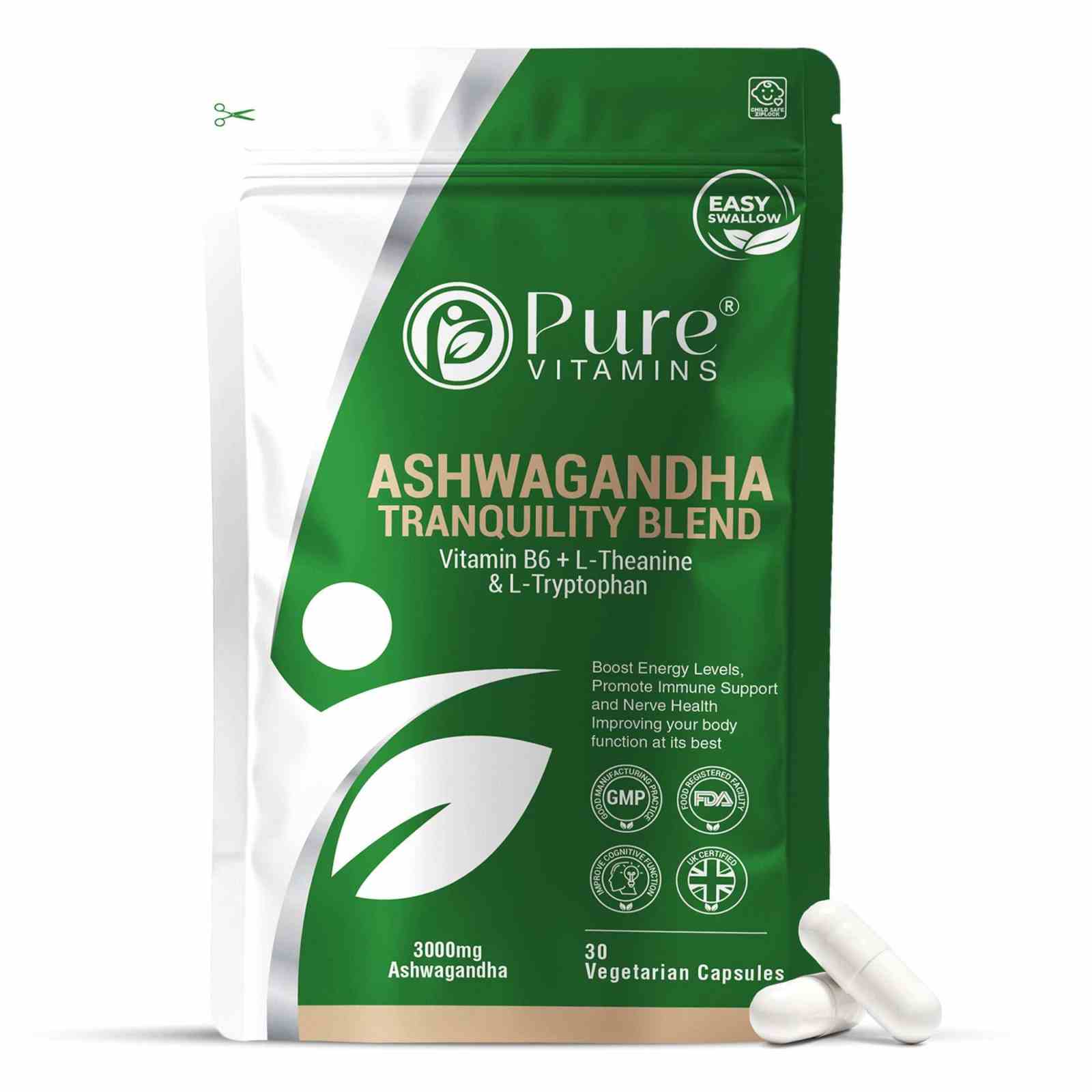
If you do decide to buy, composition and quality matter more than marketing. Look for a clearly stated extract and withanolide standardisation, a sensible serving size, and a manufacturer that is transparent about testing. Our KSM-66 ashwagandha is formulated in the UK and tested for purity and heavy metals at our GMP-certified facility, and it pairs the root extract with L-theanine and vitamin B6; you can read why we add L-theanine. If you are comparing extract types, my guide to root-only versus full-spectrum may help.
The takeaway
Ashwagandha is well tolerated by many people in short-term studies, but it is not for everyone. Pregnancy and breastfeeding, thyroid and autoimmune conditions, liver concerns and medication use all warrant a conversation with your GP first, and the rare liver case reports are a genuine reason to stop and seek advice if warning signs appear. For real anxiety, mood or menopausal concerns, professional support comes first; a supplement is not a treatment.
Frequently asked questions
Is ashwagandha safe to take daily? Many people take it daily and it is generally well tolerated in short-term studies, though robust data beyond a few months are limited, so following the label and taking occasional breaks is sensible.
What are the side effects of ashwagandha? Usually mild if any, such as digestive upset or drowsiness at higher servings; rare case reports of liver injury are the important signal to know about.
Who should not take ashwagandha? It should be avoided in pregnancy and breastfeeding, and used only with medical advice if you have thyroid, autoimmune or liver conditions, or take medication.
Can ashwagandha affect the liver? Controlled trials have not generally flagged liver problems, but there are rare case reports of liver injury, so stop and seek advice if you notice jaundice, dark urine or persistent nausea.
Food supplements should not be used as a substitute for a varied, balanced diet and a healthy lifestyle. Ashwagandha is generally advised against in pregnancy and breastfeeding, and people with thyroid, autoimmune or liver conditions, or those on medication, should speak to their GP or pharmacist before taking it. Concerns about anxiety, mood or menopausal symptoms should be discussed with your GP.
Dr. Miron, Founder of Pure Vitamins UK.
