


Probiotics after antibiotics is one of the most common reasons people reach for a probiotic, usually alongside two other questions: when to take it, and whether it helps with IBS. Here is my honest take, drawn from what the research on specific strains actually shows and where a GP, rather than a supplement, is the right answer.
Reviewed and updated: 24 July 2026

Probiotics after antibiotics: the quick answer (TL;DR)
- Common practice: many people take a probiotic during and after a course of antibiotics. If you do, space it a few hours from the antibiotic dose and always finish the antibiotics exactly as prescribed.
- What research shows: trials of specific probiotic strains have found a lower risk of antibiotic-associated diarrhoea, though the effect depends on the strain and the dose.
- Timeline: probiotics are not fast-acting. Consistent daily use over weeks is the approach, not a fixed number of days.
- IBS: a genuine medical condition that belongs with your GP, not a self-chosen supplement.
Should you take a probiotic after antibiotics?
Antibiotics act on bacteria broadly, and in doing so they can disturb the balance of the gut's normal bacteria. That is well understood, and it is exactly why so many people like to take a probiotic during or after a course. My practical advice is simple:
- Spacing: if you are taking both, separate the probiotic from the antibiotic dose by a few hours.
- Follow your prescriber: always finish the antibiotics as prescribed, and ask your GP or pharmacist whether a probiotic is right for you.
- Carrying on afterwards: many people continue the probiotic for a while once the course finishes, as part of their daily routine.
What the research shows about antibiotic-associated diarrhoea
This is the area with the strongest evidence, so it is worth reporting properly, as science about studied strains. A systematic review of 42 randomised trials involving 11,305 adults found that taking probiotics alongside antibiotics was associated with a lower risk of antibiotic-associated diarrhoea, with the overall evidence graded as moderate quality (Goodman et al., 2021). The same review found the benefit depended on a higher dose and certain species, mainly lactobacillus and bifidobacteria, and was less apparent when the underlying risk of diarrhoea was low. In other words, this is strain-specific and context-specific science rather than a blanket property of every probiotic.

Why the strain matters so much
Here is the point most labels gloss over: probiotic findings attach to the specific strains studied at specific doses, not to "probiotics" as a generic idea. Clinical guidance reflects this, making strain-specific recommendations rather than one sweeping statement (Szajewska et al., 2016). The takeaway is that you cannot read a result for one strain and assume it applies to a different product. It is why a good probiotic is described by its named strains and its CFU count, so you know exactly what you are taking.
How long do probiotics take to work?
Honestly, there is no neat number, and I would be wary of any product that gives you one. Probiotics are live cultures taken as part of a routine, not a fast-acting medicine. The sensible approach is consistent daily use over a period of weeks, taken as directed, rather than watching the calendar. There is more in how long probiotics take to work.
When and how to take a probiotic
Take it consistently, following the product directions. Some people prefer a set time relative to meals, but the single most important factor is simply taking it regularly so it becomes a habit. A delayed-release capsule, like ours, is designed to help protect the cultures through stomach acid; see do probiotics survive stomach acid. If your product also contains a prebiotic such as inulin, that is food for the cultures rather than a culture itself; see what is inulin in a probiotic and prebiotic vs probiotic.
A careful word on IBS and gut conditions
Probiotics come up constantly in conversations about IBS, including the constipation-predominant type, so let me be straight with you. IBS is a genuine medical condition that deserves proper assessment. If you have IBS or persistent digestive symptoms, the right first step is a conversation with your GP, who can diagnose it, rule out other causes, and discuss evidence-based management, which may or may not include specific strains studied for your situation. A general daily supplement is not a substitute for that, and I would never suggest self-treating suspected IBS with a probiotic alone.
Who should check first?
Most healthy adults tolerate probiotics well, but speak to your GP or pharmacist first if you are immunocompromised, seriously unwell, pregnant, or managing a medical condition, as probiotics are not right for everyone.

What to look for in a probiotic
- Named strains and CFU: the specific strains and the colony-forming units per capsule, not just "live cultures"; see what CFU means.
- Multi-strain breadth: a defined blend rather than a single unnamed culture, ideally from the most-studied genera.
- Delivery: a delayed-release capsule to help cultures survive stomach acid.
- Quality: tested for purity and heavy metals at our GMP-certified facility and formulated in the UK, with a CFU count guaranteed to the end of shelf life rather than only at manufacture.

The takeaway
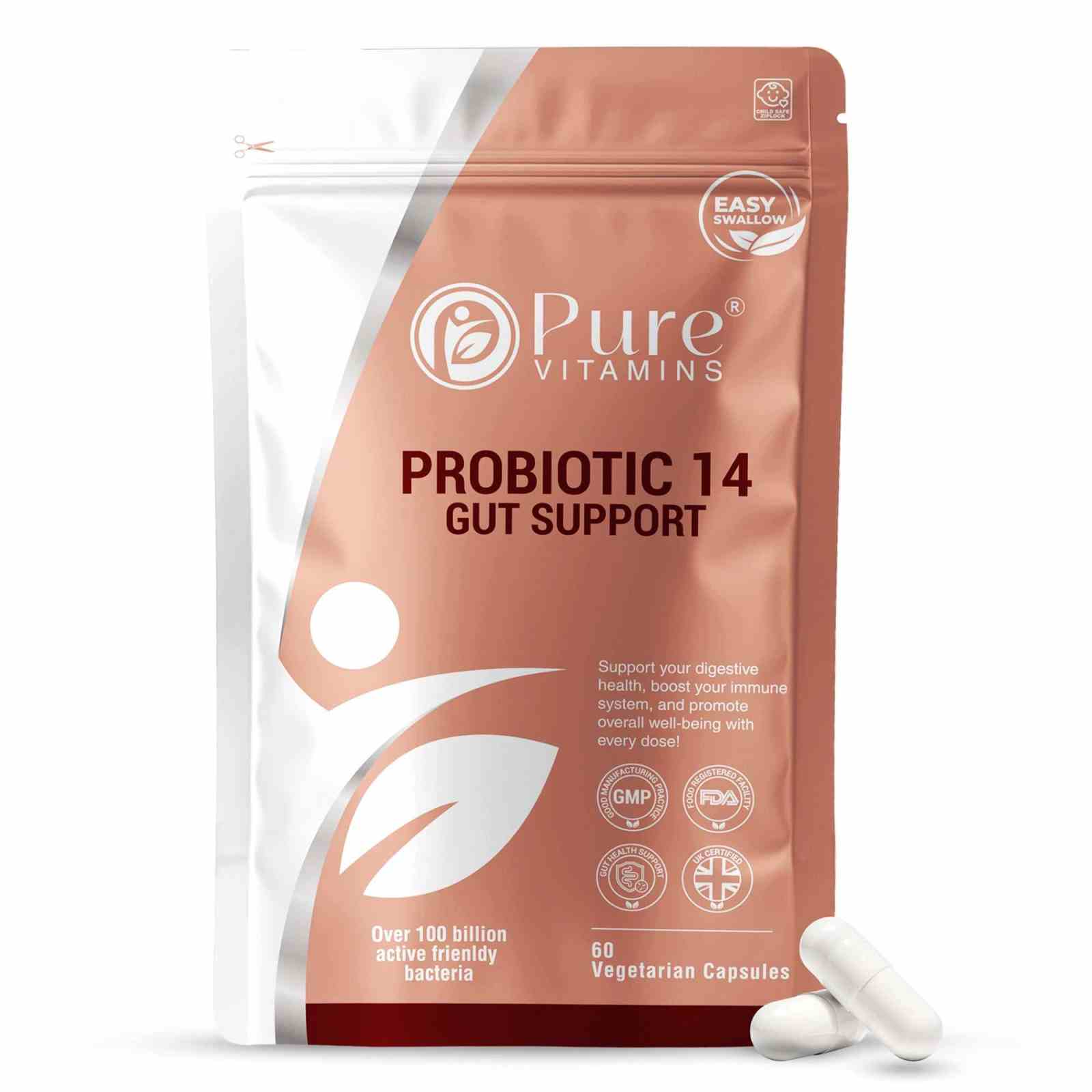
Many people take a probiotic during and after antibiotics; if you do, space the doses and follow your prescriber. The strongest research, on specific strains, links probiotics with a lower risk of antibiotic-associated diarrhoea, but that is strain-specific science. Probiotics work through consistent routine use over weeks rather than on a fixed timeline, and IBS or persistent gut symptoms belong with your GP. Our 14-strain Probiotic is a delayed-release daily capsule; explore the strains in our guide to the best probiotic strains, or browse everything at the Pure Vitamins UK home page.
Signed, Dr. Miron, Founder of Pure Vitamins UK.
Sources retrieved from PubMed; see the linked DOIs above. This article is for general information, not medical advice. Food supplements should not be used as a substitute for a varied, balanced diet and a healthy lifestyle. IBS and persistent digestive symptoms should be assessed by your GP. If you are pregnant, breastfeeding, taking medication, immunocompromised or managing a medical condition, speak to your GP or pharmacist before starting a new supplement.
