


Reviewed and updated: 23 July 2026
Prebiotic vs probiotic: what's the difference?
The easiest way to hold the prebiotic vs probiotic difference in your head is this: probiotics are the live, friendly bacteria, and prebiotics are the plant fibres that feed them. The two words look almost identical, which is honestly half the confusion, but they describe two completely different things that happen to work as a team. Below I will walk through what each one actually is, how they fit together, and how I would choose between them or, more often, choose both.

The quick answer (TL;DR)
- Probiotic: live micro-organisms, measured in CFU and listed by strain. You are buying a dose of living cultures.
- Prebiotic: a non-living plant fibre, such as inulin, that your own gut cannot digest, so it travels on to feed beneficial bacteria.
- Synbiotic: both in one product, the cultures plus their food. For most people this is the tidiest option.
- Good to know: you can get plenty of prebiotic fibre from everyday food, so a supplement is a convenience, not a requirement.
Probiotics: the live cultures
Probiotics are live micro-organisms. The scientific consensus definition, agreed by an international expert panel, is simply "live micro-organisms that, when administered in adequate amounts, confer a health benefit on the host" (Hill et al., 2014, DOI). In practice that means the friendly bacteria you see measured in CFU (colony-forming units) and named by strain, such as Lactobacillus acidophilus or Bifidobacterium longum. When you buy a probiotic, you are really buying a measured, living dose.
Two things decide whether that dose is worth taking. The first is how many organisms actually reach the gut alive. A review retrieved from PubMed describes how probiotic bacteria have to survive low stomach pH and bile on the way down, and lean on strain-dependent stress-response mechanisms to do it (Castro-Lopez et al., 2022, DOI). That is exactly why a delayed-release, acid-resistant capsule matters, a point I cover in do probiotics survive stomach acid. The second is diversity: a well-designed blend spreads its bets across several families rather than relying on one. If you want to go deeper on that, see the best probiotic strains and what CFU means.
Prebiotics: the food for those cultures
Prebiotics are not alive at all, and that surprises a lot of people. The expert consensus defines a prebiotic as "a substrate that is selectively utilised by host micro-organisms conferring a health benefit" (Gibson et al., 2017, DOI). In plain terms, they are specific plant fibres your own digestive enzymes cannot break down, so they pass through to the lower gut where resident bacteria ferment them. Inulin, found naturally in chicory root, onions and garlic, is one of the most common. I find the gardening picture helps: probiotics are like planting seeds, and prebiotics are the fertiliser that helps them settle in. Our own capsule uses inulin, and I explain why in what inulin is in a probiotic.

So which do you actually need?
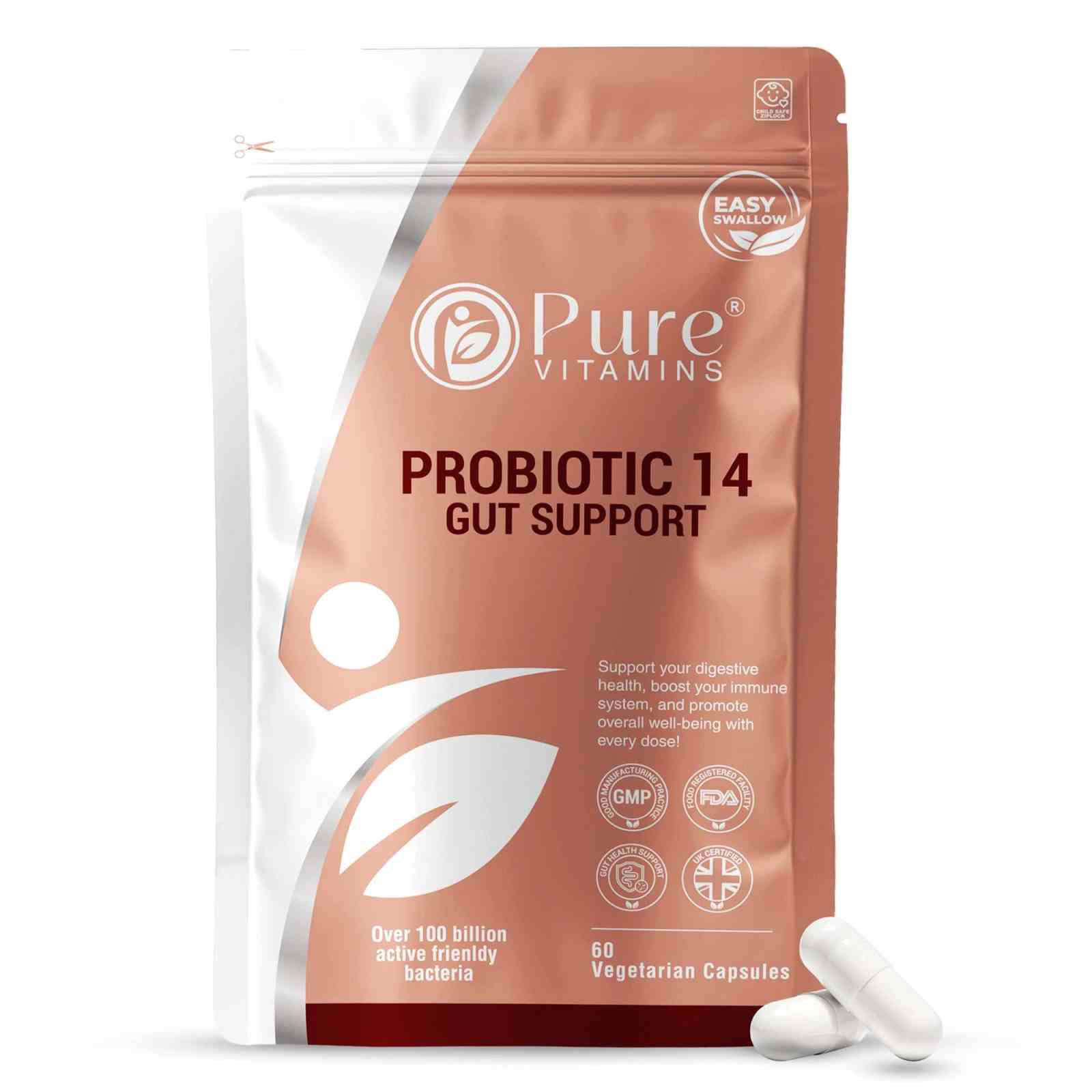
For most people the genuinely useful answer is both, together. A supplement that combines live cultures with a prebiotic is called a synbiotic. The international panel that reviewed the term defined it as "a mixture comprising live micro-organisms and substrate(s) selectively utilised by host micro-organisms" (Swanson et al., 2020, DOI), and the point they made is a nice one: the two components are designed to work cooperatively rather than as two unrelated ingredients sharing a capsule. That is the thinking behind our Probiotic Capsules, which pair 14 live-culture strains with prebiotic inulin so the cultures arrive with their first meal already packed alongside them. You can absolutely take a prebiotic fibre on its own, or just eat more fibre-rich plants, but if you are already taking a probiotic, having the prebiotic built in is simply the neater route.
Where prebiotics show up in food
Prebiotic fibres are widespread in everyday food, so a supplement is never the only way to get them. Good sources include chicory root, onions, garlic, leeks, asparagus, slightly under-ripe bananas, oats and other wholegrains. A varied, plant-rich, fibre-rich diet supplies a whole range of these fibres naturally. A prebiotic in a capsule just adds a measured, consistent amount right next to the cultures, which is handy on the days your plate is not as colourful as you would like.
A quick word on postbiotics
You may also see "postbiotics" on shelves now. These are not live organisms either; they are the beneficial compounds and inactivated cells that bacteria leave behind. They sit alongside pre- and probiotics as a newer, related category rather than a replacement for either. For everyday choosing, the pre, pro and synbiotic distinction above is the one that matters most.
Quick comparison
- Probiotic: live bacteria, measured in CFU and named strains, needs to survive stomach acid to be useful.
- Prebiotic: non-living plant fibre such as inulin, feeds beneficial bacteria, found in food and added to better supplements.
- Synbiotic: both in one product, the cultures plus their food, designed to work together.
How to take them
A synbiotic capsule is taken daily like any probiotic, and consistency matters far more than the exact hour of the day. Many people simply take it with breakfast so it becomes automatic. If you add a separate prebiotic fibre, my best tip is to introduce it gradually. Fermentable fibres can cause a bit of wind or bloating at first while your gut bacteria adjust, and easing in over a week or two keeps things comfortable.
What to realistically expect
The gut microbiome is a genuinely active and fast-moving area of science, and it is also highly individual, so honesty helps here. Cultures and fibres are part of an everyday routine rather than a quick fix, and any response tends to be gradual and personal. A sensible way to think about it is as one small, consistent habit sitting alongside a varied diet, good sleep and movement, rather than something that transforms things overnight.
A few cautions worth knowing
Live cultures and prebiotic fibres are well tolerated by most healthy adults. The most common experience when starting is a little temporary wind or bloating, which usually settles. If you are seriously unwell, immunocompromised, or in hospital care, it is worth speaking to your doctor before starting live cultures. And as with any supplement, if you are pregnant, breastfeeding, taking medication or managing a medical condition, check with your GP or pharmacist first. Follow the dose on the label rather than assuming more is better.
View the Probiotic with Prebiotic Inulin
Frequently asked questions
What is the difference between a prebiotic and a probiotic? Probiotics are live bacteria, measured in CFU and listed by strain. Prebiotics are the plant fibres, such as inulin, that feed those bacteria. A product that contains both is called a synbiotic.
Do I need to take both? Many people find a combined synbiotic the simplest option, because it delivers the cultures and their food in one capsule. You can also get prebiotic fibre from a fibre-rich, plant-rich diet.
Is inulin a prebiotic? Yes. Inulin is one of the most common prebiotic fibres and occurs naturally in chicory root, onions and garlic.
What is a synbiotic? A synbiotic is a product that combines live cultures with a prebiotic designed to work with them, so the bacteria arrive alongside a food source.
When is the best time to take a probiotic with prebiotic? Any consistent time works. Taking it daily, often with breakfast, matters more than the exact time of day.
Food supplements should not be used as a substitute for a varied, balanced diet and a healthy lifestyle. If you are pregnant, breastfeeding, taking medication or managing a medical condition, speak to your GP or pharmacist before starting a new supplement.
Dr. Miron, Founder of Pure Vitamins UK.
