


Reviewed and updated: 23 July 2026
Do probiotics survive stomach acid? The honest answer
Do probiotics survive stomach acid? Some do and some do not, and that is exactly why it is the right question to ask. Stomach acid is a genuine hurdle for live bacteria, but survival is not a coin toss. It depends heavily on which strains you choose, how the capsule is made, and whether you take them with food. The goal of any probiotic is simple: to deliver live bacteria past the stomach and into the gut where they can do their work.
I am Dr. Miron, and I want to demystify this without the hype, because the survival story is more interesting, and more within your control, than most labels let on.

The short version
- It varies by strain: some bacteria are naturally acid-hardy, others are fragile. Strain choice matters most.
- Delivery helps: delayed-release capsules and taking probiotics with or just before food improve how many survive the journey.
- Look at delivered count: what matters is live bacteria reaching the gut, not just the number printed at manufacture.
Why stomach acid is a challenge
Your stomach sits at a very low pH, roughly 1.5 to 3.5, which is brilliant at killing off unwanted microbes in food. Live probiotic bacteria have to pass through that acidic environment, and then a wash of bile in the small intestine, before they reach the large intestine. Fragile strains lose numbers along the way, which is why a probiotic that looks impressive on paper can under-deliver if it is not built for the trip.

Which strains cope best
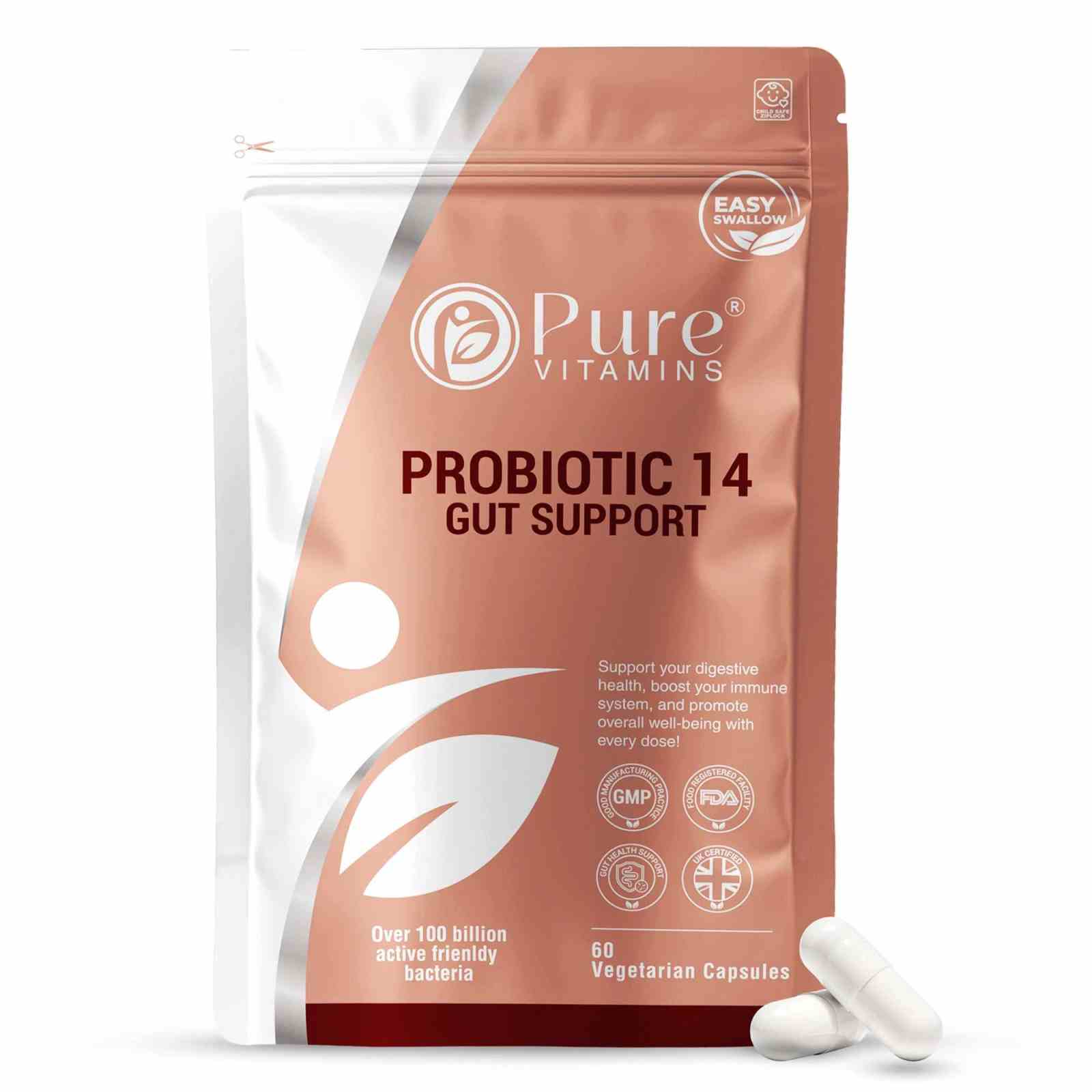
Not all bacteria are equally tough. Based on articles retrieved from PubMed, an in vitro study using human gastric and duodenal juices found that Lactobacillus strains were markedly more acid tolerant than more fragile lactococci, surviving digestion with only a minor drop in numbers, and, importantly, that taking bacteria within a food matrix significantly improved the survival of the more sensitive strains (Faye et al., 2012, Journal of Dairy Science). In practical terms, well-chosen Lactobacillus and Bifidobacterium species, and spore-forming bacteria, tend to travel best. A broad blend hedges your bets by including several hardy families. Our Probiotic 14 combines 14 strains with prebiotic inulin for exactly that reason. If you want to understand the numbers, see what CFU means in probiotics.
How capsule design and timing help
Two levers make a real difference to how many bacteria survive:
- Capsule design: delayed or acid-resistant capsules are built to hold together through the stomach and open lower down, shielding the bacteria from the harshest acid.
- Take them with or just before food: a meal buffers stomach acid and slows transit, and the food matrix itself appears to protect the bacteria, as the study above suggests.
A little inulin, a prebiotic fibre, is also handy, because it gives the surviving bacteria something to feed on once they arrive. There is more on that in what is inulin in a probiotic.

CFU at manufacture versus delivered
You will see big numbers on probiotic labels, often billions of CFU (colony forming units). What really counts is how many are still alive when they reach your gut. A high count at manufacture, hardy strains, sensible capsule design and taking them with food all stack up to a better delivered dose. Do not be dazzled by the headline number alone.
How to take them for best survival
- With or just before food: a meal buffers acid and improves survival. Breakfast is an easy anchor.
- Store as directed: keep them cool and dry, and follow any fridge instructions, since heat and moisture reduce viable numbers.
- Be consistent: probiotic bacteria are mostly transient, so a daily habit keeps a steady population arriving.
A few cautions worth knowing
Probiotics are generally well tolerated, though some people notice mild wind or bloating in the first few days as things settle. If you are immunocompromised, seriously unwell, or caring for someone who is, speak to a doctor before starting a probiotic. Anyone pregnant, breastfeeding or managing a health condition should check with a healthcare professional first.
Frequently asked questions
Do probiotics actually survive stomach acid?
Some strains survive well and others do not. Acid-hardy Lactobacillus and Bifidobacterium species and spore-formers cope best, and taking probiotics with food and using acid-resistant capsules improves how many reach the gut alive.
Should I take probiotics with or without food?
With or just before food is generally better, because a meal buffers stomach acid and the food matrix helps protect the bacteria during digestion.
Do I need an enteric or delayed-release capsule?
It helps. Delayed or acid-resistant capsules shield bacteria from the harshest stomach acid, though hardy strains and taking your dose with food also make a real difference.
What does the CFU number actually tell me?
CFU is the count of live bacteria, usually measured at manufacture. What matters most is how many survive to reach your gut, which depends on strain, capsule and how you take them.
Wondering how quickly they act? Read how long probiotics take to work, or explore the range on the Pure Vitamins UK home page.
Dr. Miron, Founder of Pure Vitamins UK
Food supplements are not a substitute for a varied, balanced diet and a healthy lifestyle.
