


Table of Contents
- What Batch Testing Means for Supplement Safety
- Why Batch Testing Matters for Athletes and Active Adults
- Third-Party Tested Supplements: Understanding Independent Certification
- How to Check Supplement Quality and Verify Batch Numbers
- Clean Label Vitamins: What Transparency Really Means
- Batch Testing vs. GMP Certification: What's the Difference?
- Common Contaminants Beyond Banned Substances
- Conclusion
Last Updated: August 19, 2026
What Batch Testing Means for Supplement Safety
Batch testing is independent laboratory analysis of a specific production run to verify ingredient identity, purity, and the absence of contaminants. Each batch receives its own certificate of analysis documenting exactly what's in the product. This matters because the supplement industry operates with far less regulatory oversight than pharmaceuticals, manufacturers can make claims without third-party verification, making batch-tested vitamins a meaningful step toward accountability.
The process tests for banned substances, heavy metals, microbial contamination, and ingredient potency. A third-party laboratory receives samples directly from the manufacturer and runs standardised protocols, returning results as a certificate of analysis that responsible brands publish openly. Without this verification, you're trusting only the manufacturer's own quality assurance.
At Pure Vitamins UK, every product batch undergoes independent laboratory testing before reaching customers. The brand publishes certificates of analysis for customers who want to verify what they're actually buying, separating batch-tested vitamins from the vast majority of supplements on retail shelves.
Why Batch Testing Matters for Athletes and Active Adults
Athletes and active adults face unique risks when choosing supplements. A banned substance inadvertently present in a multivitamin or pre-workout formula could trigger a positive anti-doping test, even if accidental. This risk exists because many manufacturers source ingredients globally, and cross-contamination can occur during production if quality control lapses.
For all consumers, batch testing ensures what's on the label is actually in the bottle. Many supplements contain less of the active ingredient than claimed or contain undisclosed fillers. A study by the Natural Products Foundation found widespread ingredient accuracy issues in the supplement market, which is precisely why independent verification exists.
Batch testing also screens for heavy metals like lead, cadmium, and mercury, which accumulate in your body over time and can damage organs and cognitive function. Repeated exposure across multiple products compounds the risk significantly.
Athletes and fitness enthusiasts taking multiple supplements daily should prioritise brands that batch test. The cost difference is minimal, often just a few pounds more than untested alternatives, but the risk reduction is substantial.
Third-Party Tested Supplements: Understanding Independent Certification
Third-party testing and third-party certification are related but distinct. Testing means an independent laboratory analyses a batch and produces a certificate of analysis. Certification means the brand has met specific quality standards set by an independent body and is audited regularly.
Common certification bodies include NSF Certified for Sport, Informed Choice, and USP (United States Pharmacopeia). NSF Certified for Sport focuses on banned substances and is the gold standard for athletes. Informed Choice tests for banned substances and contaminants. USP verifies ingredient identity, strength, purity, and manufacturing quality.
A brand might have one batch tested and publish results, that's transparency. A certified brand undergoes regular audits and meets documented standards consistently. Both offer value, but certification provides ongoing assurance rather than one-time verification.
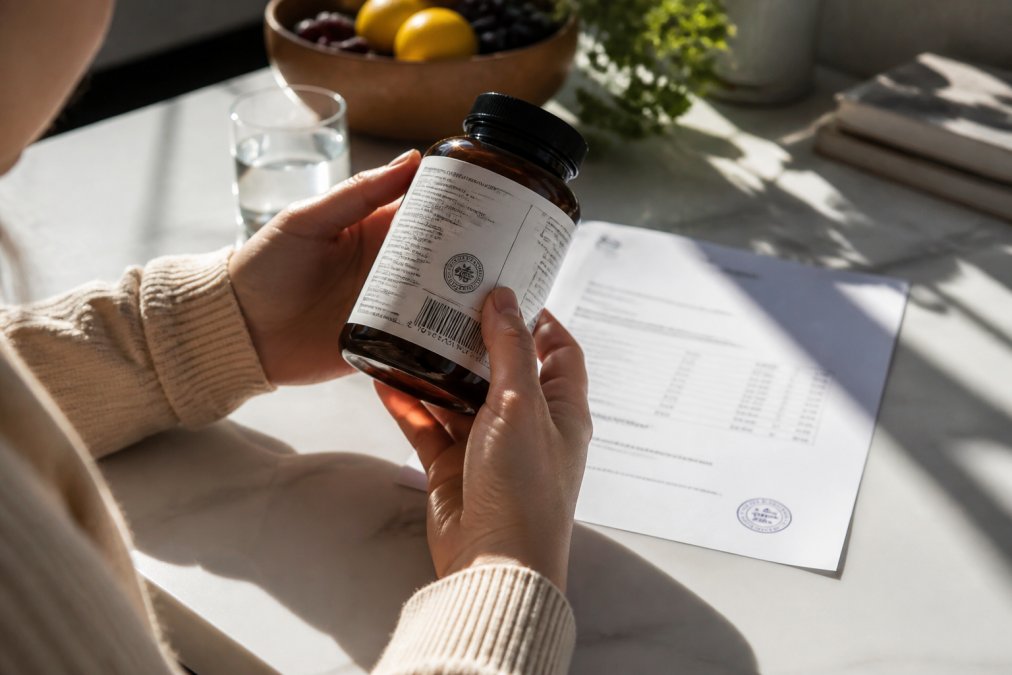
When evaluating supplements, look for certification logos on packaging or batch-specific certificates on the brand's website. Pure Vitamins UK manufactures to ISO 22000, HACCP, and GMP standards, quality assurance frameworks governing manufacturing processes. Combined with batch testing, these standards provide layered verification that the product is what it claims to be.
How to Check Supplement Quality and Verify Batch Numbers
Every supplement batch has a unique identifier, usually printed on the label or packaging. This number links to the certificate of analysis. To verify quality, find the batch number on your bottle, then check the brand's website or contact customer service with that number. Responsible brands will provide the corresponding test results within days.
The batch number typically appears near the expiry date or on the bottom of the bottle. Once you have it, visit the brand's website and look for a "Batch Testing Results," "Certificates of Analysis," or "Test Results" section.
Step-by-step verification process:
-
Locate the batch number. Check the back or bottom of the bottle, the side of the packaging, or the outer carton. Write it down exactly as printed.
-
Visit the brand's website. Look for a dedicated testing or transparency page, typically in the footer or under "Quality" or "Testing."
-
Search the batch database. If the brand has an online search tool, enter your batch number. If not, prepare to contact them directly.
-
Request the certificate if not available online. Email the brand with your batch number, product name, and purchase date. Legitimate brands respond within 24-48 hours. If they delay or refuse, this is a significant red flag.
-
Review the certificate of analysis. Check three critical elements:
- Product match: Confirm the product name, strength, and form match your bottle exactly.
- Test date: The certificate should be dated within the last 18-24 months.
- Results status: Every tested parameter should show "Pass," "Within Specification," or "Compliant." Any result marked "Fail" or "Non-Compliant" means the batch should not have been released for sale.
If the brand's website doesn't have a searchable database and customer service doesn't respond, contact them via phone or social media. Transparency should be the default. If a brand claims to batch test but cannot produce a certificate within 48 hours, their testing claims are unverifiable.

Clean Label Vitamins: What Transparency Really Means
Clean label lacks a legal definition but typically means fewer additives and fillers than conventional alternatives. A truly clean label vitamin lists active ingredients and only essential binding agents required for tablet or capsule production. If you can't pronounce most ingredients or the label lists "proprietary blend" without specifying amounts, it's not transparent.
Transparency includes dosage forms. Magnesium glycinate absorbs better than magnesium oxide but costs more. A transparent brand specifies which form they use and why. Vitamin D3 with K2 is more effective than D3 alone for bone health. A transparent brand documents this choice.
Pure Vitamins UK publishes exact dosages for every ingredient in every product. This level of specificity is rare. Most brands either hide dosages behind proprietary blends or use cheaper, less bioavailable forms without disclosing the difference.
Clean label also means no artificial sweeteners, colours, or preservatives unless necessary. Some vitamins require a preservative to prevent microbial growth, that's legitimate. Artificial colours serve no purpose in a supplement, that's unnecessary.
Batch Testing vs. GMP Certification: What's the Difference?
GMP stands for Good Manufacturing Practice. It's a framework governing how supplements are manufactured: equipment maintenance, staff training, sanitation, quality control processes, and documentation. A GMP-certified facility has been audited by an independent body and meets these standards. However, GMP certification doesn't guarantee that every batch was tested independently. It certifies the process, not the product.
Batch testing is direct analysis of finished products. A batch is manufactured, samples are sent to an independent laboratory, and results come back as a certificate of analysis. GMP certification ensures the manufacturing process follows best practices, but it doesn't verify the final product itself.
GMP certification reduces contamination likelihood during manufacturing through documented procedures, staff training, and regular audits. However, a supplier might deliver contaminated raw materials, or equipment might malfunction. A batch can still be contaminated even if the facility is GMP-certified.
Batch testing catches contamination if it occurs anyway. It's direct evidence that the finished product is safe. If a batch fails testing, it should be destroyed, not sold.
Evaluating a brand's quality assurance:
When comparing supplements, ask three questions:
-
Is the manufacturer GMP-certified? Look for GMP certification from a recognised body. In the UK, the Medicines and Healthcare products Regulatory Agency (MHRA) oversees GMP compliance. If a brand doesn't mention GMP certification, ask them directly.
-
Does the brand batch test? Ask whether every batch is tested by an independent laboratory. Responsible brands test every batch. If a brand won't commit to 100% batch testing, their quality assurance is incomplete.
-
Are certificates of analysis published or available on request? This is the most important question. If a brand won't publish or share results, their testing claims are unverifiable.
The best approach:
The strongest quality assurance combines both. A GMP-certified manufacturer that batch tests every product and publishes certificates of analysis offers the highest level of assurance. GMP certification provides ongoing oversight through regular audits. Batch testing provides immediate verification of each product you buy.
Common Contaminants Beyond Banned Substances
Batch testing screens for heavy metals, lead, cadmium, arsenic, and mercury. These accumulate in soil and plants, appearing in supplements even when the manufacturer has done nothing wrong. Regular exposure damages the nervous system, kidneys, and bones.
Microbial contamination is another major concern. Bacteria like E. coli and Salmonella can grow in supplements stored in warm, humid conditions. Batch testing includes microbial analysis to ensure the product is safe to consume.
Pesticide residues appear in plant-based supplements. If raw ingredients were grown using pesticides, traces may remain even after processing. Testing detects these residues and confirms they're below safety thresholds.
Undisclosed allergens represent a hidden risk. A supplement might contain peanut oil as a carrier without disclosure. Cross-contamination during manufacturing is also common if a facility produces allergen-containing supplements on the same equipment without proper cleaning. Batch testing catches this if the brand requests it.
Responsible brands test for the full range: heavy metals, microbial contamination, pesticides, and allergens. Brands that test only for banned substances are missing significant risks.
Conclusion
Batch-tested vitamins represent a meaningful commitment to product integrity. The testing process is straightforward: independent laboratory analysis, published results, verifiable batch numbers. Yet most supplements on retail shelves skip this step entirely, relying on manufacturer claims instead.
The cost of batch testing is modest, typically a few pounds per product. Brands that absorb this cost signal they prioritise your safety over maximum profit margins. Pure Vitamins UK batch tests every product and publishes results transparently. This commitment, combined with GMP manufacturing standards and clean-label formulations, means you know exactly what you're buying and that it's been independently verified. Shop now and experience the difference transparency makes.
Frequently Asked Questions
What does batch tested mean for vitamins?
Batch testing means each production run of a supplement is independently analysed for purity, potency and contaminants before release. Every batch receives a certificate of analysis documenting what's actually in the product. This differs from finished-product testing done by the manufacturer alone. Batch tested vitamins provide traceability, you can verify results for the specific lot number on your bottle, not just a generic claim about the brand.
Why is third-party testing important for supplements?
Third-party testing removes conflicts of interest. An independent laboratory has no financial stake in the product's success, so results are objective and credible. The UK supplement market is not as tightly regulated as medicines, making independent verification essential for safety. Third-party certification confirms banned substances are absent, ingredient potency matches the label, and heavy metals or microbial contaminants are within safe limits. This gives you proof, not just promises.
How can I verify if a supplement brand is transparent about quality?
Look for brands that publish certificates of analysis publicly or provide them on request. Check whether they list exact doses of each ingredient (not just 'proprietary blends'), disclose their manufacturing standards (ISO 22000, HACCP, GMP), and state their testing protocols clearly. Transparent brands explain what contaminants they screen for and share batch numbers so you can cross-reference results. If a company refuses to share test data or avoids specifics about sourcing and manufacturing, that's a red flag.
Are batch tested vitamins safer than standard supplements?
Batch tested vitamins carry significantly lower risk. Standard supplements may only be tested by the manufacturer, which creates potential bias. Batch testing by independent laboratories detects adulteration, heavy metal accumulation, and banned substances that standard quality control might miss. For athletes especially, batch testing confirms the product is genuinely clean-label and free from prohibited compounds. Even for everyday users, batch testing provides documented proof of what you're actually consuming, not just what the label claims.
Do I need batch tested vitamins if I'm not a professional athlete?
Yes. Batch testing protects everyone, not just athletes. Contaminated supplements can expose you to heavy metals, banned substances, or mislabelled ingredients regardless of your activity level. If you're managing specific health goals, hormonal balance, digestion, joint health, you want certainty that your supplements contain exactly what you're paying for at the stated dose. Batch testing eliminates guesswork and ensures product integrity, giving you confidence in your daily wellness routine.

