

Reviewed and updated: 11 November 2026
The best biodegradable materials for vitamin containers are unlined kraft paper, moulded pulp, cellulose film, PLA and PHA, but each only breaks down under the right conditions: PLA needs industrial composting, PHA and certified paper or pulp can be home composted, and none of them protects tablets from moisture as well as glass or aluminium, which are not biodegradable but recycle very well. The greenest choice is the one that protects the supplement and actually gets disposed of properly.
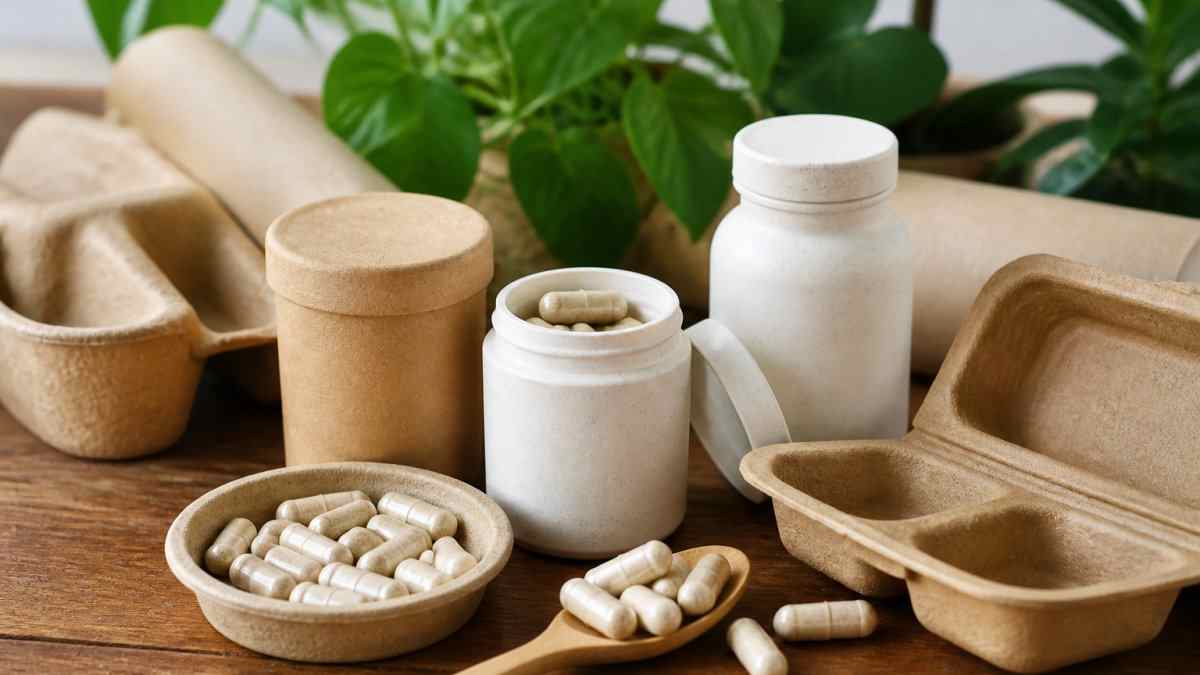
I spend more time than I ever expected thinking about packaging. A container has two jobs that pull in different directions: keep the vitamins inside stable until the last capsule, and leave as little behind as possible afterwards. Here is an honest, material-by-material look at the options, including where each one falls short.
Biodegradable materials for vitamin containers: the quick answer
- Kraft paper and moulded pulp: light and compostable when unlined and certified, but a weak moisture barrier on their own.
- PLA (plant-based plastic): made from corn starch or sugarcane; breaks down in industrial composting, not in a garden heap.
- PHA: a newer bio-based polymer that can break down in home compost, soil and water, but costs more and is harder to source.
- Cellulose film: wood-pulp based and compostable, often used as an inner layer or window.
- Glass and aluminium: not biodegradable, but excellent barriers and widely recycled at the kerbside.
- The key check: look for a recognised compostability mark and which environment it covers, home or industrial.

Our pick for this guide
Curious what six daily essentials look like in light, resealable pouches?
Explore our daily essentials, formulated in the UK: six full-size formulas in one pack, each in a resealable pouch. A food supplement, not a replacement for medical advice.
From £49.00 · 6 full-size pouches
Shop Complete Daily Bundle →Why vitamin packaging is worth getting right
A supplement container is used for a few weeks and then spends a very long time somewhere else. Rigid plastic can persist for decades, which is why more people now ask what the pack is made from before they ask what is inside it. WRAP's work on plastic packaging is a good overview of why reducing and redesigning packaging matters in the UK.
But there is a catch that a lot of "eco" marketing skips. Vitamins are sensitive to moisture, heat, light and oxygen. A container that lets humidity in can shorten shelf life, and wasted product carries its own environmental cost. So the right material is always a balance between barrier performance and what happens at the end of the pack's life.
The 7 materials compared
There is no single winner. The best choice depends on whether you are protecting moisture-sensitive tablets or a stable powder, how long the shelf life needs to be, and how the container will realistically be thrown away.

1. Kraft paper
Kraft paper pouches and sleeves are light, cheap and widely recognised by recycling and composting schemes when unlined. On their own they let water vapour through, so most paper supplement pouches carry a thin plastic or foil liner. That liner is what usually stops a paper pouch going into the compost or paper recycling. Best for: stable powders and short shelf lives. Watch for: hidden liners.
2. Moulded pulp
Moulded pulp (the material of egg boxes) can be shaped into tubs and inserts. Certified grades can be home composted. It is a poor moisture barrier, so it works best as outer or secondary packaging around a sealed inner bag. Best for: outer packs and gift boxes.
3. Cardboard tubes
Paperboard tubes look lovely and recycle easily in household paper collections when they are uncoated. Like pulp, they need a barrier layer or inner pouch for tablets and capsules, and metal or plastic end caps should be separated before recycling. Best for: premium presentation with an inner seal.
4. Cellulose film
Cellulose film is made from wood pulp and is compostable in certified grades. It is often used for inner wraps, windows and lamination layers rather than whole containers, because its moisture barrier varies by grade. Best for: inner layers and windows.
5. PLA (polylactic acid)
PLA is a bio-based plastic made from fermented plant sugars. It feels and behaves much like conventional plastic, which makes it easy to use for jars and film. The honest limitation is that it needs the sustained heat of an industrial composting facility; in a home compost heap or in landfill it breaks down very slowly. In the UK, few households can send PLA to industrial composting through their kerbside collection, so check what your local council accepts. Best for: brands and customers with access to food-waste or commercial composting.
6. PHA (polyhydroxyalkanoates)
PHA is made by microorganisms and is one of the few bio-based polymers certified to break down in home compost, soil and marine conditions, although even then it takes months rather than weeks. It is more expensive and fewer suppliers make it, which is why you see it less often. Best for: brands willing to pay more for a wider range of breakdown routes.
7. Glass and aluminium (the recyclable alternatives)
These two are not biodegradable at all, but they belong in any fair comparison. Glass is chemically inert, an excellent moisture and oxygen barrier, and amber glass filters light. Aluminium is light and an excellent barrier too. Both are collected by most UK councils and can be recycled many times. The trade-offs are weight and breakage for glass, which raise transport emissions, and energy-intensive primary production for aluminium. Best for: oils and moisture-sensitive tablets where shelf life matters most.
Barrier performance and shelf life
For a vitamin container, protecting the contents comes first. Some nutrients are notably sensitive: vitamin C and several B vitamins can degrade with moisture and heat, omega-3 oils oxidise with air and light, and probiotics are sensitive to moisture and temperature. Effervescent and hygroscopic powders absorb water quickly.
The technical measures to ask a supplier for are the moisture vapour transmission rate (how much water vapour passes through) and the oxygen transmission rate. Compostable films have improved a lot, but many still let through more moisture than conventional high-barrier laminates, so a desiccant, a resealable zip and good storage advice ("keep cool and dry, reseal after use") matter even more.
Biodegradable versus compostable: what the words mean
"Biodegradable" on its own simply means microorganisms can break a material down eventually. It does not say how long that takes, in what conditions, or what is left behind, which is why it is easy to misuse in marketing.
"Compostable" is a stricter claim. Packaging certified to the European standard EN 13432 must break down in industrial composting conditions within a set time and leave no harmful residue. Separate home-compost certifications exist for materials that break down at lower garden-heap temperatures. When you see a mark, check which environment it covers: an industrial mark does not mean a pack will break down in your garden bin.
Where each material actually breaks down
- Home compost: only materials certified for home composting belong here, typically unlined paper, pulp and some PHA and cellulose grades. Thin film breaks down far faster than thick-walled containers.
- Industrial composting: PLA and most compostable films. These need a council food-waste or commercial composting route that accepts packaging; many do not.
- Landfill: conditions are largely without oxygen, so compostable materials can sit for years and may release methane as they slowly break down.
- Soil and water: only a narrow set of materials, such as certain PHA grades, are certified to break down here, and still over months.
The UK government's guidance on compost made from waste explains why composters are cautious about packaging contamination, which is one reason compostable packs are not always accepted.
Glass versus plastic vitamin containers: a lifecycle view
The glass versus plastic question rarely has a clean answer. A lifecycle view adds up raw material production, manufacturing energy, transport weight and what happens at the end. Glass is heavy to ship but recycles repeatedly into new glass. Conventional plastic is light but is often downcycled into lower-grade products, and a lot is not recycled at all. Recycled plastic (rPET) cuts the virgin plastic content, and light, flexible pouches use much less material than rigid tubs, which counts in their favour on transport.
In practice, the best result usually comes from using less material overall, choosing a format that can genuinely be recycled or composted where the customer lives, and printing clear disposal instructions.
Food-contact safety comes first
Any material that touches a supplement must be safe for food contact. In the UK, businesses placing food contact materials on the market are responsible for compliance, and the Food Standards Agency's food contact materials guidance sets out the rules. For plant-based and compostable materials, ask for the declaration of compliance for food contact, not just a sustainability claim.
Producers also now carry more of the cost of packaging waste under the UK's extended producer responsibility (EPR) for packaging rules, which is pushing brands towards formats that are easier to recycle.
Choosing the right format for each supplement type
- Tablets and capsules: need a good moisture barrier. Glass, aluminium, or a high-barrier resealable pouch with a desiccant all work; compostable options need barrier data to back them up.
- Powders: tolerate pouches well; a resealable zip and a tight seal matter more than a rigid tub.
- Oils and softgels: benefit from light and oxygen protection, so amber glass or opaque barrier pouches are sensible.
- Gummies: need protection from moisture and sticking, so barrier film or rigid containers are common.
Our own products come in resealable pouches, which use much less material than rigid tubs and are light to send by post. Our guide to sustainable vitamin packaging benefits looks at the wider environmental picture, and if you are developing your own range, our guide to UK supplement manufacturing quality standards covers the questions to ask a manufacturer, packaging included.
How to dispose of supplement packaging properly
- Glass and aluminium: rinse and put in your kerbside recycling or bottle bank.
- Unlined paper and card: paper recycling, or home compost if certified home compostable.
- PLA and compostable film: only in a food-waste or composting collection that accepts packaging; otherwise general waste, not plastic recycling, where it can contaminate the stream.
- Lined paper or mixed-material pouches: check the pack and your council's guidance; many go in general waste unless a dedicated scheme accepts them.
- Desiccant sachets: general waste.
When in doubt, the instructions printed on the pack and your local council's website are the best guide. Our step-by-step guide on how to read supplement labels also covers where to find storage and disposal information.
Frequently asked questions
What materials are biodegradable for vitamin containers?
The main biodegradable options are unlined kraft paper, moulded pulp, uncoated card, cellulose film, PLA and PHA. Each needs specific conditions to break down, so check whether a material is certified for home or industrial composting. Glass and aluminium are not biodegradable but are widely recyclable.
Are biodegradable vitamin containers safe for supplements?
They can be, as long as the material is approved for food contact and offers enough protection from moisture, light and oxygen for the product's shelf life. Ask for the food-contact declaration and barrier data rather than relying on an eco label.
What is the difference between biodegradable and compostable packaging?
Biodegradable only means a material can eventually be broken down by microorganisms, with no set time or conditions. Compostable packaging is certified to break down within a set time under defined composting conditions and leave no harmful residue, for example under EN 13432 for industrial composting.
Can I put PLA vitamin packaging in my home compost?
Usually not. PLA needs the sustained heat of industrial composting to break down in a reasonable time. Unless the pack is certified home compostable, put it in a food-waste or composting collection that accepts packaging, or in general waste.
Is glass better than plastic for vitamins?
Glass is an excellent barrier and recycles repeatedly, but it is heavy to transport and can break. Light plastic or pouch formats use less material and weigh less to ship. The better choice depends on the product, the distance it travels and how it will be recycled.
Our pick for this guide
Want one pack that covers your daily basics?
Explore our daily essentials, formulated in the UK: magnesium, vitamin D3 and K2, omega-3, a 14-strain culture, vitamin B12, and zinc with copper, each in its own pouch. A food supplement, not a replacement for medical advice.
From £49.00 · 6 full-size pouches
Shop Complete Daily Bundle →Sources
- WRAP. Plastic packaging. wrap.ngo
- Food Standards Agency. Food contact materials guidance. food.gov.uk
- UK Government. Extended producer responsibility for packaging. gov.uk
- Environment Agency. Compost made from waste: resource framework. gov.uk
Browse more in our supplement guides hub or start from the home page.
With care,
Dr. Miron, Founder of Pure Vitamins UK
Food supplements should not be used as a substitute for a varied, balanced diet and a healthy lifestyle. This article is for general information only.


