


Table of Contents
- Why Buyers Search for Transparent Labs Alternatives
- What Makes a Transparent Labs Alternative Worth Considering
- Third-Party Tested Supplements UK: The Quality Standard
- Clean Label Protein Powder UK and Beyond: Ingredient Transparency
- UK Supplement Manufacturing Standards: What Certification Means
- Cost-Per-Serving Comparison: Value Without Compromise
- Pure Vitamins UK: A Transparent Alternative Built for UK Buyers
- Frequently Asked Questions
Last Updated: September 3, 2026
Why Buyers Search for Transparent Labs Alternatives
When shopping for supplements, you quickly realise that transparency isn't universal. Many brands hide behind vague proprietary blends, source ingredients from unclear suppliers, and make claims that stretch the evidence. This is why people search for transparent labs alternatives, they've either tried a brand that disappointed them or they're determined to avoid that disappointment from the start.
Most buyers want three things: clear ingredient lists with actual doses printed on the label, evidence that what's written on the bottle is actually inside, and confidence that the manufacturing process meets real standards.
At Pure Vitamins UK, we've built our entire approach around solving this exact problem. We formulate in the UK, manufacture to ISO 22000, HACCP and GMP standards, and print every single dose on the label so you know exactly what you're buying. The UK supplement market has expanded significantly, and several brands now compete seriously on transparency and quality. Understanding what separates the genuine alternatives from the greenwashing is the first step toward making a choice you'll actually feel good about.
What Makes a Transparent Labs Alternative Worth Considering
A transparent alternative isn't just a brand that uses the word "clean" in its marketing. Real transparency means three measurable things: ingredient sourcing that's verifiable, manufacturing standards you can actually check, and dosing that matches what's printed on the label.
Start with ingredient sourcing. A real alternative will tell you whether your magnesium is magnesium glycinate (well-absorbed) or magnesium oxide (cheaper, poorly absorbed). It will name the supplier or at least the country of origin. This isn't pedantry; the form of an ingredient directly affects whether your body can actually use it.
Manufacturing standards are where many brands fall short. A facility certified to GMP is the baseline. ISO 22000 certification means the facility has documented food safety protocols. HACCP means there's a system in place to identify and control hazards. When a brand tells you their facility meets these standards, ask for the certificate.
Finally, print the doses on the label. All of them. No proprietary blends that hide the actual amounts. This is the single easiest way to spot a brand that's genuinely transparent versus one that's just using the language of transparency.
Third-Party Tested Supplements UK: The Quality Standard
Third-party testing is the industry standard that separates serious brands from casual ones. When a supplement is third-party tested, an independent laboratory verifies that what's written on the label is actually in the bottle, and that it's free from banned substances, heavy metals, and microbial contaminants.
The UK doesn't have a mandatory third-party testing requirement for all supplements, but the Medicines and Healthcare products Regulatory Agency (MHRA) sets standards for any product making health claims (mhra.gov.uk). Many reputable brands invest in third-party testing anyway, because it builds customer trust and catches problems before they reach consumers.
What third-party testing actually checks:
- Label accuracy: Does the product contain the dose of each ingredient it claims?
- Microbial contamination: Is the product free from bacteria, moulds, and other pathogens?
- Heavy metals: Lead, cadmium, and other toxic metals that can accumulate in supplements
- Banned substances: Ingredients that regulatory bodies have restricted or banned
- Potency: Does the active ingredient have the strength it's supposed to have?
The most rigorous testing labs in the UK and Europe are accredited to ISO 17025, which means they've been independently verified as competent (iso.org). When a brand mentions third-party testing, check whether the lab is ISO 17025 accredited.
A truly transparent alternative will either publish certificates of analysis on their website or provide them on request.
Clean Label Protein Powder UK and Beyond: Ingredient Transparency
Clean label typically means no artificial sweeteners, no fillers, no unnecessary additives, and a clear breakdown of what you're actually consuming.
The most common artificial sweeteners in protein powders are sucralose, aspartame, and acesulphame K. A genuinely clean protein powder will either use natural sweeteners like stevia or monk fruit, or it will simply taste less sweet and rely on flavouring instead. The choice should be yours, not hidden behind marketing language.
Fillers are the second major issue. Some protein powders bulk out their formulas with cheap carbohydrates like maltodextrin or dextrose. A clean label will tell you the protein content per serving and list carbohydrates and fats separately. If a 30g scoop contains only 20g of protein, you're paying for 10g of filler.
The ingredient list itself should be readable. A clean label protein will have a short ingredient list: whey isolate or concentrate, natural flavouring, perhaps a small amount of emulsifier, and maybe a sweetener. For plant-based protein powders, the same principles apply. A clean plant-based powder will be transparent about whether the protein is an isolate (higher protein concentration, fewer carbs) or a concentrate (lower protein, more carbs).
UK Supplement Manufacturing Standards: What Certification Means
Manufacturing certification in the UK is governed by the MHRA and supported by industry standards like GMP, ISO 22000, and HACCP. Understanding what each one actually means is key to knowing whether a brand's manufacturing claims are genuine.
GMP (Good Manufacturing Practice) is the baseline. A GMP-certified facility has documented procedures for every step of production, from raw material intake to finished product packaging. The facility is regularly inspected, and records are audited. If a brand doesn't mention GMP, that's a red flag. Ask whether it's GMP-certified or just GMP-compliant. Certified means third-party verified; compliant is self-assessed.
ISO 22000 is a food safety management system standard. It's more comprehensive than GMP because it looks at the entire supply chain. An ISO 22000-certified facility has a documented system for identifying hazards, controlling them, and monitoring that the controls are working.
HACCP (Hazard Analysis and Critical Control Points) is a systematic approach to food safety that identifies where things can go wrong and puts controls in place. A facility with HACCP has analysed the manufacturing process and set up monitoring and corrective actions.
When a brand claims their facility is certified to these standards, ask for proof. A legitimate facility will have a certificate number and an accreditation body. In the UK, look for accreditation from bodies like UKAS (UK Accreditation Service).
| Certification | What It Covers | Third-Party Verified? | Frequency of Audit |
|---|---|---|---|
| GMP | Manufacturing procedures, cleanliness, staff training | Yes | Annual minimum |
| ISO 22000 | Supply chain food safety, hazard identification, monitoring | Yes | Annual minimum |
| HACCP | Critical control points, hazard analysis, corrective actions | Can be | Varies |
| GMP + ISO 22000 + HACCP | All of the above combined | Yes | Annual minimum |
A brand that manufactures to all three standards is saying: "We've documented everything, we've been audited, and we've committed to a system that catches problems before they reach you."
Cost-Per-Serving Comparison: Value Without Compromise
Price is where transparency often breaks down. A cheap supplement might be cheap because it uses cheap ingredients. A premium supplement might be premium because of marketing, not because of actual quality. The only way to know is to calculate cost-per-serving and compare it against what you're actually getting.
If a protein powder costs £25 and contains 30 servings, that's 83p per serving. If another costs £40 for 60 servings, that's 67p per serving. The second is cheaper, but only if the protein content per serving is the same. If the first has 25g of protein per serving and the second has 20g, the first is actually the better value.
Cost-per-serving should account for:
- Protein content per serving (for protein powders)
- Bioavailability of the form used (magnesium glycinate costs more than magnesium oxide, but your body absorbs more of it)
- Dose of active ingredients
- Manufacturing standards (a GMP-certified facility costs more than an unverified one)
- Third-party testing (adds cost, but adds assurance)
Pure Vitamins UK products range from £8.99 to £29.99, positioned between budget brands and premium alternatives. The Energy & Focus Bundle costs £36.99 for four full-size formulas. The Micronised Creatine Monohydrate is £10.07 for a 400g pouch, roughly a three to four month supply for daily use. These prices aren't the cheapest on the market, but they're not premium either. The trade-off is transparent dosing, UK manufacturing, and batch testing.

When comparing alternatives, look at how long each bottle lasts, the actual dose of the active ingredient per serving, whether the ingredient is in a form your body can absorb, whether the brand publishes third-party test results, and the manufacturing standards they meet.
Pure Vitamins UK: A Transparent Alternative Built for UK Buyers
Pure Vitamins UK exists because the founders got frustrated with finding supplements that are actually transparent, actually work, and don't cost three times what they should.
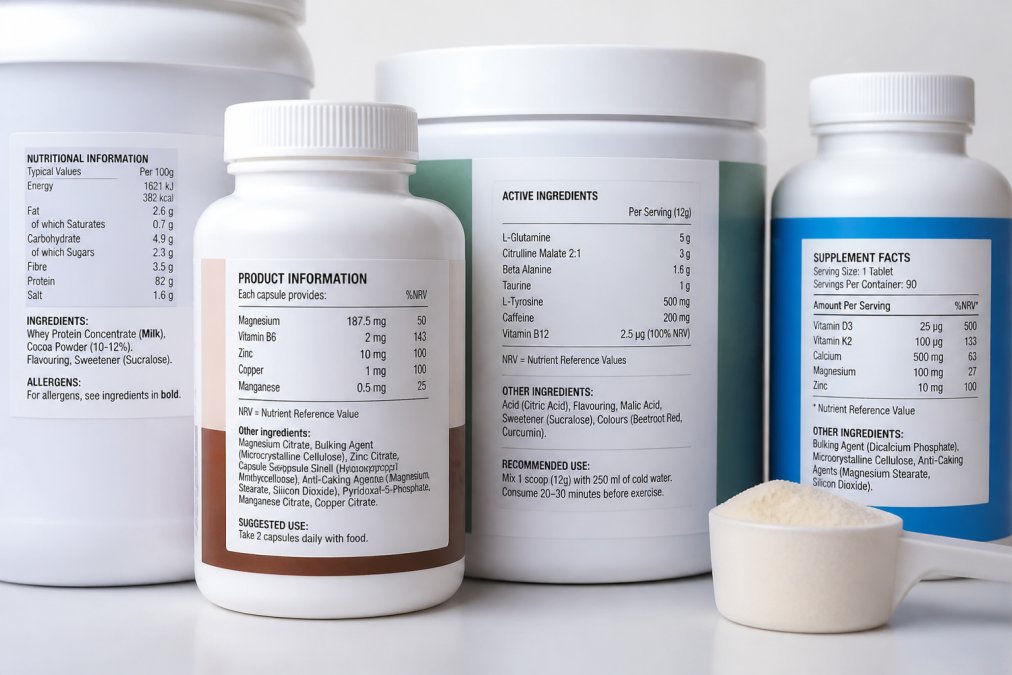
The brand formulates every product in the UK and manufactures in facilities certified to ISO 22000, HACCP, and GMP. Every single dose is printed on the label, no proprietary blends, no hidden amounts. The range spans 23 products from £8.99 to £29.99, designed to sit between under-dosed budget supplements and overpriced premium brands.
The Energy & Focus Bundle (£36.99) brings together four formulas: B12 (which has an authorised claim for normal energy-yielding metabolism and reduction of tiredness and fatigue), Lion's Mane mushroom extract, KSM-66 ashwagandha, and nicotinamide riboside. Each is included at a full, effective dose.
The Joint & Active Bundle (£36.99) pairs creatine monohydrate (which has an authorised claim for increased physical performance in high-intensity exercise), omega-3 EPA and DHA, turmeric and ginger extracts, and collagen peptides. The creatine is micronised for clean mixing; the collagen is hydrolysed for absorption and also counts as protein.
The Micronised Creatine Monohydrate (£10.07) addresses a real problem: cheaper creatine powders clump at the bottom of the shaker. This one is milled ultra-fine so it disperses cleanly. One level teaspoon provides 3.5g, which exceeds the 3g daily dose needed to trigger the authorised performance claim. A 400g pouch lasts roughly three to four months.

The NAD+ Supplement (£19.00) combines 500mg nicotinamide riboside with 250mg quercetin phytosome and 150mg trans-resveratrol. The quercetin uses phytosome delivery for improved absorption; the resveratrol is naturally sourced.
The NMN Supplement (£24.99) pairs 500mg NMN with 500mg TMG (trimethylglycine), which is significant. NMN metabolism runs through a methylation-dependent pathway, so TMG belongs in the formula. Most brands skip the TMG to save cost. This one includes it at full dose. The formula also contains trans-resveratrol, pterostilbene, quercetin, CoQ10, and piperine, each included at a dose that reflects its role.
What separates Pure Vitamins UK from cheaper alternatives is the commitment to ingredient form, dose transparency, and manufacturing verification. What separates it from premium brands is the pricing. You're not paying for premium positioning or influencer marketing. You're paying for actual quality, and it costs less because the brand sells direct.
Finding a transparent labs alternative that actually delivers on its promises requires knowing what to look for: clear ingredient lists with real doses, verifiable manufacturing standards, and willingness to show you third-party test results. The UK supplement market now has several brands worth considering, but they're not all equal. The best alternatives combine transparency with rigorous manufacturing, fair pricing, and honesty about what the evidence actually supports.
Pure Vitamins UK meets all of these criteria. The brand formulates in the UK, manufactures to ISO 22000, HACCP, and GMP standards, prints every dose on the label, and makes test results available on request. The range spans energy support, joint and active formulas, and targeted micronutrients, all positioned between budget supplements and premium alternatives. Shop now and discover supplements that actually tell you what you're buying and at what dose.
Frequently Asked Questions
Q: What should I look for in a transparent supplement brand?
A: Prioritise brands that list every ingredient with exact doses on the label, not proprietary blends. Check for manufacturing certifications (GMP, ISO 22000, HACCP), and clear sourcing information. Avoid artificial sweeteners like sucralose and unnecessary fillers. Reputable brands publish certificates of analysis on request and disclose their manufacturing location and standards.
Q: How do I verify the quality of UK-manufactured supplements?
A: Look for GMP certification and ISO 22000:2018 accreditation, which ensure consistent manufacturing standards. Request certificates of analysis for heavy metals and purity testing. Check if the brand conducts batch testing through independent labs. UK-manufactured supplements should clearly state their facility location and quality protocols. Many transparent brands, like Pure Vitamins UK, publish batch-test results on request.
Q: Are there UK-based alternatives to Transparent Labs with better value?
A: Yes. UK brands like Pure Vitamins UK offer transparent dosing and batch testing at lower price points. Pure Vitamins UK bundles range from £36.99 and individual products from £10.07 to £24.99. Compare cost-per-serving and ingredient bioavailability rather than price alone.
Q: Why is ingredient transparency important in sports nutrition?
A: Transparent ingredient lists with declared doses let you verify bioavailability, avoid banned substances, and match formulas to your goals. Vague proprietary blends hide cheap fillers and underdosed actives. For athletes, batch testing and banned substance screening are critical. Transparent labelling also helps identify artificial sweeteners, allergens, and unnecessary additives that might affect performance or digestion.
This article was written using GrandRanker
