


Table of Contents
- What 'Clean Label' Actually Means for Supplement Safety
- Common Supplement Fillers to Avoid and Their Side Effects
- Hidden Contaminants: Heavy Metals and Pesticide Residues
- How to Read Supplement Labels in the UK
- Are Expensive Vitamins Actually Better?
- Bioavailability vs. Clean Label: Why Both Matter
- Regulatory Standards and Labelling Loopholes
- Frequently Asked Questions
Last Updated: September 26, 2026
What 'Clean Label' Actually Means for Supplement Safety
Clean label supplements refer to products formulated with transparent ingredient lists, minimal synthetic additives, and clearly disclosed doses. But the term itself isn't legally defined in the UK, which creates a critical gap between marketing language and actual safety, and understanding clean label supplements side effects requires looking beyond the label itself.
The real issue isn't whether a supplement looks "clean", it's whether you can verify what's actually inside and whether those ingredients might cause adverse effects. Many consumers assume "clean label" means automatically safer, but that's a dangerous assumption. A product can have a short ingredient list and still contain problematic excipients, hidden contaminants, or undisclosed allergens that trigger genuine side effects.
At Pure Vitamins UK, we've built our formulations around transparency because vague ingredient lists are where problems hide. When a label says "proprietary blend" or lists vague carriers like "natural flavourings," you have no way of knowing what you're ingesting or whether it might interact with your medications or trigger a sensitivity.
The distinction matters because regulatory standards differ between markets. The UK follows EU nutrition and health claims rules, which means manufacturers must declare all ingredients by their INCI (International Nomenclature of Cosmetic Ingredients) names. Yet many brands still exploit loopholes by burying problematic additives under technical names or by using carriers that aren't explicitly required to be listed at certain concentrations.
Common Supplement Fillers to Avoid and Their Side Effects
Synthetic Additives and Excipients
Excipients are the inactive ingredients that hold a supplement together, improve absorption, or extend shelf life. They're necessary, a capsule needs a binder, and powders need flow agents. The problem is that many excipients commonly used in supplements can trigger side effects ranging from mild digestive discomfort to genuine allergic reactions.
Magnesium stearate is one of the most widely used flow agents in the supplement industry. It prevents powders from clumping during manufacturing and makes capsule filling faster. Yet some people report bloating, constipation, or digestive upset after taking supplements containing it. The mechanism isn't fully understood, but magnesium stearate can coat the intestinal lining and potentially reduce nutrient absorption if used in high concentrations.
Silica (silicon dioxide) is added to prevent caking in powders and tablets. In small amounts, it's generally recognised as safe, but excessive silica exposure has been linked to inflammatory responses in some individuals, particularly those with existing gut sensitivities.
Cellulose, used as a binder and filler, can ferment in the colon if you have a sensitive digestive system, causing bloating and gas. Microcrystalline cellulose is the form most commonly used, and whilst it's considered safe at standard doses, some people experience noticeable digestive symptoms.
Titanium dioxide, historically used as a whitening agent in supplements, has faced increasing scrutiny. The EU restricted it in food in 2022, yet some older formulations still contain it. Concerns centre on potential inflammatory effects and nanoparticle absorption through the gut.
Allergen Cross-Contamination Risks
Cross-contamination happens during manufacturing when trace amounts of one ingredient end up in a product that isn't supposed to contain it. A facility that processes nuts, gluten, or shellfish can leave residues on equipment, even after cleaning.
The UK requires allergen labelling for the 14 major allergens (peanuts, tree nuts, gluten, shellfish, sesame, etc.), but manufacturers only need to declare allergens that are intentional ingredients. They're not required to warn about cross-contamination unless it's significant enough to pose a genuine risk.
This creates a gap: someone with a severe tree nut allergy might buy a supplement labelled "nut-free" that was made on shared equipment with almonds. If the manufacturer didn't test for cross-contamination, they won't know the risk exists. Symptoms can range from mild itching in the mouth to anaphylaxis in severe cases.
Third-party testing can catch cross-contamination, but it's voluntary and expensive. Brands that invest in it typically advertise it prominently. If a supplement doesn't mention allergen testing and you have a severe allergy, contact the manufacturer directly to ask about their production protocols.
Hidden Contaminants: Heavy Metals and Pesticide Residues
Raw materials for supplements, whether botanical extracts, mineral salts, or amino acids, come from farms, mines, and extraction facilities around the world. Many of those environments contain heavy metals like lead, cadmium, and arsenic in the soil or water.
A supplement ingredient can be 100% pure in terms of chemical composition yet still contain trace heavy metals absorbed from its source. Calcium from certain mineral deposits, for example, often contains lead. Herbal extracts from regions with contaminated soil can accumulate cadmium. Over time, regular consumption of contaminated supplements can lead to heavy metal bioaccumulation in your tissues.
NAD+ Supplement | Nicotinamide →
Symptoms of heavy metal exposure develop slowly and are often attributed to other causes: fatigue, brain fog, joint pain, and digestive issues. By the time someone suspects heavy metal toxicity, they may have been taking a contaminated supplement for months.
Pesticide residues follow a similar pattern. Botanical ingredients like ashwagandha, turmeric, and ginseng are often grown in regions where pesticide regulation is less strict than in the UK. A supplement containing these ingredients can carry residues of organophosphates or neonicotinoids that aren't immediately harmful but accumulate with repeated exposure.
The UK doesn't mandate heavy metal or pesticide testing for supplements the way it does for food. This is a regulatory gap. Brands that test for these contaminants typically use third-party labs and publish results. If a brand doesn't mention testing and you're taking a supplement regularly, it's worth asking them directly.
How to Read Supplement Labels in the UK
Decoding Ingredient Lists and Proprietary Blends
A properly formatted supplement label lists every ingredient in descending order by weight, followed by the amount per serving. If a label says "Magnesium Glycinate 400mg," you know exactly what you're getting and how much.

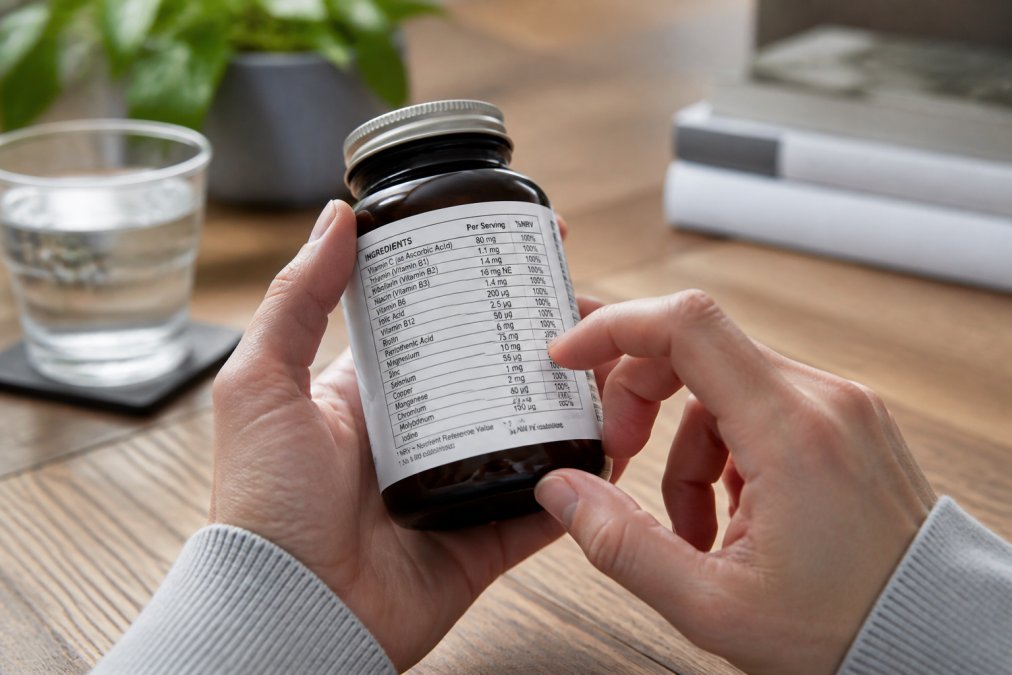
A proprietary blend, by contrast, lists ingredients without individual doses. You might see "Energy Complex: Caffeine, L-Theanine, B-vitamins" without knowing whether it contains 10mg or 100mg of caffeine. This is legal under UK labelling rules, but it's a red flag for transparency.
The term "natural flavourings" is vague by design.
Understanding Third-Party Testing Claims
Third-party testing means an independent laboratory, not the manufacturer, has analysed the product to verify its contents. This is the gold standard for supplement verification.
When evaluating third-party claims, look for:
- The testing organisation's name (not just "third-party tested")
- What specifically was tested (heavy metals, banned substances, label accuracy, potency)
- How recent the testing was (ideally within the last year)
- Whether results are publicly available
Are Expensive Vitamins Actually Better?
Price doesn't automatically correlate with quality, but it often reflects ingredient sourcing, manufacturing standards, and testing rigour. A £5 multivitamin from a discount retailer and a £25 multivitamin from a premium brand might contain similar active ingredients but differ dramatically in absorption, contaminant testing, and excipient quality.
Bioavailability vs. Clean Label: Why Both Matter
A supplement can have a clean label and terrible bioavailability, or vice versa, which is why understanding clean label supplements side effects means evaluating both transparency and efficacy. Bioavailability is how much of an ingredient your body can actually absorb and use. A supplement with excellent bioavailability but a long ingredient list full of synthetic additives might deliver results but expose you to unnecessary chemicals.
Regulatory Standards and Labelling Loopholes
The UK regulates supplements as food, not medicine. This means they're subject to the Food Standards Agency (FSA) rules and must comply with the Food and Drug Regulations. However, the regulatory framework is less stringent than it is for pharmaceuticals, which creates opportunities for misleading claims.
Frequently Asked Questions
What does 'clean label' actually mean for supplement safety?
Clean label supplements contain minimal synthetic additives, artificial preservatives, and unnecessary fillers. The term refers to transparency in ingredient sourcing and manufacturing. However, 'clean label' is a marketing term, not a regulated definition in the UK. A truly clean supplement should declare every ingredient at its exact dose, avoid proprietary blends that hide quantities, and come from a manufacturer using third-party testing. The absence of artificial additives doesn't guarantee safety, contaminants like heavy metals or pesticide residues can still be present, which is why batch testing matters.
Can clean label supplements still cause side effects?
Yes. Even clean label supplements can trigger adverse reactions through excipients, allergen cross-contamination, or individual sensitivities to natural ingredients. For example, magnesium glycinate is highly bioavailable and gentle, but some people experience digestive upset. The 'clean' designation means fewer synthetic additives, not zero risk. Anyone with existing health conditions, allergies, or those taking medications should check with a healthcare professional before starting any supplement, regardless of how clean the label appears.
How do I identify truly transparent supplement brands?
Look for brands that declare every ingredient at its exact dose, not vague 'proprietary blends' that hide quantities. Check whether the manufacturer is ISO 22000, HACCP, and GMP certified, which indicates quality control standards. Verify that third-party testing certificates are available or linked on the website. Transparent brands publish batch test results showing the absence of heavy metals, pesticides, and microbial contaminants. Read the full ingredient list for unnecessary excipients like magnesium stearate, silicon dioxide, or synthetic colours. Compare ingredient forms, magnesium glycinate and vitamin D3 with K2 are more bioavailable than cheaper alternatives like oxide forms.
What regulatory standards govern supplement safety in the UK?
Supplements in the UK are regulated as food, not medicines, under the Food Standards Agency (FSA) and the Medicines and Healthcare products Regulatory Agency (MHRA). Manufacturers must comply with food safety law, including HACCP principles and labelling regulations. Health claims on supplements must be authorised by the European Commission's Register of Nutrition and Health Claims. Supplements cannot claim to treat, prevent, or cure disease. Manufacturers are responsible for ensuring safety and quality, but the FSA does not pre-approve supplements before sale. This means consumer vigilance and third-party testing are essential to verify ingredient purity and exclude contaminants.
