

Reviewed and updated: 6 November 2026
Pure Encapsulations Iron-C is a once-a-day capsule that pairs 28 mg of iron as iron bisglycinate with 100 mg of vitamin C, and in this guide I compare it with our Iron Tablets with Vitamin C, B12 and Folic Acid, plus two other popular UK iron options, on the facts you can check yourself. I'm Dr. Miron, founder of Pure Vitamins UK. I'll cover the iron form, how much iron you get each day, what else is in each product, pack size, price per day and delivery, and I'll be honest about where each one fits.
Pure Encapsulations Iron-C compared: the quick answer
- Pure Encapsulations Iron-C: 28 mg of iron as iron bisglycinate (200% NRV) and 100 mg of vitamin C as calcium ascorbate (125% NRV) in one vegetarian capsule a day. 60 capsules for £17.40 (£15.66 on subscription), about 29p a day.
- Pure Vitamins Iron Tablets with Vitamin C, B12 and Folic Acid: 14 mg of iron from 42 mg of ferrous fumarate (100% NRV), 60 mg of vitamin C, 3 mcg of vitamin B12 and 200 mcg of folic acid in one tablet a day. 30 tablets for £8.76, about 29p a day.
- Spatone Apple: 5 mg of iron (36% NRV) and 60 mg of vitamin C in a liquid sachet a day. 28 sachets for £16.99, about 61p a day.
- Floradix Liquid Iron: 15 mg of iron from ferrous gluconate (107% NRV) in 20 ml a day, with vitamins C, B1, B2, B6 and B12. 250 ml at £13.49 RRP, about £1.08 a day.
- The NHS says 17 mg or less of iron a day from supplements is unlikely to cause harm, and to continue a higher dose only if a GP advises it.
- If a doctor or practitioner recommended a specific iron product to you, check with them before switching.

Our pick for this guide
Looking for iron with vitamin C, B12 and folic acid in one daily tablet?
Each tablet gives 14 mg of iron from ferrous fumarate (100% NRV), 60 mg of vitamin C, 3 mcg of vitamin B12 and 200 mcg of folic acid, 30 tablets per pouch. A food supplement, not a replacement for medical advice.
From £8.76 · 30 tablets
What is Pure Encapsulations Iron-C?
Iron-C is a single-purpose iron product from Pure Encapsulations, a brand many people first hear about from a nutritionist or practitioner. On the brand's UK website it is described as iron in the form of Ferrochel® bisglycinate with a buffered form of vitamin C. The full ingredient list reads: ferrous bisglycinate, calcium ascorbate, hypoallergenic plant fibre (microcrystalline cellulose) and ascorbyl palmitate, in a vegetarian capsule made from hydroxypropyl methyl cellulose. The product is labelled vegan, vegetarian, gluten free, dairy free, non-GMO and soya free.
The amounts per capsule are not printed on the product web page itself, but the brand's UK product information sheet gives them: 28 mg of iron (200% NRV), 100 mg of vitamin C (125% NRV) and 11 mg of calcium from the calcium ascorbate. The direction is one capsule a day with a meal, or as directed by a health professional. One small tip if you shop around: the US version of Iron-C is listed with different amounts, so always read the label of the pack you are actually buying.

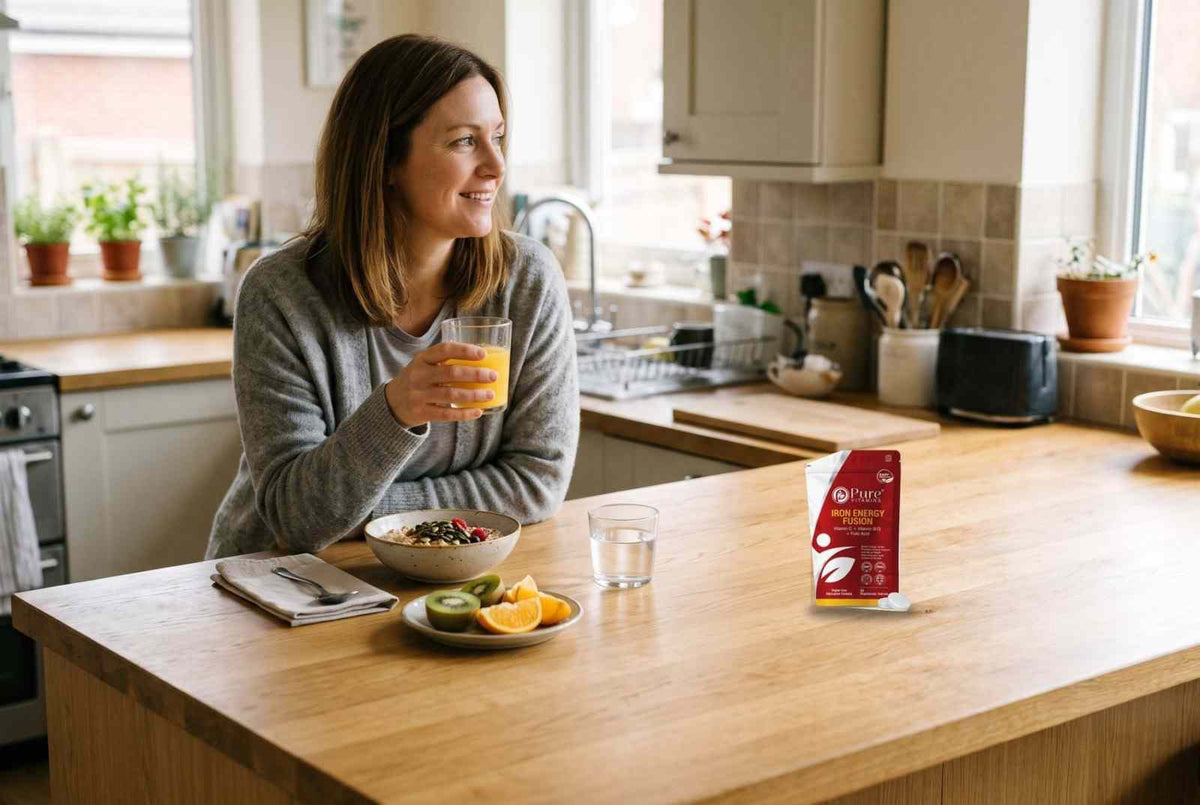
Iron with breakfast, and a glass of orange juice rather than a cup of tea alongside it. Illustrative image.
The products side by side
Here is everything in one place. The competitor details were read from each brand's own UK website today, and ours from our product pages. Price per day is the pack price divided by the number of days the pack lasts at the label's adult daily serving.
Pure Vitamins Iron Tablets with Vitamin C, B12 and Folic Acid
- Form: ferrous fumarate; tablet
- Per daily serving (1 tablet): 14 mg iron (100% NRV), 60 mg vitamin C (75% NRV), 3 mcg vitamin B12 as methylcobalamin (120% NRV), 200 mcg folic acid (100% NRV)
- Pack: 30 tablets, 30 days
- Price: £8.76, so £8.76 ÷ 30 = about 29p a day
- Described as a 100% vegan formula, gluten-free
Pure Encapsulations Iron-C
- Form: iron bisglycinate with calcium ascorbate; HPMC vegetarian capsule
- Per daily serving (1 capsule): 28 mg iron (200% NRV), 100 mg vitamin C (125% NRV), 11 mg calcium
- Pack: 60 capsules, 60 days
- Price: £17.40, so £17.40 ÷ 60 = 29p a day (£15.66 on subscription, about 26p a day)
- Labelled vegan, vegetarian, gluten free, dairy free, non-GMO, soya free
Spatone Apple (Nelsons)
- Form: naturally iron-rich water with apple concentrate; liquid sachet
- Per daily serving (1 sachet): 5 mg iron (36% NRV), 60 mg vitamin C (100% NRV)
- Pack: 28 sachets, 28 days
- Price: £16.99, so £16.99 ÷ 28 = about 61p a day
- Contains the preservative potassium sorbate; vegan status not stated on the page
Floradix Liquid Iron (Salus)
- Form: ferrous gluconate in a herbal and fruit liquid
- Per adult daily serving (10 ml twice a day): 15 mg iron (107% NRV), 16 mg vitamin C, plus vitamins B1, B2, B6 and B12
- Pack: 250 ml, which is 12.5 days at 20 ml a day
- Price: £13.49 RRP, so £13.49 ÷ 12.5 = about £1.08 a day
- Labelled vegetarian and lactose-free; contains wheat germ extract and honey; refrigerate once opened
Delivery, checked 6 November 2026: Pure Encapsulations UK charges £4.49 standard delivery, free on orders of £50 or more, to mainland UK. Nelsons offers free standard UK delivery over £30. Salus offers free delivery on orders over £25 to UK mainland, otherwise £3. Our own delivery options are shown at checkout.
28 mg, 15 mg, 14 mg or 5 mg: how much iron do you need?
The NHS says men aged 19 and over need about 8.7 mg of iron a day, women aged 19 to 49 need about 14.8 mg, and women aged 50 and over need about 8.7 mg (women still having periods after 50 may need the higher amount). It also says most people can get all the iron they need from a varied diet, and that taking 17 mg or less a day of iron supplements is unlikely to cause any harm, while a higher dose should be continued if a GP has advised it (NHS).
Here is how the four products sit against that 17 mg line, as plain arithmetic:
- Spatone Apple: 5 mg a day, a gentle top-up well below 17 mg.
- Pure Vitamins Iron Tablets: 14 mg a day, which is 100% of the NRV and within the NHS 17 mg figure.
- Floradix Liquid Iron: 15 mg a day at the adult serving, also within it.
- Pure Encapsulations Iron-C: 28 mg a day, which is above the 17 mg figure. That is a strength people usually take on the advice of a GP or practitioner, often after a blood test, and that is how many people come to Iron-C in the first place.
So these products are not really doing the same job. If you want a daily amount in line with the NRV alongside a varied diet, the 14 mg and 15 mg options are the closer match. If your GP has asked you to take a higher daily amount of iron, a 28 mg capsule gets you there in one capsule, and the right product is the one that matches the dose you were given.
Iron contributes to normal formation of red blood cells and haemoglobin, to normal oxygen transport in the body and to the reduction of tiredness and fatigue. Those are the roles of iron itself, and they apply to any product that provides a meaningful amount of it, whichever brand you choose. If you want the detail on the NRV figure, my guide to whether 14 mg of iron a day is enough walks through it.
Iron bisglycinate vs ferrous fumarate: does the form matter?
This is the biggest difference between Iron-C and our tablet, so it deserves its own section.
Iron bisglycinate is iron bound to two molecules of the amino acid glycine, sometimes called a chelate. It is the form in Iron-C. A 2023 systematic review and meta-analysis pooled 17 randomised trials comparing ferrous bisglycinate with other iron supplements. In pregnant women, taking bisglycinate for 4 to 20 weeks was linked with slightly higher haemoglobin and fewer reported gut side effects than other iron supplements, while ferritin results were similar. No clear differences were seen in children, and the authors say more trials are needed in other groups, including men and women who are not pregnant (Fischer and colleagues, 2023).
Ferrous fumarate is a well-established iron salt and the form in our tablets. Each tablet uses 42 mg of ferrous fumarate to give 14 mg of iron, which shows why it is worth checking whether a label lists the compound or the iron itself. Ferrous salts are among the most widely studied iron forms. A 2015 meta-analysis found that ferrous sulfate, a close relative, was linked with more gut side effects such as nausea and constipation than placebo in adults (Tolkien and colleagues, 2015). In everyday terms, the dose matters a lot here: the NHS lists constipation, feeling sick and stomach pain as side effects of high doses (over 20 mg) of iron.
My honest summary: both are recognised, well-used iron forms. Bisglycinate has some evidence for being easier on the stomach, mainly from pregnancy trials, and it is the reason many people choose Iron-C. Ferrous fumarate gives you more iron per milligram of compound and is a familiar, widely used form. The amount you take each day, and whether you can take it consistently, usually matters more than the exact form. My guide to choosing an iron supplement that sits comfortably has more practical tips.

Lentils, greens and a few red peppers on the side make an easy weekday lunch. Illustrative image.
Why vitamin C sits next to the iron
All four products in this comparison include vitamin C, and there is a good reason. Vitamin C increases iron absorption, which is why it is so often paired with iron in one product. The amounts differ: 100 mg per capsule in Iron-C, 60 mg in our tablet and in a Spatone sachet, and 16 mg in a 20 ml serving of Floradix. Iron-C uses calcium ascorbate, a buffered form of vitamin C, while ours, Spatone and Floradix list ascorbic acid.
Our tablet then adds two more nutrients that Iron-C does not contain: vitamin B12 (as methylcobalamin) and folic acid. Iron, vitamin B12 and folic acid all contribute to the reduction of tiredness and fatigue, and vitamin B12 contributes to normal red blood cell formation. If you already take a B12 or folic acid supplement, or a multivitamin, count those amounts too. If you want iron and vitamin C only, without the B vitamins, Iron-C or our gentle 14 mg iron tablet are simpler options. For more on our combined formula, see ferrous fumarate, iron with vitamin C and folic acid.
Capsule, tablet or liquid?
The format is a practical choice, and it changes the cost a lot:
- Capsule (Iron-C): a plant-based HPMC capsule with no coatings. One a day, and a 60-capsule pot lasts two months.
- Tablet (ours): one small tablet a day, 30 per pouch, so a pouch lasts a month.
- Liquid sachet (Spatone): no tablet to swallow, an apple taste, and a lower 5 mg dose. It costs about twice as much per day as the capsule or tablet.
- Liquid tonic (Floradix): taken twice a day by the spoonful, kept in the fridge once opened, and the most expensive per day here at the adult serving.
If swallowing tablets or capsules is a struggle for you, a liquid is a perfectly reasonable choice, and that is one situation where I would happily point you towards Spatone or Floradix instead of either capsule or tablet.
The cost per day, worked out
Pack prices can mislead, because packs last different lengths of time. Dividing by the days each pack lasts gives a fairer picture:
- Our gentle 14 mg iron tablet (iron only): £7.50 ÷ 30 days = 25p a day.
- Pure Encapsulations Iron-C: £17.40 ÷ 60 days = 29p a day (about 26p on subscription at £15.66).
- Pure Vitamins Iron Tablets with Vitamin C, B12 and Folic Acid: £8.76 ÷ 30 days = about 29p a day.
- Spatone Apple: £16.99 ÷ 28 days = about 61p a day.
- Floradix Liquid Iron 250 ml: £13.49 ÷ 12.5 days = about £1.08 a day.
So on today's prices, Iron-C and our combined tablet cost almost exactly the same per day. Per milligram of iron, Iron-C works out lowest, at about 1.0p per mg, because each capsule holds twice as much iron as our tablet (about 2.1p per mg). Two more points are worth knowing. Each Iron-C pot lasts two months, twice as long as one of our pouches, so you reorder less often. And Pure Encapsulations UK adds £4.49 delivery on orders under £50, so a single pot bought on its own costs a little more than the shelf price.

Food first. Iron-rich foods on one side of the board, vitamin C on the other. Illustrative image.
How to take iron so it works with your day
- With a meal, and with water or juice. All three capsule and tablet directions mention food. Taking iron with food can make it sit more comfortably.
- Keep tea and coffee apart. Tannins in tea and coffee can make iron harder to absorb, so leave a gap of an hour or two. Calcium and dairy at the same sitting can also compete.
- Pick a time you will remember. Morning or lunchtime suits most people. My guide on taking iron tablets at night covers the evening question.
- Every day or every other day? Research in iron-depleted women found that iron taken on alternate days was absorbed in a higher proportion than the same dose taken on consecutive days, because daily dosing kept hepcidin, a hormone that limits iron uptake, higher (Stoffel and colleagues, 2017). The trial used high doses (60 mg), so it is mainly relevant to higher-dose plans, and it is something to agree with your GP rather than change on your own.
Food still comes first. The NHS lists red meat, liver (avoided in pregnancy), beans such as red kidney beans, edamame and chickpeas, nuts, dried fruit such as apricots, fortified breakfast cereals and soy bean flour as good sources. Iron from meat (haem iron) is absorbed more easily than iron from plants, which is one reason vegans and vegetarians are among the most common iron buyers. My article on haem vs non-haem iron explains the difference.
Should you test before you take iron?
I always say this with iron: a blood test first is worth it. Tiredness has many causes, and iron is one of the few supplements where too much can be a problem. A simple test from your GP shows your haemoglobin and ferritin, your body's iron store, and that tells you whether you need a top-up dose, a higher dose for a set period, or no iron at all. My pillar guide on how to increase ferritin explains how to read those numbers and what usually comes next. If you are choosing between products in general, my guide to what to look for in iron tablets may help too.

A plant-based lunch bowl, and the tablet goes in with it. Illustrative image.
Which one suits you
I want this section to be useful even if you end up buying from someone else.
Pure Encapsulations Iron-C may suit you better if:
- Your GP or practitioner has advised a higher daily amount of iron, around 28 mg, and you want it in one capsule.
- You specifically want iron bisglycinate, for example because a ferrous salt has not suited you in the past.
- You want iron and vitamin C only, without B12 or folic acid.
- You want the lowest cost per milligram of iron in this comparison, or a two-month pack so you reorder less often.
- A doctor, nutritionist or practitioner recommended Iron-C for you. In that case, speak to them before changing anything.
Spatone or Floradix may suit you better if:
- You find tablets and capsules hard to swallow and prefer a liquid.
- You want a lower daily dose of iron, as with Spatone's 5 mg sachet.
Our Iron Tablets with Vitamin C, B12 and Folic Acid may suit you better if:
- You want 14 mg of iron a day, which is 100% of the NRV and within the NHS 17 mg supplement figure.
- You like having vitamin B12 and folic acid in the same tablet, for example on a vegan or vegetarian diet.
- You want a small one-a-day tablet at about 29p a day, in a monthly pouch.
And if you want iron on its own at 14 mg, our gentle iron tablet is the simplest and lowest-cost option in this guide at 25p a day. For other categories, see our page on a UK alternative to Pure Encapsulations.
A few cautions worth knowing
- Keep all iron products out of reach of children. The NHS warns that very high doses of iron can be fatal, particularly for children.
- Keep supplemental iron at 17 mg a day or less unless your GP advises a higher dose, and count the iron in any multivitamin you already take.
- Do not take iron without advice if you have a condition that affects how your body stores iron, such as haemochromatosis, or if you have been told your iron levels are already high.
- Iron can reduce the absorption of some medicines, including levothyroxine, some antibiotics (tetracyclines and quinolones) and some osteoporosis medicines. Ask your pharmacist how to space them.
- If you are pregnant or breastfeeding, follow your midwife's or GP's advice on iron and folic acid.
- Dark stools are common with iron, but speak to your GP about any ongoing stomach pain or change in bowel habit.
Frequently asked questions
Is Pure Vitamins the same company as Pure Encapsulations?
No. Pure Vitamins UK is an independent British brand. We are not connected to, endorsed by or affiliated with Pure Encapsulations or its owner.
How much iron is in Pure Encapsulations Iron-C?
According to the brand's UK product information sheet, checked on 6 November 2026, each capsule provides 28 mg of iron as iron bisglycinate (200% NRV) and 100 mg of vitamin C from calcium ascorbate (125% NRV), taken as one capsule a day with a meal.
Is 28 mg of iron a day too much?
The NHS says 17 mg or less of iron a day from supplements is unlikely to cause harm, and that a higher dose should be continued only if a GP advises it. A 28 mg daily capsule is above that figure, so it is best taken on a GP's or practitioner's advice.
What form of iron is in your tablets?
Ferrous fumarate. Each tablet uses 42 mg of ferrous fumarate to provide 14 mg of iron, which is 100% of the NRV, together with 60 mg of vitamin C, 3 mcg of vitamin B12 and 200 mcg of folic acid.
Which is cheaper per day, Iron-C or your iron tablets?
On 6 November 2026 they cost almost the same: £17.40 for 60 Iron-C capsules is 29p a day, and £8.76 for 30 of our tablets is about 29p a day. Iron-C is lower per milligram of iron because each capsule holds twice as much iron.
Our pick for this guide
Want 14 mg of iron with vitamin C, B12 and folic acid in one tablet a day?
One tablet gives 14 mg of iron from ferrous fumarate, 60 mg of vitamin C, 3 mcg of vitamin B12 and 200 mcg of folic acid, and each pouch of 30 tablets lasts a month. A food supplement, not a replacement for medical advice.
From £8.76 · 30 tablets
Where these facts come from
- Pure Encapsulations Iron-C, £17.40 (subscribe £15.66), 60 capsules, iron bisglycinate and calcium ascorbate, checked 6 November 2026: pure-encapsulations.co.uk
- Pure Encapsulations Iron-C product information sheet, 28 mg iron (200% NRV) and 100 mg vitamin C (125% NRV) per capsule, checked 6 November 2026: product information sheet (PDF)
- Pure Encapsulations UK delivery (£4.49, free on orders of £50 or more), checked 6 November 2026: delivery and returns
- Spatone Apple with Vitamin C, £16.99, 28 sachets, 5 mg iron and 60 mg vitamin C per sachet, free standard UK delivery over £30, checked 6 November 2026: nelsons.com
- Floradix Liquid Iron, 250 ml £13.49 RRP, 15 mg iron per 20 ml, delivery free over £25 (otherwise £3), checked 6 November 2026: floradix.co.uk
- Pure Vitamins Iron Tablets with Vitamin C, B12 and Folic Acid, £8.76, 30 tablets, and Gentle Iron Tablets 14 mg, £7.50, 30 tablets: our product page and gentle iron product page
Sources
- NHS. Vitamins and minerals: iron. nhs.uk
- Fischer JAJ and colleagues. The effects of oral ferrous bisglycinate supplementation on hemoglobin and ferritin concentrations in adults and children: a systematic review and meta-analysis of randomized controlled trials. Nutrition Reviews, 2023. PMC10331582
- Tolkien Z and colleagues. Ferrous sulfate supplementation causes significant gastrointestinal side-effects in adults: a systematic review and meta-analysis. PLoS One, 2015. PMC4336293
- Stoffel NU and colleagues. Iron absorption from oral iron supplements given on consecutive versus alternate days and as single morning doses versus twice-daily split dosing in iron-depleted women. Lancet Haematology, 2017. PubMed 29032957
More reading: our supplement guides hub and the Pure Vitamins UK home page.
Dr. Miron, Founder of Pure Vitamins UK
Food supplements should not be used as a substitute for a varied, balanced diet and a healthy lifestyle. This article is for general information and is not medical advice. Always speak to your GP or pharmacist if you have a medical condition, take medication, or are pregnant or breastfeeding.
