



Table of Contents
- What Bioavailability Actually Means for Fast Absorbing Supplements
- Factors Affecting Nutrient Absorption You Need to Know
- Liquid vs Pill Supplements: Which Absorbs Better?
- 'Fast-Absorbing' Marketing vs Physiological Reality
- How to Improve Supplement Absorption: Evidence-Based Strategies
- Choosing Fast Absorbing Supplements: Ingredient Forms That Deliver
- Conclusion
Last Updated: August 10, 2026
What Bioavailability Actually Means for Fast Absorbing Supplements
Bioavailability is the proportion of a nutrient that enters systemic circulation and becomes available for use by the body's tissues. This distinction separates marketing language from measurable physiology when evaluating fast absorbing supplements.
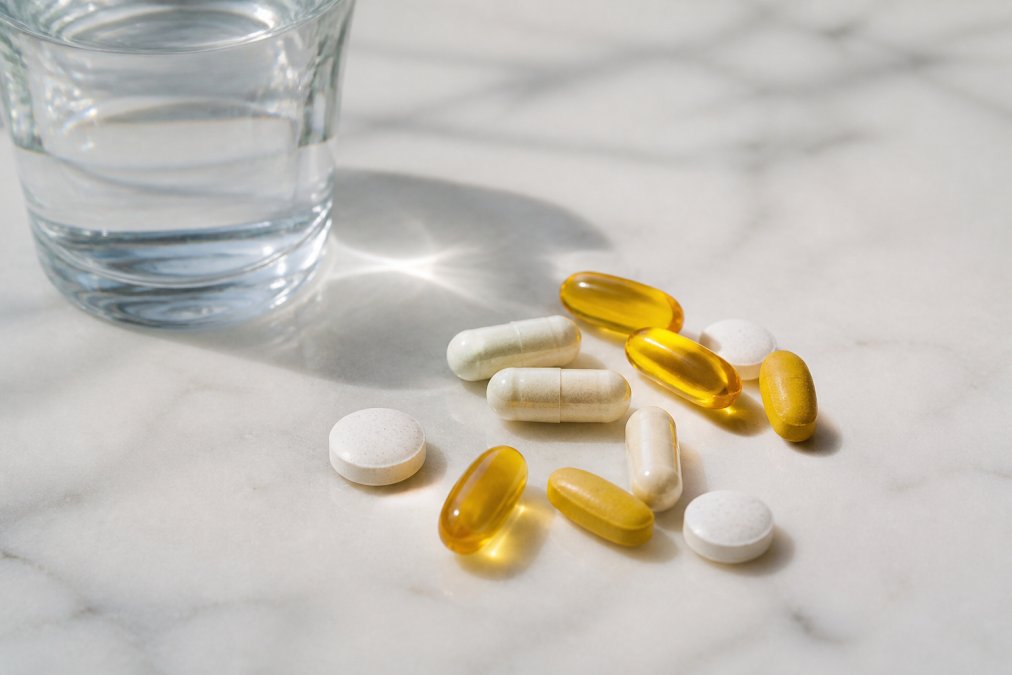
At Pure Vitamins UK, we formulate around this principle directly. Choosing a well-absorbed ingredient form, such as magnesium glycinate rather than magnesium oxide, changes how much of what you swallow actually reaches the cells that need it.

Bio-accessibility refers to the amount of a nutrient released from its food or supplement matrix during digestion. Bioavailability then describes what fraction of that accessible nutrient crosses the intestinal wall and enters circulation. A supplement can score well on bio-accessibility yet have poor bioavailability if the molecule is poorly transported across the gut lining.
The Journey from Capsule to Cell: Dissolution, Digestion and First-Pass Metabolism
A capsule or tablet must first disintegrate in the stomach, releasing its contents into solution before absorption can begin. Dissolution rate varies significantly by formulation and affects how much nutrient is available during the stomach's transit window.
Once dissolved, nutrients move into the small intestine where the majority of absorption occurs. Enzymatic breakdown by pancreatic enzymes and bile acids prepares fat-soluble compounds for uptake via the lymphatic system. Water-soluble compounds generally pass through the intestinal wall directly into the portal blood supply.
Nutrients absorbed through the small intestine travel via the portal vein to the liver before reaching systemic circulation. The liver can metabolise a significant proportion of certain compounds before they reach target tissues, reducing effective serum concentration. This is why sublingual delivery, which bypasses the digestive tract and absorbs through mucous membranes under the tongue, achieves higher bioavailability for some nutrients such as B12.
Gastrointestinal transit time also plays a role. A gut that moves contents rapidly may not allow sufficient contact time between nutrients and the absorptive surface of the small intestine, reducing overall absorption efficiency.
Factors Affecting Nutrient Absorption You Need to Know
Understanding the factors affecting nutrient absorption reveals where the real complexity in supplementation lives and changes how you supplement effectively.
Fat-Soluble vs Water-Soluble Vitamins: Why the Difference Matters
Fat-soluble vitamins (A, D, E and K) require dietary fat to be absorbed. They are packaged into structures called chylomicrons in the intestinal wall and transported through the lymphatic system before entering the bloodstream. Taking vitamin D3 on an empty stomach may result in absorbing a fraction of the dose compared with taking it alongside a meal containing healthy fats.
Water-soluble vitamins, including vitamin C and the B vitamins, do not require fat for absorption. They are absorbed directly through the intestinal wall via active transport or passive diffusion. However, they are not stored in the body to the same degree, so consistent daily intake matters more.
According to NHS guidance on vitamins and minerals, vitamin D is one of the few nutrients the UK population is routinely advised to supplement, particularly during autumn and winter months. The fact that it is fat-soluble makes the timing and context of supplementation genuinely consequential.
Gut Microbiome and Genetic Variability: The Hidden Variables
The gut microbiome influences nutrient absorption directly. Specific bacterial populations produce short-chain fatty acids that support intestinal lining integrity, affecting how efficiently nutrients cross into circulation. Dysbiosis can impair this barrier function and reduce absorption efficiency for a range of micronutrients.
Genetic variability adds another layer. The MTHFR gene variant affects the conversion of folic acid to its active form, methylfolate. Individuals with this variant may absorb and utilise synthetic folic acid poorly but respond normally to the methylated form. This is why ingredient form, not just dose, determines whether a supplement works for a given individual.
Liquid vs Pill Supplements: Which Absorbs Better?
The honest answer is: it depends on the nutrient and the formulation quality.
| Format | Dissolution Required | Typical Absorption Speed | Best For |
|---|---|---|---|
| Liquid | No | Fast | B12, iron, some minerals |
| Softgel capsule | Partial | Moderate-fast | Fat-soluble vitamins (D, E, K) |
| Hard-shell capsule | Yes | Moderate | Most vitamins and minerals |
| Tablet | Yes (slowest) | Slower | Bulk minerals, buffered forms |
| Sublingual | None | Fastest | B12, melatonin, CBD |
Liquids skip the dissolution step entirely, making the nutrient available for absorption as soon as it reaches the small intestine. For nutrients like ferrous fumarate, liquid forms can reduce gastric irritation while maintaining absorption. However, liquid supplements often require preservatives and some nutrients degrade faster in solution than in solid form.

Softgel capsules work well for fat-soluble vitamins because the oil-based fill provides the lipid environment needed for absorption. Hard-shell capsules dissolve faster than compressed tablets and avoid the binders required to hold a tablet together. The weakest format for absorption speed is typically the compressed tablet, though a high-quality tablet of a well-absorbed ingredient form will outperform a liquid containing a poorly bioavailable compound.
'Fast-Absorbing' Marketing vs Physiological Reality
The phrase "fast-absorbing" appears on supplement packaging more often than the science justifies. Absorption speed is only one variable in a chain that determines nutritional outcome. A nutrient absorbed rapidly but in a form the body cannot use adds nothing to micronutrient status.
The European Food Safety Authority guidance on nutrient bioavailability makes clear that bioavailability claims require substantiation based on the specific form and dose of a nutrient, not just the delivery format. Marketing that implies speed of absorption without reference to the ingredient form or clinical evidence should be treated with scepticism.
Excipients, Binders and Fillers: What They Do to Absorption
Excipients are the inactive ingredients in a supplement formulation: binders, fillers, coatings, flow agents and preservatives. They affect dissolution rate and, in some cases, absorption efficiency.
Magnesium stearate is a common flow agent used in tablet manufacture. Some research has raised questions about whether high concentrations affect dissolution rate, though at typical supplement concentrations the evidence is not conclusive. Certain coatings, particularly enteric coatings designed to resist stomach acid, can significantly slow nutrient release.
Bulking agents such as microcrystalline cellulose are inert and generally do not affect absorption. However, supplements loaded with unnecessary fillers offer less active ingredient per unit than cleaner formulations.
How to Improve Supplement Absorption: Evidence-Based Strategies
Improving supplement absorption does not require expensive interventions. Several evidence-based strategies make a genuine difference to how much of what you take actually reaches your cells.

The most consistent gains come from pairing supplements with the right dietary context, supporting digestive function, and choosing correct ingredient forms:
- Take fat-soluble vitamins with a fat-containing meal. Vitamins D3, K2, A and E require bile acids and dietary fat for absorption via the lymphatic system. A meal containing avocado, eggs, olive oil or nuts provides the lipid context these nutrients need.
- Avoid high-dose calcium and iron at the same time. These minerals compete for the same transport proteins in the intestinal wall, reducing absorption of both.
- Support gastric pH. Adequate stomach acid is essential for enzymatic breakdown of proteins and release of minerals from their matrix. Chronic use of proton pump inhibitors is associated with impaired absorption of B12, magnesium and iron.
- Prioritise gut microbiome health. A diverse microbiome supports intestinal lining integrity and participates in bio-transformation of several nutrients. Fermented foods, prebiotic fibre and avoiding unnecessary antibiotic use all support this.
Timing, Food Pairing and Nutrient Synergy
Nutrient synergy, the positive interaction between nutrients that enhances uptake or use of each, is a practical tool for improving absorption.
Vitamin C taken alongside non-haem iron reduces iron from its ferric to its more absorbable ferrous form, meaningfully improving absorption. Vitamin D3 and K2 work synergistically in calcium metabolism: D3 supports calcium absorption from the gut; K2 directs calcium to bone rather than soft tissue.
According to British Nutrition Foundation guidance on micronutrients, the timing and combination of nutrients in meals and supplements can significantly affect absorption and retention.
Magnesium glycinate, a chelated form where magnesium is bound to the amino acid glycine, is absorbed more efficiently than inorganic forms because it uses a different transport pathway less susceptible to competition from other minerals. Taking it in the evening aligns with its role in supporting relaxation and sleep quality.
Choosing Fast Absorbing Supplements: Ingredient Forms That Deliver
The single most important decision in choosing fast absorbing supplements is the ingredient form. The same nutrient in different chemical forms can have dramatically different absorption profiles.
| Nutrient | Poorly Absorbed Form | Well-Absorbed Form | Why |
|---|---|---|---|
| Magnesium | Magnesium oxide | Magnesium glycinate | Chelated form uses amino acid transport |
| Iron | Ferrous sulphate (high GI side effects) | Ferrous fumarate | Better tolerated, similar absorption |
| Vitamin B12 | Cyanocobalamin (less efficient for some) | Methylcobalamin | Active form, bypasses conversion step |
| Folate | Folic acid (MTHFR variants) | Methylfolate (5-MTHF) | Pre-converted, no enzymatic conversion needed |
| Vitamin D | Ergocalciferol (D2) | Cholecalciferol (D3) | D3 raises serum concentration more effectively |
| Collagen | Intact collagen (large molecule) | Hydrolysed collagen peptides | Smaller peptides absorbed via digestive tract |
Pure Vitamins UK's Magnesium Glycinate Capsules (£11.99) use three bioavailable forms of magnesium in a single formulation, addressing both absorption efficiency and magnesium's different roles in energy, muscle function and sleep. The Iron Tablets (£7.50) use ferrous fumarate because it is gentler on the digestive tract than ferrous sulphate while maintaining strong absorption.
For collagen, hydrolysed bovine collagen peptides represent a meaningful upgrade over intact collagen protein. The hydrolysis process breaks the protein into smaller peptides that the digestive tract can absorb directly. The Hydrolysed Bovine Collagen Capsules (£12.50) combine Type I and III collagen with hyaluronic acid and vitamin C, the latter included because vitamin C is required for collagen synthesis in the body.

For those seeking a formula combining multiple well-absorbed ingredients, the Maca, Ginseng & Ginkgo Complex for Men (£10.00) offers a fast-absorbing capsule format with botanicals that have a long history of use in energy and focus support.
A higher dose of a poorly absorbed form will often deliver less to your cells than a lower dose of a well-absorbed form. Chasing headline milligram counts without checking the ingredient form is one of the most common and costly mistakes in supplementation.
Frequently Asked Questions
Does the body actually absorb nutrients from supplements?
Yes, but absorption varies considerably depending on the supplement form, ingredient quality, and your individual digestive health. Nutrients from supplements enter the bloodstream via the gastrointestinal tract, but bioavailability differs between formulations. Magnesium glycinate, for example, absorbs more readily than magnesium oxide. Choosing well-formulated supplements with bioavailable ingredient forms, and taking them with appropriate foods, gives your body the best chance of making use of what you swallow.
What factors influence the bioavailability of vitamins and minerals?
Several factors affecting nutrient absorption include gastric pH, the presence of dietary fat (critical for fat-soluble vitamins A, D, E and K), gut microbiome composition, gastrointestinal transit time, and the chemical form of the nutrient itself. Antagonistic interactions also matter: calcium and iron compete for the same transporters, so taking them together reduces uptake of both. Genetic variability in enzyme production can further alter how efficiently individuals convert and absorb specific micronutrients.
Are liquid supplements better absorbed than tablets or capsules?
Liquids skip the dissolution stage, which can speed up the early steps of absorption. However, dissolution rate is only one factor in overall bioavailability. A well-formulated capsule using a bioavailable ingredient form often outperforms a liquid containing a poorly absorbed nutrient form. The ingredient itself matters more than the delivery format in most cases. Sublingual delivery is a genuine exception, bypassing first-pass metabolism via the mucous membranes, which is why it is used for specific nutrients like vitamin B12.
What is the hardest vitamin for the body to absorb?
Vitamin B12 is widely considered one of the most difficult to absorb from supplements because it requires a protein called intrinsic factor, produced in the stomach, to bind to it before uptake through the digestive tract. Older adults and people with low gastric acid produce less intrinsic factor, reducing absorption efficiency significantly. Sublingual B12 formulations bypass this pathway via the mucous membranes and tend to achieve higher serum concentrations than standard oral tablets in those with absorption difficulties.
Improving how your body absorbs nutrients starts with understanding what is actually in your supplements and why the form matters. Pure Vitamins UK formulates around bioavailable ingredient forms, including magnesium glycinate, ferrous fumarate and hydrolysed collagen, with transparent dosing and in-house batch testing so you know exactly what you are taking. Shop now and choose supplements built around absorption, not just dose.

