


Reviewed and updated: 31 August 2026
If you are trying to work out whether magnesium glycinate or bisglycinate is the better choice, here is the honest answer up front: they are the same thing. Magnesium bisglycinate is simply the chemically precise name for what most brands label magnesium glycinate, so you are not choosing between two different minerals, you are looking at two names for one compound. The comparison that genuinely matters is the one people mean when they ask this question, which is bisglycinate against ordinary shelf magnesium, meaning oxide, citrate and carbonate. That is where the real differences sit, and this guide covers both.
Magnesium glycinate or bisglycinate: the short answer
Magnesium binds to two molecules of the amino acid glycine to form the compound. "Bi" means two, so bisglycinate describes the structure exactly: one magnesium ion held between two glycine molecules. "Glycinate" is the everyday shorthand that stuck on supplement labels because it is easier to say and easier to search for. Some brands write "magnesium glycinate (chelated bisglycinate)" to make both names visible at once, which is the clearest way of doing it.
So if you have two bottles in front of you and one says glycinate while the other says bisglycinate, the difference between them is marketing language, not chemistry. I get asked this question more than almost any other, and I think the confusion persists because a few sites genuinely present them as rival forms. They are not.

The quick answer at a glance
- What it is: magnesium chelated to two glycine molecules. Glycinate and bisglycinate are two names for the same compound.
- Versus "regular" magnesium: the meaningful comparison is against oxide, citrate and carbonate. Bisglycinate's advantage is tolerability rather than a dramatic absorption gap.
- Who it suits: adults who want a well absorbed magnesium that tends to sit comfortably in the stomach, rather than a cheap oxide that often does not.
- What to compare instead: elemental magnesium per serving, whether oxide has been blended in, and the daily dose the label actually recommends.
- One honest caution: magnesium interacts with several common medicines and is handled differently if your kidneys are not working well, so check with your GP or pharmacist first if either applies to you.
What "regular magnesium" actually means on a UK label
Nobody sells plain magnesium, because magnesium on its own is a reactive metal that would never survive in a capsule. It always arrives attached to something else, and the something else is what the argument is about. When people say "regular magnesium" they almost always mean one of three things.
- Magnesium oxide. The cheapest and most common form on a UK shelf, and the one hiding inside most supermarket own-brand tablets and a good many multivitamins. It carries a very high percentage of elemental magnesium by weight, which makes the label look generous, but it dissolves poorly, which is the source of its reputation for loose stools.
- Magnesium citrate. Magnesium bound to citric acid. Genuinely well absorbed, cheap enough to be everywhere, and mildly laxative at higher doses, which is why it also turns up in bowel-prep products. A perfectly reasonable everyday form if your stomach is happy with it.
- Magnesium carbonate. Sits between the two. It converts partly to magnesium chloride in stomach acid, so people with low stomach acid tend to get less from it. Often used because it is inexpensive and stable.
You will also see malate, taurate, chloride, lactate and L-threonate. Those are all organic forms and behave more like citrate than like oxide. The single most useful mental sorting is not glycinate versus everything else, it is oxide versus everything else.
What chelation is, and why the glycine matters
When magnesium is attached to glycine, the resulting molecule is called a chelate, from the Greek word for a claw, because the amino acid effectively grips the mineral from both sides.
That structure matters because it changes how the mineral behaves on the way through you. An inorganic salt such as magnesium oxide dissociates readily, which is a polite way of saying it splits apart and leaves a lot of loose magnesium sitting in the gut drawing water in behind it. That is osmosis, and it is the entire mechanism behind the laxative effect. A chelate holds together more of the way through and is thought to be taken up partly through amino-acid transport routes rather than relying solely on the passive channels a loose mineral uses. That is the reason chelated forms have a reputation for being easier on the digestion.
The glycine half of the molecule is not just packaging either. Glycine is the smallest amino acid, it is used throughout the body in protein and in collagen, and it has a mild, settling reputation of its own, which is part of why chelated magnesium became the form people reach for in the evening. I would not oversell that. The amount of glycine in a magnesium capsule is small next to what you get from a normal day's food, and the honest reason to choose the form is comfort and absorption rather than the glycine doing something dramatic on its own.
What magnesium bisglycinate actually is
Exactly the same molecule as glycinate, named properly. Chemists write it as magnesium bis-glycinate or magnesium diglycinate, and the formal name tells you the stoichiometry: two glycines to one magnesium. You will occasionally see "magnesium glycinate" used loosely for a mono-glycinate or for a partly chelated product, and that is really the only situation where the two words can mean different things in practice. It is not a different form of magnesium so much as a less complete version of the same one.
Why two names exist at all
Supplement labelling grew up alongside chemistry rather than inside it. Brands wanted a word customers would recognise and type into a search bar, and glycinate won. Manufacturers, ingredient suppliers and researchers stayed with bisglycinate because it is unambiguous. In the trial literature you will almost always see bisglycinate, and on a UK shelf you will almost always see glycinate.

Elemental magnesium by form, and why a big number can mean less
This is the single most useful thing on this page, and it is the piece of arithmetic almost no brand wants you to do.
Every magnesium compound is part magnesium and part carrier. The percentage of the compound that is actually magnesium is called the elemental content, and it varies enormously between forms. Roughly, by weight:
- Magnesium oxide: around 60 per cent elemental magnesium.
- Magnesium carbonate: around 29 per cent.
- Magnesium citrate: around 16 per cent.
- Magnesium malate: around 15 per cent.
- Magnesium bisglycinate (glycinate): around 14 per cent.
- Magnesium chloride: around 12 per cent.
- Magnesium lactate: around 12 per cent.
- Magnesium taurate: around 9 per cent.
- Magnesium L-threonate: around 8 per cent.
Now look at what that does to a label. A tub shouting "1000mg magnesium glycinate" is quoting the weight of the whole chelate, glycine included, so the magnesium itself is roughly 140mg. A cheaper tablet declaring "400mg magnesium oxide" contains roughly 240mg of elemental magnesium, nearly twice as much on paper, for a fraction of the price.
And this is exactly the trap. Oxide wins the arithmetic and loses the biology, because a high elemental percentage is worth very little if a large share of it never crosses the gut wall and instead sits there drawing in water. The number on the front of the tub is not the number that reaches you.
So the figure that matters is the elemental magnesium line, usually printed further down the nutrition panel next to the NRV percentage. A product declaring 375mg elemental magnesium at 100% NRV is giving you a real, comparable number. A product shouting a four-figure compound weight and hiding the elemental figure is hoping you will not look. Compare elemental to elemental and most of the marketing noise disappears.
The second thing worth checking is whether oxide has been quietly blended in. "Magnesium glycinate" on the front with magnesium oxide appearing in the ingredients is common, because oxide is cheap and carries that high elemental percentage, which flatters the label at the cost of the tolerability you were paying for. Some products are described as "buffered" bisglycinate, which is the same thing said politely.
Absorption: what the research actually shows
This is where I want to be straight with you, because the internet is full of very confident numbers about chelated magnesium being several times better absorbed, and the evidence does not support that level of certainty.
The most useful overview is a review by Schuchardt and Hahn, which pulled together what is known about magnesium uptake and concluded something refreshingly unfashionable: the type of magnesium salt appears less relevant than is often thought. Some studies found a slightly higher bioavailability for organic forms compared with inorganic ones, and other studies found no meaningful difference. What consistently mattered more was the dose itself, your existing magnesium status, and whether the mineral arrived in one large hit or in smaller amounts spread across the day, since a smaller dose is absorbed proportionally better than a large one (Schuchardt and Hahn, 2017).
Laboratory work does show real differences at the cell level. Uberti and colleagues compared a buffered bisglycinate chelate against another delivery format in a human intestinal cell model and found better permeability across the intestinal barrier for the chelate (Uberti et al., 2020). A more recent Caco-2 cell comparison is worth reading for a different reason: it tested a commercial magnesium bisglycinate alongside an analytical grade bisglycinate, and the two did not behave identically (Demehin et al., 2026). That is a quiet argument for checking what is really in the capsule rather than trusting the word on the front.
There is also a comparative human crossover study in which 350mg of magnesium was given as citrate, oxide, bisglycinate or a sucrosomial format, with the sponsoring company's own format coming out ahead (Brilli et al., 2018). I mention it for completeness and because you should know who funded it. Industry-sponsored head to head comparisons rarely lose.
Taken together, the fair reading is this: chelated magnesium is a sensible, well tolerated choice, and the gap between it and other organic forms such as citrate or malate is smaller than most marketing implies. The gap between any of those and cheap oxide is the one that genuinely shows up. If somebody tells you bisglycinate is four times better absorbed than everything else, they are quoting a brochure rather than a study.
Tolerability, and the real reason people switch
Ask people why they moved to a chelated magnesium and almost nobody says "bioavailability data". They say their stomach was unhappy, or that the previous product sent them running.
That is the honest headline difference. Poorly absorbed magnesium stays in the gut, water follows it in by osmosis, and the result is the loose stools that magnesium is famous for. Oxide is the worst offender and citrate is mildly laxative at higher doses, which is genuinely useful if sluggish digestion is part of why you are taking it and genuinely unwelcome if it is not. A chelate holds together further along, so less loose mineral is left behind, and most people find it sits comfortably even on an empty stomach.
Two practical notes. If loose stools do appear, that is your signal the dose is too high for you rather than a sign anything is wrong, and it resolves when you bring the amount down. And splitting the daily amount into two smaller doses helps on both fronts at once, because a smaller dose is absorbed proportionally better and leaves less behind to draw water in.

Where bisglycinate has been studied directly
One randomised, double-blind, placebo-controlled trial gave 155 adults who reported poor sleep either 250mg of elemental magnesium as bisglycinate or a placebo. Insomnia Severity Index scores fell further in the magnesium group over four weeks, but the authors were careful about it: the effect size was small, and the clearest improvements showed up in people whose dietary magnesium intake had been low to begin with (Schuster et al., 2025). That pattern, where topping up matters most for people who were short in the first place, comes up again and again in mineral research and it is the most honest way to set your expectations.
When each form is the sensible pick
Rather than crowning a winner, here is how I would actually choose, which depends entirely on what you want out of it.
- Bisglycinate or glycinate if your stomach has struggled with magnesium before, if you take it in the evening, or if you simply want the least eventful option. This is the default I suggest for most people.
- Citrate if you want a well absorbed, inexpensive everyday form and a mild laxative effect is neutral or welcome. It is a genuinely good form and it is unfashionable only because it is cheap.
- Malate if you like the idea of the malic acid component and want something well absorbed that is often taken earlier in the day.
- Oxide only where the laxative effect is the point, or where cost is the overriding constraint. It is not a scandal, it is just the wrong tool for a daily top-up.
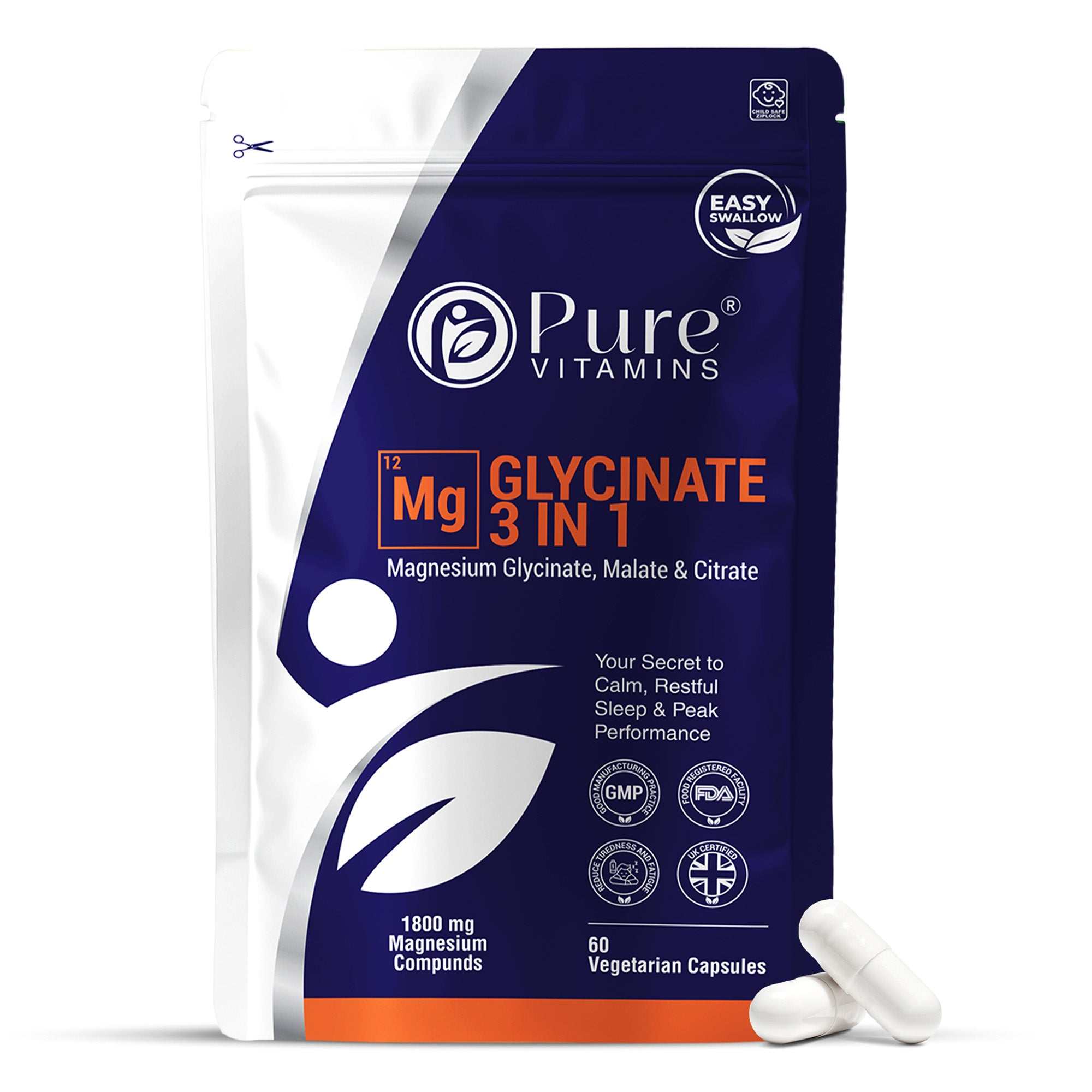
- A blend if you would rather not choose. Our own magnesium glycinate 3-in-1 capsules use chelated bisglycinate alongside malate and citrate, with the elemental figure printed plainly at 384mg per daily serving, and no oxide anywhere in the formula.
Capsules or powder?
A format preference rather than a quality difference. Capsules are pre-measured, tasteless and easy to travel with, and they are the only sensible way to deliver a fixed multi-form blend. Powder lets you adjust the amount and often costs less per gram, but chelated magnesium powder has a distinctly bitter, faintly savoury taste that a lot of people do not persist with. If you are the sort of person who will genuinely weigh a dose each morning, powder is fine. If you are not, the capsule you actually take beats the tub you gave up on.
How much, and what the upper limit is
UK reference nutrient intakes are 300mg a day for men and 270mg a day for women, counting everything you eat as well as anything you take. Green leafy vegetables, nuts, seeds, wholegrains, beans and dark chocolate are the reliable dietary sources, and a diet built around them does a lot of the work on its own.
On upper limits, two figures are worth knowing and they are not the same figure. EFSA set a tolerable upper intake level of 250mg a day for readily dissociable magnesium salts taken as supplements, on top of dietary magnesium, and that limit was set on the basis of loose stools rather than any deeper toxicity. The NHS puts it more simply, noting that taking 400mg or less a day of magnesium from supplements is unlikely to cause harm. Whichever figure you work from, stay within the dose printed on your own product and do not stack several magnesium products at once without thinking about the total. It is worth checking your multivitamin, because magnesium is frequently in there too.
What magnesium is officially recognised for
Magnesium is one of the minerals with a properly defined set of recognised functions in Great Britain, and they are worth knowing because they are specific rather than vague. Magnesium contributes to a reduction of tiredness and fatigue, to normal energy-yielding metabolism, to normal muscle function, to the normal functioning of the nervous system, to normal psychological function, to electrolyte balance, to normal protein synthesis, and to the maintenance of normal bones and teeth. It also has a role in the process of cell division.
Those apply to the mineral itself, which means they apply equally whether the label in your hand says glycinate, bisglycinate, citrate or oxide. The form changes how comfortably it goes down and how much of it you take up, not what magnesium does once it is in you. That is worth holding on to when a brand implies its particular form unlocks something the others do not.
When to take it and what to realistically expect
There is no magic hour. Consistency beats timing every time. Many people take chelated magnesium in the evening because glycine itself has a calming reputation and because an evening capsule is simply easier to remember, and if that fits your day then take it in the evening. Taking it with food helps if your stomach is at all sensitive, and splitting the daily amount across two doses is the one timing tweak with genuine absorption logic behind it.
As for what to expect, be patient and be realistic. If your intake has been low, topping it up over a few weeks is where people tend to notice most. If your diet is already rich in magnesium, expect less. That is not a disappointing answer, it is just an accurate one.
How to choose a good one in the UK
- Find the elemental magnesium figure and the NRV percentage, and compare on that number only.
- Read the full ingredients list for magnesium oxide hiding behind a glycinate headline, or the word "buffered".
- Check the daily serving size, since a low headline price often means four capsules a day rather than two.
- Look for capsules made in a GMP-certified facility and tested for purity and heavy metals.
- Check the fillers and capsule shell if you are vegetarian or vegan, or avoiding common allergens.
- If your stomach has struggled with magnesium before, a chelated form is the sensible place to start. Our guide to magnesium glycinate compared with citrate covers that comparison in more detail, and the wider UK magnesium buyer's guide walks through every form on the shelf.
A few cautions worth knowing
Magnesium can reduce the absorption of some antibiotics, including tetracyclines and quinolones, and of bisphosphonates and levothyroxine, so those are usually spaced several hours apart from a magnesium dose. If you have reduced kidney function, magnesium is cleared less efficiently and you should not supplement without medical advice. Proton pump inhibitors taken long term can lower magnesium levels, which is worth mentioning to your GP rather than self-correcting. Speak to your GP or midwife before starting anything new in pregnancy or while breastfeeding, and if you are already taking a multivitamin, add up the magnesium across everything rather than looking at one label in isolation. Loose stools are the usual sign of too much, and they resolve when the dose comes down.
Frequently asked questions
Why is magnesium bisglycinate better than regular magnesium?
Mainly tolerability. Against magnesium oxide, the most common "regular" form, bisglycinate holds together further through the gut so less loose mineral is left behind to draw in water, which is what causes the laxative effect. Against citrate and other organic forms the difference is much smaller than marketing suggests.
Is magnesium bisglycinate stronger than magnesium glycinate?
No. They are the same compound, so neither is stronger than the other. Strength comes from the elemental magnesium figure on the panel, not from which of the two names the brand chose to print.
Why do some labels say magnesium glycinate and others say bisglycinate?
Bisglycinate is the chemically precise name describing two glycine molecules bound to one magnesium. Glycinate is the common shorthand that became standard on retail labels. Some products print both.
How much elemental magnesium is in bisglycinate?
Roughly 14 per cent by weight, so 1000mg of the compound provides around 140mg of magnesium. Magnesium oxide is around 60 per cent, but a high elemental percentage is worth little if much of it is not absorbed. Always compare the elemental figure on the nutrition panel.
Is chelated magnesium better absorbed than magnesium oxide?
Research generally favours organic and chelated forms over oxide, though the reviewed evidence suggests the difference between salt types is smaller than commonly claimed, and that dose and existing magnesium status matter more (Schuchardt and Hahn, 2017).
Can I take magnesium glycinate every day?
Most healthy adults can take a daily magnesium supplement within the dose stated on the pack. Keep an eye on your total intake across all products, and check with your GP first if you take regular medication or have kidney problems.
What time of day should I take magnesium bisglycinate?
Any time that you will remember it. Evening suits many people, food helps if your stomach is sensitive, and splitting the daily amount into two smaller doses is the one adjustment with real absorption reasoning behind it.

If you want to see how magnesium fits alongside the rest of a daily routine, our guide to choosing magnesium for the evening, the piece on magnesium and normal muscle function, and the note on pairing magnesium with vitamin D3 and K2 are all worth a read. If your portions have shrunk and you are choosing a form on that basis, which magnesium is best when you're eating less applies the same comparison to a smaller plate. Everything we publish is collected on the supplement guides hub, and you can browse the full range on our home page.
Shop Magnesium Glycinate 3-in-1
Dr. Miron, Founder of Pure Vitamins UK
This product is a food supplement and should not be used as a substitute for a varied, balanced diet or a healthy lifestyle. This article is for information only and is not medical advice. Speak to your GP or pharmacist if you are pregnant, breastfeeding, taking medication or have an existing health condition.

