


Reviewed and updated: 12 August 2026
If you are wondering what kind of magnesium to take with vitamin D3 and K2, the honest short answer is magnesium glycinate (also sold as magnesium bisglycinate). It is gentle on the stomach, well absorbed, and it fits neatly alongside a daily D3 and K2 tablet. Magnesium matters here for a reason that often gets missed: your body relies on magnesium to help switch vitamin D into its active form, so pairing the two is less of a marketing bundle and more of a genuine partnership. I am Dr. Miron, founder of Pure Vitamins UK, and this is the guide I wish more people had before they built their little morning line-up of supplements.

The short answer: what kind of magnesium to take with vitamin D3 and K2
What kind of magnesium you take with vitamin D3 and K2 depends a little on your goal, but for most people magnesium glycinate is the sensible default. Here is the quick version before we get into the detail.
- Best all-round pick: magnesium glycinate (bisglycinate), because it is easy to absorb and kind to a sensitive stomach.
- Why pair it with D3 at all: magnesium is a cofactor the body uses to help make and activate vitamin D.
- Where K2 fits: vitamin K2, usually as MK-7, helps direct calcium towards where it belongs, your bones.
- Can you take all three together: yes, they work well as a daily trio for healthy adults.
- One honest caution: if you take a blood thinner such as warfarin, or you have kidney problems, speak to your GP before adding vitamin K2 or magnesium.
If you only remember one thing, remember this: magnesium glycinate is the form I would reach for, and it belongs next to your D3 and K2 rather than being an afterthought.
Why magnesium belongs next to your vitamin D3 and K2 in the first place
Vitamin D does not arrive in the body ready to use. Whether it comes from summer sunshine or from a tablet, cholecalciferol (that is D3) has to be converted, first in the liver and then in the kidney, before it becomes the active hormone your body actually works with. The enzymes that carry out those conversions are magnesium dependent. In other words, magnesium is a quiet helper standing behind vitamin D at every step.
According to research indexed on PubMed, a widely cited review of nutrient interactions describes magnesium as a cofactor for vitamin D biosynthesis, transport and activation, and points out that calcium intakes in modern diets have climbed far faster than magnesium intakes (Rosanoff, Dai and Shapses, 2016, DOI: 10.3945/an.115.008631). A separate retrospective analysis reported that people with lower magnesium levels tended to have lower concentrations of the biologically active form of vitamin D, and its authors noted that magnesium is a cofactor of the hydroxylase enzymes involved (Rothen and colleagues, 2022, DOI: 10.1007/s11096-022-01485-6).
There is even a small clinical trial that pairs the two directly. Over twelve weeks, one group took magnesium glycinate together with vitamin D and another took the same vitamin D on its own. The combined magnesium and vitamin D group showed the larger rise in blood vitamin D levels (Cheung and colleagues, 2022, DOI: 10.1016/j.nut.2022.111674). I want to be careful and honest here, because that is one modest study in a specific group of people, not a promise about what a supplement will do for you. But it lines up neatly with the wider picture, and it happens to use the very form of magnesium I keep recommending.
There is a lovely practical bonus, too. Magnesium is a genuine workhorse mineral in its own right. Magnesium contributes to normal muscle function and to the normal functioning of the nervous system, it helps reduce tiredness and fatigue, and it supports normal energy-yielding metabolism. So it earns its place in the line-up whether or not you are thinking about vitamin D.
So which form of magnesium? Glycinate, citrate, malate and the rest
Magnesium never turns up on its own on a shelf. It is always bound to something else, and that something else changes how gentle it feels and how easily it is absorbed. This is the part that confuses people most, so let me walk through the common forms the way I would explain it to a friend.
- Magnesium glycinate (bisglycinate): magnesium bound to the amino acid glycine. It is well tolerated, unlikely to send you rushing to the loo, and a firm favourite for evening use because glycine has a calming character. This is my default answer to the question of what to pair with D3 and K2.
- Magnesium citrate: magnesium bound to citric acid. Well absorbed and inexpensive, but at higher amounts it has a mild laxative pull, which some people actively want and others do not.
- Magnesium malate: magnesium bound to malic acid, a compound involved in energy production. Some people prefer it earlier in the day.
- Magnesium taurate: magnesium bound to taurine, sometimes chosen by people focused on calm and steadiness.
- Magnesium oxide: cheap and high in magnesium on paper, but poorly absorbed and the most likely to loosen the bowels. I would not build a daily habit around it.
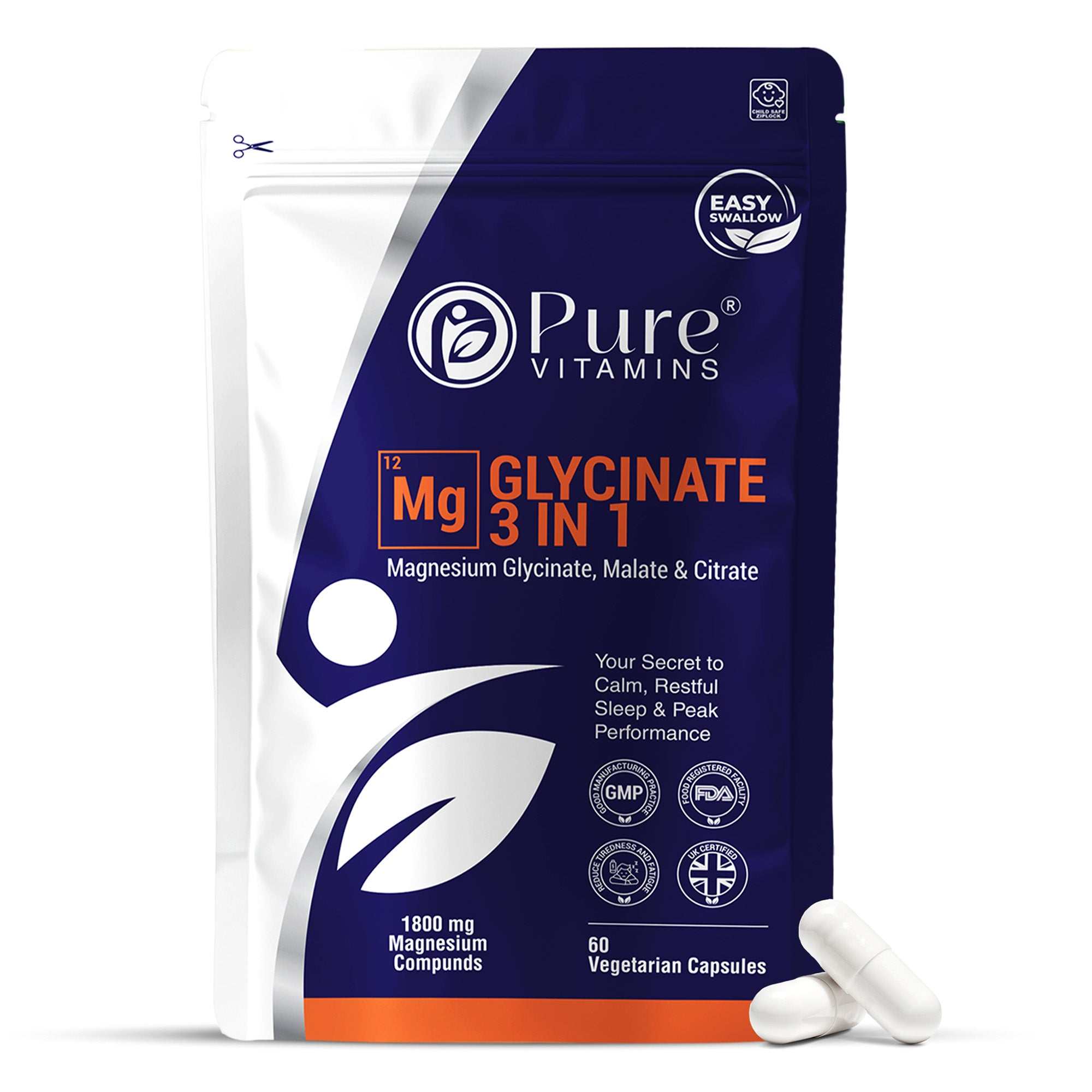
You do not actually have to choose between the friendlier forms. Our Magnesium Glycinate 3-in-1 combines glycinate, malate and citrate in one capsule, so you get the gentleness of glycinate alongside the strengths of the other two. If you would like to see the two most talked-about forms side by side, we cover that in detail in our guide to magnesium glycinate vs citrate, and there is a broader walk-through in how to choose a magnesium supplement in the UK.

What vitamin K2 (as MK-7) is doing in the pairing
If magnesium is vitamin D's quiet helper, then vitamin K2 is the traffic controller for calcium. Vitamin D helps you absorb calcium from your food, which is exactly what you want. Vitamin K2 then helps make sure that calcium is guided into bone rather than left drifting where it is less welcome. It does this by helping activate proteins such as osteocalcin, which bind calcium into the bone matrix. In plain terms, vitamin K contributes to the maintenance of normal bones, and D and K make good partners because one brings calcium in and the other helps put it to work.
The form on the label matters. K2 comes in different chain lengths, and MK-7 (menaquinone-7) is the one most supplements use because it stays active in the blood for longer than the shorter MK-4. In a one-year randomised trial in middle-aged and older adults, a modest daily dose of MK-7 improved a marker of how well osteocalcin was being activated, and reduced bone loss at the femoral neck in postmenopausal women (Zhang and colleagues, 2020, DOI: 10.1007/s00223-020-00669-4). Again, that is science about the nutrient, told honestly, rather than a guarantee about any single tablet. Our Vitamin D3 + K2 tablets use K2 as MK-7 for exactly this reason, and if you want the deeper story on the pairing we wrote a whole piece on why D3 and K2 are paired for bone health.
Can you take magnesium, vitamin D3 and K2 together?
Yes. For most healthy adults, magnesium, vitamin D3 and vitamin K2 are a comfortable daily trio, and there is a nice logic to combining them. Magnesium helps activate the vitamin D, vitamin D helps you absorb calcium, and vitamin K2 helps steer that calcium into bone. They are not competing for the same doorway, so taking them on the same day is absolutely fine.
You have two easy ways to do it. You can take a dedicated magnesium alongside a dedicated D3 and K2 tablet, which is what I do, keeping the magnesium for the evening. Or you can pick a ready-made combination. Our Immunity and Energy Support Trio brings zinc, vitamin D3 with K2, and magnesium glycinate together, which some people find simpler to stick with. Both approaches are valid. The best routine is the one you will actually remember most days, because consistency does more of the heavy lifting than any clever timing trick.
Magnesium in food, and the people who tend to run low
Before anyone reaches for a capsule, food comes first, and magnesium is genuinely abundant if you know where to look. The richest sources are the green, the brown and the crunchy: leafy greens like spinach and kale, nuts and seeds (pumpkin seeds are a standout), wholegrains, beans and lentils, and even a square or two of dark chocolate. If your plate leans that way most days, you are already doing a lot of the quiet work.
The catch is that modern, heavily processed diets tend to be lower in magnesium than the diets of a few generations ago, which is part of why the mineral so often gets overlooked while calcium and vitamin D take the spotlight. A handful of everyday situations can nudge people towards the lower end, too: getting older, long stretches of stress, very active training, regularly skipping wholefoods, or taking certain medicines such as long-term acid reducers. None of that means you are deficient, it simply means magnesium is worth keeping an eye on.
What might running low feel like? In honest, plain terms, people sometimes notice muscle cramps or twitches, flagging energy, or restless, poor-quality sleep, though every one of those has many possible causes and none is a diagnosis on its own. If you are genuinely concerned, a GP can look into it properly. For most people the sensible approach is simply to eat well and, where it helps, top up with a gentle daily magnesium so the tank does not run low in the first place. That is the quiet job a good magnesium does sitting alongside your D3 and K2.
How much of each: a plain-English dosing guide
Numbers get thrown around a lot online, and the units switch between micrograms, international units and milligrams, which does not help anyone. Here is how I would frame sensible daily amounts for an adult in the UK.
- Vitamin D3: the NHS advises 10 micrograms (400 IU) a day for most adults, particularly through the darker autumn and winter months when there is little useful sunlight in the UK. Higher-strength options do exist. Our D3 and K2 tablet provides 4000 IU (100 micrograms), which sits at the UK safe upper level. That suits people who want a stronger daily amount, but you should not exceed 100 micrograms (4000 IU) a day from supplements unless a clinician has advised it.
- Vitamin K2 (MK-7): supplements typically supply somewhere in the region of 75 to 100 micrograms of MK-7 a day, which is the range used in much of the research. Ours provides 100 micrograms.
- Magnesium: read the elemental magnesium figure, not the weight of the whole compound. UK reference intakes are about 300 mg a day for men and 270 mg for women, mostly from food. A typical supplement tops that up with 200 to 400 mg of elemental magnesium. Our 3-in-1 provides 384 mg of elemental magnesium per serving. The NHS notes that 400 mg a day or less from supplements is unlikely to cause harm.
One extra idea worth knowing is the calcium to magnesium balance. The nutrient-interaction review mentioned earlier suggests that very high calcium intakes relative to magnesium may not be ideal, and points to a calcium to magnesium ratio of roughly two to one as a reasonable target (Rosanoff, Dai and Shapses, 2016, DOI: 10.3945/an.115.008631). For most people eating a varied diet, that simply means it is worth making sure magnesium is not the forgotten mineral while calcium and vitamin D get all the attention.

When to take them: timing that actually matters
People overthink timing, so let me keep this grounded. The single most important thing is taking them consistently. After that, a couple of small tweaks help.
- Vitamin D3 and K2 with a meal that has some fat in it. Both are fat-soluble, so a little dietary fat helps them absorb. Breakfast with eggs, a lunch with olive oil, or an evening meal with oily fish all do the job. Morning or early afternoon suits most people.
- Magnesium glycinate in the evening. Glycine has a settled, calming quality, so many people like magnesium as part of their wind-down. That said, any consistent time is fine, and if mornings are easier for you, take it then.
- You can take them at the same time or spaced out. There is no need to separate magnesium from D3 and K2. The main reason to space anything is around certain medicines, which I cover in the cautions below.
If timing is genuinely on your mind, we go deeper in when to take vitamin D3 and magnesium glycinate, and there is a companion piece on the best time of day for vitamin K2 and D3.
A few cautions worth knowing
None of this should feel scary, but a supplement that is right for most people is not automatically right for everyone. Here are the situations where I would slow down and check first.
- Blood thinners: vitamin K plays a part in normal blood clotting, so if you take warfarin or a similar anticoagulant, do not start vitamin K2 without talking to your GP or anticoagulant clinic, because it can affect how your medication is managed.
- Kidney problems: if your kidneys are not working well, both magnesium and vitamin D need more care, so check with your clinician before supplementing.
- Thyroid medicine (levothyroxine): magnesium can reduce absorption of levothyroxine, so leave a gap of about four hours between the two.
- Certain antibiotics and bone medicines: magnesium can bind to some antibiotics (such as tetracyclines and quinolones) and to bisphosphonates, so space them by a few hours.
- Long-term acid reducers (PPIs): these can lower magnesium levels over time, which is worth mentioning to your GP if you take them regularly.
- Pregnancy and breastfeeding: stick to recommended amounts and do not exceed the upper limits, and if in doubt ask your midwife or GP.
- Upper limits, plainly: keep vitamin D to no more than 100 micrograms (4000 IU) a day from supplements, and remember the NHS view that 400 mg a day or less of supplemental magnesium is unlikely to cause harm. Too much magnesium usually shows up first as loose stools, which is your cue to ease off.
Supplements are there to support a healthy, varied diet, not to replace it or to fix a medical problem. If you have a persistent health concern, that is a conversation for your GP.
How to choose a good magnesium, D3 and K2 (what I look for)
Once you have decided on magnesium glycinate with a D3 and K2 tablet, quality is the next question. This is where I get a little fussy, because labels can be slippery.
- Check the elemental magnesium. A product boasting 1800 mg of magnesium compounds might only deliver a few hundred milligrams of actual elemental magnesium. Always find that elemental figure.
- Look for glycinate first in the blend. If tolerability matters to you, you want glycinate doing the heavy lifting, ideally alongside malate and citrate rather than cheap oxide fillers.
- Confirm K2 is MK-7. It is the longer-lasting form and the one used in most of the research.
- Sensible D3 strength. Match it to your needs, 10 micrograms for a gentle daily top-up or a higher strength up to the safe limit if you want more, and never beyond 100 micrograms without advice.
- Clean, honest formulation. I look for vegetarian or vegan suitability, no unnecessary fillers, formulated in the UK, and tested for purity and heavy metals at a GMP-certified facility.

That is exactly the standard we hold our own products to, which is why the Magnesium Glycinate 3-in-1 and the Vitamin D3 + K2 tablets are built the way they are. If you would like the full buying framework for the D side of the pairing, our UK vitamin D3 and K2 buyer's guide lays it all out.
Shop Magnesium Glycinate 3-in-1
What to realistically expect
Let me set honest expectations, because that is how trust is built. Supplements are a slow, steady support, not a switch you flip. Vitamin D levels build gradually over weeks, which is one reason the darker months are the classic time to keep topped up. Magnesium is a background player supporting normal muscle and nervous-system function and helping reduce tiredness, and many people simply find a consistent daily routine easier to sustain when everything they need sits in a small, sensible line-up rather than a cupboard of half-finished bottles. If you want a wider view of what magnesium can and cannot help with, our pieces on choosing magnesium for restful evenings and magnesium for muscle function are good next reads. You can also browse everything in one place on our supplement guides hub, or start from the Pure Vitamins UK home page.
Frequently asked questions
What kind of magnesium is best with vitamin D3 and K2?
Magnesium glycinate (bisglycinate) is the usual best choice, because it is well absorbed and gentle on the stomach. A blend that leads with glycinate, such as a glycinate, malate and citrate complex, gives you that gentleness with a little added versatility.
Do you really need magnesium if you take vitamin D3 and K2?
Magnesium is not strictly a supplement rule, but it is a genuine helper. The body uses magnesium as a cofactor to help make and activate vitamin D, and many people fall short of magnesium from diet alone, so pairing the two is a reasonable, evidence-informed choice.
Can I take magnesium, vitamin D3 and K2 at the same time?
Yes. For healthy adults they can be taken together on the same day, either as separate tablets or as a combined product. The only real reason to space anything out is around certain medicines such as levothyroxine or particular antibiotics.
How much magnesium should I take with D3 and K2?
Look at the elemental magnesium figure. A daily top-up of around 200 to 400 mg of elemental magnesium is typical, and the NHS notes that 400 mg a day or less from supplements is unlikely to cause harm. Our 3-in-1 provides 384 mg of elemental magnesium per serving.
Should I take magnesium in the morning or at night with my vitamin D?
Take vitamin D3 and K2 with a meal that contains some fat, usually in the morning or at lunch. Magnesium glycinate is popular in the evening because glycine feels calming, but the most important thing is simply taking it consistently.
Is 4000 IU of vitamin D3 too much every day?
The NHS recommends 10 micrograms (400 IU) a day for most adults, and 100 micrograms (4000 IU) is the UK safe upper level from supplements. So 4000 IU sits at the top of the safe range rather than above it, but you should not exceed it without advice from a clinician.
Warm wishes,
Dr. Miron, Founder of Pure Vitamins UK
Food supplements are intended to support a healthy lifestyle and should not be used as a substitute for a varied, balanced diet. This article is for general information and is not medical advice.

