


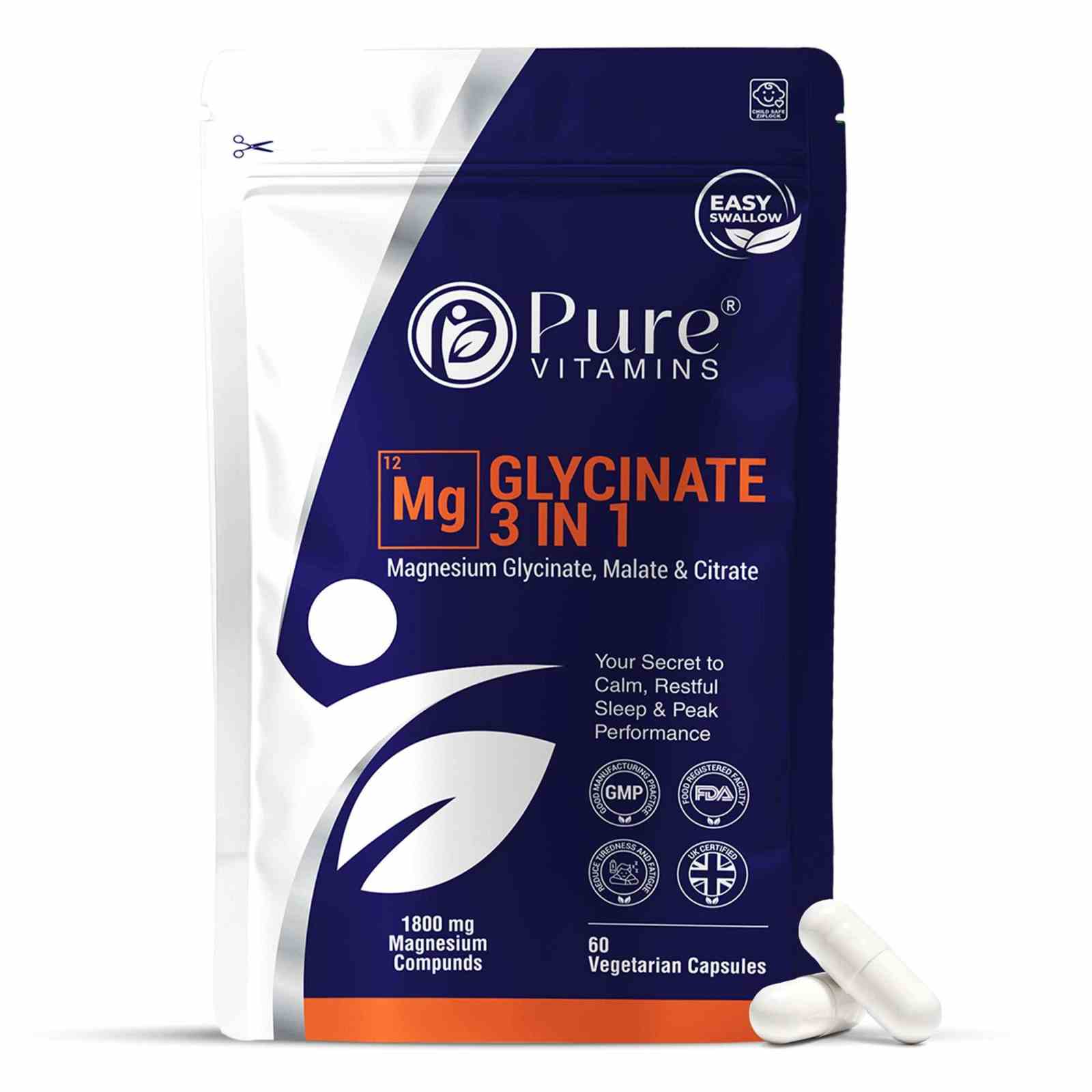
A 3-in-1 magnesium supplement combines three different magnesium compounds, typically glycinate, malate and citrate, in one daily serving, rather than relying on a single form. This guide explains what a 3-in-1 (or triple complex) magnesium actually is, why glycinate leads the formula, which forms are gentlest on the stomach, and the sensible dose and upper limit, all as composition facts with the evidence kept honest.
Reviewed and updated: 10 August 2026
3-in-1 magnesium supplement: the quick answer (TL;DR)
- What it is: one supplement combining three magnesium forms (commonly glycinate, malate and citrate).
- Why glycinate leads: magnesium bound to glycine is well-absorbed and generally gentle on the stomach.
- The honest bit: head-to-head proof that any one form is superior is limited; the bigger differences are tolerability and absorbing better than magnesium oxide.
- Key risk: magnesium's main side effect is loose stools rather than toxicity, so if you are sensitive, start with one capsule and build up.

What does "3-in-1" mean?
A 3-in-1 magnesium supplement (or triple complex) combines three different magnesium compounds in one daily serving rather than relying on a single form. Ours is built around magnesium glycinate, with magnesium malate and magnesium citrate. The idea is to bring together complementary forms so that a single daily serving carries the characteristics of more than one. Our Magnesium Glycinate 3-in-1 is led by the glycinate form for tolerability.
How the forms compare
Form genuinely affects how magnesium absorbs and how it sits with your gut. Organic, chelated salts such as glycinate, malate and citrate are generally better absorbed than inorganic magnesium oxide, which is poorly soluble and poorly bioavailable (Merschmann and colleagues, 2025, DOI). A laboratory model of intestinal absorption found magnesium bisglycinate (glycinate) had the highest uptake of the forms tested, with dimagnesium malate also higher than citrate and oxide, though this was an in-vitro study and was industry-funded, so it is suggestive rather than definitive (Hartle and colleagues, 2016, DOI). Combining glycinate, malate and citrate aims to pair good absorption with everyday tolerability.
Why magnesium glycinate leads the formula
Magnesium glycinate is magnesium bound to the amino acid glycine. It is a chelated form widely regarded as well-absorbed and, importantly, gentle on the stomach, which is the most common practical complaint about magnesium. That gentleness is the key reason it is chosen to lead a daily supplement where comfort matters.
Which magnesium is gentlest on the stomach?
This is one of the most-searched magnesium questions, and the honest answer is largely about form. Magnesium citrate and oxide have a well-known laxative tendency, drawing water into the gut, which is why they can cause loose stools or cramping in some people; in fact osmotic diarrhoea is the very effect regulators use to set magnesium reference figures (EFSA NDA Panel, 2018, DOI). Magnesium glycinate is generally considered one of the gentler, better-tolerated forms, which is why it leads our formula. We compare the two main forms in magnesium glycinate vs citrate and in which magnesium is gentlest on the stomach.

What magnesium actually does
Magnesium is a genuine workhorse mineral, involved in hundreds of processes across the body. At a meaningful amount, magnesium contributes to normal muscle function, the normal functioning of the nervous system, normal psychological function, the reduction of tiredness and fatigue, normal protein synthesis, electrolyte balance, normal energy-yielding metabolism, and the maintenance of normal bones and teeth. These are its genuine roles, and they are a more honest foundation than the knocks-you-out-for-sleep marketing you sometimes see: magnesium supports the everyday machinery of muscle and nervous-system function rather than acting like a sedative.
How much, and the safe upper limits
The reference intake (NRV) for magnesium used on labels is 375 mg a day, and our daily serving of two capsules provides 384 mg of elemental magnesium, which is 102% of that NRV. On upper limits, two reference figures exist and it is worth understanding both. The UK Expert Group on Vitamins and Minerals set a guidance level of 400 mg a day for supplemental magnesium salts, which is the figure UK products are usually positioned against. EFSA uses a more conservative tolerable upper intake level of 250 mg a day for magnesium from readily dissociable salts (EFSA NDA Panel, 2018, DOI). Both are set on the laxative threshold rather than any toxicity concern: the limiting factor with magnesium is loose stools, not harm, and neither figure applies to magnesium from food. The practical takeaway: if you are sensitive, start with one capsule and build up, or split the dose across the day. We cover timing in when to take magnesium glycinate.
Natural food sources of magnesium
Magnesium is widespread in plant foods. The richest sources are nuts and seeds (pumpkin seeds, almonds), wholegrains, dark leafy greens such as spinach, beans and lentils, and dark chocolate. A supplement is there to top up a varied diet, not replace it.

A few cautions worth knowing
A few cautions matter. People with reduced kidney function should not take magnesium supplements without medical advice, because the kidneys clear excess magnesium and impaired clearance can let it build up. Magnesium can reduce the absorption of some medicines if taken at the same time, including certain antibiotics (tetracyclines and quinolones) and bisphosphonates, so space them by a few hours. If you are pregnant or breastfeeding, take regular medication, or manage a health condition, speak to your GP or pharmacist before starting a new supplement.
How our 3-in-1 magnesium supplement is formulated
Our Magnesium Glycinate 3-in-1 combines magnesium glycinate, malate and citrate, led by the gentle glycinate form, in vegetarian capsules. The daily serving is two capsules providing 384 mg of elemental magnesium, with 30 servings per pouch. It is formulated in the UK and manufactured in a GMP-certified facility. For the bigger picture, see our guide to the best magnesium for an evening routine, or browse the range on our home page.

Frequently asked questions
What are the three forms in a 3-in-1 magnesium?
Typically magnesium glycinate, magnesium malate and magnesium citrate. Ours is led by glycinate for tolerability, with malate and citrate as complementary organic forms.
Is a 3-in-1 magnesium better than a single form?
It is a matter of breadth rather than proven superiority. Combining forms pairs good absorption with everyday tolerability. Head-to-head evidence that any single form is dramatically better is limited; the clearest difference is that organic forms absorb better than magnesium oxide.
Which magnesium form is gentlest on the stomach?
Magnesium glycinate is generally considered one of the gentlest, while citrate and oxide are more likely to loosen stools because they draw water into the gut.
How much magnesium is too much from a supplement?
The UK Expert Group on Vitamins and Minerals set a guidance level of 400 mg a day for supplemental magnesium salts, while EFSA uses a more conservative 250 mg figure for readily dissociable salts. Both are based on the laxative threshold rather than toxicity, and neither applies to magnesium from food. If you are sensitive, start with one capsule and build up.
Signed, Dr. Miron, Founder of Pure Vitamins UK.
Sources retrieved from journal pages; see the linked DOIs above. This article is for general information and composition education, not medical advice. Food supplements should not be used as a substitute for a varied, balanced diet and a healthy lifestyle. If you are pregnant, breastfeeding, taking medication or managing a medical condition, speak to your GP or pharmacist before starting a new supplement.

