


Reviewed and updated: 24 July 2026
When to take magnesium glycinate is largely a matter of routine: many people take it in the evening as part of a wind-down, but there is no compulsory clock time, and consistency matters more than the precise hour. This guide answers the practical questions honestly, when to take it, how soon it works, the safe upper limit and what about cramps, with magnesium's genuine roles woven in as we go.
TL;DR: when to take magnesium glycinate
- Best time: whenever you will take it consistently. Evening is popular for a wind-down routine, but morning is fine.
- With or without food: glycinate is well tolerated either way; with food can suit a sensitive stomach.
- How soon: magnesium is not a fast sedative; it supports normal function when levels are adequate, so steady daily intake is the point.
- Upper limit: the UK/EU tolerable upper intake level from supplements is 250 mg/day for readily dissociable salts; higher amounts can loosen stools in some people, so follow the product directions.

When should you take magnesium glycinate?
There is flexibility here, and consistency matters more than a precise clock time:
- Evening — many people take magnesium glycinate in the evening as part of a wind-down routine. It is a popular choice for an evening supplement.
- With or without food — glycinate is generally well tolerated either way; with food can suit those with a sensitive stomach.
- Consistency — taking it at the same time daily is what helps it become a sustainable habit.
Why do people take magnesium glycinate before bed?
Let me be honest about this, because it is marketed hard. Magnesium contributes to normal psychological function and the normal functioning of the nervous system, and the glycinate form is gentle and well tolerated, which together make it a comfortable thing to take as the day winds down. That is the real reason it has become an evening favourite. It will not knock you out or guarantee sleep, though, and I would rather tell you that plainly than pretend otherwise. We go into choosing magnesium with sleep in mind in our magnesium for sleep guide, and the wider category in what's actually in a natural sleep supplement.
How soon does magnesium work?
This is where honesty matters most. Magnesium is not a fast-acting sedative, and it would be misleading to suggest it produces an immediate effect you feel within an hour. It is a mineral that supports normal bodily functions when you keep your levels topped up, so the sensible approach is consistent daily intake rather than waiting for a dramatic same-night effect. The research bears this out: in a small randomised study of older adults with poor sleep, sleep-quality scores improved over several weeks in both the magnesium and the placebo groups, a useful reminder that magnesium is no instant knockout (Nielsen & Johnson, 2010, doi.org/10.1096/fasebj.24.1_supplement.325.8; meeting abstract, small sample).

What about muscle cramps?
Magnesium contributes to normal muscle function, and that is the honest basis for the association people make with cramps. I am careful here though: cramps have many causes, and adequate magnesium supporting normal muscle function is not the same as a cramp cure. If you get frequent or severe muscle cramps, that is worth raising with your GP rather than assuming it is a magnesium issue.
Forms and absorption: glycinate, malate and citrate
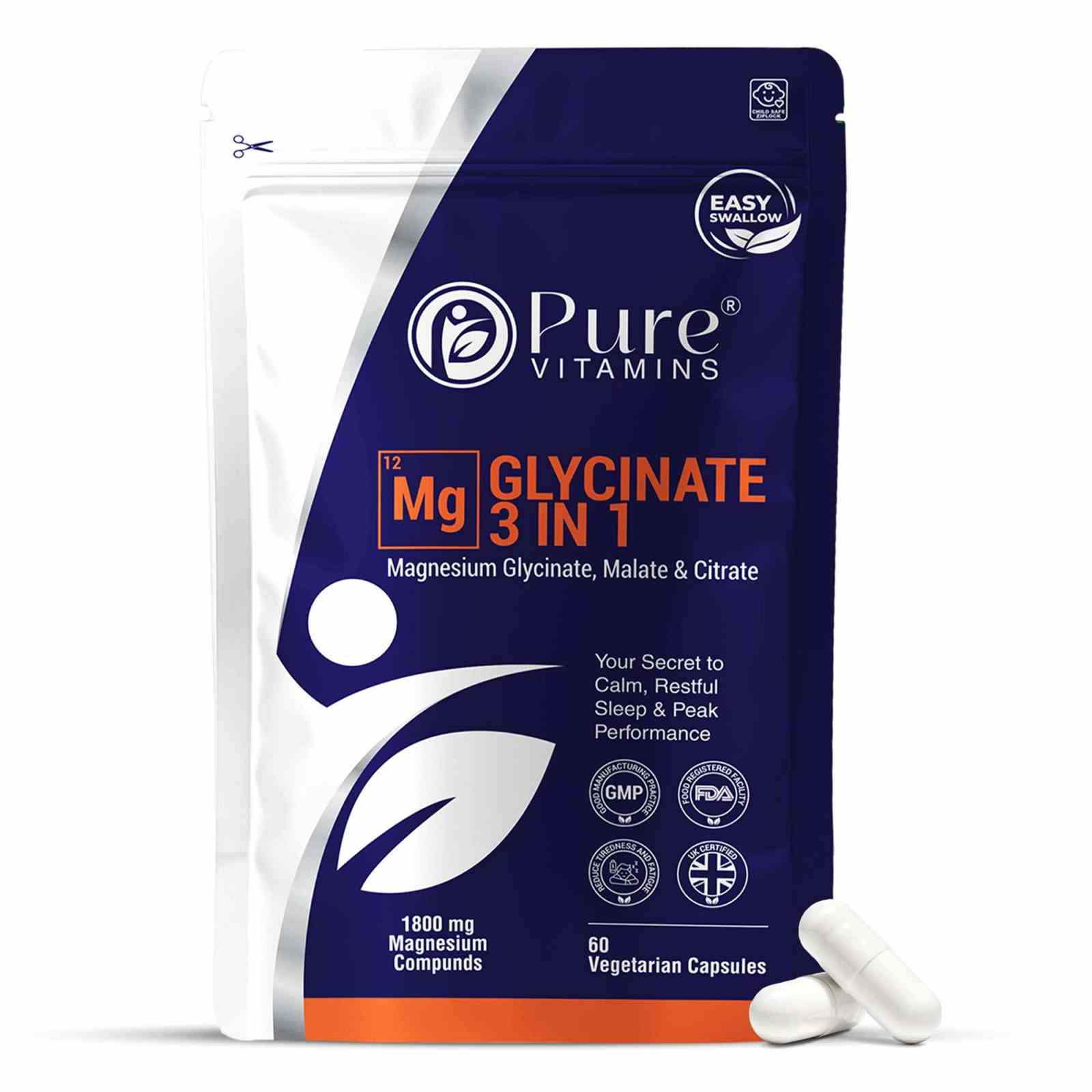
Not all magnesium is absorbed equally. Reviews of human trials consistently find that organic, water-soluble forms such as magnesium citrate and chloride are well absorbed, while magnesium oxide is poorly bioavailable, largely because it dissolves poorly in water (Merschmann et al., 2025, doi.org/10.1002/mnfr.70227). Our 3-in-1 uses glycinate, malate and citrate, three well-tolerated organic forms, which is the reasoning explained in what is a 3-in-1 magnesium. For a direct comparison of the two most common forms, see magnesium glycinate vs citrate.
How much magnesium, and the safe upper limit
For adults the UK/EU tolerable upper intake level (UL) for magnesium from supplements is 250 mg per day for readily dissociable salts, a figure set because higher supplemental intakes can cause mild osmotic diarrhoea, that is, loose stools, in some people (EFSA NDA Panel, 2018, doi.org/10.2903/j.efsa.2018.5484). This UL applies only to supplemental magnesium and not to magnesium naturally present in food and water. If a product provides more than this, some people split the dose across the day or take it with food to stay comfortable. Always follow the serving directions on the pack, and if loose stools occur, reduce the dose.
A few cautions worth knowing
Magnesium supplements are generally safe for healthy adults within sensible limits, but a few groups should take care. People with reduced kidney function should not take magnesium supplements without medical advice, because the kidneys clear excess magnesium and impaired clearance can let it accumulate. Magnesium can reduce the absorption of certain medicines, including some antibiotics (tetracyclines and quinolones) and bisphosphonates, so these should be spaced several hours apart. If you are pregnant, breastfeeding, take prescription medication or manage a health condition, check with your GP or pharmacist first.
Frequently asked questions
Is it better to take magnesium glycinate in the morning or at night?
Either works. Evening is popular because the glycinate form is gentle and fits a wind-down routine, but magnesium is not a sedative, so morning is equally fine. Take it whenever you will remember it consistently.
How long does magnesium glycinate take to work?
It is not a fast-acting sedative. Magnesium supports normal function when your levels are adequate, so the benefit comes from consistent daily intake rather than an immediate same-night effect.
Can I take magnesium glycinate with food?
Yes. It is well tolerated with or without food, and taking it with a meal can be gentler on a sensitive stomach.
How much magnesium is too much from a supplement?
The UK/EU upper intake level from supplements is 250 mg per day for readily dissociable salts. Higher amounts can cause loose stools in some people, so follow the product directions and split or reduce the dose if needed.
Explore the full range any time at Pure Vitamins UK.
Food supplements should not be used as a substitute for a varied, balanced diet and a healthy lifestyle. Frequent or severe muscle cramps, or persistent sleep difficulty, should be discussed with your GP. If you are pregnant, breastfeeding, taking medication or managing a medical condition, speak to your GP or pharmacist before starting a new supplement. Signed, Dr. Miron, Founder of Pure Vitamins UK.


