


Reviewed and updated: 21 August 2026
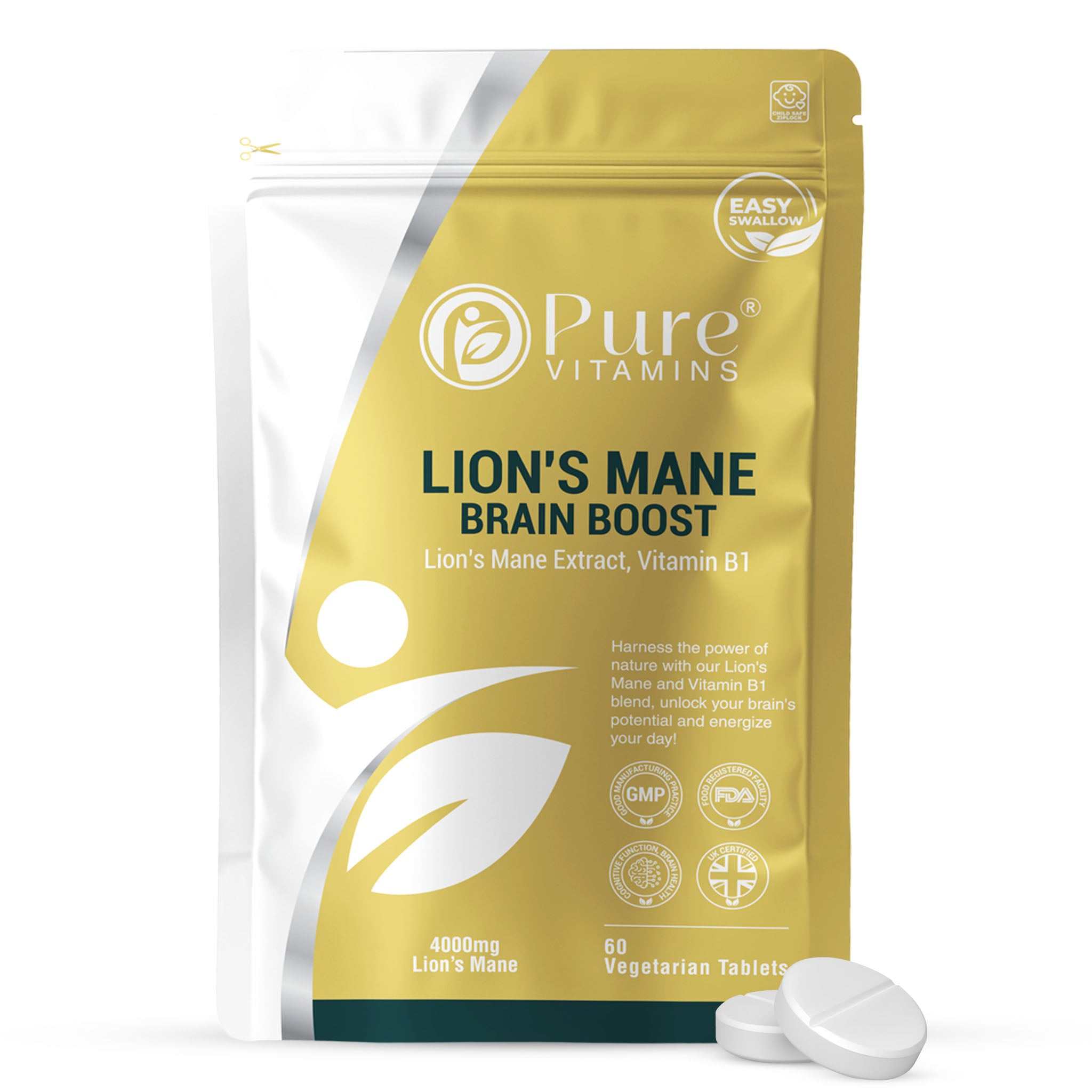
Yes, you can take Lion's Mane with vitamin B, and in the UK most quality lion's mane tablets are already built that way on purpose. The mushroom brings the compounds people have valued it for over centuries, and the added B vitamins bring the nutritional backbone that supports your nervous system and the way your body makes energy from food. I get asked this question more than almost any other about our mushroom range, so let me walk you through why the pairing exists, what each part actually does, and how to take it without overthinking it.
Can I take Lion's Mane with vitamin B? The short answer
Taking Lion's Mane with vitamin B is safe for most healthy adults, and the two are routinely formulated together rather than taken as separate tablets. There is no known interaction between Hericium erinaceus extract and thiamine, vitamin B6 or vitamin B12. They travel through different routes in the body and do not compete for absorption in any way that matters at supplement doses.
The more interesting question is why they are paired, and that comes down to what each one is for. Lion's mane is a botanical, so we talk about it the way you would talk about any traditional food or herb: where it comes from, what is in it, how it is extracted, and what people have long reached for it for. The B vitamins are nutrients with established, measurable roles in human physiology, and thiamine contributes to normal psychological function and to the normal functioning of the nervous system. Put simply, the mushroom is the tradition and the B vitamins are the nutrition.
The quick answer
- What it is: a lion's mane mushroom extract combined with one or more B vitamins, usually thiamine (B1), sometimes B6 and B12, often with a little black pepper extract.
- Can you combine them: yes, and the combination is the norm rather than the exception in the UK.
- Who it suits: adults who want a steady daily mushroom habit alongside nutrients that support the nervous system.
- One thing to know: lion's mane does not give you usable vitamin B12, despite what you may read. More on that below, because it genuinely matters.

Where lion's mane comes from and what it is traditionally known for
Lion's mane is a shaggy white mushroom that grows on hardwood trees across Asia, Europe and North America, cascading down in soft spines that really do look like a mane. In China it is hou tou gu, monkey head mushroom. In Japan it is yamabushitake, named after the yamabushi, the mountain hermit monks whose robes it was thought to resemble, and it has been eaten as a delicacy and used in traditional practice there for centuries.
That heritage is the honest reason people reach for it. In traditional Chinese and Japanese practice it has long been valued as a food for the stomach and as something taken during periods of study and mental effort. Today people mostly take it as part of a daily routine for focus and clear thinking, and it has become the mushroom of choice for anyone building what is often now called a nootropic habit. If you want the fuller story of the research behind that reputation, our guide to lion's mane and focus covers it properly.
What is actually inside lion's mane
The compounds people talk about most are the hericenones, found mainly in the fruiting body, and the erinacines, concentrated in the mycelium. Alongside them sit the beta-glucans and other polysaccharides, which is why you will see extracts described as "standardised to 50% polysaccharides". That number is the useful one on a label. It tells you what proportion of the extract is the fraction being measured, rather than leaving you to guess.
You will also see extract ratios such as 10:1 or an equivalent figure like 4,000mg. A 4,000mg equivalent means the tablet delivers extract concentrated from that much raw mushroom. Both figures matter, and a product that gives you one without the other is telling you half a story. Our lion's mane dosage guide unpacks how to read those numbers on any pack you pick up.
Why B vitamins are the natural partner
B vitamins are water-soluble, which means your body does not store much of them and you need a regular supply. They work largely as coenzymes, the small helper molecules that let your metabolic enzymes actually function. According to PubMed, a review of the neurotropic B vitamins by Calderon-Ospina and Nava-Mesa sets out how thiamine, vitamin B6 and vitamin B12 each contribute to the nervous system through distinct but overlapping biochemical routes, including cellular energy production, myelin maintenance and neurotransmitter synthesis (DOI).
Vitamin B1 (thiamine)
Thiamine is converted in the body into thiamine pyrophosphate, which acts as a cofactor for three enzyme systems central to how you get energy out of carbohydrate: transketolase in the pentose phosphate pathway, pyruvate dehydrogenase in glycolysis, and alpha-ketoglutarate dehydrogenase in the Krebs cycle. Nerve cells burn through a lot of energy and store very little of it themselves, which is why thiamine turns up so often in formulas aimed at mental sharpness. Thiamine contributes to normal energy-yielding metabolism, to normal psychological function and to the normal functioning of the nervous system. The EU nutrient reference value is 1.1mg a day.
Vitamin B6
Vitamin B6 is involved in amino acid metabolism and in making several neurotransmitters. Vitamin B6 contributes to normal psychological function, to the normal functioning of the nervous system and to the reduction of tiredness and fatigue. The nutrient reference value is 1.4mg a day.
Vitamin B12
Vitamin B12 is the one most people have heard of, and the one most likely to be genuinely low if you eat little or no animal food. Vitamin B12 contributes to normal energy-yielding metabolism, to the normal functioning of the nervous system, to normal psychological function and to the reduction of tiredness and fatigue. The nutrient reference value is 2.5 micrograms a day. If you want the detail on forms and who is most at risk, our vitamin B12 guide goes through it.

Does lion's mane already contain vitamin B12?
This is where I want to be very direct, because there is a persistent claim online that lion's mane is a plant-based source of B12. It is not, and the chemistry is clear.
According to PubMed, Teng and colleagues analysed cultured and dried lion's mane fruiting bodies and found only trace corrinoid content, roughly 0.04 to 0.36 micrograms per 100g of dry weight in most samples. More importantly, when they purified those corrinoids and identified them by mass spectrometry, a portion turned out to be vitamin B12[c-lactone], an unnatural corrinoid that was completely inactive in the B12-dependent bacteria used in standard bioassays (DOI). In plain English: some of what registers as "B12" in a lion's mane sample is a lookalike molecule your body cannot use.
So if you are vegan, vegetarian, or simply want to be sure your B12 intake is covered, a mushroom will not do that job. A B-fortified lion's mane product is a meaningfully different thing from a plain mushroom powder, and that is exactly the gap the added vitamins fill.
What the human research on lion's mane actually shows
Honest framing here matters more than hype. Most of the excitement around lion's mane comes from animal and cell work on hericenones and erinacines. The human trials in healthy adults are small, recent and mixed.
According to PubMed, Docherty and colleagues ran a double-blind, placebo-controlled pilot in 41 healthy adults aged 18 to 45 using 1.8g daily. Participants were faster on the Stroop task 60 minutes after a single dose, and there was a trend towards reduced subjective stress after 28 days that did not reach statistical significance. The authors themselves flag the small sample and the null findings alongside the positive ones (DOI).
A more recent crossover study by Surendran and colleagues gave 18 healthy younger adults a single 3g dose of a 10:1 fruiting body extract and found no significant effect on composite measures of global cognition or mood at 90 minutes, though performance on one individual task, the pegboard test, did improve (DOI).
Read together, the picture is early and unresolved. Something may be happening in specific task domains, the effect sizes are modest, sample sizes are small, and nobody has yet established the right dose or the time to peak concentration in the brain. That is the truthful state of play, and it is why the nutritional wording on a combined product rests on the B vitamins rather than the mushroom.
Why black pepper extract is in the mix
Piperine, the active alkaloid in black pepper, is poorly water-soluble itself but is widely studied as an absorption-support compound, and reviews of its chemistry, absorption and metabolism describe exactly that role (DOI). It is typically included at a few milligrams. It is not doing anything dramatic on its own; it is there to give the rest of the formula a better run at being absorbed.

How to take lion's mane with your B vitamins
My honest advice is that consistency beats clever timing every time. That said, a few practical points do help.
- Morning or early afternoon. B vitamins sit in the energy-metabolism pathways, and some people find a late dose leaves them a little too switched on at bedtime. If that is you, move it earlier.
- With food. Take it with a meal. It is gentler on the stomach and the fats in a normal meal help with the fat-soluble fraction of a mushroom extract.
- Daily, not occasionally. The single-dose studies above found little at 90 minutes. Whatever benefit people report tends to come from a steady habit over weeks, not from one tablet.
- Do not double up unnecessarily. If you already take a B complex or a multivitamin, check the labels before adding another B source so you know your actual daily total.
How much is enough, and where the upper limits sit
Common lion's mane tablets in the UK sit around a 4,000mg equivalent per serving, taken once or twice daily. Our own guide to whether 4000mg of lion's mane is safe goes through the tolerability data in detail.
On the vitamins, thiamine is water-soluble with a high turnover and no tolerable upper intake level has been set for it, since surplus is simply excreted. Vitamin B12 likewise has no established upper limit. Vitamin B6 is the one to keep an eye on, because it is the one B vitamin where long-term high intakes are genuinely a concern. EFSA reviewed the safe upper level in 2023 and set a tolerable upper intake level of 12mg a day for adults, lower than the figure that had stood previously. Most sensible formulas stay well under that, and there is no good reason for a lion's mane product to be anywhere near it.
Food sources of these B vitamins
Supplements sit on top of a diet, not instead of one. Thiamine is found in wholegrains, fortified breakfast cereals, pork, peas, nuts and seeds. Vitamin B6 turns up in poultry, fish, potatoes, bananas and fortified cereals. Vitamin B12 comes almost entirely from animal foods such as meat, fish, eggs and dairy, plus fortified foods including many plant milks and nutritional yeast, which is why it is the one to plan for on a plant-based diet.
How to choose a good lion's mane and B vitamin product
- Look for both the extract ratio and the standardisation. "4,000mg equivalent, standardised to 50% polysaccharides" tells you far more than "mushroom blend".
- Check which part of the mushroom is used. Fruiting body, mycelium or both should be stated plainly.
- Read the vitamin amounts and their NRV percentages. A vitamin only carries its nutritional wording when it is present in a meaningful amount, so the percentage matters as much as the milligrams.
- Ask where it is made and how it is checked. Ours is formulated in the UK and tested for purity and heavy metals at our GMP-certified facility.
- Be wary of long "proprietary blends". If a label will not tell you how much of each thing is in there, that is a choice the brand made.
If you would like to compare across the whole range first, everything sits in one place in our supplement guides hub, and you can browse the full range on the Pure Vitamins UK home page.
Shop Lion's Mane 4000mg with Vitamin B1

What to realistically expect
I would rather set the bar honestly than sell you a story. The B vitamins do a defined nutritional job, and if your intake has been on the low side you may well notice the difference in how steady your days feel. The mushroom is a longer, quieter proposition: an ingredient with real heritage, an interesting compound profile, and a human evidence base that is still finding its feet. Give it eight to twelve weeks of consistent daily use before you form a view, and judge it against how you actually feel rather than against a marketing promise.
A few cautions worth knowing
Most people take a combined lion's mane and B vitamin tablet without any trouble, but a few situations are worth flagging.
- Skip it if you have a known mushroom or fungal allergy. Skin reactions to lion's mane have been reported, though they are uncommon.
- If you are pregnant or breastfeeding, speak to your midwife or GP first. There simply is not enough safety data on lion's mane in pregnancy to be relaxed about it.
- If you take anticoagulants such as warfarin, diabetes medication, or anything where your dosing is finely balanced, check with your pharmacist before adding a mushroom extract.
- Long-term high intakes of vitamin B6 well above the upper level can affect the nerves, so keep an eye on your total across all the supplements you take.
- If you have been told you are low in B12, or are being looked into for it, that is a conversation for your GP rather than something to manage with a mushroom tablet.
Frequently asked questions
Can you take lion's mane and a B complex on the same day?
Yes. There is no interaction between them. Just add up the B vitamin amounts across both products so you know your daily total, particularly for vitamin B6.
Does lion's mane contain vitamin B12?
Only in trace amounts, and analysis has shown that part of what is detected is an inactive corrinoid your body cannot use. Think of lion's mane as a mushroom, not as a B12 source.
Should I take lion's mane with vitamin B in the morning or at night?
Morning or early afternoon with food suits most people, since B vitamins sit in the energy-metabolism pathways and a late dose can leave some people feeling alert at bedtime.
Which B vitamin is usually added to lion's mane?
Vitamin B1, thiamine, is the most common. Thiamine contributes to normal psychological function and to the normal functioning of the nervous system, which is why it sits naturally alongside a mushroom people take as part of a focus routine.
How long before I notice anything?
Give it eight to twelve weeks of consistent daily use. Single-dose studies in healthy adults have found little at 90 minutes, so this is a habit rather than a quick fix.
Is it better than taking ashwagandha?
They are built for different moments in the day. We compared them properly in is lion's mane better than ashwagandha.
Dr. Miron, Founder of Pure Vitamins UK
Food supplements should not be used as a substitute for a varied, balanced diet and a healthy lifestyle. This article is for general information and is not medical advice. Always consult a healthcare professional before use if you are pregnant, breastfeeding, have a medical condition or are taking medication.

