


D3 vs D3+K2, what K2 MK-7 is, and is 4000 IU safe?
The short answer: choose plain vitamin D3 if you want simple, everyday vitamin D, or D3 combined with K2 if you want a bone-focused pairing, because both vitamin D and vitamin K contribute to the maintenance of normal bones. And 4,000 IU (100 micrograms) of vitamin D a day sits right at the recognised safe upper limit for adults, so it is fine to take within that ceiling but not a level to go beyond without medical advice.
Reviewed and updated: 23 July 2026

TL;DR
- What it is: two ways to take vitamin D. Plain D3, or D3 paired with vitamin K2 (as MK-7).
- Who it is for: plain D3 suits anyone topping up everyday vitamin D, especially through a British winter. D3+K2 suits people who want a higher-strength, bone-focused pairing.
- The one thing to know: 4,000 IU is the safe daily ceiling for adults, not a target. More is not better, and if you take blood-thinning medication, talk to your GP before adding K2.
What is the difference between D3 and D3+K2?
Vitamin D3 on its own is a single-nutrient supplement, like our Vitamin D3 1000 IU. It is the sensible, no-fuss choice for keeping your vitamin D topped up, which matters most from about October to March in the UK when there simply is not enough sunlight to make your own.
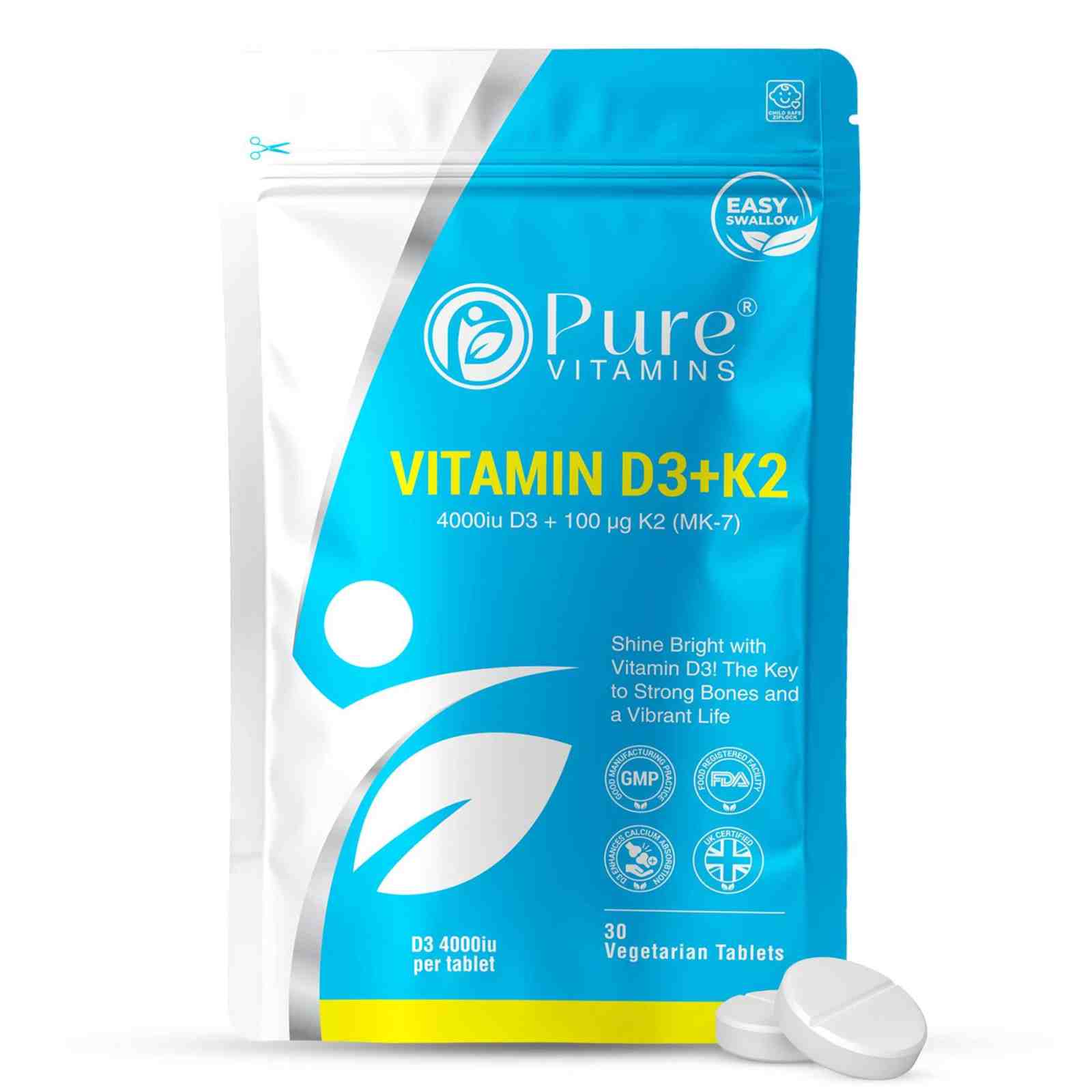
D3 plus K2 puts vitamin D3 alongside vitamin K2 in the same tablet, as in our Vitamin D3 + K2 4000 IU. The two are put together for a good reason: vitamin D contributes to the maintenance of normal bones, and so does vitamin K, so pairing them gives you a genuinely complementary, bone-minded combination at a higher D3 strength. Vitamin D also contributes to normal muscle function and to the normal function of the immune system, which is part of why so many people take it year round. We look at the common worry about pairing in whether vitamin D3 without K2 is actually a problem.
So, D3 vs D3+K2: which should you pick? If you want straightforward vitamin D, go with plain D3. If you want the bone-focused pairing at a stronger dose, D3+K2 is the one. I explain that combination in more depth in our guide to vitamin D3 and K2 for bone health.
What is vitamin K2 MK-7?
Vitamin K2 comes in a few different forms, labelled with MK numbers. MK-7 (menaquinone-7) is the form worth looking for, because it is well absorbed and stays active in the body far longer than shorter forms such as MK-4, so a single daily dose keeps your levels steady. Based on a comparison retrieved from PubMed, a single nutritional dose of MK-7 was well absorbed and detectable in the blood for up to 48 hours, whereas the same dose of MK-4 from food did not raise blood levels at all (Sato et al., 2012, DOI). A later study in healthy adults confirmed MK-7 reaches peak plasma levels around six hours after intake and has a very long half-life (Du et al., 2023, DOI).
In plain terms: when a label says K2 as MK-7, it is telling you it uses the well-absorbed, long-acting form, which is exactly what our D3+K2 uses. Think of it as a quality signal for the form, in the same way a standardisation percentage tells you something useful about a herbal extract.

Is 4000 IU of vitamin D safe daily?
Let me be precise here, because dosage deserves a careful answer. 4,000 IU (100 micrograms) per day is the tolerable upper intake level for adults set by food-safety authorities, meaning the maximum considered safe for long-term daily intake across the general adult population (EFSA, 2012). So 4,000 IU sits right at that established ceiling, not beyond it.
A few practical points follow from that:
- For general winter maintenance, smaller amounts such as 400 to 1,000 IU are often plenty. The UK guidance suggests 10 micrograms (400 IU) a day through autumn and winter for most people. More is not automatically better.
- Higher-strength products like 4,000 IU suit people who specifically want a stronger daily dose, kept within the safe ceiling.
- Do not go above the upper limit without medical advice, and if you take other supplements or a multivitamin that also contain vitamin D, add those up too so your total stays sensible.
- If you take anticoagulant (blood-thinning) medication, speak to your GP before taking vitamin K2, as K2 can interact with it.
Why D3 is the form to look for
Whichever option you choose, D3 (cholecalciferol) is the form to pick over D2 (ergocalciferol). Based on research retrieved from PubMed, a randomised trial found vitamin D3 raised blood 25-hydroxyvitamin D levels more than vitamin D2 (Shieh et al., 2016, DOI), and a separate randomised trial in healthcare workers found daily cholecalciferol produced a larger rise in 25(OH)D than weekly ergocalciferol (Amphansap et al., 2022, DOI). That is why both our D3 and our D3+K2 use D3. There is more on the forms and the signs of low vitamin D in our guide to vitamin D3 vs D2.

Natural sources and signs of low vitamin D
Sunlight on skin is our main source of vitamin D, which is exactly why levels dip in a UK winter. Food contributes some: oily fish such as salmon, mackerel and sardines, egg yolks, and fortified foods like some cereals and spreads. In practice, diet alone rarely covers the shortfall over winter, which is why a daily supplement is such a common, sensible habit here.
Signs that can point to low vitamin D include persistent tiredness, aches in the bones or muscles, and feeling generally run down, though these are non-specific and a blood test is the only way to know for sure. If you suspect you are low, your GP can check.
How to take D3 or D3+K2
My best tip is simple: take it with your largest meal, ideally one with some fat in it, because vitamin D and K2 are both fat-soluble and absorb better alongside food. The time of day matters far less than doing it consistently. Pick a meal you never skip and tie the tablet to it. For how much different groups tend to take, see our guide to how much vitamin D3 and K2 to take daily, and for the seasonal angle, vitamin D in winter in the UK.
A few cautions worth knowing
Vitamin K2 can interact with warfarin and similar blood-thinning medicines, so check with your GP or pharmacist before adding it. Keep your total daily vitamin D at or below 4,000 IU unless a healthcare professional has advised otherwise, and remember to count any vitamin D in a multivitamin you already take. If you are pregnant, breastfeeding, managing a medical condition or taking regular medication, have a quick word with your GP or pharmacist before starting anything new.
The takeaway
In the D3 vs D3+K2 comparison: plain D3 is the straightforward everyday choice; D3+K2 pairs two bone-supporting vitamins, with K2 in the well-absorbed MK-7 form; and 4,000 IU sits at the recognised safe upper daily limit for adults, fine within that ceiling but not something to exceed, and worth a GP chat first if you take blood thinners. Our Vitamin D3 + K2 is formulated in the UK and manufactured in a GMP-certified facility. You can browse the wider range on our Pure Vitamins UK home page.

Frequently asked questions
Should I take D3 or D3+K2? Plain D3 is fine for simple everyday vitamin D. D3+K2 suits those who want a bone-focused pairing at a higher strength, since both vitamins contribute to the maintenance of normal bones.
Is 4000 IU of vitamin D too much? No, it sits at the recognised safe upper daily limit for adults. It is fine within that ceiling, but do not exceed it without medical advice, and count any vitamin D from other supplements.
What is MK-7? MK-7 (menaquinone-7) is a well-absorbed, long-acting form of vitamin K2 that keeps daily levels steady from a single dose.
Can I take K2 with blood thinners? Vitamin K2 can interact with warfarin and similar anticoagulants, so speak to your GP or pharmacist before taking it.
Food supplements should not be used as a substitute for a varied, balanced diet and a healthy lifestyle. Do not exceed 4000 IU (100 micrograms) of vitamin D daily without medical advice. If you take blood-thinning medication, speak to your GP before taking vitamin K2. If you are pregnant, breastfeeding, taking medication or managing a medical condition, speak to your GP or pharmacist before starting a new supplement.
Dr. Miron, Founder of Pure Vitamins UK.


