


Reviewed and updated: 23 July 2026
Does creatine affect sleep? The honest answer
Does creatine affect sleep? For most people, not in any meaningful way. Creatine is not a stimulant like caffeine, it contains nothing that revs up your nervous system, and it is not known to cause insomnia. If anything, the more interesting early research points the other way, exploring whether creatine might help the tired brain cope when sleep is short.
I am Dr. Miron, and this is a question I get a lot from people who take their creatine in the evening and worry it will keep them awake. Let me lay out what we know and what is still uncertain.

The short version
- Not a stimulant: creatine has no caffeine-like effect and is not known to disrupt sleep.
- Timing: evening dosing is fine. Take it whenever suits your routine.
- Emerging angle: early research is exploring whether creatine can buffer the mental effects of sleep deprivation, but this is preliminary.
Why creatine is unlikely to keep you awake
Creatine works quietly, by keeping your muscles and brain topped up with a rapid energy reserve called phosphocreatine. There is no stimulant in it. According to PubMed, the International Society of Sports Nutrition position stand describes creatine as safe and well tolerated in healthy people, with no flag for sleep disruption as a common effect (Kreider et al., 2017, Journal of the International Society of Sports Nutrition). If your evening dose seems to affect you, it is far more likely to be your coffee, your screen time or your training buzz than the creatine itself.

The more interesting question: creatine and the tired brain
The brain is an energy-hungry organ, and sleep loss drains its energy reserves. That has led researchers to ask whether creatine, which supports the same energy system, could soften the effects of a bad night. In one 2024 study, a single high dose of creatine improved cognitive performance and processing speed and shifted brain energy markers during a night of sleep deprivation (Gordji-Nejad et al., 2024, Scientific Reports). This is a small, early study using a much larger one-off dose than you would take daily, so I would read it as a fascinating hint, not a reason to expect creatine to replace sleep. Nothing replaces sleep.
What about vivid dreams or restlessness?
You will find anecdotes online about creatine causing vivid dreams or restless nights. These reports are not supported by good evidence, and there is no established mechanism for them. If you notice anything, the practical move is simple: shift your dose to the morning and see if it makes any difference. For most people it will not.

So when should you take it?
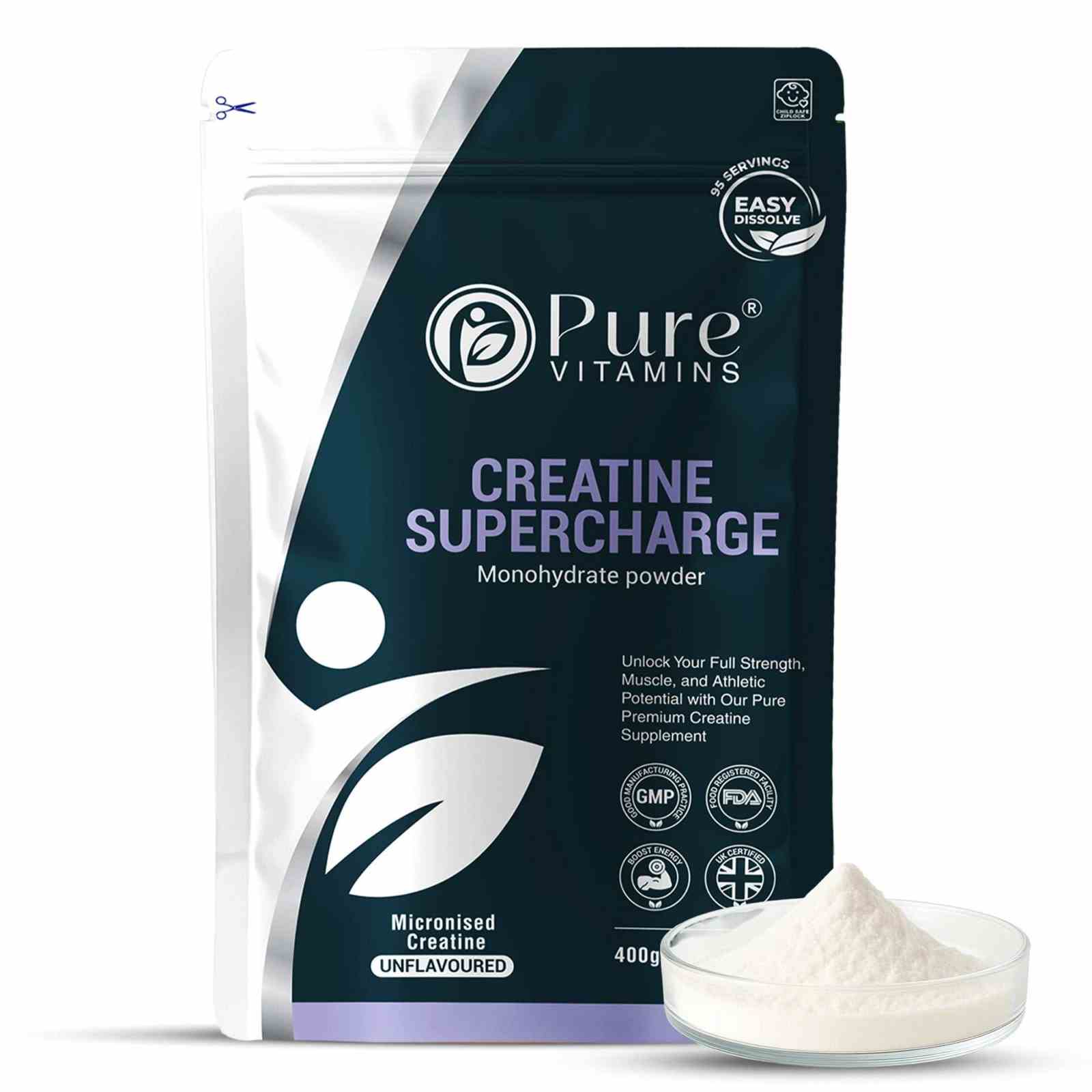
Whenever you will remember. Because the benefit of creatine comes from staying saturated day to day rather than from any single dose, morning or evening both work. Our micronised creatine monohydrate mixes cleanly into any drink, so it is easy to attach to a daily habit. There is more on this in creatine timing.
What to realistically expect
Do not expect creatine to change your sleep, for better or worse, in everyday use. Treat it as a training-performance supplement that happens to be sleep-neutral. If you are chasing better sleep, the fundamentals matter far more: a consistent bedtime, less late caffeine, a dark cool room and winding down before bed.
A few cautions worth knowing
Creatine is well tolerated in healthy adults. Mild stomach upset is the most common niggle and is usually linked to high loading doses rather than a normal 3 to 5 g serving. If you have kidney disease, are pregnant or breastfeeding, or take regular medication, check with your GP or pharmacist before starting.
Frequently asked questions
Can creatine cause insomnia?
There is no good evidence that creatine causes insomnia. It is not a stimulant, so it is unlikely to keep you awake. If you notice anything, try taking it in the morning instead.
Is it OK to take creatine at night?
Yes. Evening dosing is perfectly fine, because the benefit of creatine comes from daily saturation rather than the time you take it.
Does creatine help if I am sleep deprived?
Early research suggests creatine may partly buffer the mental effects of sleep deprivation, but the studies are small and preliminary. It is not a substitute for sleep.
Does creatine cause vivid dreams?
There is no reliable evidence that creatine causes vivid dreams. The reports are anecdotal with no established mechanism.
Shop Micronised Creatine Monohydrate
Want the wider picture? Read creatine myths, honestly, or browse the full range on the Pure Vitamins UK home page.
Dr. Miron, Founder of Pure Vitamins UK
Food supplements are not a substitute for a varied, balanced diet and a healthy lifestyle.


