


Omega-3 for dry eyes is a popular search, especially among people who are on screens all day, and I want to give you the level-headed version. Omega-3 is not a treatment for dry eye disease. What DHA, one of the two omega-3s in oily fish, does have is a genuine role in maintaining normal vision, because it is a structural fat in the retina. This guide sets out that role, what the research actually shows for dry eye, and where realistic expectations belong.
Reviewed and updated: 24 July 2026

Omega-3 for dry eyes: the quick answer (TL;DR)
- Where omega-3 genuinely helps: DHA contributes to the maintenance of normal vision, at 250 mg DHA per day.
- What it is not: a treatment for dry eye disease, and I will not pretend it is one.
- What the research shows: genuinely mixed. Reviews of people who already have dry eye disease lean modestly positive, while a large trial in healthy adults found no benefit for stopping it developing.
- The sensible takeaway: an adequate omega-3 intake is a reasonable foundation for general eye health, alongside good screen habits and professional care, not a substitute for them.
DHA and the eyes
DHA (docosahexaenoic acid) is not only concentrated in the brain; it is also a major structural fat in the retina, which is why it has a recognised role in maintaining normal vision at 250 mg DHA daily. That structural role is the genuine basis for omega-3's long association with eye health, and it is quite separate from any idea of treating dryness. Getting enough DHA is about supporting the eye's underlying machinery, not fixing a symptom.
What the research honestly shows on omega-3 and dry eye
This is a genuinely contested area, so let me be straight about it. Two meta-analyses of randomised trials in people who already have dry eye disease reported that omega-3 supplementation improved dry eye symptoms and signs such as tear break-up time compared with placebo (Giannaccare et al., 2019; Wang and Ko, 2023), with the larger effects seen at higher doses, longer durations and higher EPA content. Both reviews also caution that the trials are very heterogeneous, so the findings should be generalised carefully. And in a large randomised trial of more than 23,000 healthy adults, 1 g per day of marine omega-3 did not reduce the incidence of dry eye disease compared with placebo (Christen et al., 2022). The honest summary: the evidence in established dry eye is mixed and leans modestly positive, while the evidence for preventing it in the first place is negative. That is why I frame omega-3 around DHA's normal-vision role rather than dry-eye relief.

Occasional dryness vs dry eye disease
Dry, tired or gritty eyes are extremely common, particularly with age, screen use, contact lenses and dry environments. Persistent dry eye, though, can be a genuine medical condition (dry eye disease) that an optometrist or GP should assess and manage. A supplement is not a substitute for that assessment. If you have ongoing pain, redness, light sensitivity or any change in vision, please see a professional rather than running a supplement experiment.
Sensible steps for eye comfort
- Screen habits: the 20-20-20 approach (every 20 minutes, look about 20 feet away for 20 seconds) and consciously blinking more both genuinely help.
- Environment: air conditioning, heating and dry air worsen eye dryness, so adjust where you can.
- Adequate omega-3: from oily fish or a quality supplement, for DHA's normal-vision role.
- Professional care: persistent dryness, pain or vision changes warrant an optometrist or GP.
EPA vs DHA and how much you need
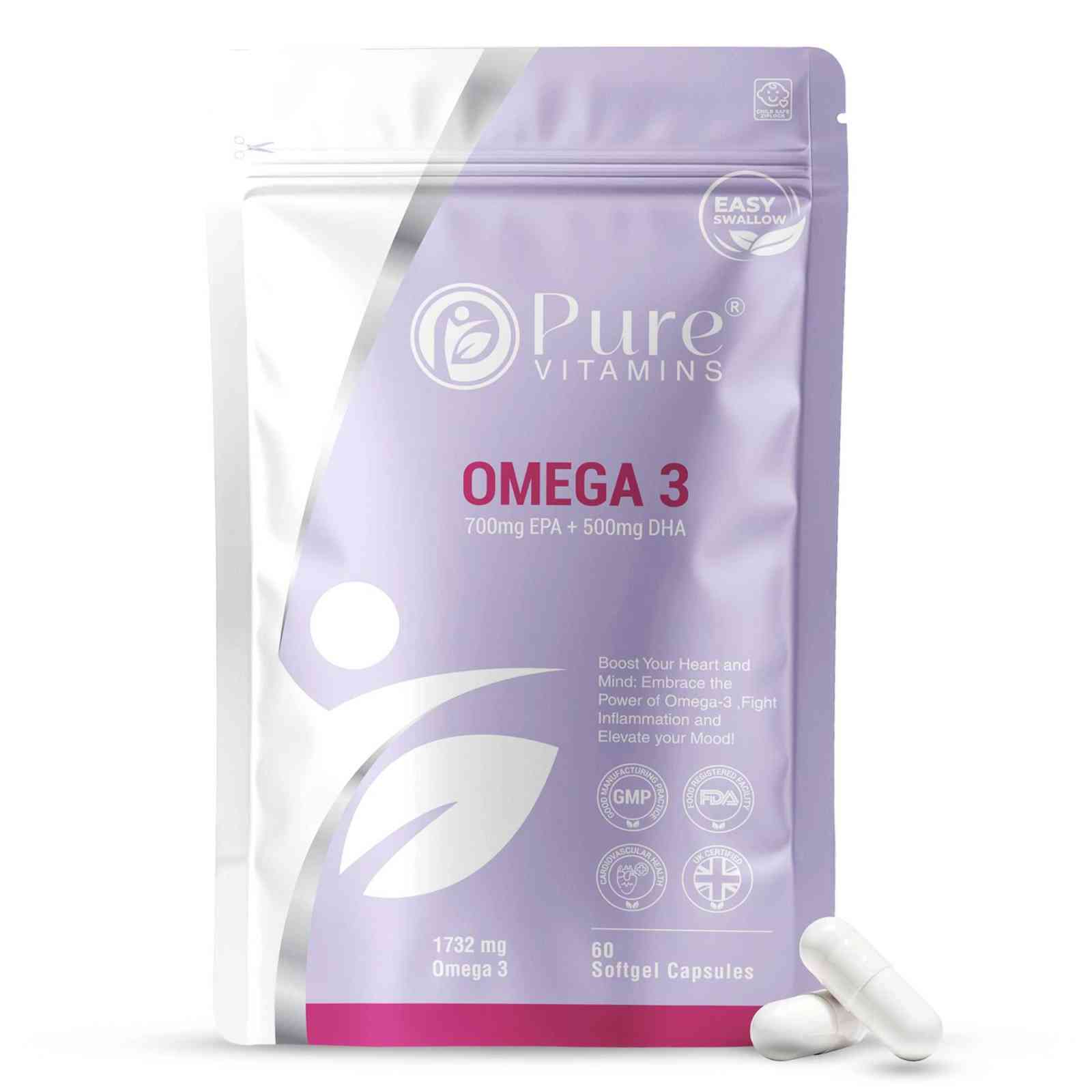
Because the vision role is DHA-specific, the figure to check on a label is the DHA amount, not just total omega-3, and it should comfortably clear 250 mg per day. The dry eye reviews above suggested EPA content also mattered for symptom improvement, so a product with meaningful EPA as well as DHA makes sense. Our High-Strength Omega-3 Fish Oil provides 692 mg DHA and 1,040 mg EPA per daily serving of two softgels, well above the 250 mg DHA mark.
How to take it
Take omega-3 with a meal containing some fat, since it is fat-soluble and absorbs better that way. There is no special time of day required; consistency over weeks matters more than timing, which fits the research showing that longer durations tended to produce clearer effects.
Interactions and who should be cautious
- Blood thinners: if you take anticoagulants such as warfarin, or antiplatelet medicines, check with your GP or pharmacist before a high-strength omega-3, since it can affect bleeding tendency at higher doses.
- Before surgery: tell your clinical team about any omega-3 supplement ahead of planned procedures.
- Pregnancy and breastfeeding: omega-3 is widely used, but choose a quality product and check with your midwife or GP.
- Fish allergy: this product contains fish (anchovies) and is not suitable if you are allergic to fish; an algal omega-3 is the alternative.

What to look for when choosing
- The DHA figure: at least 250 mg DHA per day for the normal-vision role, not just a big "fish oil" number.
- Meaningful EPA too: useful given what the dry eye reviews observed about EPA content.
- Manufacturing and freshness: a product made in a GMP-certified facility, and fresh rather than oxidised oil.
- A format you will keep taking: softgels for convenience, or algal oil if you avoid fish.
The takeaway
Omega-3 is not a treatment for dry eyes, and the research is genuinely mixed: modestly positive in people who already have dry eye disease, but negative for stopping it developing in healthy adults. What DHA does have is a real role in maintaining normal vision at 250 mg per day, and getting enough is a reasonable foundation for general eye health. Pair it with good screen habits, and see a professional if dryness persists. For the wider picture see omega-3 for heart and brain health, the companion look at omega-3 and brain fog, or browse everything at the Pure Vitamins UK home page.

Signed, Dr. Miron, Founder of Pure Vitamins UK.
Findings are paraphrased from the published literature as science and are not product claims. Food supplements should not be used as a substitute for a varied, balanced diet and a healthy lifestyle. If you are pregnant, breastfeeding, taking medication or managing a medical condition, speak to your GP or pharmacist before starting a new supplement. Persistent eye symptoms should be assessed by an optometrist or GP. Contains fish (anchovies).

