


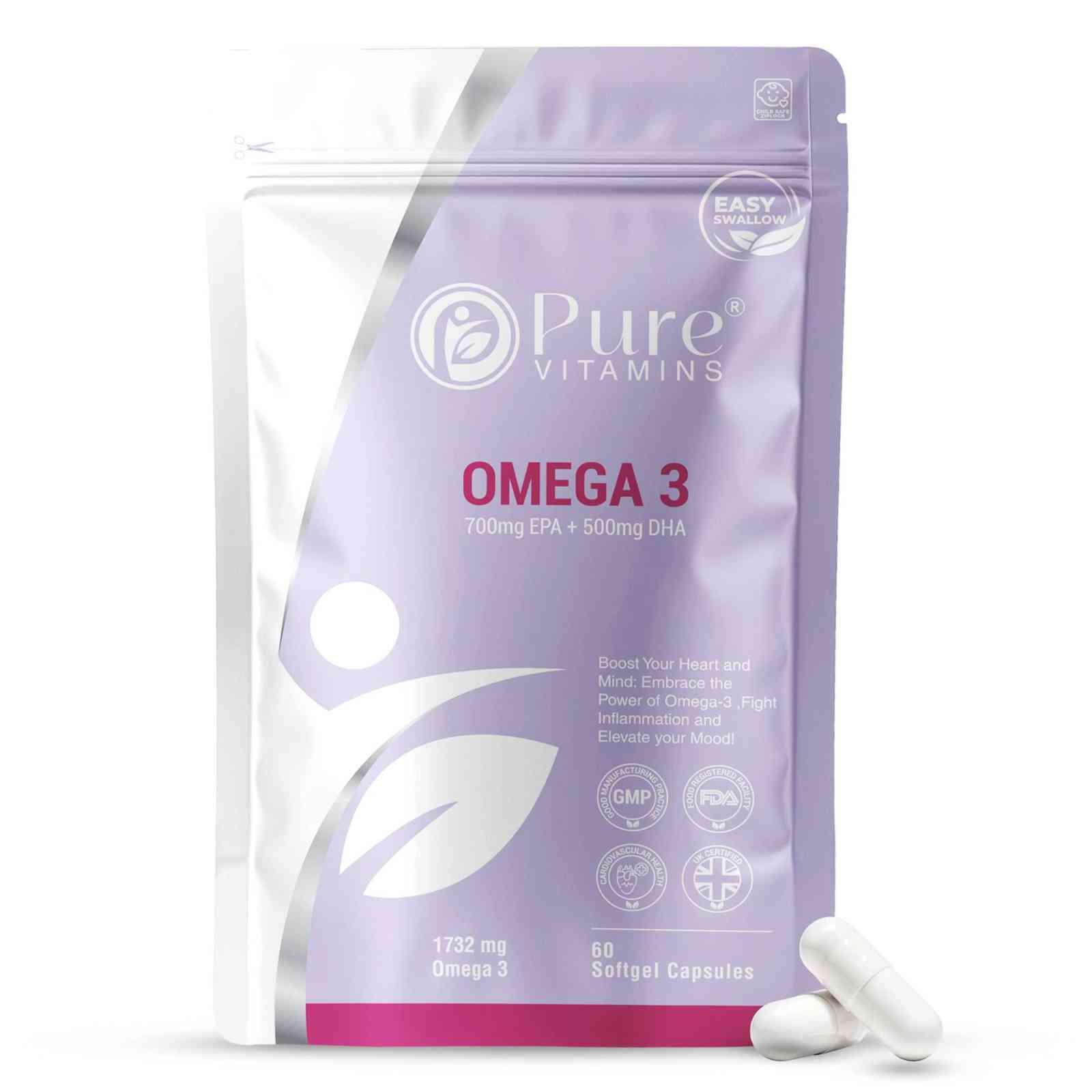
Omega-3 and brain fog is one of the most searched supplement pairings, and I want to give you the honest version rather than the hopeful one. Omega-3 is not a cure for a foggy head, mostly because "brain fog" is not one single thing. What DHA, one of the two omega-3s in oily fish, does have is a genuine, recognised role in maintaining normal brain function. This guide shows where the realistic line sits between real support and hype.
Reviewed and updated: 24 July 2026

Omega-3 and brain fog: the quick answer (TL;DR)
- The honest position: no supplement clears brain fog, because brain fog is a catch-all description, not a single condition.
- Where omega-3 genuinely helps: DHA contributes to the maintenance of normal brain function, at 250 mg DHA a day. Think of that as a sensible foundation, not a same-day switch.
- What the research shows: evidence that omega-3 sharpens thinking or memory in already-healthy people is mixed at best, and a formal review did not establish a memory-improvement effect.
- Fix the basics first: sleep, hydration, stress, and iron and B12 status are far more common drivers of foggy thinking than omega-3 intake.
What "brain fog" actually is
People use "brain fog" to describe everything from tiredness and poor concentration to the haze after a bad night's sleep. It has many possible causes: short or poor sleep, dehydration, stress, low mood, an unbalanced diet, certain medications, hormonal changes, and underlying issues such as low iron, low B12 or thyroid problems. Because it is really a symptom with many roots rather than a defined condition, the useful approach is to work out what is driving yours, not to reach for a single supplement and hope.
What DHA actually does in the brain
DHA (docosahexaenoic acid) is one of the two long-chain omega-3s from oily fish, and it is a major structural building block of brain tissue. Reviews note that 30 to 60% of the brain is lipid, with DHA heavily concentrated in neuronal membranes where it influences membrane fluidity and signalling (Bauer et al., 2013). That structural role is why an adequate DHA intake is a sensible foundation, and it is the reason DHA has a recognised part in maintaining normal brain function, with that role attaching at a daily intake of 250 mg DHA. It is support for the underlying machinery, not a cognitive dial you can turn up on a foggy afternoon.
What the research honestly shows on omega-3 and thinking
This is where honesty matters most. Observational studies have linked higher omega-3 status with better cognitive scores in adults, but those show association rather than cause (Carlson et al., 2012). When researchers run controlled trials in healthy people, the results are inconsistent: a literature review found no scientific consensus that omega-3 supplementation reliably improves cognition in healthy adults (Bauer et al., 2013). And when a specific "DHA improves memory" proposition was formally assessed, the conclusion was that a cause-and-effect relationship had not been established, because most human trials showed no effect on memory (EFSA, 2016). So the fair, evidence-aligned way to think about omega-3 is as steady support for normal brain function, rather than a memory booster or a fog-clearer.

EPA vs DHA: which matters for the brain?
DHA is the omega-3 most concentrated in brain and retinal tissue, which is why the brain-function and vision roles sit specifically with DHA rather than EPA. EPA is present in the brain at far lower levels but has its own jobs, and EPA and DHA together support the normal function of the heart.
If brain fog is bothering you, start with the basics
- Sleep: by far the most common driver of foggy thinking. Address this first.
- Hydration and diet: including adequate omega-3 from oily fish or a supplement.
- Iron and B12: genuine shortfalls here affect energy and concentration. See our notes on B12 and energy and raising ferritin, and ask your GP for a blood test if you are persistently struggling.
- Stress and screen fatigue: common, under-rated causes of a foggy head.
- Persistent or worsening fog: that is a reason to see your GP, not to self-treat with supplements.
How much omega-3, and how to take it
DHA's brain-function role attaches at 250 mg DHA per day. If your diet is low in oily fish, a concentrated omega-3 is a practical way to reach that comfortably. Our High-Strength Omega-3 Fish Oil provides 692 mg DHA and 1,040 mg EPA per daily serving of two softgels, well above the 250 mg DHA mark. Take it with a meal that contains some fat, since omega-3 is fat-soluble and absorbs better that way, and there is no need for a special time of day: consistency matters more than timing.
Interactions and who should be cautious
- Blood thinners: if you take anticoagulants such as warfarin, or antiplatelet medicines, talk to your GP or pharmacist before adding a high-strength omega-3, as omega-3 can affect bleeding tendency at higher doses.
- Before surgery: mention any omega-3 supplement to your clinical team ahead of planned procedures.
- Pregnancy and breastfeeding: omega-3 is commonly used, but choose a quality product and check with your midwife or GP.
- Fish allergy: this product contains fish (anchovies), so it is not suitable if you are allergic to fish; an algal omega-3 is the alternative.
What to look for when choosing an omega-3
- EPA and DHA dose, not just "fish oil": the numbers that matter are the EPA and DHA per serving, not the total oil weight.
- Enough DHA: at least 250 mg DHA per day for the brain-function role.
- Manufacturing and freshness: a product made in a GMP-certified facility, and fresh oil rather than an oxidised, fishy one.
- Format that suits you: softgels for convenience, or an algal oil if you avoid fish.

The takeaway
Omega-3 will not clear brain fog, because brain fog is not one thing and no supplement can honestly promise to lift it. What DHA does have is a genuine role in maintaining normal brain function at 250 mg a day, and getting enough is a sensible part of the foundation. Sort the sleep and the basics first, and treat omega-3 as steady support rather than a switch. For the wider picture, see our guide to omega-3 for heart and brain health, the dedicated look at omega-3 and dry eyes, or browse everything at the Pure Vitamins UK home page.

Signed, Dr. Miron, Founder of Pure Vitamins UK.
Findings are paraphrased from the published literature as science and are not product claims. Food supplements should not be used as a substitute for a varied, balanced diet and a healthy lifestyle. If you are pregnant, breastfeeding, taking medication or managing a medical condition, speak to your GP or pharmacist before starting a new supplement. Persistent cognitive symptoms should be discussed with your GP. Contains fish (anchovies).


